English

How a Seed Grows
A first-person narrative explaining the process of seed germination and how human understanding of…
Reads at Grades 6–8 Listens at Grades 4–8
Print & create
Answer keys·No prep·Free with an account
28 worksheets · answer keys · full story · quiz · Ages 10-12 · CEFR B2
Plus adds 244,000+ more stories in 27 languages, audio for every one, and printables for all of them.
Just want How a Seed Grows?
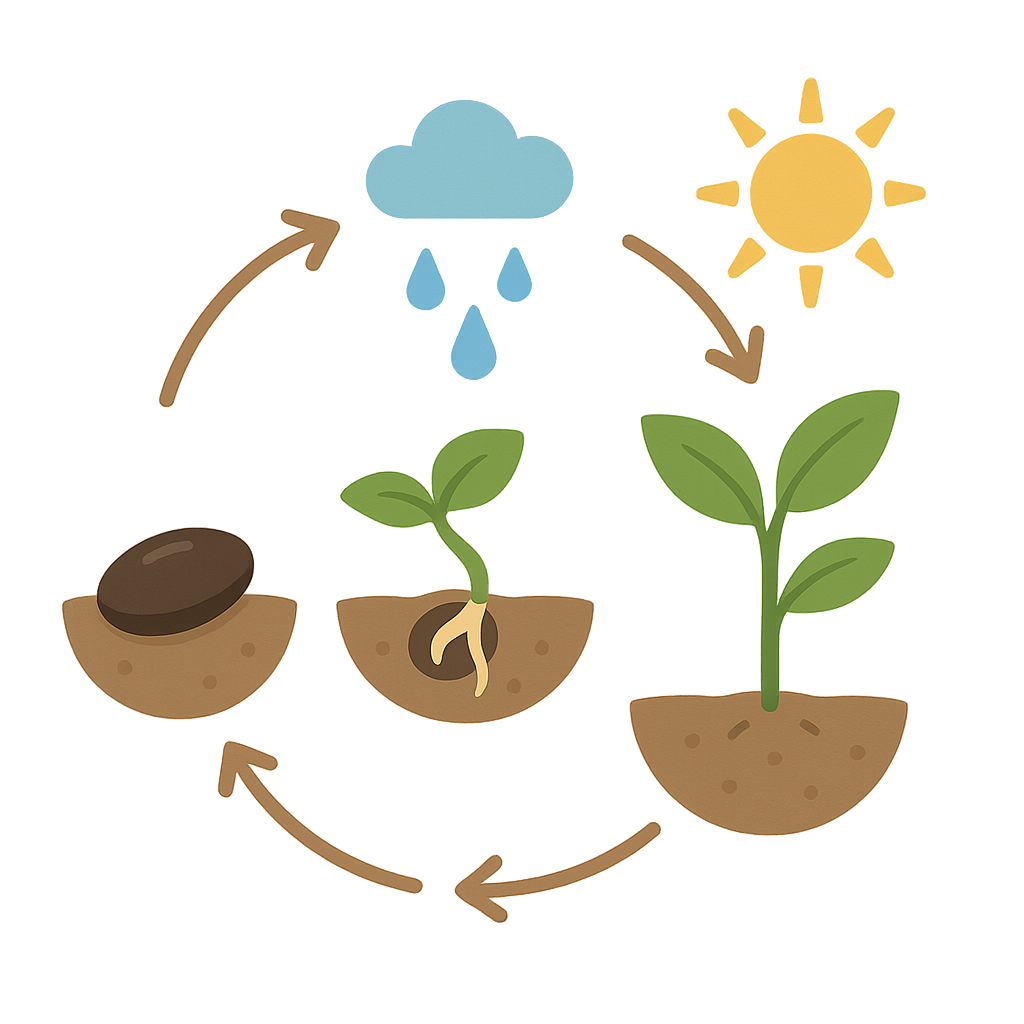
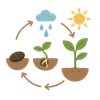
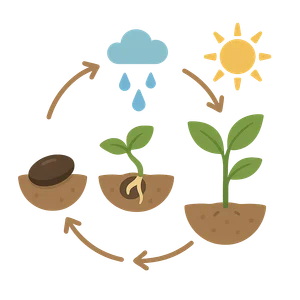
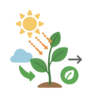
Imagine being curled up in a tiny, dark room, waiting. That’s me, most of the time. I am a secret, a promise, a complex recipe for something amazing, all packed into a neat little shell. I can wait for days, months, or even thousands of years for just the right moment. Then, it happens. A little water seeps through my coat, a bit of warmth from the sun reaches my soil, and something deep inside me wakes up. It’s a feeling like a slow, powerful stretch. I send a tiny root, a radicle, downward, sensing gravity, feeling for a drink and something to hold onto. Then, I push a delicate green shoot, a plumule, upward, fighting my way through the dark earth to greet the sky. I am the magic of potential, the blueprint for life itself. I am how a seed grows.
For a very long time, humans didn’t understand my mechanics; they just knew that I worked. Way back around 10,000 BCE, during a period you call the Neolithic Revolution, people made a monumental discovery. Instead of just gathering the plants they found on their wanderings, they realized they could save me, put me in the ground on purpose, and cultivate their own food. This changed everything. They stopped their nomadic roaming and started building permanent villages, which grew into towns and cities. They learned my rhythms, observing the sun and seasons to know the perfect time to plant. In ancient Egypt, around 3000 BCE, farmers depended on me completely. They knew that after the great Nile River flooded its banks each year, the soil would be saturated with rich silt, perfect for me to sprout. They didn't have science labs or genetics, but they were expert observers. They saw that a tiny grain of wheat could become a stalk for bread, and a small seed from a melon could become a sprawling vine heavy with juicy fruit. To them, I was a mystical gift from the gods, a sacred cycle of death and rebirth they learned to join.
The Seed's Story
Imagine being curled up in a tiny, dark room, waiting. That’s me, most of the time. I am a secret, a promise, a complex recipe for something amazing, all packed into a neat little shell. I can wait for days, months, or even thousands of years for just the right moment. Then, it happens. A little water seeps through my coat, a bit of warmth from the sun reaches my soil, and something deep inside me wakes up. It’s a feeling like a slow, powerful stretch. I send a tiny root, a radicle, downward, sensing gravity, feeling for a drink and something to hold onto. Then, I push a delicate green shoot, a plumule, upward, fighting my way through the dark earth to greet the sky. I am the magic of potential, the blueprint for life itself. I am how a seed grows.
For a very long time, humans didn’t understand my mechanics; they just knew that I worked. Way back around 10,000 BCE, during a period you call the Neolithic Revolution, people made a monumental discovery. Instead of just gathering the plants they found on their wanderings, they realized they could save me, put me in the ground on purpose, and cultivate their own food. This changed everything. They stopped their nomadic roaming and started building permanent villages, which grew into towns and cities. They learned my rhythms, observing the sun and seasons to know the perfect time to plant. In ancient Egypt, around 3000 BCE, farmers depended on me completely. They knew that after the great Nile River flooded its banks each year, the soil would be saturated with rich silt, perfect for me to sprout. They didn't have science labs or genetics, but they were expert observers. They saw that a tiny grain of wheat could become a stalk for bread, and a small seed from a melon could become a sprawling vine heavy with juicy fruit. To them, I was a mystical gift from the gods, a sacred cycle of death and rebirth they learned to join.
It took thousands of years for people to start looking at me with a scientist’s eye. Around 300 BCE, a thoughtful man in Greece named Theophrastus decided to study and write about every plant he could find. He was like a plant detective, meticulously describing my different shapes, sizes, and parts in his work Enquiry into Plants. He gave names to the things he saw and is now called the 'Father of Botany.' But the biggest secrets I held were too small for the naked eye. That changed in the 17th century when the microscope was invented. In 1665, an English scientist named Robert Hooke published a book called Micrographia. It was filled with amazing drawings of the tiny worlds he saw through his lens, including the complex, cellular structures of plants. For the first time, people could peek inside my protective coat and see the tiny, sleeping plant—the embryo—and its food supply, the endosperm, tucked within. Then, in the 1850s, a quiet monk in Austria named Gregor Mendel conducted some incredible experiments. Between 1856 and 1863, he grew thousands of pea plants in his monastery garden. He carefully tracked how traits, like flower color or seed shape, were passed from one generation to the next. He discovered that I carry a hidden set of instructions—what you now call genes—that determines everything about the plant I will become. He had cracked my code.
Today, your understanding of me is more important than ever. Scientists use the knowledge passed down from pioneers like Theophrastus and Mendel to develop stronger crops that can resist disease, withstand drought, and feed billions of people. And because you know how precious I am, you’ve even created special places to protect me. High in the Arctic, on a remote Norwegian island, there is a giant, frozen vault built deep into a mountain. The Svalbard Global Seed Vault, which opened on February 26th, 2008, is like a library and a backup drive for seeds from all over the world, keeping them safe from any disaster for the future. But you don’t need a fancy lab or a frozen vault to witness my power. You just need a little patch of soil, some water, and a bit of sun. Every time you plant a garden or watch a mighty tree sprout from a tiny acorn, you are participating in my ancient, life-giving story. I am a constant reminder that even the biggest, strongest, and most beautiful things often have the smallest of beginnings.
Wow facts
About
A first-person narrative explaining the process of seed germination and how human understanding of agriculture and botany developed over time, from early farming to modern genetics.
Take a Quiz
Question 1 of 5
According to the story, what were the three major scientific breakthroughs that helped humans understand how seeds work?
Explore next



Want to do even more?
Go beyond exploring. Unlock tools that turn every story into real learning.

Storypie Plus for families
Full stories, quizzes, and printables. Nights and car rides, sorted.
- Unlimited audio stories
- Create Mode: your child stars in the story
- Offline downloads
- Printable worksheets & coloring pages

Why Storypie for Schools
Students engaged. Prep in seconds. Evenings back to you.
- Worksheets & Quizzes
- Classroom Management
- Formative Assessment
- Custom Curriculum & Lesson Plans
- 27 Languages

Why Storypie for Homeschool
Curriculum done. They'll ask for more. Hours back in your day.
- Worksheet Generator
- First-Person Audio Stories
- Built-in Comprehension Quizzes
- Custom Curriculum & Lesson Plans
- Print & Go Activities