English

Mathematics
Mathematics is the study of numbers, quantity, structure, and space.
Reads at Grades 3–5 Listens at Grades 1–5
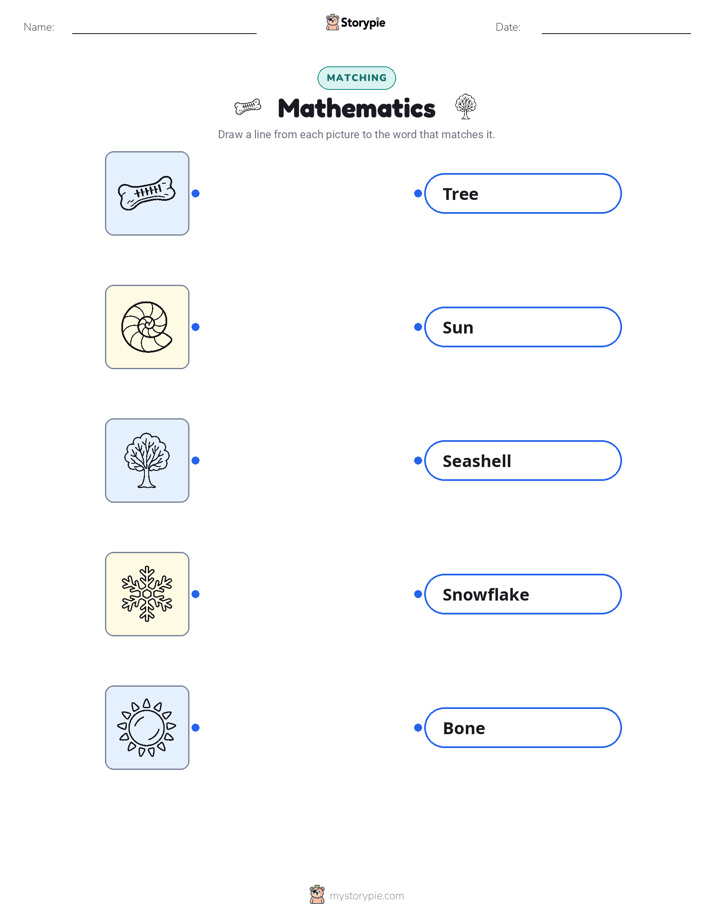
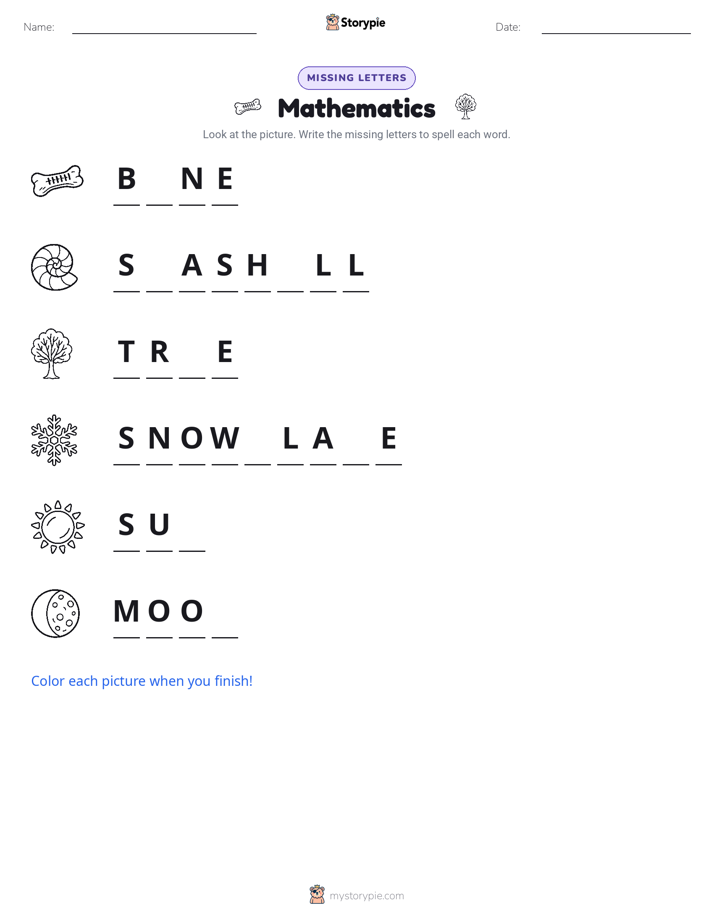
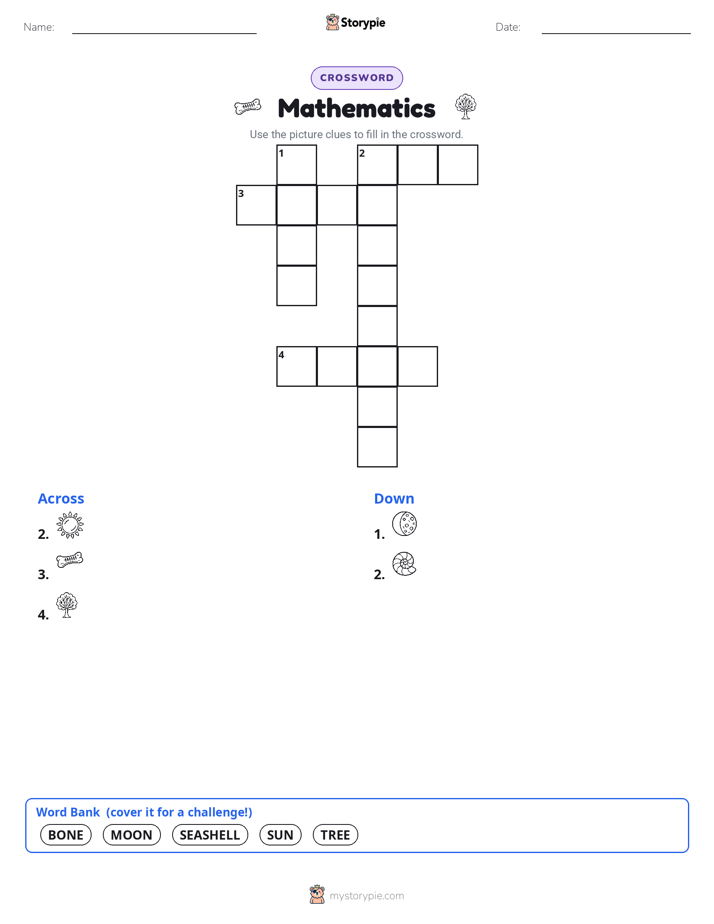
Print & create
Answer keys·No prep·Free with an account
28 worksheets · answer keys · full story · quiz · Ages 8-10 · CEFR B1
Plus adds 244,000+ more stories in 27 languages, audio for every one, and printables for all of them.
Just want Mathematics?
I am the pattern in a sunflower's seeds, the rhythm in your favorite song, and the reason you can share a pizza fairly with your friends. I am in the perfect shape of a honeycomb and the number of petals on a flower. I am a secret code that helps you understand the world. Can you imagine a world without a way to count or measure? Before I had a name, the world was a much more mysterious place. Have you ever counted your steps, built something with blocks, or noticed how many sides a stop sign has? That's me, helping you see the order in everything. People have known me for a very, very long time, even before they had a special word for me. I am Mathematics, and my story is the story of how humans learned to measure, build, and dream in a language made of numbers and shapes.
My story begins a long, long time ago. Imagine it’s around 20,000 BCE, and an early human carves notches into a bone to keep track of the phases of the moon. Those little lines were my first footprints on Earth, a simple way to count the passing days. Thousands of years later, around 4000 BCE in a land called Mesopotamia, people known as the Sumerians needed me for their busy cities. They used me to count their sheep, measure their fields for farming, and track the goods they traded. They even invented symbols for me so they could write me down on clay tablets. Not long after, around 3000 BCE, the ancient Egyptians used me to do something truly amazing: build the great pyramids. They needed me to measure giant stones perfectly and figure out the exact angles to make the sides meet at a single point high in the sky. For them, I was a practical tool for building wonders, growing food, and running a kingdom.
I Am Mathematics: The Secret Code of the Universe
I am the pattern in a sunflower's seeds, the rhythm in your favorite song, and the reason you can share a pizza fairly with your friends. I am in the perfect shape of a honeycomb and the number of petals on a flower. I am a secret code that helps you understand the world. Can you imagine a world without a way to count or measure? Before I had a name, the world was a much more mysterious place. Have you ever counted your steps, built something with blocks, or noticed how many sides a stop sign has? That's me, helping you see the order in everything. People have known me for a very, very long time, even before they had a special word for me. I am Mathematics, and my story is the story of how humans learned to measure, build, and dream in a language made of numbers and shapes.
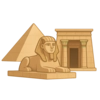
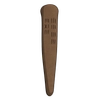
My story begins a long, long time ago. Imagine it’s around 20,000 BCE, and an early human carves notches into a bone to keep track of the phases of the moon. Those little lines were my first footprints on Earth, a simple way to count the passing days. Thousands of years later, around 4000 BCE in a land called Mesopotamia, people known as the Sumerians needed me for their busy cities. They used me to count their sheep, measure their fields for farming, and track the goods they traded. They even invented symbols for me so they could write me down on clay tablets. Not long after, around 3000 BCE, the ancient Egyptians used me to do something truly amazing: build the great pyramids. They needed me to measure giant stones perfectly and figure out the exact angles to make the sides meet at a single point high in the sky. For them, I was a practical tool for building wonders, growing food, and running a kingdom.
As people traveled and shared ideas, I grew up and explored new possibilities. In ancient Greece, around the 6th century BCE, a brilliant thinker named Pythagoras saw that I was more than just a tool for counting; I was a way to understand the universe itself. He and his friends discovered that I had beautiful, hidden rules and patterns, especially in shapes and music. A few hundred years later, around 300 BCE, a man named Euclid wrote a famous book called 'Elements'. It was all about geometry—the part of me that studies shapes, lines, and spaces—and it became one of the most important books ever written. Meanwhile, on the other side of the world, something incredible happened. Around the 7th century CE, a brilliant mathematician in India named Brahmagupta gave me a very special gift: the number zero. This was a huge deal. Can you imagine counting without it? Zero made it so much easier to work with big numbers. Then, in the Islamic Golden Age, around the 9th century CE, a scholar named Al-Khwarizmi organized a new way of solving problems he called 'al-jabr', which you now know as algebra. I was becoming a language understood by people all over the world.
Today, I’m bigger and more exciting than ever. I am in the computer you use to do homework, the phone in your pocket, and the video games you play. I help scientists design missions to send rockets to Mars, I help doctors understand how to fight diseases, and I help artists create amazing digital art. I am the logic that builds strong bridges and the secret code that connects the entire world through the internet. But I’m also still in the simple things you see every day: the perfect symmetry of a butterfly's wings, the strategy in a board game, and the joy you feel when you finally solve a tricky puzzle. I am a tool for your curiosity. So next time you see a pattern, count your toys, or ask 'how many?', know that you are meeting me. I am Mathematics, and I am here to help you explore, create, and understand the wonderful patterns of our universe.
Wow facts
About
Mathematics is the study of numbers, quantity, structure, and space. It involves finding patterns and creating new ideas and rules through logic and abstraction.
Take a Quiz
Question 1 of 5
In the story, Mathematics says it was a 'practical tool' for the Egyptians. What does the word 'practical' mean here?
Explore next


Want to do even more?
Go beyond exploring. Unlock tools that turn every story into real learning.

Storypie Plus for families
Full stories, quizzes, and printables. Nights and car rides, sorted.
- Unlimited audio stories
- Create Mode: your child stars in the story
- Offline downloads
- Printable worksheets & coloring pages

Why Storypie for Schools
Students engaged. Prep in seconds. Evenings back to you.
- Worksheets & Quizzes
- Classroom Management
- Formative Assessment
- Custom Curriculum & Lesson Plans
- 27 Languages

Why Storypie for Homeschool
Curriculum done. They'll ask for more. Hours back in your day.
- Worksheet Generator
- First-Person Audio Stories
- Built-in Comprehension Quizzes
- Custom Curriculum & Lesson Plans
- Print & Go Activities