English

Moon Phases
The recurring cycle of the Moon's appearance from Earth…
Reads at Grades K-2 Listens at K–3
 Screen-free speaker. Built for your kids.
No card, no commitment. One email when there is real news, and one click to stop.
Print & create
Answer keys·No prep·Free with an account
28 worksheets · answer keys · full story · quiz · Ages 6-8 · CEFR A2
Plus adds 102,000+ more stories in 27 languages, audio for every one, and printables for all of them.
Just want Moon Phases?
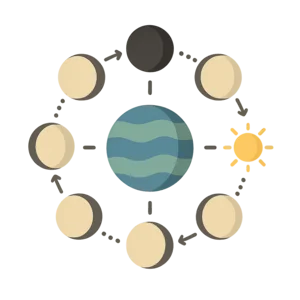
Have you ever looked up at the night sky and seen the Moon playing dress-up? Some nights, it’s a giant, glowing circle, bright enough to read a book by. Other nights, it’s just a skinny, silver smile, like a secret just for you. And sometimes, it hides completely. It’s like I’m a cosmic artist, painting a different picture in the sky each evening. I might show you a full, round face, or just a sliver of my cheek, or a perfect half-circle. People have wondered about my changing looks for thousands and thousands of years. They would ask their friends, 'Where does the rest of the Moon go when we can't see it?' They thought maybe it disappeared. But it doesn't go anywhere. I am the Moon Phases, and I’m the secret behind the Moon’s magical monthly dance. I show how much of the sunlit Moon you can see from Earth.
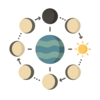
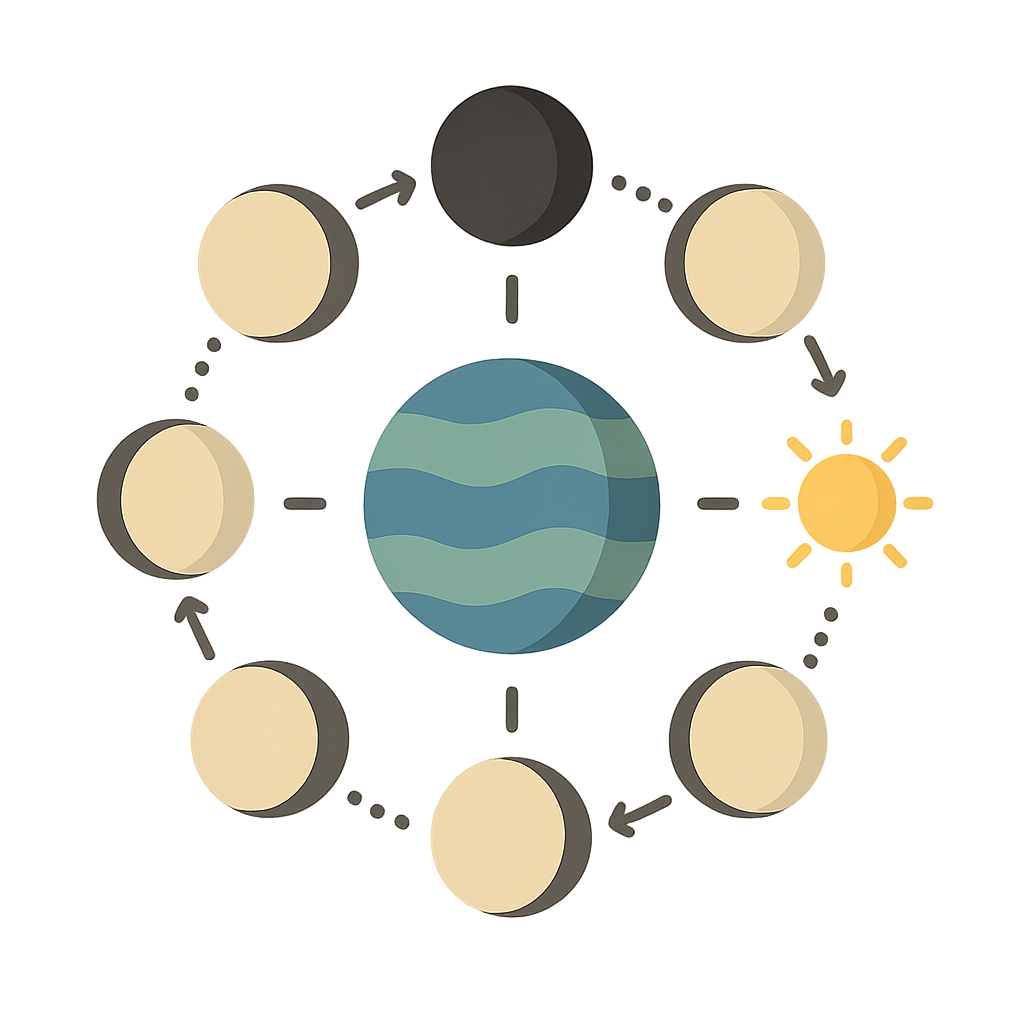
So, how do I do it? It’s not magic, but it’s just as wonderful. It’s all part of a big, beautiful dance between the Moon, your Earth, and the Sun. The Moon doesn’t have its own light, like a flashlight. It’s more like a giant, dusty ball that borrows its shine from the super-bright Sun. As the Moon travels in a big circle around the Earth, the Sun lights up different parts of it. When the Moon is between the Earth and the Sun, the side lit by the sun is facing away from you, so the sky looks dark—that's the New Moon. As the Moon keeps dancing, you start to see a little slice of that sunlight, which I call a Crescent. Then you see half, the First Quarter, and then the whole bright face, which you call a Full Moon. For thousands of years, people tracked my changes to create calendars. Then, a long time ago, around November 30th, 1609, a man named Galileo Galilei pointed a telescope at the moon and saw its mountains and craters up close. He helped everyone understand that my changing shapes were just sunlight and shadows in a cosmic dance, not magic.
The Moon's Secret Dance
Have you ever looked up at the night sky and seen the Moon playing dress-up? Some nights, it’s a giant, glowing circle, bright enough to read a book by. Other nights, it’s just a skinny, silver smile, like a secret just for you. And sometimes, it hides completely. It’s like I’m a cosmic artist, painting a different picture in the sky each evening. I might show you a full, round face, or just a sliver of my cheek, or a perfect half-circle. People have wondered about my changing looks for thousands and thousands of years. They would ask their friends, 'Where does the rest of the Moon go when we can't see it?' They thought maybe it disappeared. But it doesn't go anywhere. I am the Moon Phases, and I’m the secret behind the Moon’s magical monthly dance. I show how much of the sunlit Moon you can see from Earth.
So, how do I do it? It’s not magic, but it’s just as wonderful. It’s all part of a big, beautiful dance between the Moon, your Earth, and the Sun. The Moon doesn’t have its own light, like a flashlight. It’s more like a giant, dusty ball that borrows its shine from the super-bright Sun. As the Moon travels in a big circle around the Earth, the Sun lights up different parts of it. When the Moon is between the Earth and the Sun, the side lit by the sun is facing away from you, so the sky looks dark—that's the New Moon. As the Moon keeps dancing, you start to see a little slice of that sunlight, which I call a Crescent. Then you see half, the First Quarter, and then the whole bright face, which you call a Full Moon. For thousands of years, people tracked my changes to create calendars. Then, a long time ago, around November 30th, 1609, a man named Galileo Galilei pointed a telescope at the moon and saw its mountains and craters up close. He helped everyone understand that my changing shapes were just sunlight and shadows in a cosmic dance, not magic.
For as long as people have looked up, I have been their guide. I helped ancient farmers know the best time to plant their seeds and when to harvest their crops. I helped sailors navigate across dark oceans by the light of a Full Moon. I have inspired countless bedtime stories, beautiful poems, and happy festivals all over the world. Even today, I am a reminder that the universe is full of amazing, predictable patterns. So next time you look up at night, watch me change. See if you can spot my crescent smile or my full, happy face. I’ll be up there, dancing with the Sun and Earth, reminding you to always stay curious and keep looking up.
Wow facts
About
The recurring cycle of the Moon's appearance from Earth, caused by the changing angles at which we view its sunlit surface as it orbits our planet.
Take a Quiz
Question 1 of 4
Why does the Moon look dark during the New Moon phase?
Explore next




Want to do even more?
Go beyond exploring. Unlock tools that turn every story into real learning.

Storypie Plus for families
Full stories, quizzes, and printables. Nights and car rides, sorted.
- Unlimited audio stories
- Create Mode: your child stars in the story
- Offline downloads
- Printable worksheets & coloring pages

Why Storypie for Schools
Students engaged. Prep in seconds. Evenings back to you.
- Worksheets & Quizzes
- Classroom Management
- Formative Assessment
- Custom Curriculum & Lesson Plans
- 27 Languages

Why Storypie for Homeschool
Curriculum done. They'll ask for more. Hours back in your day.
- Worksheet Generator
- First-Person Audio Stories
- Built-in Comprehension Quizzes
- Custom Curriculum & Lesson Plans
- Print & Go Activities