English

Patterns
Patterns are repeating arrangements of shapes, numbers, colors, or events that are found in nature, art…
Reads at Grades 6–8 Listens at Grades 4–8
Print & create
Answer keys·No prep·Free with an account
28 worksheets · answer keys · full story · quiz · Ages 10-12 · CEFR B2
Plus adds 244,000+ more stories in 27 languages, audio for every one, and printables for all of them.
Just want Patterns?
Have you ever paused to trace the bold stripes on a zebra's back, or wondered how a bee knows how to build the perfect hexagon of its honeycomb? Have you looked at a photograph of a distant galaxy and seen it swirling in a perfect spiral, or felt the steady, reassuring rhythm of your own heartbeat? I am in all of those things. I am the reason you trust that the sun will rise each morning and that winter will always give way to spring. I am the predictable beat in a song that makes you want to dance, the pleasing symmetry in a painting, and the comforting sequence of your daily routine. For millennia, humans felt my presence without knowing my name. I am the secret rhythm of the universe, the invisible thread connecting everything. You can call me Patterns.
For a long, long time, humans noticed me without truly seeing me. The earliest people survived because of me. They saw me in the phases of the moon, which told them when to hunt at night, and in the great migration of animals, which told them where to find food. They began to not just see me, but to create me. As far back as 30,000 BCE, they scratched symmetrical lines onto their tools and painted repeating dots and shapes on the walls of their caves. As civilizations grew, so did humanity's understanding of me. In ancient Egypt, around 3100 BCE, people used my rigid and reliable geometric forms to achieve the impossible. They built the great pyramids, with their perfect angles pointing to the heavens, and they charted the stars, using my celestial cycles to create calendars that could predict the flooding of the Nile River. Then came the thinkers of Ancient Greece. A man named Pythagoras, who lived around 570 BCE, was convinced that I was the hidden language of the entire universe. He discovered me not in the stars, but in music. He found that the pleasing sounds of musical harmonies were created by simple mathematical ratios, proving that numbers and beauty were part of the same grand design.
The Universe's Secret Habit
Have you ever paused to trace the bold stripes on a zebra's back, or wondered how a bee knows how to build the perfect hexagon of its honeycomb? Have you looked at a photograph of a distant galaxy and seen it swirling in a perfect spiral, or felt the steady, reassuring rhythm of your own heartbeat? I am in all of those things. I am the reason you trust that the sun will rise each morning and that winter will always give way to spring. I am the predictable beat in a song that makes you want to dance, the pleasing symmetry in a painting, and the comforting sequence of your daily routine. For millennia, humans felt my presence without knowing my name. I am the secret rhythm of the universe, the invisible thread connecting everything. You can call me Patterns.
For a long, long time, humans noticed me without truly seeing me. The earliest people survived because of me. They saw me in the phases of the moon, which told them when to hunt at night, and in the great migration of animals, which told them where to find food. They began to not just see me, but to create me. As far back as 30,000 BCE, they scratched symmetrical lines onto their tools and painted repeating dots and shapes on the walls of their caves. As civilizations grew, so did humanity's understanding of me. In ancient Egypt, around 3100 BCE, people used my rigid and reliable geometric forms to achieve the impossible. They built the great pyramids, with their perfect angles pointing to the heavens, and they charted the stars, using my celestial cycles to create calendars that could predict the flooding of the Nile River. Then came the thinkers of Ancient Greece. A man named Pythagoras, who lived around 570 BCE, was convinced that I was the hidden language of the entire universe. He discovered me not in the stars, but in music. He found that the pleasing sounds of musical harmonies were created by simple mathematical ratios, proving that numbers and beauty were part of the same grand design.
My story weaves through time, with different cultures finding new ways to express me. During the Islamic Golden Age, from the 8th to the 14th centuries, artists and architects used me to create breathtaking beauty. They crafted intricate geometric tiles, called tessellations, where shapes fit together perfectly without any gaps, covering walls and domes in an endless, mesmerizing dance. They believed that contemplating my infinite complexity was a way to understand the divine. Later, in Italy, a mathematician named Leonardo Pisano, whom you might know as Fibonacci, introduced a very special sequence of numbers to Europe in his book in 1202. It starts simply: 1, 1, 2, 3, 5, 8, and so on, with each number being the sum of the two before it. He didn't invent the sequence, but he showed how powerful it was. And the most amazing part? You can find his numbers everywhere in nature—in the number of petals on a flower, the arrangement of seeds in a sunflower, the spiral scales on a pinecone, and the elegant curve of a seashell. During the Renaissance, the great artist and inventor Leonardo da Vinci was obsessed with me. He studied my proportions in the human body and the branching of trees, believing that I was the key to both art and science. Centuries later, in the 20th century, a brilliant mind named Alan Turing showed just how powerful I could be. During World War II, he used his profound understanding of me to analyze enemy communications and crack their secret codes, helping to change the course of history. But he wasn't done. In a famous paper from 1952, he used mathematics to ask how I create the spots on a leopard or the stripes on a tiger, a question that scientists are still exploring today.
Now, it’s your turn to find me. I haven’t gone anywhere; in fact, I am more a part of your world than ever before. I am in the complex lines of computer code that power your favorite video games and apps. I am the repeating chorus of a song that gets stuck in your head and the sturdy, repeating framework of a skyscraper that touches the clouds. Recognizing me is like having a superpower. It helps scientists predict weather systems and discover new medicines. It helps artists create music and paintings that feel balanced and beautiful. It helps engineers design bridges that are strong and efficient. For everyone, spotting me is the first step to making sense of a world that can sometimes seem chaotic. I am all around you, an endless puzzle waiting to be solved and a masterpiece waiting to be seen. Keep your eyes open, because every time you find me, you understand the world a little better. What new patterns will you discover today?
Wow facts
About
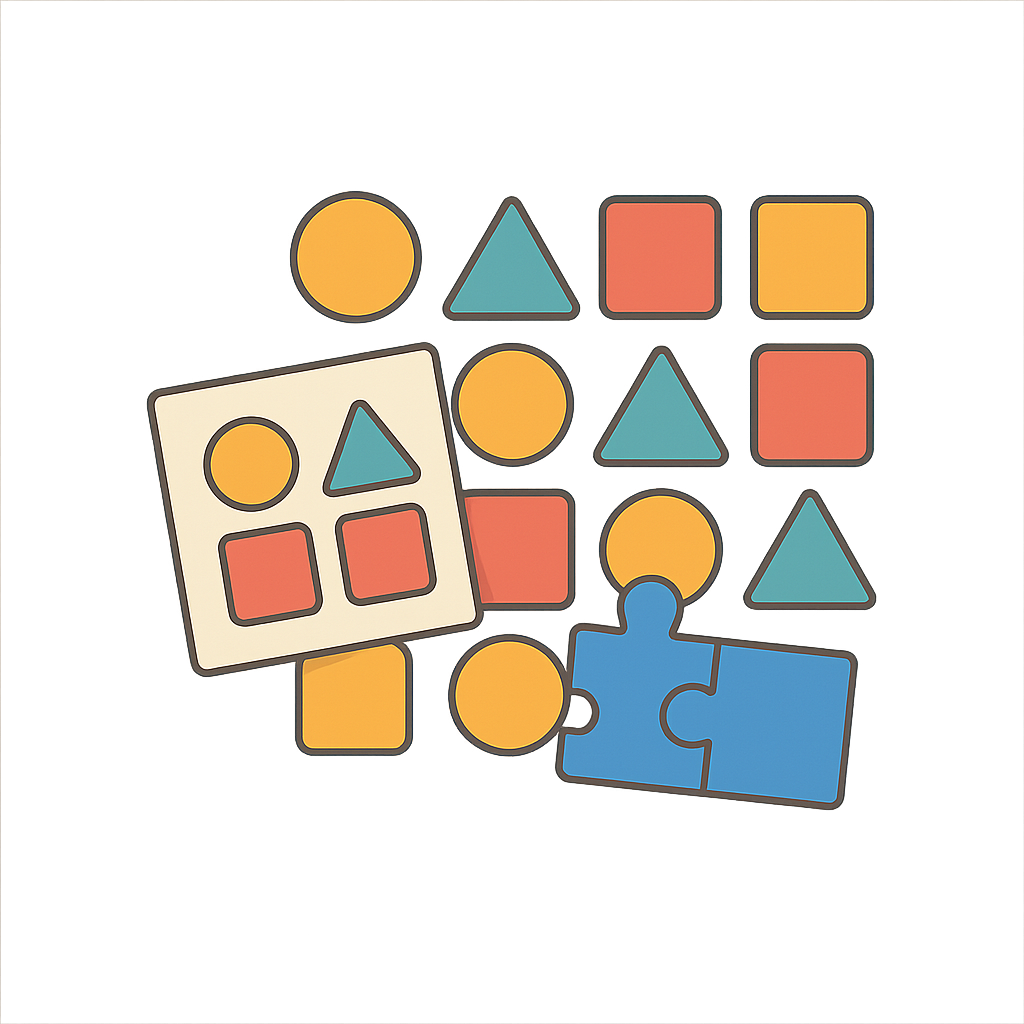
Patterns are repeating arrangements of shapes, numbers, colors, or events that are found in nature, art, science, and daily life, helping humans understand and organize the world.
Take a Quiz
Question 1 of 5
According to the story, which historical figure discovered mathematical relationships in musical notes, believing patterns were the 'language of the universe'?
Explore next



Want to do even more?
Go beyond exploring. Unlock tools that turn every story into real learning.

Storypie Plus for families
Full stories, quizzes, and printables. Nights and car rides, sorted.
- Unlimited audio stories
- Create Mode: your child stars in the story
- Offline downloads
- Printable worksheets & coloring pages

Why Storypie for Schools
Students engaged. Prep in seconds. Evenings back to you.
- Worksheets & Quizzes
- Classroom Management
- Formative Assessment
- Custom Curriculum & Lesson Plans
- 27 Languages

Why Storypie for Homeschool
Curriculum done. They'll ask for more. Hours back in your day.
- Worksheet Generator
- First-Person Audio Stories
- Built-in Comprehension Quizzes
- Custom Curriculum & Lesson Plans
- Print & Go Activities