English

Slavery in the United States
Slavery in the United States was the legal institution of chattel slavery…
Reads at Grades 6–8 Listens at Grades 4–8
Print & create
Answer keys·No prep·Free with an account
28 worksheets · answer keys · full story · quiz · Ages 10-12 · CEFR B2
Plus adds 102,000+ more stories in 27 languages, audio for every one, and printables for all of them.
Just want Slavery in the United States?
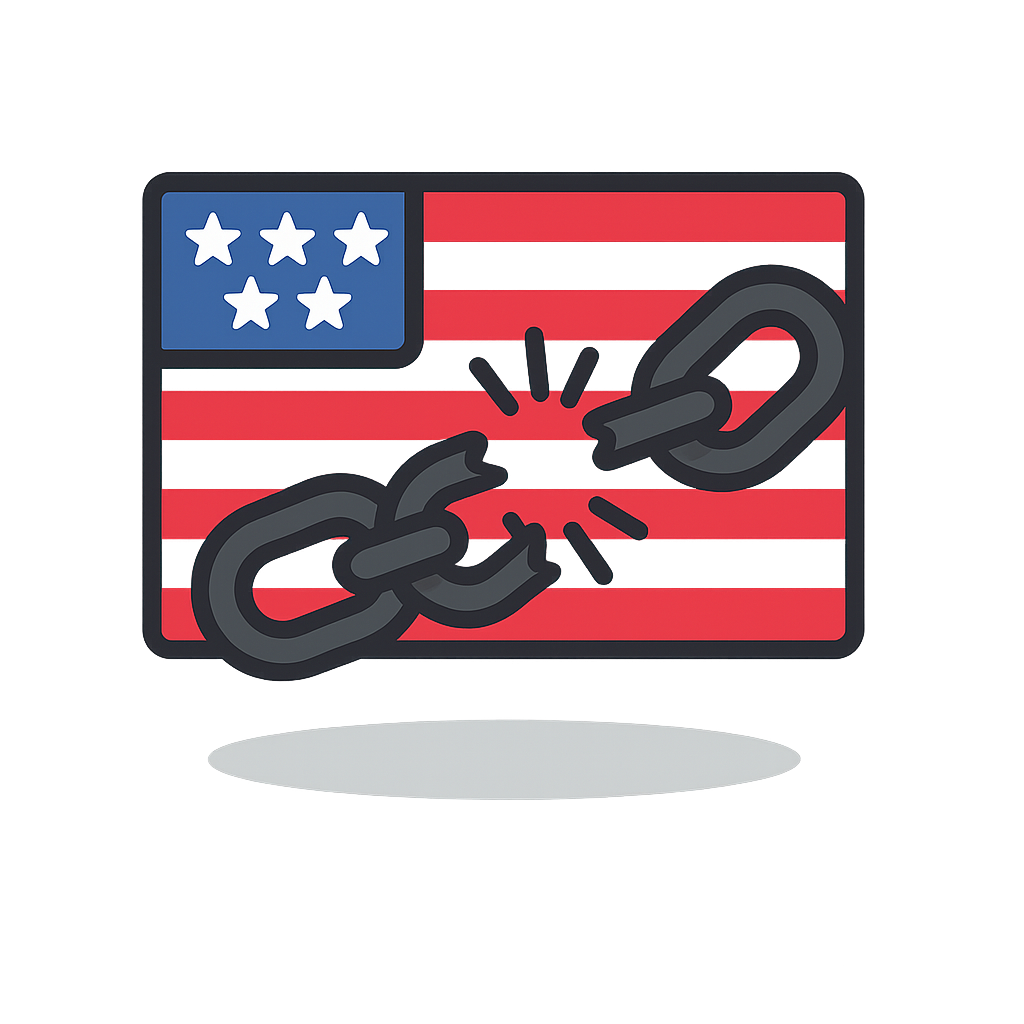
Imagine a heavy weight you can never set down, a constant burden that stops you from choosing your own path. Picture invisible chains that hold you in one place, no matter how much you wish to run. Think of a deep silence where your own voice, your own thoughts, and your own dreams should be. For centuries, this was the reality I created for millions of people. I was a system, a terrible and powerful idea built by some people to control others, taking root in the soil of a new world and growing into a monstrous tree. I am the institution of Slavery in the United States, and my story is a difficult but essential one to understand, for it is woven into the very fabric of the nation's history.
My story in America began on a sweltering summer day in August of 1619. A ship, battered by the sea, arrived in the English colony of Virginia at a place called Point Comfort. Onboard were '20 and odd' captive Africans, stolen from their homes and brought across the ocean. They were sold to the colonists, and with that transaction, my seeds were planted. In those first few decades, the rules around me were still murky and forming. Some people of African descent were treated like indentured servants, who might one day earn their freedom. But that possibility soon vanished. By the 1660s, a series of cruel new laws were passed in the colonies, making me a formal, legal, and inherited condition. This was a devastating change. It meant that if a mother was enslaved, her children would be born into my grasp, and their children after them, creating a cycle of bondage that spanned generations. I grew strongest and most powerful in the southern colonies, where the warm climate was perfect for growing cash crops. The economy there came to depend entirely on huge farms called plantations, which grew valuable goods like tobacco, rice, and later, cotton. My immense power and the wealth of many came directly from the forced, unpaid, and relentless labor of millions of people.
My Name is Slavery
Imagine a heavy weight you can never set down, a constant burden that stops you from choosing your own path. Picture invisible chains that hold you in one place, no matter how much you wish to run. Think of a deep silence where your own voice, your own thoughts, and your own dreams should be. For centuries, this was the reality I created for millions of people. I was a system, a terrible and powerful idea built by some people to control others, taking root in the soil of a new world and growing into a monstrous tree. I am the institution of Slavery in the United States, and my story is a difficult but essential one to understand, for it is woven into the very fabric of the nation's history.
My story in America began on a sweltering summer day in August of 1619. A ship, battered by the sea, arrived in the English colony of Virginia at a place called Point Comfort. Onboard were '20 and odd' captive Africans, stolen from their homes and brought across the ocean. They were sold to the colonists, and with that transaction, my seeds were planted. In those first few decades, the rules around me were still murky and forming. Some people of African descent were treated like indentured servants, who might one day earn their freedom. But that possibility soon vanished. By the 1660s, a series of cruel new laws were passed in the colonies, making me a formal, legal, and inherited condition. This was a devastating change. It meant that if a mother was enslaved, her children would be born into my grasp, and their children after them, creating a cycle of bondage that spanned generations. I grew strongest and most powerful in the southern colonies, where the warm climate was perfect for growing cash crops. The economy there came to depend entirely on huge farms called plantations, which grew valuable goods like tobacco, rice, and later, cotton. My immense power and the wealth of many came directly from the forced, unpaid, and relentless labor of millions of people.
As the United States fought for its own freedom from Britain and became a new nation in the late 1700s, the founders argued fiercely about me. Men who wrote soaring words about liberty and the rights of all mankind owned other human beings. They knew I was a contradiction to the nation's ideals, a deep hypocrisy at its heart, but the challenge of removing me seemed too great, and the desire for the wealth I produced was too strong. So, they compromised, and I was allowed to continue. Then, a single invention tightened my grip on the South to a terrifying degree. In 1793, the cotton gin was invented, a machine that made cleaning cotton fifty times faster than by hand. This created a massive, insatiable demand for more cotton from the textile mills in the North and in England. Tragically, this meant a massive demand for more enslaved people to plant, cultivate, and pick it. Life under my rule was a landscape of brutality and sorrow. Families were torn apart at auction blocks, with parents, children, and spouses sold to different owners, often never to see each other again. People were denied education, forbidden to learn to read or write, and stripped of their most basic human rights. But even in these darkest of times, the human spirit refused to be extinguished. Brave men and women, both Black and white, known as abolitionists, rose up to speak out against me. People like Frederick Douglass, who had escaped my clutches, used his powerful voice and brilliant mind to expose my horrors to the world. Secret networks like the Underground Railroad, guided by courageous 'conductors' like Harriet Tubman, created pathways of hope, helping thousands of people navigate the dangerous journey to freedom in the North. The country was splitting in two—a North that was increasingly against me and a South that was willing to do anything to defend me.
The constant arguments and growing hatred finally exploded into a terrible fire. In 1861, the American Civil War began. It was a long, bloody, and devastating conflict fought between the United States, known as the Union in the North, and the eleven southern states that had broken away to form their own country, the Confederacy. At its core, the war was about me. In the middle of this brutal war, a powerful change occurred. On January 1st, 1863, President Abraham Lincoln issued the Emancipation Proclamation. This historic document declared that all enslaved people in the rebelling Confederate states were 'thenceforward, and forever free.' While it couldn't be enforced in the South immediately, it was a monumental turning point. It officially transformed the war from a fight to preserve the nation into a moral crusade for human freedom. The Union army now marched not just for country, but for liberty. Finally, in the spring of 1865, the war ended with a Union victory. Soon after, the Thirteenth Amendment was added to the U.S. Constitution. It was a simple, powerful statement that echoed across the land: I, slavery, was officially and forever abolished in the United States.
Even though the law had broken my chains, my shadow was long and dark. The end of my system did not mean the end of unfairness, prejudice, or the struggle for equality. For many decades that followed, Black Americans faced new and difficult challenges, from discriminatory laws to systemic racism, and they had to continue fighting for the civil rights and true freedom that had been promised. My story is a painful and shameful part of American history, a profound reminder of a great and terrible injustice. But it is also a story of incredible courage, unbreakable resilience, and the unending human desire to be free. Understanding my history is not just about looking at the past; it is about learning from it so we can build a better future. It inspires people today to keep working toward a world where everyone is treated with dignity, respect, and justice, and where the promise of freedom is finally real for all.
Wow facts
About
Slavery in the United States was the legal institution of chattel slavery, primarily of Africans and African Americans, but also affected other groups, including Native Americans and, in some cases, Europeans. This system existed from 1619 until 1865, with earlier instances of slavery in other parts of the Americas.
Take a Quiz
Question 1 of 5
What is the main reason the story says slavery became more widespread after 1793?
Explore next

Want to do even more?
Go beyond exploring. Unlock tools that turn every story into real learning.

Storypie Plus for families
Full stories, quizzes, and printables. Nights and car rides, sorted.
- Unlimited audio stories
- Create Mode: your child stars in the story
- Offline downloads
- Printable worksheets & coloring pages

Why Storypie for Schools
Students engaged. Prep in seconds. Evenings back to you.
- Worksheets & Quizzes
- Classroom Management
- Formative Assessment
- Custom Curriculum & Lesson Plans
- 27 Languages

Why Storypie for Homeschool
Curriculum done. They'll ask for more. Hours back in your day.
- Worksheet Generator
- First-Person Audio Stories
- Built-in Comprehension Quizzes
- Custom Curriculum & Lesson Plans
- Print & Go Activities