English

Thirteen Colonies
The Thirteen Colonies were a group of British colonies on the Atlantic coast of North America…
Reads at Grades 6–8 Listens at Grades 4–8
Print & create
Answer keys·No prep·Free with an account
28 worksheets · answer keys · full story · quiz · Ages 10-12 · CEFR B2
Plus adds 102,000+ more stories in 27 languages, audio for every one, and printables for all of them.
Just want Thirteen Colonies?
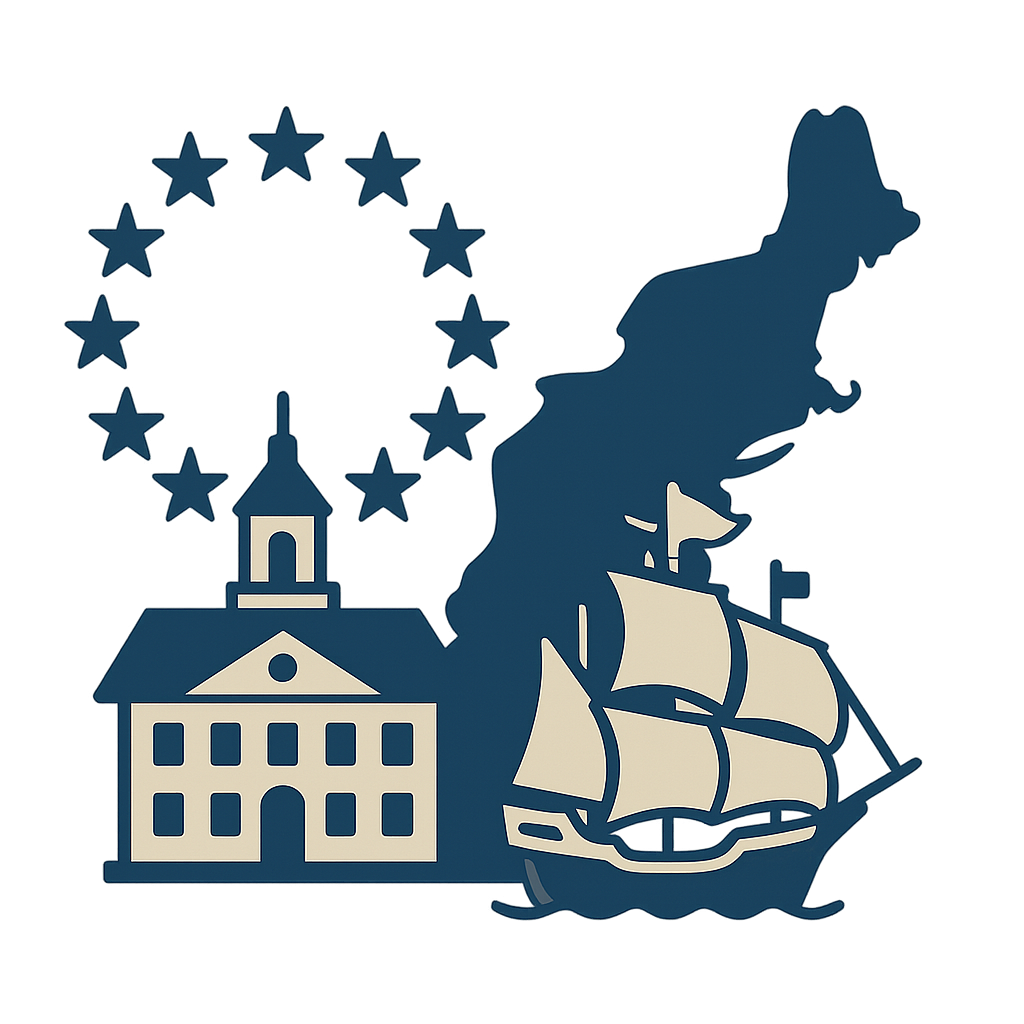
I begin as a whisper across a great ocean, a dream of new beginnings. Imagine a long stretch of coastline, wild and green, where ancient forests met the sea. Before I had a name, I was just land, home to many Indigenous peoples for thousands of years. Then, ships with tall sails began to arrive from England, carrying people with hopes as big as the sky. They built small, rugged settlements, like Jamestown in Virginia, founded on May 14th, 1607, and Plymouth in Massachusetts, where the Pilgrims landed in 1620. They were looking for religious freedom, for riches, for a chance to build something entirely their own. At first, I was not one place, but many, a scattered and sometimes struggling family of settlements, each with its own distinct personality. All of them, however, were subjects of a king an ocean away. I am the Thirteen Colonies.
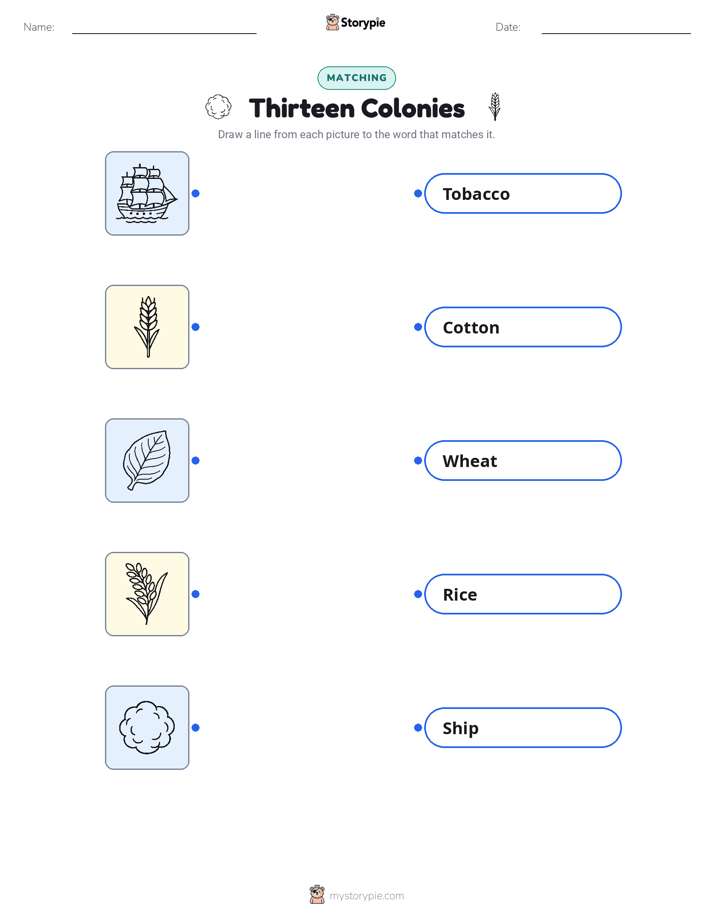
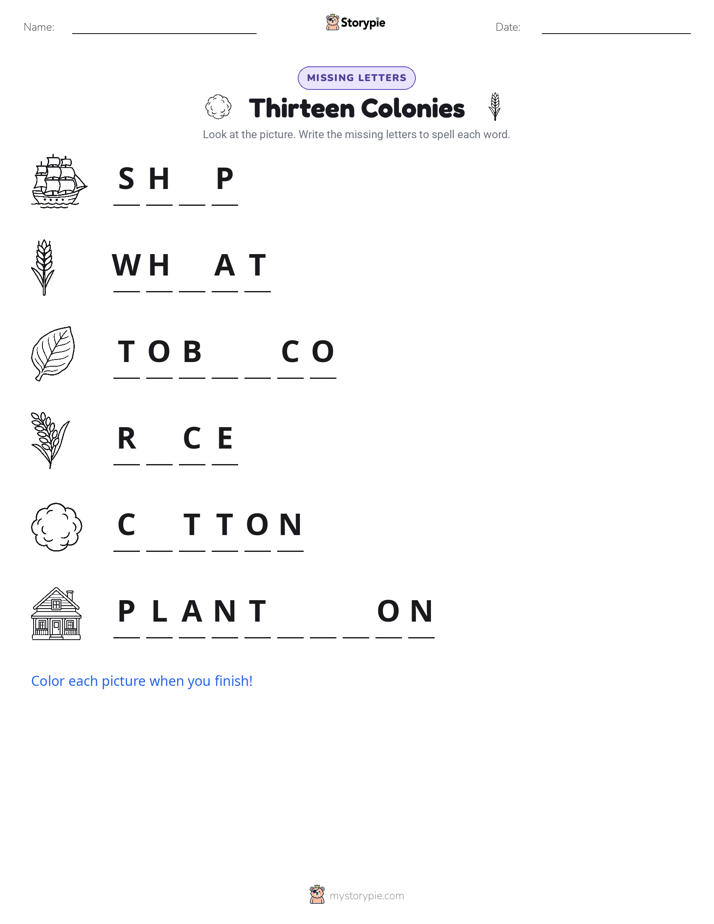
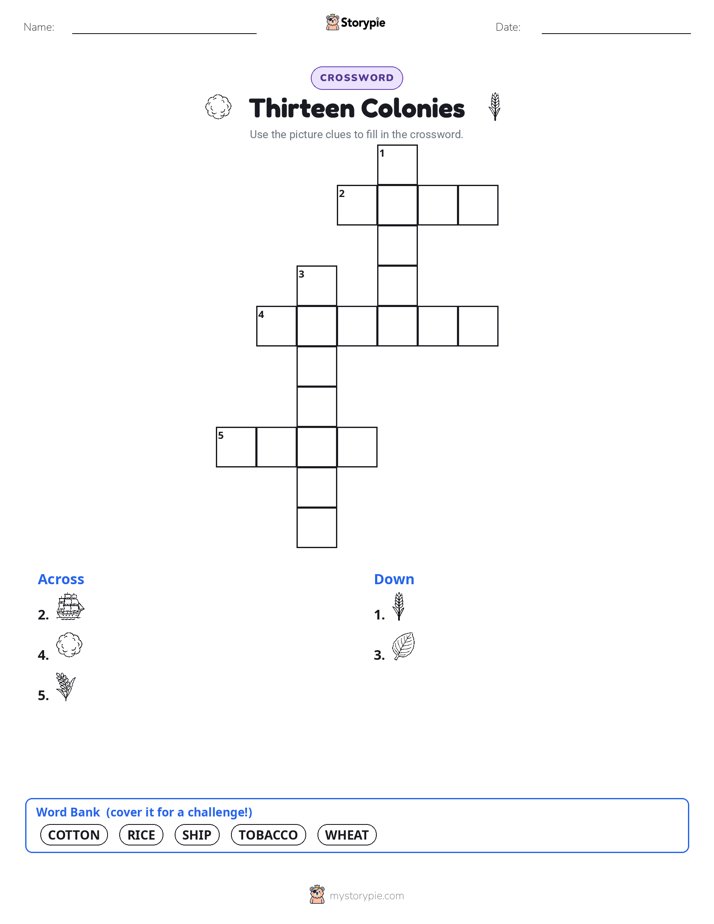
For over a century and a half, I grew and changed in remarkable ways. My family of colonies was diverse and could be seen in three groups. In the North, the New England Colonies—like Massachusetts and Connecticut—were largely built by people seeking to practice their religion freely. They faced rocky soil, which made large-scale farming difficult, so they turned to the sea and the forests, becoming experts at fishing, shipbuilding, and trade. In my center were the Middle Colonies, including New York and Pennsylvania. Here, I was a true melting pot, with people from many different European countries and religions learning to live together. They called me the 'breadbasket' of the colonies because my fertile farms grew so much wheat and grain that we could feed ourselves and export the rest. Down South, in colonies like Virginia, the Carolinas, and Georgia, the warm climate and rich soil were perfect for growing valuable cash crops like tobacco, rice, and cotton on large farms called plantations. Though each part of me was different, we were all connected by our shared English language and laws, and by the steady flow of trade between us and back to Great Britain. We were growing up, developing our own way of doing things, and forming a unique character far from the watchful eyes of the Crown.
The Story of the Thirteen Colonies
I begin as a whisper across a great ocean, a dream of new beginnings. Imagine a long stretch of coastline, wild and green, where ancient forests met the sea. Before I had a name, I was just land, home to many Indigenous peoples for thousands of years. Then, ships with tall sails began to arrive from England, carrying people with hopes as big as the sky. They built small, rugged settlements, like Jamestown in Virginia, founded on May 14th, 1607, and Plymouth in Massachusetts, where the Pilgrims landed in 1620. They were looking for religious freedom, for riches, for a chance to build something entirely their own. At first, I was not one place, but many, a scattered and sometimes struggling family of settlements, each with its own distinct personality. All of them, however, were subjects of a king an ocean away. I am the Thirteen Colonies.
For over a century and a half, I grew and changed in remarkable ways. My family of colonies was diverse and could be seen in three groups. In the North, the New England Colonies—like Massachusetts and Connecticut—were largely built by people seeking to practice their religion freely. They faced rocky soil, which made large-scale farming difficult, so they turned to the sea and the forests, becoming experts at fishing, shipbuilding, and trade. In my center were the Middle Colonies, including New York and Pennsylvania. Here, I was a true melting pot, with people from many different European countries and religions learning to live together. They called me the 'breadbasket' of the colonies because my fertile farms grew so much wheat and grain that we could feed ourselves and export the rest. Down South, in colonies like Virginia, the Carolinas, and Georgia, the warm climate and rich soil were perfect for growing valuable cash crops like tobacco, rice, and cotton on large farms called plantations. Though each part of me was different, we were all connected by our shared English language and laws, and by the steady flow of trade between us and back to Great Britain. We were growing up, developing our own way of doing things, and forming a unique character far from the watchful eyes of the Crown.
As I entered the mid-1700s, I started to feel a deep and unfamiliar restlessness. My small towns had grown into bustling cities like Philadelphia, Boston, and New York. People like the inventor and statesman Benjamin Franklin were thinking in new ways, questioning old ideas and imagining a different future. My people had fought bravely alongside British soldiers in a major conflict called the French and Indian War, which finally ended in 1763. But after the war, everything changed. The British government, led by King George III, was deep in debt from the long and expensive war and decided that I needed to help pay for it. Parliament began to pass laws that affected the daily lives of my colonists. The Stamp Act of 1765 put a tax on all paper goods, from legal documents to playing cards. Then came the Townshend Acts of 1767, which taxed imported goods like tea, glass, and paint. To the people living within me, this felt profoundly unfair. They had no say in these laws, no elected representatives in the British Parliament to speak for them. A simple but powerful phrase began to echo through my streets and taverns: 'No taxation without representation.' It was more than a complaint; it was a revolutionary idea, the seed of a great and unstoppable change.
The restlessness soon grew into open defiance. In the winter of 1773, a group of colonists in Boston, disguised as Mohawk Indians, boarded three British ships and dumped an entire shipment of tea into the dark harbor. The event became known as the Boston Tea Party, and it was a bold act of protest against the tax on tea. King George III and Parliament were furious. They responded by passing even harsher laws, which the colonists called the Intolerable Acts, to punish Massachusetts and bring it to heel. But instead of crushing my spirit, these actions brought my separate colonies closer together. They realized that a threat to one of them was a threat to all of them. In 1774, leaders from twelve of my colonies gathered in Philadelphia for the First Continental Congress to decide on a unified response. The air crackled with tension, and in April of 1775, the first shots of a long and difficult conflict were fired at Lexington and Concord. I was no longer just a collection of colonies; I was on the path to becoming something entirely new. The final, irreversible step came on July 4th, 1776, when my leaders signed the Declaration of Independence. On that day, I ceased to be the Thirteen Colonies of Great Britain and was reborn as the United States of America, a new nation built on the radical idea that people have the right to govern themselves.
My time as the Thirteen Colonies may have ended on that historic day, but my story is the foundation of a country. The struggles for fairness, the passionate debates about the meaning of freedom, and the sheer courage it took to create a new form of government still inspire people around the world today. The ideas that grew within me—that people should have a voice in their own laws and that all individuals possess certain unalienable rights, including liberty—are as powerful now as they were then. My story reminds everyone that even when you start as a small, scattered collection of hopeful settlements on the edge of a wilderness, you can grow into something strong, united, and capable of changing the world.
Wow facts
About
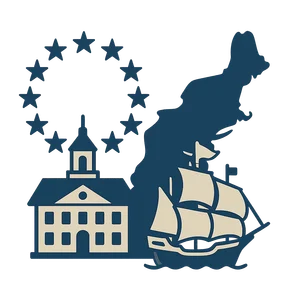
The Thirteen Colonies were a group of British colonies on the Atlantic coast of North America, founded in the 17th and 18th centuries that declared independence in 1776 and formed the United States of America.
Take a Quiz
Question 1 of 5
What was the main problem that led the colonists to declare independence from Great Britain?
Explore next



Want to do even more?
Go beyond exploring. Unlock tools that turn every story into real learning.

Storypie Plus for families
Full stories, quizzes, and printables. Nights and car rides, sorted.
- Unlimited audio stories
- Create Mode: your child stars in the story
- Offline downloads
- Printable worksheets & coloring pages

Why Storypie for Schools
Students engaged. Prep in seconds. Evenings back to you.
- Worksheets & Quizzes
- Classroom Management
- Formative Assessment
- Custom Curriculum & Lesson Plans
- 27 Languages

Why Storypie for Homeschool
Curriculum done. They'll ask for more. Hours back in your day.
- Worksheet Generator
- First-Person Audio Stories
- Built-in Comprehension Quizzes
- Custom Curriculum & Lesson Plans
- Print & Go Activities