English

Time Zones
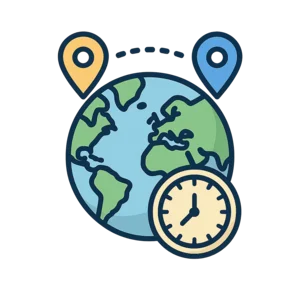
Time zones are a global system that divides the world into 24 regions, each with a standardized time…
Reads at Grades 6–8 Listens at Grades 4–8
 Screen-free speaker. Built for your kids.
No card, no commitment. One email when there is real news, and one click to stop.
Print & create
Answer keys·No prep·Free with an account
28 worksheets · answer keys · full story · quiz · Ages 10-12 · CEFR B2
Plus adds 102,000+ more stories in 27 languages, audio for every one, and printables for all of them.
Just want Time Zones?
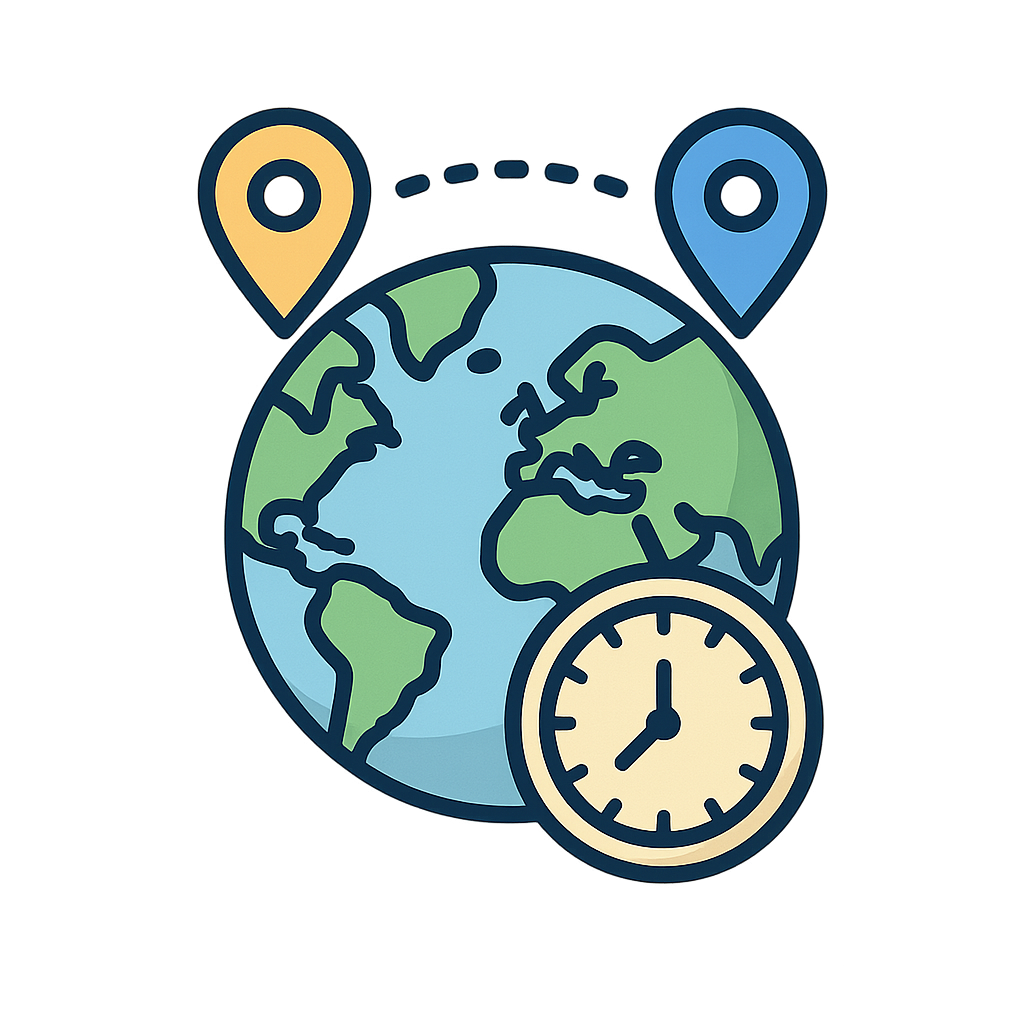
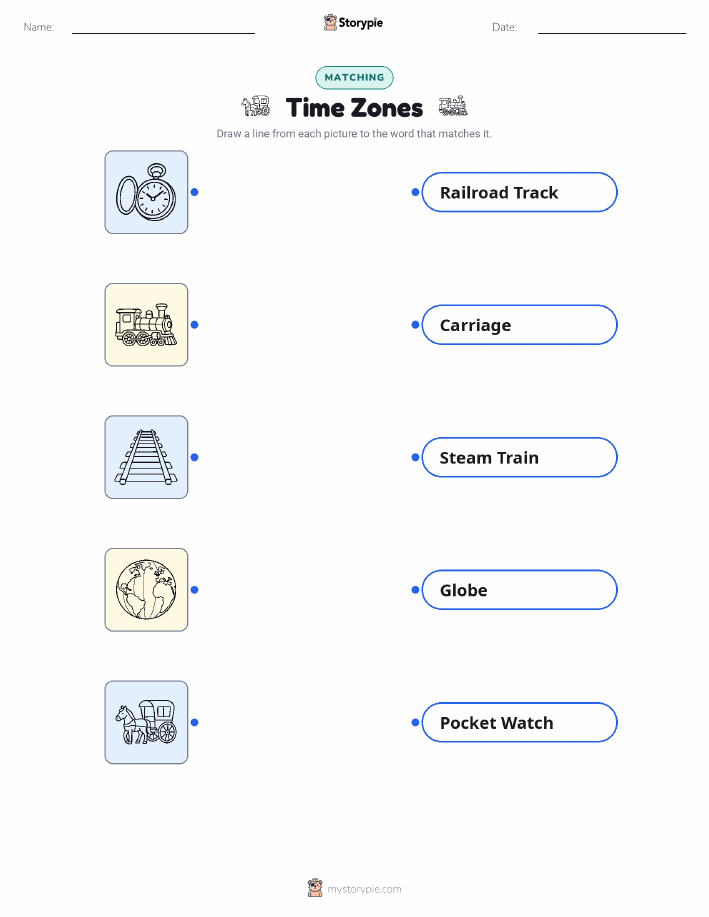
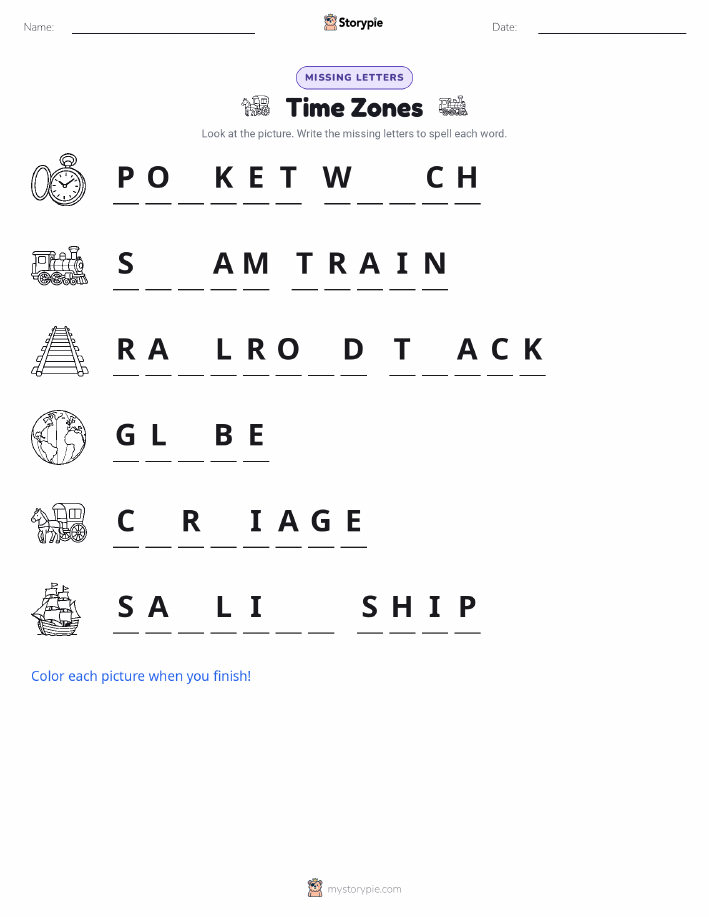
Have you ever tried to call a friend who lives across the ocean, only to wake them from a deep sleep while you were eating your lunch? It can feel like you live on two different planets, but you just live in two different moments. Before I existed, this wasn't a problem. In fact, for most of human history, every single town and village lived in its own little bubble of time. When the sun was highest in the sky, the town clock struck twelve, signaling noon. This was called 'local time' or 'sun time'. A town just a few miles to the east would have its noon a few minutes earlier, and a town to the west would have its noon a few minutes later. This simple system worked beautifully. After all, when the fastest you could travel was by horse or by ship, who would notice a few minutes' difference? Life was slower, and the world felt enormous. Each community was a self-contained world, marching to the rhythm of its own sunrise and sunset. This was a time of simple, disconnected clocks, a patchwork of moments spread across the globe. But a new age of speed and steam was about to arrive, and it would throw this peaceful patchwork into complete and utter chaos.
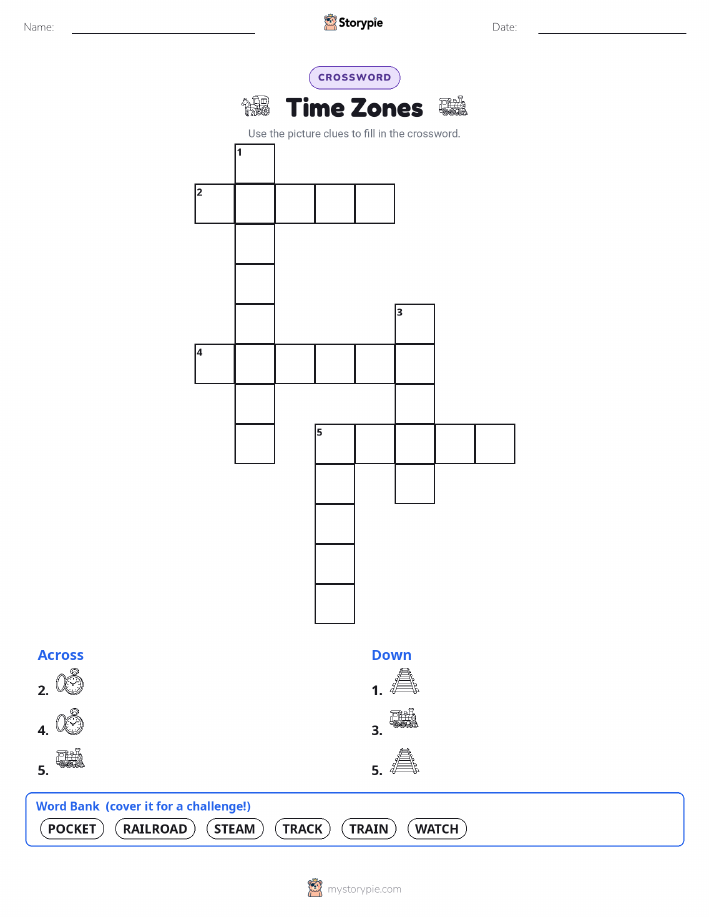
Everything changed with the invention of the railroad. Suddenly, people could travel faster than the sun itself. A train journey that once took days could now be completed in a matter of hours, crossing dozens of those little 'sun time' bubbles along the way. Imagine the pandemonium. A train might leave a station at 10:00 a.m. local time, travel for an hour, and arrive at the next station where the local time was only 10:15 a.m. Scheduling was a nightmare. Conductors juggled watches set to different towns, and timetables were a confusing mess of arrivals and departures that seemed to defy logic. It wasn't just confusing; it was dangerous, leading to near misses and accidents on the tracks. The world needed a new system, a universal clock. The man who would solve this puzzle was a Scottish-born Canadian engineer named Sir Sandford Fleming. His moment of inspiration came from personal frustration. In 1876, he missed a train in Ireland because the schedule listed '5:35 p.m.' when it should have said '5:35 a.m.' Annoyed but inspired, Fleming proposed a radical idea: a standard, worldwide, 24-hour clock. His idea gained momentum, and in 1884, leaders from 25 nations gathered for the International Meridian Conference in Washington, D.C. There, they agreed to establish a single Prime Meridian in Greenwich, England, as the starting point for all global time. From that line, they divided the Earth into 24 slices, like an orange, and a new, orderly system was born from the chaos.
The World's Invisible Clock
Have you ever tried to call a friend who lives across the ocean, only to wake them from a deep sleep while you were eating your lunch? It can feel like you live on two different planets, but you just live in two different moments. Before I existed, this wasn't a problem. In fact, for most of human history, every single town and village lived in its own little bubble of time. When the sun was highest in the sky, the town clock struck twelve, signaling noon. This was called 'local time' or 'sun time'. A town just a few miles to the east would have its noon a few minutes earlier, and a town to the west would have its noon a few minutes later. This simple system worked beautifully. After all, when the fastest you could travel was by horse or by ship, who would notice a few minutes' difference? Life was slower, and the world felt enormous. Each community was a self-contained world, marching to the rhythm of its own sunrise and sunset. This was a time of simple, disconnected clocks, a patchwork of moments spread across the globe. But a new age of speed and steam was about to arrive, and it would throw this peaceful patchwork into complete and utter chaos.
Everything changed with the invention of the railroad. Suddenly, people could travel faster than the sun itself. A train journey that once took days could now be completed in a matter of hours, crossing dozens of those little 'sun time' bubbles along the way. Imagine the pandemonium. A train might leave a station at 10:00 a.m. local time, travel for an hour, and arrive at the next station where the local time was only 10:15 a.m. Scheduling was a nightmare. Conductors juggled watches set to different towns, and timetables were a confusing mess of arrivals and departures that seemed to defy logic. It wasn't just confusing; it was dangerous, leading to near misses and accidents on the tracks. The world needed a new system, a universal clock. The man who would solve this puzzle was a Scottish-born Canadian engineer named Sir Sandford Fleming. His moment of inspiration came from personal frustration. In 1876, he missed a train in Ireland because the schedule listed '5:35 p.m.' when it should have said '5:35 a.m.' Annoyed but inspired, Fleming proposed a radical idea: a standard, worldwide, 24-hour clock. His idea gained momentum, and in 1884, leaders from 25 nations gathered for the International Meridian Conference in Washington, D.C. There, they agreed to establish a single Prime Meridian in Greenwich, England, as the starting point for all global time. From that line, they divided the Earth into 24 slices, like an orange, and a new, orderly system was born from the chaos.
And so, I was born. I am Time Zones, the invisible grid that wraps around your planet, organizing the day into a predictable, coordinated flow. You may not see me, but my work is crucial in your modern world. I am the reason a pilot flying from Tokyo to Los Angeles knows exactly when to land. I am the reason businesses in London can schedule a video conference with their partners in Sydney. When you play an online game with friends from different countries, I am the one synchronizing your digital world. Even space missions rely on me, using a coordinated universal time to talk to astronauts and guide probes to distant planets. I help connect people and cultures, not separate them. While I may say it's nighttime for you and daytime for someone else, I am a constant reminder that we all share the same twenty-four hours. We are all living on the same spinning globe, simply experiencing our shared day at different, beautifully organized moments.
Wow facts
About
Time zones are a global system that divides the world into 24 regions, each with a standardized time, to help coordinate activities and travel across different longitudes.
Take a Quiz
Question 1 of 5
What major problem did the invention of the railroad create for telling time, and how did Sandford Fleming's idea solve it?
Explore next






Want to do even more?
Go beyond exploring. Unlock tools that turn every story into real learning.

Storypie Plus for families
Full stories, quizzes, and printables. Nights and car rides, sorted.
- Unlimited audio stories
- Create Mode: your child stars in the story
- Offline downloads
- Printable worksheets & coloring pages

Why Storypie for Schools
Students engaged. Prep in seconds. Evenings back to you.
- Worksheets & Quizzes
- Classroom Management
- Formative Assessment
- Custom Curriculum & Lesson Plans
- 27 Languages

Why Storypie for Homeschool
Curriculum done. They'll ask for more. Hours back in your day.
- Worksheet Generator
- First-Person Audio Stories
- Built-in Comprehension Quizzes
- Custom Curriculum & Lesson Plans
- Print & Go Activities