English


Zero
Zero is a number representing no quantity or a null value.
Reads at Grades 3–5 Listens at Grades 1–5
Print & create
Answer keys·No prep·Free with an account
28 worksheets · answer keys · full story · quiz · Ages 8-10 · CEFR B1
Plus adds 102,000+ more stories in 27 languages, audio for every one, and printables for all of them.
Just want Zero?

Can you picture the empty space in a treasure chest before it’s filled with sparkling jewels. Or think about the quiet moment right before a countdown begins for a rocket launch. What about the line on a thermometer that’s neither hot nor cold. I am all of those things. It might seem like I am just nothing, but I am actually one of the most powerful ideas anyone has ever had. I am the reason the number 10 is so different from the number 1, and why 100 is so much bigger than 10. Can you imagine trying to write the year you were born without me. It would be impossible. All the other numbers would get jumbled and confused if I wasn't around to hold their places. I am the hero of 'nothing' who makes everything else make perfect sense.
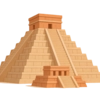
My story begins a very, very long time ago, before people even thought of me as a number. In a place called ancient Mesopotamia, around the 3rd century BCE, some very clever people called the Babylonians were amazing astronomers and mathematicians. They needed a way to show when a space was empty in one of their big, important numbers. So, they came up with a special sign, two little wedge marks, that they would tuck between other numbers. It was their way of saying, 'Hey, nothing goes in this column.' It was a placeholder. Far across the world, in Central America, the incredible Maya civilization also had a brilliant idea for me around 350 CE. They gave me a beautiful symbol that looked just like a shell. They used me in their very complicated calendars to help them keep track of the days and years. For both the Babylonians and the Maya, I was a very important symbol, a helpful placeholder, but I wasn't quite a number that you could add or subtract. My big moment was still to come.
The Incredible Story of Nothing
Can you picture the empty space in a treasure chest before it’s filled with sparkling jewels. Or think about the quiet moment right before a countdown begins for a rocket launch. What about the line on a thermometer that’s neither hot nor cold. I am all of those things. It might seem like I am just nothing, but I am actually one of the most powerful ideas anyone has ever had. I am the reason the number 10 is so different from the number 1, and why 100 is so much bigger than 10. Can you imagine trying to write the year you were born without me. It would be impossible. All the other numbers would get jumbled and confused if I wasn't around to hold their places. I am the hero of 'nothing' who makes everything else make perfect sense.
My story begins a very, very long time ago, before people even thought of me as a number. In a place called ancient Mesopotamia, around the 3rd century BCE, some very clever people called the Babylonians were amazing astronomers and mathematicians. They needed a way to show when a space was empty in one of their big, important numbers. So, they came up with a special sign, two little wedge marks, that they would tuck between other numbers. It was their way of saying, 'Hey, nothing goes in this column.' It was a placeholder. Far across the world, in Central America, the incredible Maya civilization also had a brilliant idea for me around 350 CE. They gave me a beautiful symbol that looked just like a shell. They used me in their very complicated calendars to help them keep track of the days and years. For both the Babylonians and the Maya, I was a very important symbol, a helpful placeholder, but I wasn't quite a number that you could add or subtract. My big moment was still to come.
My real adventure, my journey to becoming a true star, started in India around the 5th century CE. There, brilliant thinkers and mathematicians looked at me in a whole new way. They gave me a name, 'shunya,' which means 'emptiness,' and a brand-new look that you would recognize today: a simple dot, which later became a small circle. For the very first time, people saw me not just as a placeholder, but as a real number with my own special job. A super-smart astronomer and mathematician named Brahmagupta wrote a very important book around the year 628 CE. This book was like my superhero rulebook. He wrote down all my powers for everyone to see. He explained that if you add me to any number, that number stays the same. He also explained that if you multiply any number by me, you get me. I finally had my own identity and my own amazing powers.
Once I had my powers, I was ready to see the world. My idea traveled with traders on their camels and scholars with their books, journeying along the busy trade routes from India all the way to the Middle East. Around the 9th century CE, a famous Persian mathematician named Al-Khwarizmi thought I was fantastic. He used me to help invent a whole new kind of math called algebra. He called me by a new name, 'sifr,' which is where my English name comes from. I was a big hit. Later, in the year 1202, an Italian mathematician named Fibonacci brought me and my nine number friends—the Hindu-Arabic numerals—to Europe. At first, some people were a little scared of me because I was so new and different. But they soon realized how much I could help them with everything from building giant castles to counting coins at the market.
Today, I'm everywhere you look. I bet you've used me a dozen times already today. Look at a computer, a smartphone, or a video game. They all speak a secret language called binary code, and it's made of just two digits: me and my best friend, the number one. I am Zero. From starting a race with '3, 2, 1, GO.' to helping scientists calculate how to fly rockets into space, I am always there, playing a very important part. I show that even something that starts as 'nothing' can become one of the most important things in the entire world. I am proof that every empty space is just an opportunity for something amazing to begin.
Wow facts
About
Zero is a number representing no quantity or a null value. It serves as both a number in its own right and a crucial placeholder in place-value numeral systems.
Take a Quiz
Question 1 of 5
In the story, Zero says its name in India was 'shunya.' What does 'shunya' mean?
Explore next



Want to do even more?
Go beyond exploring. Unlock tools that turn every story into real learning.

Storypie Plus for families
Full stories, quizzes, and printables. Nights and car rides, sorted.
- Unlimited audio stories
- Create Mode: your child stars in the story
- Offline downloads
- Printable worksheets & coloring pages

Why Storypie for Schools
Students engaged. Prep in seconds. Evenings back to you.
- Worksheets & Quizzes
- Classroom Management
- Formative Assessment
- Custom Curriculum & Lesson Plans
- 27 Languages

Why Storypie for Homeschool
Curriculum done. They'll ask for more. Hours back in your day.
- Worksheet Generator
- First-Person Audio Stories
- Built-in Comprehension Quizzes
- Custom Curriculum & Lesson Plans
- Print & Go Activities