English

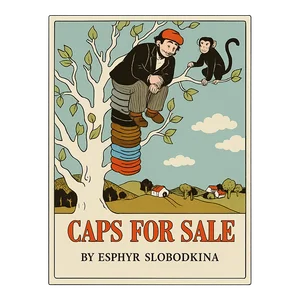
Caps for Sale (book)
A classic 1940 children's book written and illustrated by Esphyr Slobodkina…
Reads at Grades 3–5 Listens at Grades 1–5
Print & create
Answer keys·No prep·Free with an account
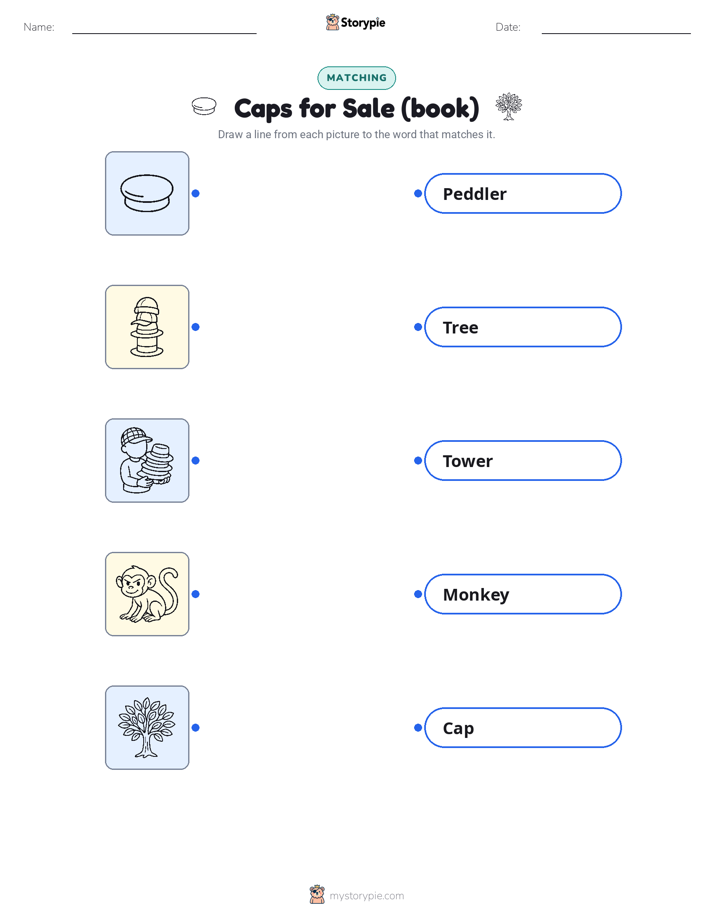
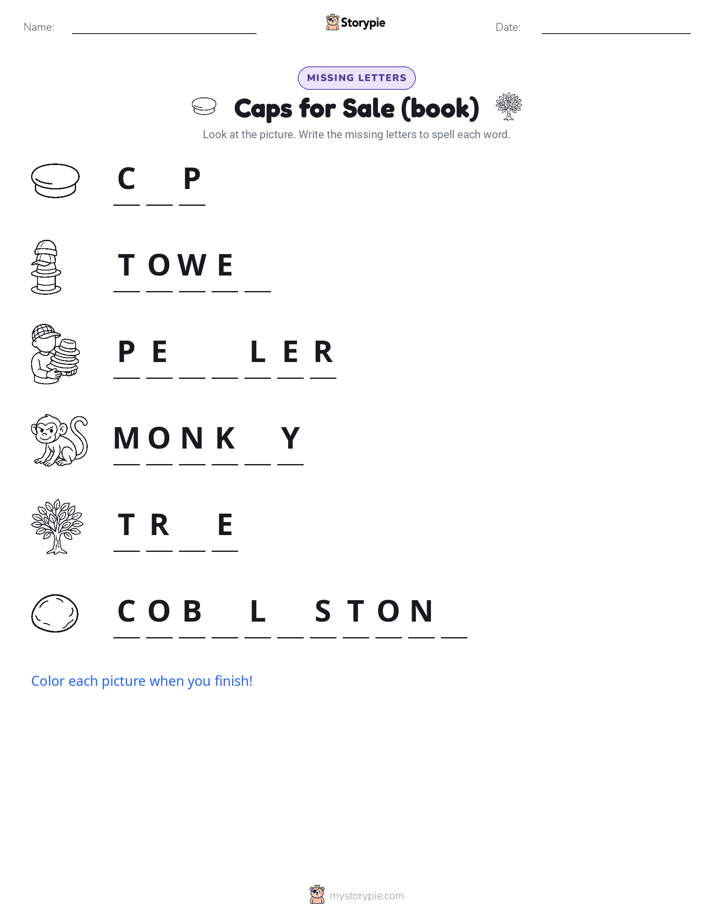
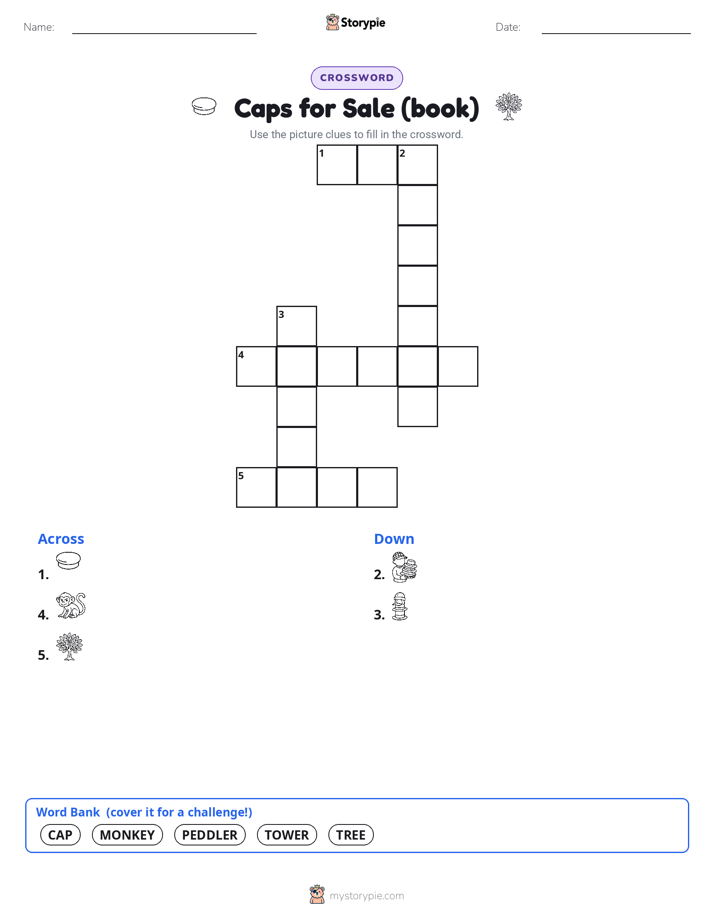
28 worksheets · answer keys · full story · quiz · Ages 8-10 · CEFR B1
Plus adds 279,000+ more stories in 27 languages, audio for every one, and printables for all of them.
Just want Caps for Sale (book)?
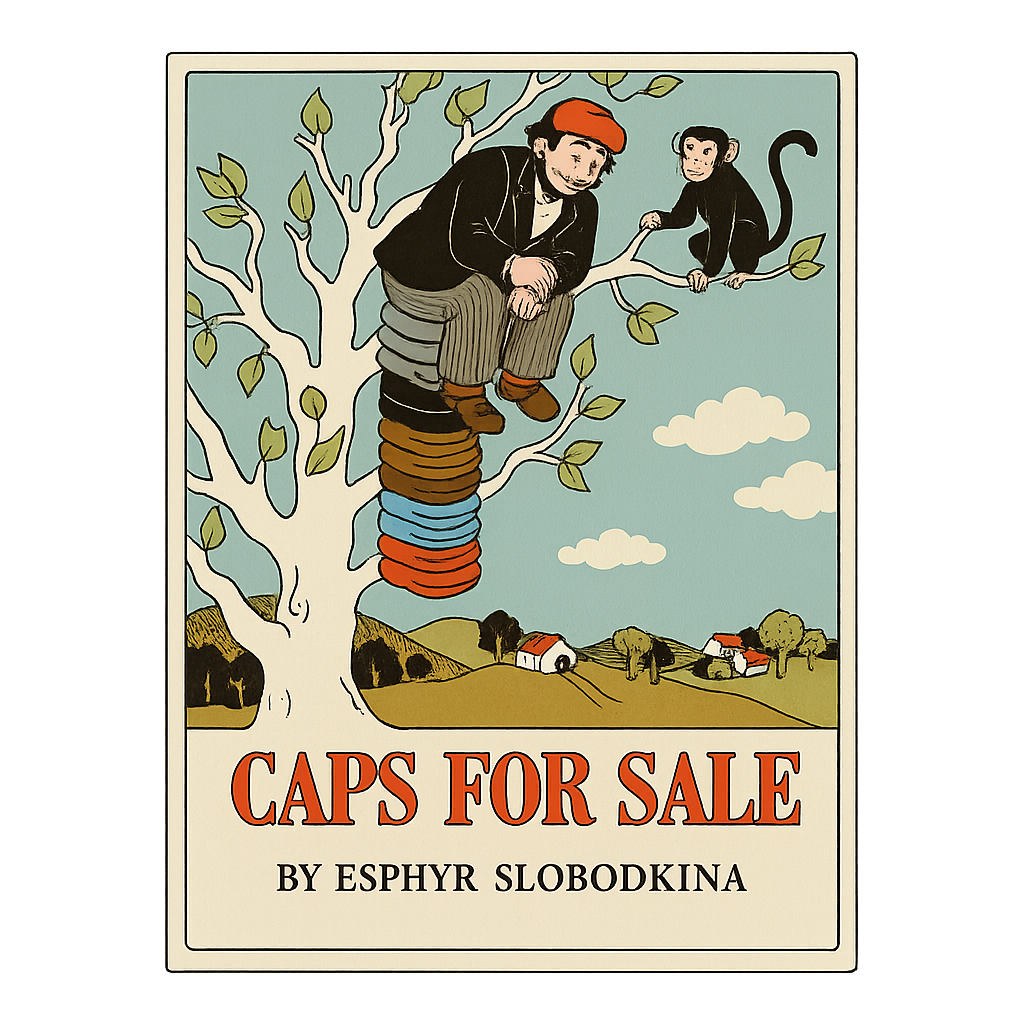
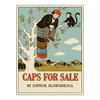
Before you know my name, you see my pictures. I am a stack of pages, filled with simple, bright colors and a very funny story. Inside me, a man with a magnificent mustache walks up and down streets, balancing a tall, wobbly tower of gray, brown, blue, and red caps on his head. He has his own checked cap, too. He calls out, 'Caps. Caps for sale. Fifty cents a cap.' But one day, his journey takes him into the country, where he feels very sleepy. He sits down under a big tree, checks that all the caps are straight on his head, and takes a long nap. That nap leads to the most mischievous adventure you can imagine. Can you guess who I am? I am the book called 'Caps for Sale,' and my story was brought to life by an artist named Esphyr Slobodkina, who first published me for children to read on September 1st, 1940.
My creator, Esphyr, wasn't just a writer; she was a painter and an artist who loved bold shapes and bright colors. She was born far away in a place called Siberia on December 22nd, 1908, and she moved to America in 1928 to create all kinds of art. When she decided to tell my story, she didn't use fussy, detailed drawings with lots of shadows and lines. Instead, she used a style called modern art. Can you imagine making pictures by cutting and pasting shapes? That’s what she did. She used simple, colorful paper to create my illustrations in a technique called collage. The peddler is a collection of friendly shapes, the tree is strong and green, and the monkeys… oh, the monkeys are full of playful energy. The story itself was an old folktale she remembered hearing, but her unique artwork made it feel brand new and exciting for everyone who turned my pages.
The Story of Caps for Sale
Before you know my name, you see my pictures. I am a stack of pages, filled with simple, bright colors and a very funny story. Inside me, a man with a magnificent mustache walks up and down streets, balancing a tall, wobbly tower of gray, brown, blue, and red caps on his head. He has his own checked cap, too. He calls out, 'Caps. Caps for sale. Fifty cents a cap.' But one day, his journey takes him into the country, where he feels very sleepy. He sits down under a big tree, checks that all the caps are straight on his head, and takes a long nap. That nap leads to the most mischievous adventure you can imagine. Can you guess who I am? I am the book called 'Caps for Sale,' and my story was brought to life by an artist named Esphyr Slobodkina, who first published me for children to read on September 1st, 1940.
My creator, Esphyr, wasn't just a writer; she was a painter and an artist who loved bold shapes and bright colors. She was born far away in a place called Siberia on December 22nd, 1908, and she moved to America in 1928 to create all kinds of art. When she decided to tell my story, she didn't use fussy, detailed drawings with lots of shadows and lines. Instead, she used a style called modern art. Can you imagine making pictures by cutting and pasting shapes? That’s what she did. She used simple, colorful paper to create my illustrations in a technique called collage. The peddler is a collection of friendly shapes, the tree is strong and green, and the monkeys… oh, the monkeys are full of playful energy. The story itself was an old folktale she remembered hearing, but her unique artwork made it feel brand new and exciting for everyone who turned my pages.
When I was first published in 1940, children opened my covers and discovered the peddler's silly problem. After his long and restful nap, he reaches up to check his stack of caps, but all he feels is his own checked cap. They are gone. He looks to the right of him, no caps. He looks to the left of him, no caps. He looks behind the tree, no caps. Then he looks up into the tree, and what does he see? A tree full of monkeys, and every single monkey is wearing a gray, brown, blue, or red cap. He shakes his finger at them and shouts, 'You monkeys, you. You give me back my caps.' But the monkeys just shake their fingers back at him and say, 'Tsz, tsz, tsz.' He stomps his foot, and they stomp their little feet back. This part of my story made children giggle and join in. Parents and teachers loved reading me aloud, and soon, classrooms everywhere echoed with children shouting along with the peddler.
My simple tale of the frustrated peddler and the copycat monkeys became what people call a 'classic'. In 1958, I received a special honor called the Lewis Carroll Shelf Award. This meant I was considered a timeless story, worthy of sitting on a bookshelf next to famous books like 'Alice in Wonderland.' For over 80 years, I have helped children learn about colors, counting, and patterns. But more importantly, I show them a funny truth: sometimes, when you are very frustrated, the solution comes in an unexpected way. The peddler tries everything to get the monkeys to listen, but they just copy him. Finally, he gets so angry that he pulls his own cap off his head, throws it on the ground, and begins to walk away. And what do you think those monkeys do? They all throw their caps down on the ground, too. It's a silly solution to a silly problem.
Today, my pages are still turning in libraries, schools, and cozy bedrooms all around the world. I may be made of paper and ink, but I am also made of laughter, surprise, and the fun of a shared story. I am a reminder that a little bit of silliness can solve a big problem and that even anger can sometimes lead to an unexpected answer. Every time a child sees a monkey or a stack of colorful hats, I hope they remember the peddler's tale and smile. That smile is what keeps my story alive, connecting children and grown-ups for many more years to come.
Wow facts
About
A classic 1940 children's book written and illustrated by Esphyr Slobodkina, telling the story of a cap peddler whose wares are stolen by mischievous monkeys.
Take a Quiz
Question 1 of 5
In the story, I say I received an award that meant I was considered a 'timeless story.' What does the phrase 'timeless story' most likely mean?
Explore next





Want to do even more?
Go beyond exploring. Unlock tools that turn every story into real learning.

Storypie Plus for families
Full stories, quizzes, and printables. Nights and car rides, sorted.
- Unlimited audio stories
- Create Mode: your child stars in the story
- Offline downloads
- Printable worksheets & coloring pages

Why Storypie for Schools
Students engaged. Prep in seconds. Evenings back to you.
- Worksheets & Quizzes
- Classroom Management
- Formative Assessment
- Custom Curriculum & Lesson Plans
- 27 Languages

Why Storypie for Homeschool
Curriculum done. They'll ask for more. Hours back in your day.
- Worksheet Generator
- First-Person Audio Stories
- Built-in Comprehension Quizzes
- Custom Curriculum & Lesson Plans
- Print & Go Activities