English

Casey at the Bat (poem)
An iconic 1888 American poem by Ernest Lawrence Thayer about a fateful baseball game…
Reads at Grades 6–8 Listens at Grades 4–8
Print & create
Answer keys·No prep·Free with an account
28 worksheets · answer keys · full story · quiz · Ages 10-12 · CEFR B2
Plus adds 279,000+ more stories in 27 languages, audio for every one, and printables for all of them.
Just want Casey at the Bat (poem)?
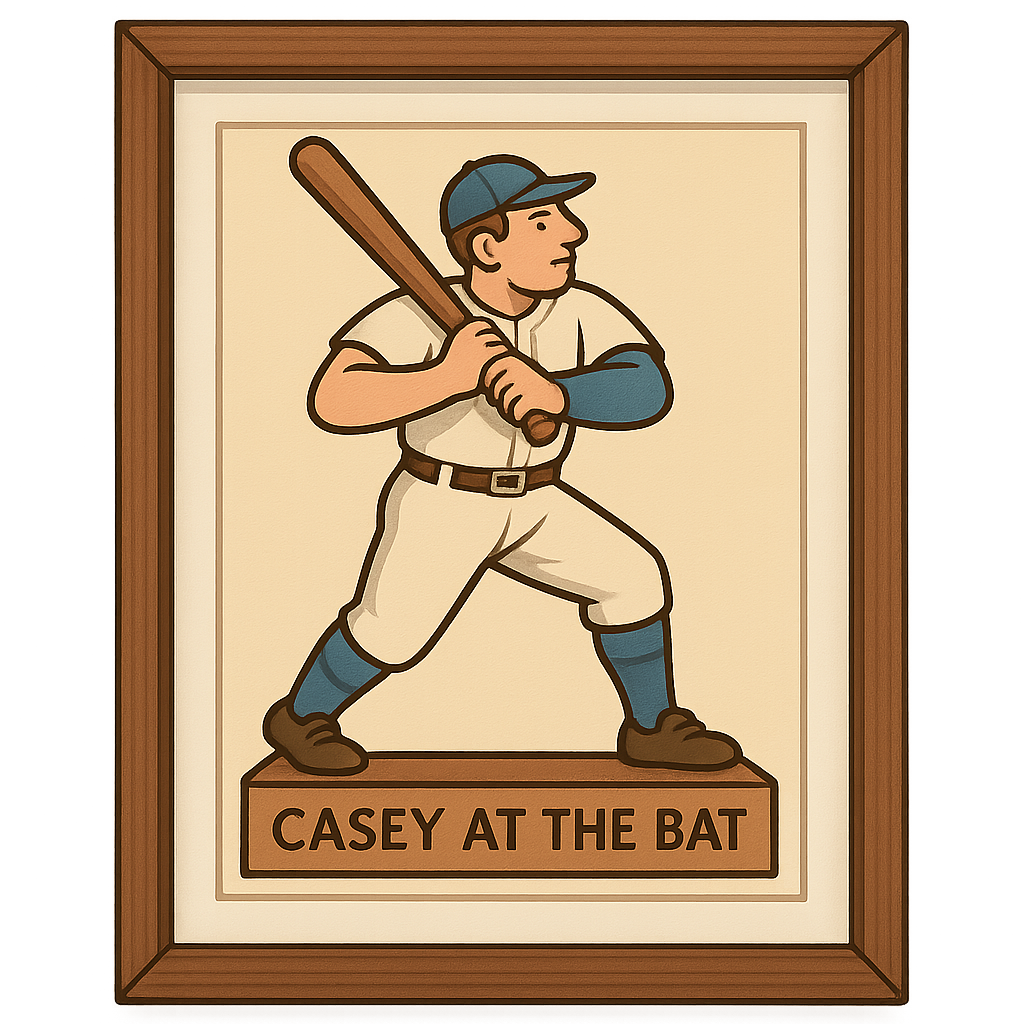
The air is thick with dust and the scent of cut grass. A roar swells from thousands of throats, a wave of sound that you can feel in your chest. It’s the bottom of the ninth inning, the last chance for the home team, and the hope of an entire town rests on the shoulders of one man walking toward the plate. The crowd chants his name, their voices a single, desperate plea for a miracle. Everything—the game, the pride of the town, the very joy of the afternoon—hangs in the balance. The pitcher winds up, the ball is a white blur, and a story is about to be written in a single swing. I am that story, that feeling of breathless anticipation caught in words. I am the poem, Casey at the Bat.
I was born from the mind of a clever man named Ernest Lawrence Thayer. He wasn't a world-famous poet, but he had a sharp wit and a love for words that he had polished at Harvard University. In the spring of 1888, he sat down and penned my thirteen verses for a newspaper he sometimes wrote for, The San Francisco Examiner. I wasn't meant to be some grand piece of literature; I was simply a bit of entertainment, a dramatic tale for the Sunday paper. On June 3rd, 1888, I made my debut in print. Mr. Thayer, a bit shy about his poetry, signed me with the simple pen name 'Phin.' There I was, tucked away in the pages of the paper, telling the story of a fictional, baseball-crazed town called Mudville. My hero was the town's star player, a confident slugger known only as 'the mighty Casey.' I described the crushing pressure of the final inning, the crowd's unwavering faith, and Casey's proud stance at the plate. For a little while, I was just words on a page, read by people in San Francisco and then mostly forgotten, like yesterday’s news.
Casey at the Bat: The Poem's Own Story
The air is thick with dust and the scent of cut grass. A roar swells from thousands of throats, a wave of sound that you can feel in your chest. It’s the bottom of the ninth inning, the last chance for the home team, and the hope of an entire town rests on the shoulders of one man walking toward the plate. The crowd chants his name, their voices a single, desperate plea for a miracle. Everything—the game, the pride of the town, the very joy of the afternoon—hangs in the balance. The pitcher winds up, the ball is a white blur, and a story is about to be written in a single swing. I am that story, that feeling of breathless anticipation caught in words. I am the poem, Casey at the Bat.
I was born from the mind of a clever man named Ernest Lawrence Thayer. He wasn't a world-famous poet, but he had a sharp wit and a love for words that he had polished at Harvard University. In the spring of 1888, he sat down and penned my thirteen verses for a newspaper he sometimes wrote for, The San Francisco Examiner. I wasn't meant to be some grand piece of literature; I was simply a bit of entertainment, a dramatic tale for the Sunday paper. On June 3rd, 1888, I made my debut in print. Mr. Thayer, a bit shy about his poetry, signed me with the simple pen name 'Phin.' There I was, tucked away in the pages of the paper, telling the story of a fictional, baseball-crazed town called Mudville. My hero was the town's star player, a confident slugger known only as 'the mighty Casey.' I described the crushing pressure of the final inning, the crowd's unwavering faith, and Casey's proud stance at the plate. For a little while, I was just words on a page, read by people in San Francisco and then mostly forgotten, like yesterday’s news.
My journey from a forgotten newspaper column to a national sensation was a stroke of luck, all thanks to a popular stage actor named DeWolf Hopper. He was looking for a new, exciting piece to perform, something with drama and a bit of humor. A friend showed him a newspaper clipping of me, and Mr. Hopper immediately saw my potential. He knew my story of high stakes and shocking failure would captivate an audience. My big night came on August 14th, 1888, at Wallack's Theatre in New York City. It was a special evening honoring the local baseball clubs, and in the audience were players from the New York Giants and the Chicago White Stockings. When DeWolf Hopper took the stage and began to recite my lines, the theater fell silent. He built the tension with his booming voice, acting out the hope of the crowd and the arrogance of Casey. When he reached my final, devastating line—'But there is no joy in Mudville—mighty Casey has struck out'—the audience erupted. They loved me. From that night on, I became his signature piece. He performed me for audiences all across America, it's said more than 10,000 times, making me one of the most famous poems in the country.
For over a century, I have lived on, far beyond the newspaper page or the theater stage. My story isn't just about a baseball game; it's a timeless lesson about pride, hope, and the humbling reality that even the strongest heroes can fail. I show that disappointment is a part of life, but the game itself—the effort, the shared excitement, the community—is what truly matters. My famous ending has become a part of the American language, a common way to talk about an unexpected defeat. I have been brought to life in new ways my creator never could have imagined. In 1946, the great Walt Disney turned my story into an animated cartoon, giving Casey a face and bringing the town of Mudville to life in vibrant color. I have inspired songs, sequels that imagine Casey getting his revenge, and countless recitations at school assemblies and family gatherings. I am a bridge between generations, a shared piece of culture that connects grandparents with their grandchildren through the simple, thrilling story of a hero who let his whole town down, but in doing so, became an unforgettable legend.
Wow facts
About
An iconic 1888 American poem by Ernest Lawrence Thayer about a fateful baseball game, capturing the drama and suspense of the sport and becoming a piece of classic Americana.
Take a Quiz
Question 1 of 5
In your own words, retell the poem's journey from its creation to becoming famous.
Explore next






Want to do even more?
Go beyond exploring. Unlock tools that turn every story into real learning.

Storypie Plus for families
Full stories, quizzes, and printables. Nights and car rides, sorted.
- Unlimited audio stories
- Create Mode: your child stars in the story
- Offline downloads
- Printable worksheets & coloring pages

Why Storypie for Schools
Students engaged. Prep in seconds. Evenings back to you.
- Worksheets & Quizzes
- Classroom Management
- Formative Assessment
- Custom Curriculum & Lesson Plans
- 27 Languages

Why Storypie for Homeschool
Curriculum done. They'll ask for more. Hours back in your day.
- Worksheet Generator
- First-Person Audio Stories
- Built-in Comprehension Quizzes
- Custom Curriculum & Lesson Plans
- Print & Go Activities