English

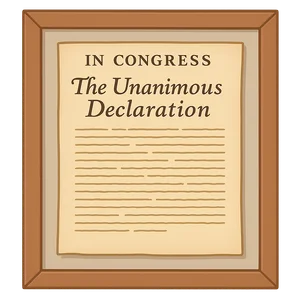
Declaration of Independence
The foundational document of the United States, adopted on July 4th, 1776…
Reads at Grades 6–8 Listens at Grades 4–8
The Declaration of Independence: My Story
Imagine a sweltering room in Philadelphia during the long, hot summer of 1776. The air is thick with worry, but also with a thrilling, dangerous idea. That’s where I began, not as ink on paper, but as a whisper of freedom passed between serious men in powdered wigs. I was the revolutionary thought that people could, and should, choose their own destiny, separate from a distant king. Before I was a famous document, I was a feeling of hope and resolve, an argument for liberty taking shape. A tall, quiet Virginian named Thomas Jefferson was tasked with putting this feeling into words. With a quill pen dipped in ink, he began to write, and I started to become something real. I am the Declaration of Independence, and my story began not with a battle, but with the radical idea that all people have the right to govern themselves. My purpose was to explain to the entire world why the thirteen American colonies felt they had no choice but to break away from the most powerful empire on Earth, Great Britain.
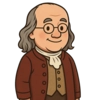
Thomas Jefferson was my main author, but he did not work alone. He was part of a group called the Committee of Five, which included the wise and witty Benjamin Franklin and the passionate John Adams. They debated every phrase, knowing the weight of their words. They wanted me to be more than just a list of complaints; they wanted me to be a statement of universal principles. That is why I begin with my most famous sentence: 'We hold these truths to be self-evident, that all men are created equal, that they are endowed by their Creator with certain unalienable Rights, that among these are Life, Liberty and the pursuit of Happiness.' These words were a bold challenge to the old European idea that some people were born to rule and others were born to be ruled. After stating this powerful idea, I continue with a long list of grievances, outlining all the ways the colonies felt King George III had wronged them, from imposing taxes without their consent to sending soldiers to live in their homes. After weeks of careful writing and intense debate in the Second Continental Congress, my final text was officially adopted on July 4th, 1776. This became my birthday, the day I was sent out to the world as the united voice of a new, free people.
Once my words were agreed upon, I wasn't yet the famous document you see today. First, I was printed and sent by horseback and ship to all the colonies and to the Continental Army. People gathered in town squares to hear me read aloud for the very first time. Church bells rang out and bonfires blazed in celebration. Finally, the time came to create the official, formal copy. A skilled scribe carefully wrote my words onto a large sheet of parchment. This is the version that the delegates would sign. The signing began on August 2nd, 1776. John Hancock, the president of the Congress, famously signed his name in large, bold letters so the king, he said, wouldn't need his spectacles to read it. Each of the fifty-six signatures that followed was an extraordinary act of courage. By signing their names, these men were publicly committing treason against the British Crown. If their revolution failed, they would face execution. Their signatures transformed me from a declaration of ideas into a pledge of their lives, their fortunes, and their sacred honor. I was no longer a secret whisper; I was a public shout for freedom, signed in defiance.
My journey did not end when the Revolutionary War was won. In many ways, it was just beginning. I became a promise, a standard for the new nation to strive for. The words 'all men are created equal' became a powerful tool for change. Throughout American history, people have looked to me for inspiration in their own struggles for freedom and equality. Abolitionists fighting to end slavery in the 19th century used my words to argue against the injustice of human bondage. Suffragists campaigning for women's right to vote pointed to my principles of self-government. During the 20th century, leaders of the Civil Rights Movement, like Dr. Martin Luther King Jr., quoted me in their speeches to demand that the nation live up to its founding ideals. Today, I am carefully preserved in a special, helium-filled case at the National Archives Museum in Washington, D.C. Millions of people from around the world come to see me each year. Though my ink has faded and the parchment is worn, my ideas shine as brightly as ever. I am a permanent reminder that words have the power to change the world, and that the pursuit of freedom is a story that belongs to everyone.
Wow facts
About
The foundational document of the United States, adopted on July 4th, 1776, which announced the separation of the thirteen American colonies from Great Britain and articulated the philosophical principles of human rights and self-governance.
Take a Quiz
Question 1 of 5
In your own words, summarize the journey of the Declaration of Independence from an idea to a signed document.
Explore next



Want to do even more?
Go beyond exploring. Unlock tools that turn every story into real learning.

Storypie Plus for families
Full stories, quizzes, and printables. Nights and car rides, sorted.
- Unlimited audio stories
- Create Mode: your child stars in the story
- Offline downloads
- Printable worksheets & coloring pages

Why Storypie for Schools
Students engaged. Prep in seconds. Evenings back to you.
- Worksheets & Quizzes
- Classroom Management
- Formative Assessment
- Custom Curriculum & Lesson Plans
- 27 Languages

Why Storypie for Homeschool
Curriculum done. They'll ask for more. Hours back in your day.
- Worksheet Generator
- First-Person Audio Stories
- Built-in Comprehension Quizzes
- Custom Curriculum & Lesson Plans
- Print & Go Activities