English

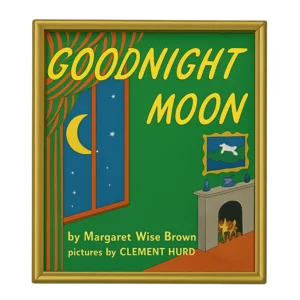
Goodnight Moon (book)
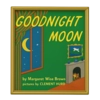
A classic American children's book by Margaret Wise Brown and Clement Hurd, celebrated for its soothing…
Reads at Grades 6–8 Listens at Grades 4–8
Print & create
Answer keys·No prep·Free with an account
28 worksheets · answer keys · full story · quiz · Ages 10-12 · CEFR B2
Plus adds 280,000+ more stories in 27 languages, audio for every one, and printables for all of them.
Just want Goodnight Moon (book)?
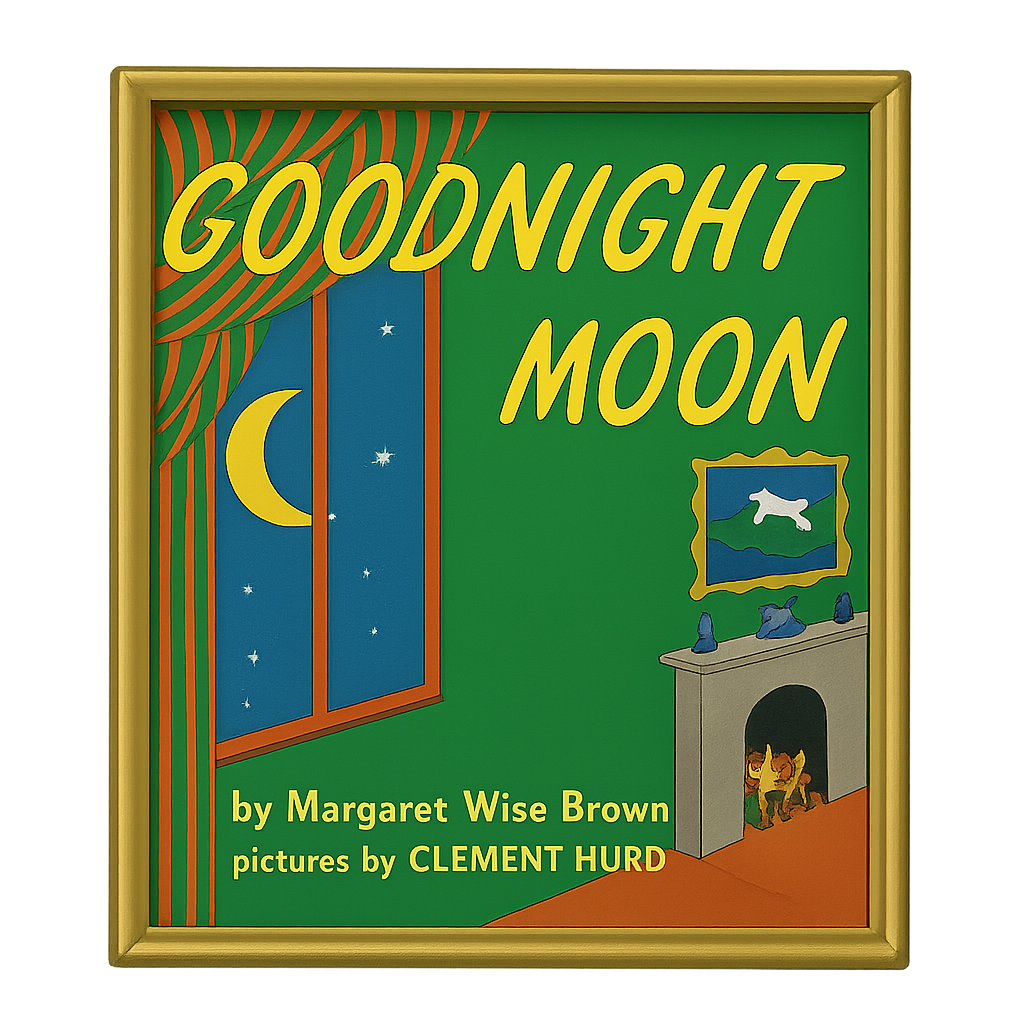
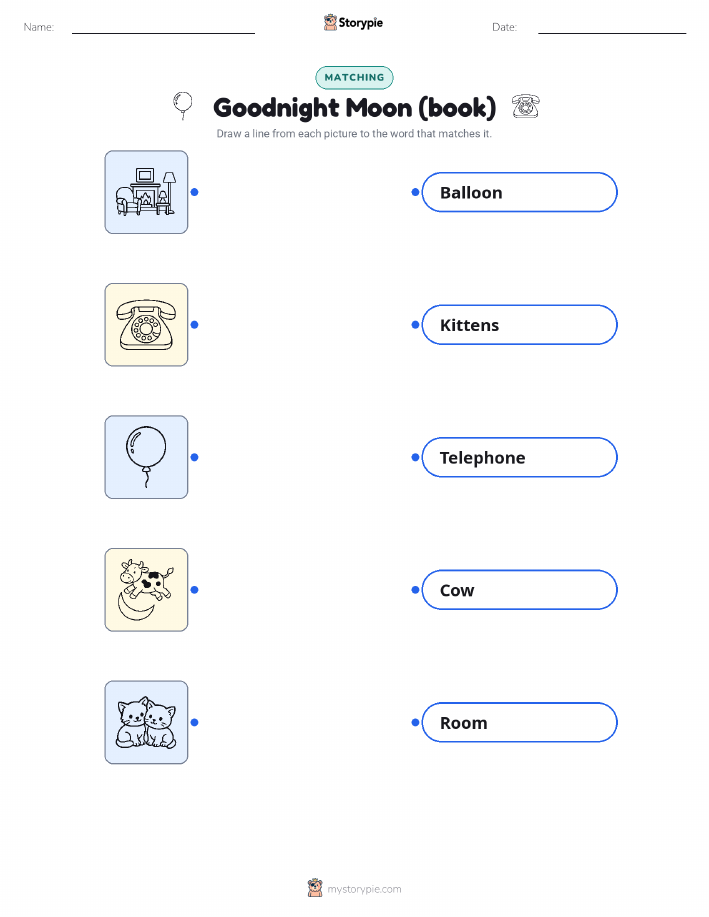
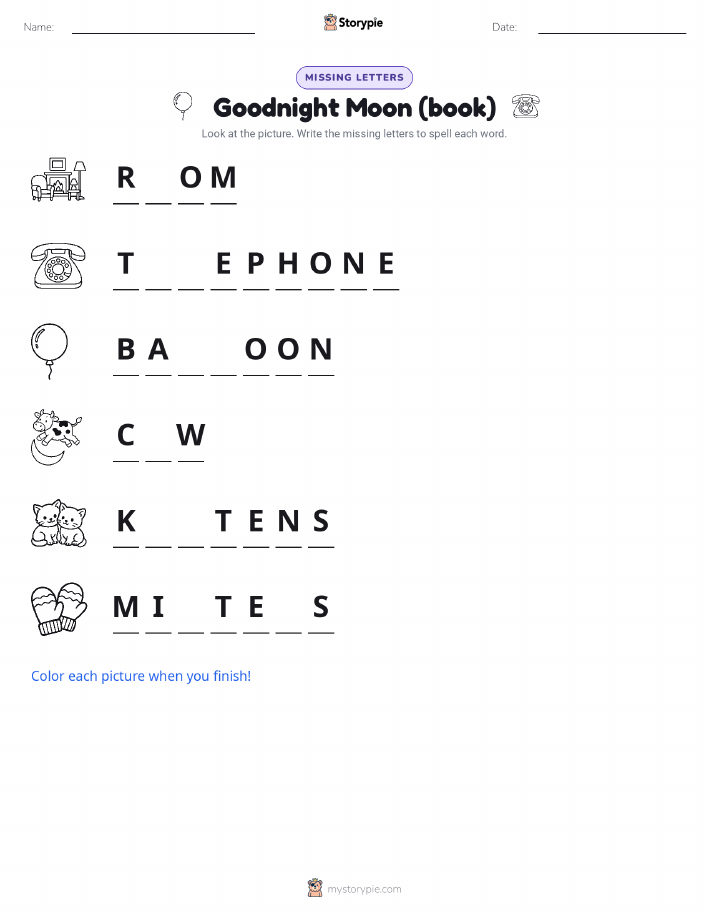
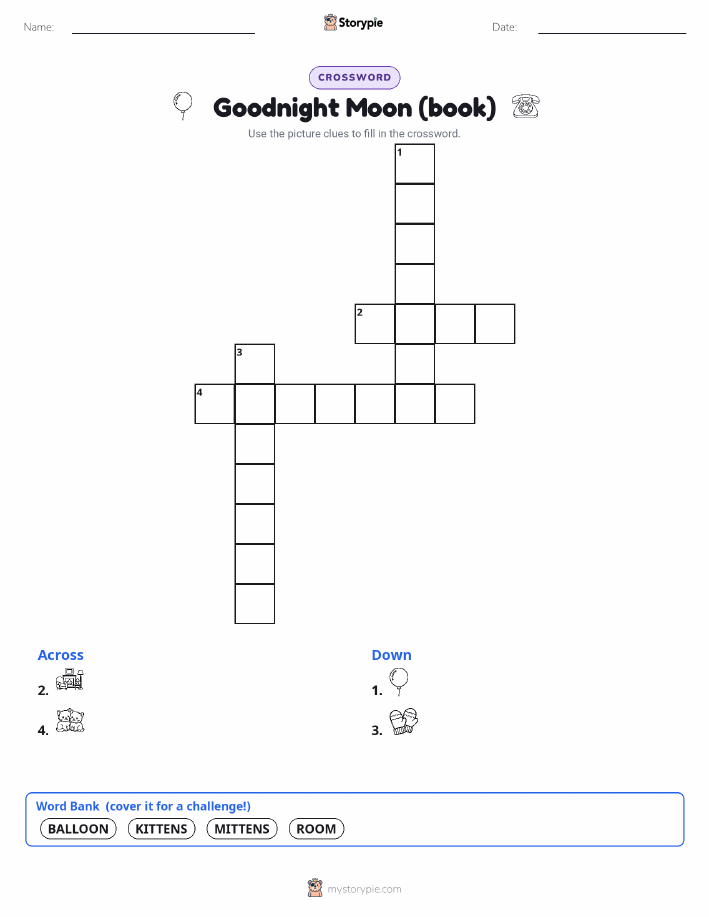
Imagine a world contained within a great green room. The walls are the color of fresh spring leaves, and the floor is a deep, rich red. In this room, there is a quiet magic. You can almost feel the gentle warmth from the two little lamps, hear the soft ticking of the clock, and see the sleepy fire crackling in the fireplace. There’s a telephone that never seems to ring and a picture on the wall of a cow jumping over the moon. It is a place of absolute tranquility, a sanctuary from the bustling world outside. My very pages breathe with this calm. With every turn, a familiar voice whispers a soothing rhythm, a gentle goodbye to each object. Goodnight to the red balloon, goodnight to the bears sitting on chairs. I am the vessel for this nightly ritual, a quiet companion in the twilight hour. I am a book, a collection of paper and ink and dreams. I am Goodnight Moon.
My story begins not with a fairy tale kingdom or a talking animal, but with a visionary writer named Margaret Wise Brown. In the 1940s, Margaret had a revolutionary idea. She believed that children’s books shouldn’t always be about far-off lands and fantastical creatures. Instead, she wanted to write for the ‘here and now,’ capturing the simple, profound world a young child actually experiences. She imagined creating a ‘verbal rocking chair,’ a story whose words would be so simple, rhythmic, and repetitive that they could soothe a child to sleep like a lullaby. She crafted my words to be a gentle poem, a ceremony of saying goodnight to the familiar objects in a child’s own room, reassuring them that their world was safe and sound. But words alone could not build my great green room. For that, she needed an artist, a man named Clement Hurd. Clement understood Margaret’s vision perfectly. He had previously worked with her on another beloved book, ‘The Runaway Bunny,’ which you can even spot resting on the little bookshelf within my own pages. Clement’s art was bold and comforting, using vibrant, solid colors that felt both modern and timeless. Together, they planned every detail. It was Clement’s brilliant idea to have the room gradually grow darker with each turn of the page, mirroring the setting sun and the descent into sleep. He also added a playful secret for sharp-eyed children to discover: a tiny white mouse, appearing in a different spot on each color page, a quiet friend on a nighttime adventure. When I was finally published on September 3rd, 1947, I was unlike any other bedtime story. I wasn’t an adventure or a fable. I was a quiet, meditative poem designed to make the world feel secure before a child closed their eyes.
Goodnight Moon
Imagine a world contained within a great green room. The walls are the color of fresh spring leaves, and the floor is a deep, rich red. In this room, there is a quiet magic. You can almost feel the gentle warmth from the two little lamps, hear the soft ticking of the clock, and see the sleepy fire crackling in the fireplace. There’s a telephone that never seems to ring and a picture on the wall of a cow jumping over the moon. It is a place of absolute tranquility, a sanctuary from the bustling world outside. My very pages breathe with this calm. With every turn, a familiar voice whispers a soothing rhythm, a gentle goodbye to each object. Goodnight to the red balloon, goodnight to the bears sitting on chairs. I am the vessel for this nightly ritual, a quiet companion in the twilight hour. I am a book, a collection of paper and ink and dreams. I am Goodnight Moon.
My story begins not with a fairy tale kingdom or a talking animal, but with a visionary writer named Margaret Wise Brown. In the 1940s, Margaret had a revolutionary idea. She believed that children’s books shouldn’t always be about far-off lands and fantastical creatures. Instead, she wanted to write for the ‘here and now,’ capturing the simple, profound world a young child actually experiences. She imagined creating a ‘verbal rocking chair,’ a story whose words would be so simple, rhythmic, and repetitive that they could soothe a child to sleep like a lullaby. She crafted my words to be a gentle poem, a ceremony of saying goodnight to the familiar objects in a child’s own room, reassuring them that their world was safe and sound. But words alone could not build my great green room. For that, she needed an artist, a man named Clement Hurd. Clement understood Margaret’s vision perfectly. He had previously worked with her on another beloved book, ‘The Runaway Bunny,’ which you can even spot resting on the little bookshelf within my own pages. Clement’s art was bold and comforting, using vibrant, solid colors that felt both modern and timeless. Together, they planned every detail. It was Clement’s brilliant idea to have the room gradually grow darker with each turn of the page, mirroring the setting sun and the descent into sleep. He also added a playful secret for sharp-eyed children to discover: a tiny white mouse, appearing in a different spot on each color page, a quiet friend on a nighttime adventure. When I was finally published on September 3rd, 1947, I was unlike any other bedtime story. I wasn’t an adventure or a fable. I was a quiet, meditative poem designed to make the world feel secure before a child closed their eyes.
My journey into the hearts of families wasn't instantaneous. In fact, some important grown-ups didn't quite understand my magic at first. The esteemed New York Public Library, a place where all books dream of living, decided not to acquire me. For twenty-five years, from 1947 until 1972, my pages were absent from their prestigious shelves. The librarian at the time found my story too sentimental and simplistic. But while some critics were puzzled, children and their parents knew my secret. They understood. They felt the comfort in my rhythmic goodnights and saw the genius in my slowly dimming room. I became a cherished bedtime ritual, a gift passed from one generation to the next. My simple words became a shared promise between parent and child. My deeper purpose was to teach a quiet, essential lesson: even when you say goodnight and the lights go out, the world you love remains. The moon, the stars, the quiet old lady whispering ‘hush’—they are all still there, waiting for morning. My legacy is not just as a classic piece of literature, but as a shared moment of peace that has connected millions of families. I am proof that the most profound ideas can be found in the simplest words, and that a quiet whisper of ‘goodnight’ can echo with love through time.
Wow facts
About
A classic American children's book by Margaret Wise Brown and Clement Hurd, celebrated for its soothing, poetic ritual of bidding goodnight to objects in a 'great green room.'
Take a Quiz
Question 1 of 5
Why did Margaret Wise Brown want to write a book like 'Goodnight Moon' instead of a traditional fairy tale? Use evidence from the story to support your answer.
Explore next






Want to do even more?
Go beyond exploring. Unlock tools that turn every story into real learning.

Storypie Plus for families
Full stories, quizzes, and printables. Nights and car rides, sorted.
- Unlimited audio stories
- Create Mode: your child stars in the story
- Offline downloads
- Printable worksheets & coloring pages

Why Storypie for Schools
Students engaged. Prep in seconds. Evenings back to you.
- Worksheets & Quizzes
- Classroom Management
- Formative Assessment
- Custom Curriculum & Lesson Plans
- 27 Languages

Why Storypie for Homeschool
Curriculum done. They'll ask for more. Hours back in your day.
- Worksheet Generator
- First-Person Audio Stories
- Built-in Comprehension Quizzes
- Custom Curriculum & Lesson Plans
- Print & Go Activities