English

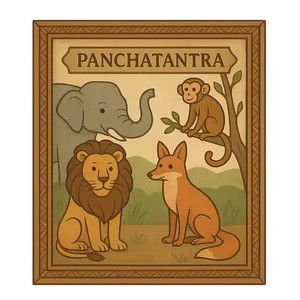
Panchatantra
The Panchatantra is an ancient Indian collection of interrelated animal fables in Sanskrit verse and prose…
Reads at Grades 6–8 Listens at Grades 4–8
Print & create
Answer keys·No prep·Free with an account
28 worksheets · answer keys · full story · quiz · Ages 10-12 · CEFR B2
Plus adds 164,000+ more stories in 27 languages, audio for every one, and printables for all of them.
Just want Panchatantra?
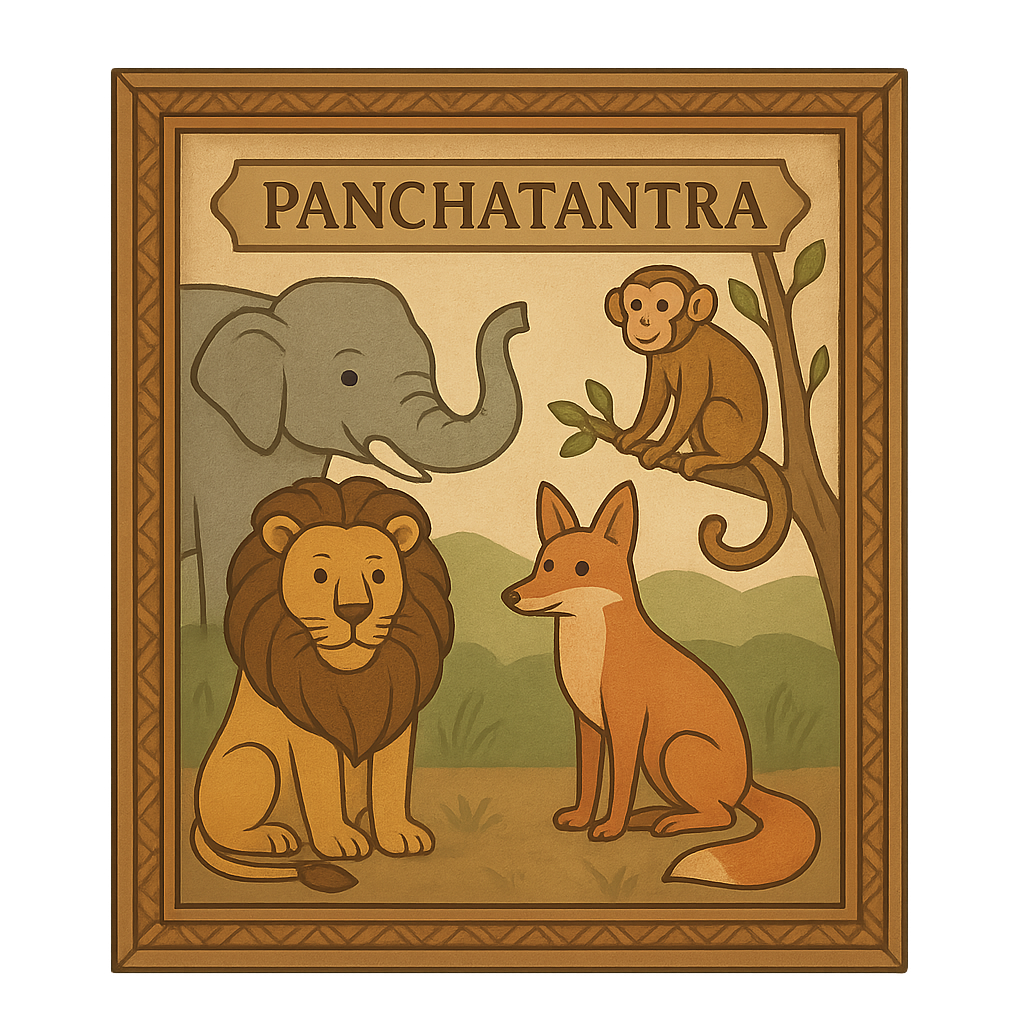
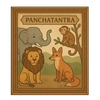
Before I had a name, I was a feeling—a collection of whispers from the heart of a vibrant, ancient land. Imagine the rustle of leaves in a dense jungle, the clever chatter of monkeys, and the low growl of a wise old lion. I am made of these sounds, woven into tales where animals think, talk, and act like kings, ministers, and ordinary people. They face dilemmas, make alliances, and learn hard lessons, just like humans do. My stories are not just for entertainment; they are puzzles and lessons, designed to teach the listener about friendship, loyalty, and the dangers of making a foolish choice. I am a world where a clever rabbit can outsmart a powerful lion, a group of pigeons can escape a hunter's net through teamwork, and a humble turtle can win a race through wit, not speed. In my tales, you will find monkeys who lose their homes because of greed and two jackals who use clever words to manipulate a king. For centuries, I flowed from storyteller to listener, a river of oral tradition passed down through generations around campfires and in royal courts. Each telling added a new current, a different ripple, but my core purpose remained the same: to reveal the path of wise conduct, what the people of ancient India called *niti*. I was a mirror held up to human nature, using the animal kingdom to show the best and worst of what people could be. It was not until a brilliant teacher saw my potential that I was given a permanent shape and a name. He gathered my flowing stories and arranged them into a single, powerful form. I am the Panchatantra.
The Panchatantra: A River of Whispering Stories
Before I had a name, I was a feeling—a collection of whispers from the heart of a vibrant, ancient land. Imagine the rustle of leaves in a dense jungle, the clever chatter of monkeys, and the low growl of a wise old lion. I am made of these sounds, woven into tales where animals think, talk, and act like kings, ministers, and ordinary people. They face dilemmas, make alliances, and learn hard lessons, just like humans do. My stories are not just for entertainment; they are puzzles and lessons, designed to teach the listener about friendship, loyalty, and the dangers of making a foolish choice. I am a world where a clever rabbit can outsmart a powerful lion, a group of pigeons can escape a hunter's net through teamwork, and a humble turtle can win a race through wit, not speed. In my tales, you will find monkeys who lose their homes because of greed and two jackals who use clever words to manipulate a king. For centuries, I flowed from storyteller to listener, a river of oral tradition passed down through generations around campfires and in royal courts. Each telling added a new current, a different ripple, but my core purpose remained the same: to reveal the path of wise conduct, what the people of ancient India called niti. I was a mirror held up to human nature, using the animal kingdom to show the best and worst of what people could be. It was not until a brilliant teacher saw my potential that I was given a permanent shape and a name. He gathered my flowing stories and arranged them into a single, powerful form. I am the Panchatantra.
I was born from a challenge, a royal dilemma. Long ago, around the 3rd century BCE in the kingdom of Mahilaropya in Southern India, a king named Amarasakti had a serious problem. He had three sons who, despite being princes, showed no interest in learning. They were ignorant and stubborn, and the king worried deeply about the future of his kingdom. He sought a teacher who could ignite their minds, someone who could transform them into wise and capable rulers. Many scholars tried and failed, but then a brilliant and elderly scholar named Vishnu Sharma stepped forward. He made a bold promise: he could teach the princes the art of wise living and ruling—what we call niti—in just six months. The king, though skeptical, agreed. But Vishnu Sharma knew that dry lectures on politics and ethics would only bore the princes further. So, he created me. He wove his essential lessons into five enchanting books, which is why my name, Panchatantra, means 'The Five Treatises' in Sanskrit. Each book is a frame story, a larger tale that holds dozens of smaller tales inside, like a set of nesting dolls. The first book, Mitra-bheda, teaches about 'The Loss of Friends,' showing how misunderstanding and deceit can break even the strongest bonds. The second, Mitra-lābha, is about 'The Winning of Friends,' demonstrating the power of alliance and cooperation. The third, Kākolūkīyam, explores 'Of Crows and Owls,' a treatise on war and strategy. The fourth, Labdhapraṇāśam, or 'Loss of Gains,' warns of how quickly one can lose what has been earned. And the fifth, Aparīkṣitakārakaṃ, discusses 'Ill-Considered Action,' showing the consequences of acting without thinking. Through me, Vishnu Sharma successfully educated the princes, making them experts in the art of intelligent living.
My stories were too full of life and practical wisdom to stay in one place. Like seeds on the wind, they traveled far beyond the Indian subcontinent. My great journey across the world began in earnest around the year 550 CE, when I was taken to Persia during the reign of King Khosrow I. There, I was translated into the Pahlavi language, and my reputation began to grow. From Persia, my biggest adventure began. Around 750 CE, I was translated into Arabic by a Persian scholar named Ibn al-Muqaffaʿ, who gave me the new title Kalīlah wa-Dimnah, named after the two clever jackal characters from my first book. This version of me became immensely famous, a treasured text in the Islamic world. I traveled with merchants along the Silk Road and with scholars to the great libraries of Baghdad and Cairo. My tales were told in royal courts across the Middle East and soon found their way into Europe. By the 11th century, I had been translated into Greek, and from there into Latin, Spanish, Hebrew, and countless other languages. The characters might have changed names—the jackals sometimes became foxes, the lion a different king—but their essential wisdom remained. The story of the two clever jackals, Karataka and Damanaka, became a guide for courtiers everywhere, teaching lessons about political strategy and human nature. My fables shared common ground with other great story collections. Scholars see my influence in the themes and plots that later appeared in works like Aesop's Fables from ancient Greece and in the celebrated fables of Jean de La Fontaine in 17th-century France. I had become a global phenomenon, a testament to the universal appeal of a good story with a powerful message.
Though I am thousands of years old, born in a world of ancient kings and scholars, my voice is not lost to time. The lessons Vishnu Sharma crafted for three young princes now belong to the world. I live on in classrooms, in bedtime stories shared between parents and children, and in the quiet moments when you realize that a simple story about a monkey and a crocodile can teach a profound lesson about trust. I am proof that a good story is a timeless treasure, a bridge connecting people across centuries, continents, and cultures. My animal characters continue to whisper their secrets to anyone who is willing to listen, reminding you that wisdom is all around—in the actions of others, in the patterns of nature, and in the choices you make every day. You just have to know how to look for it.
Wow facts
About
The Panchatantra is an ancient Indian collection of interrelated animal fables in Sanskrit verse and prose, traditionally attributed to Vishnu Sharma, with estimates of its composition ranging from the 3rd century BCE to the 3rd century CE.
Take a Quiz
Question 1 of 5
Summarize in your own words why Vishnu Sharma created the Panchatantra.
Explore next




Want to do even more?
Go beyond exploring. Unlock tools that turn every story into real learning.

Storypie Plus for families
Full stories, quizzes, and printables. Nights and car rides, sorted.
- Unlimited audio stories
- Create Mode: your child stars in the story
- Offline downloads
- Printable worksheets & coloring pages

Why Storypie for Schools
Students engaged. Prep in seconds. Evenings back to you.
- Worksheets & Quizzes
- Classroom Management
- Formative Assessment
- Custom Curriculum & Lesson Plans
- 27 Languages

Why Storypie for Homeschool
Curriculum done. They'll ask for more. Hours back in your day.
- Worksheet Generator
- First-Person Audio Stories
- Built-in Comprehension Quizzes
- Custom Curriculum & Lesson Plans
- Print & Go Activities