English

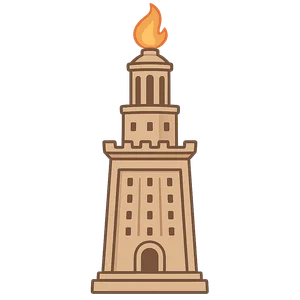
Pharos of Alexandria
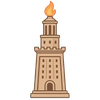
The Pharos of Alexandria was a magnificent lighthouse, one of the Seven Wonders of the Ancient World…
Reads at Grades 6–8 Listens at Grades 4–8
Print & create
Answer keys·No prep·Free with an account
28 worksheets · answer keys · full story · quiz · Ages 10-12 · CEFR B2
Plus adds 244,000+ more stories in 27 languages, audio for every one, and printables for all of them.
Just want Pharos of Alexandria?
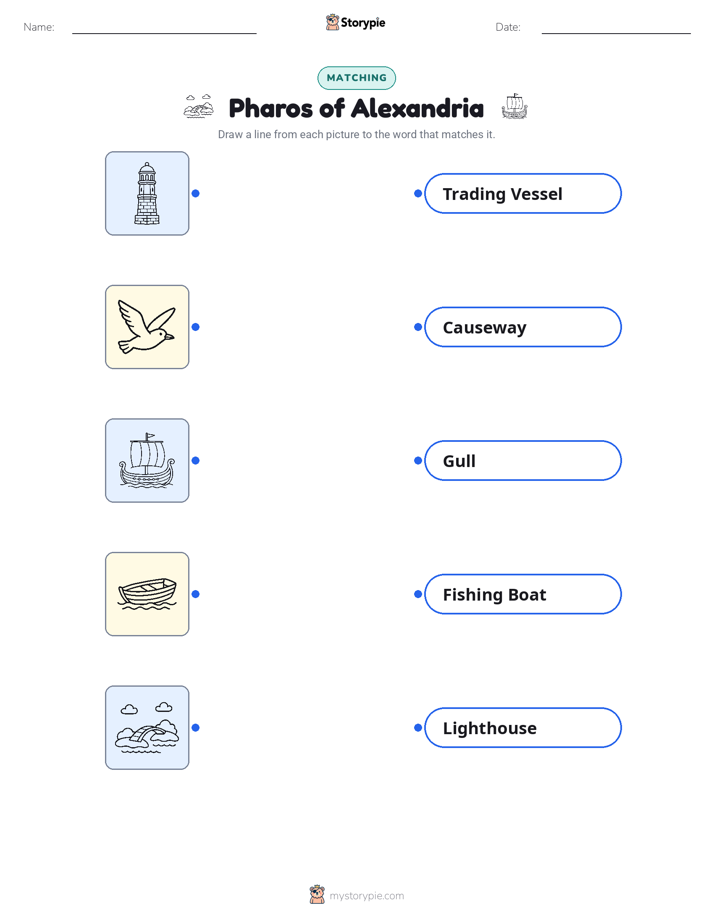
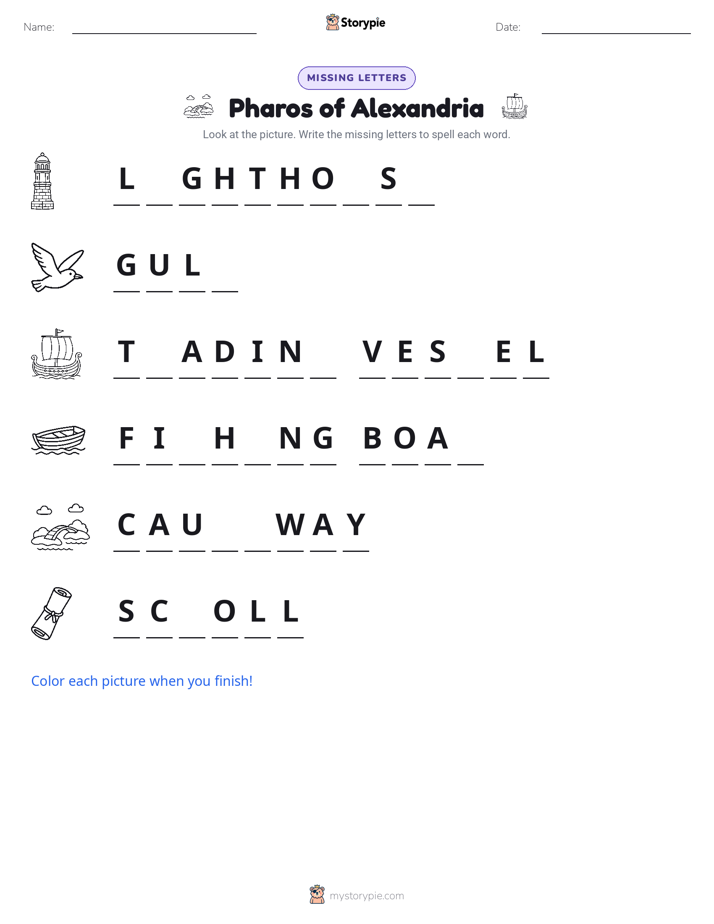
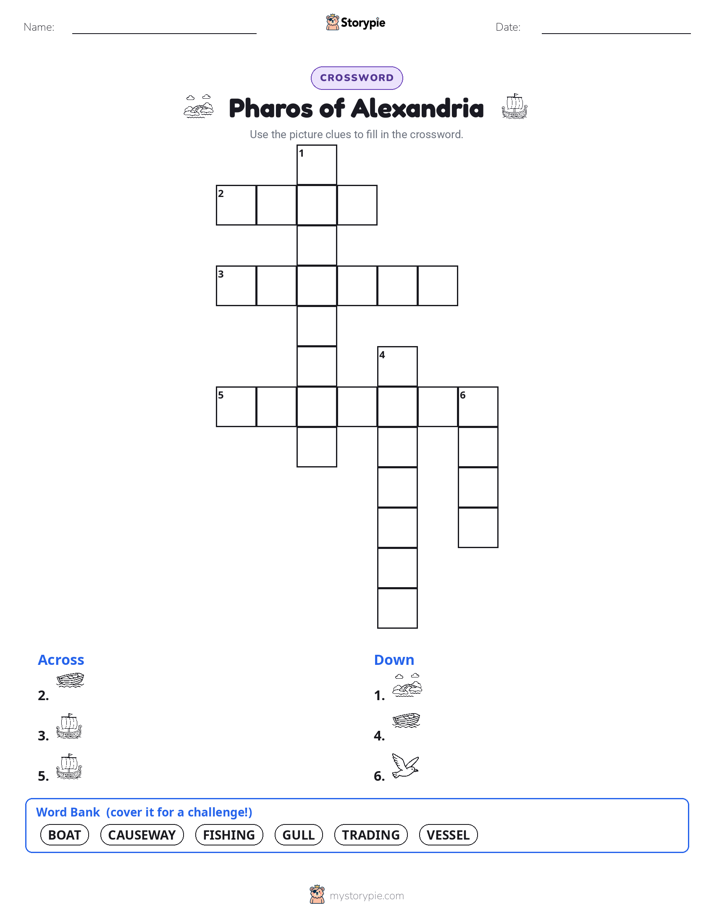
Feel the cool spray of the Mediterranean Sea on your face, just as I did for centuries. Hear the sharp cries of the gulls as they wheel and dive in the salty air. From my perch, I watched them all: the grand trading vessels with their sails full of wind, and the small fishing boats bobbing on the waves. I stood on a small island, a rocky outcrop named Pharos, connected by a man-made causeway to one of the most magnificent cities the world has ever known: Alexandria, in Egypt. It was a city of scholars and scrolls, of merchants trading spices and silks, of dreamers from every corner of the known world. Before anyone spoke my name, they understood my purpose. To the sailors navigating the sometimes treacherous waters near the coast, I was a whisper of pale stone and brilliant light, a promise of safe harbor. I was a guide, a silent guardian of the coast. I am the Pharos of Alexandria, and I was a tower of light that touched the sky.
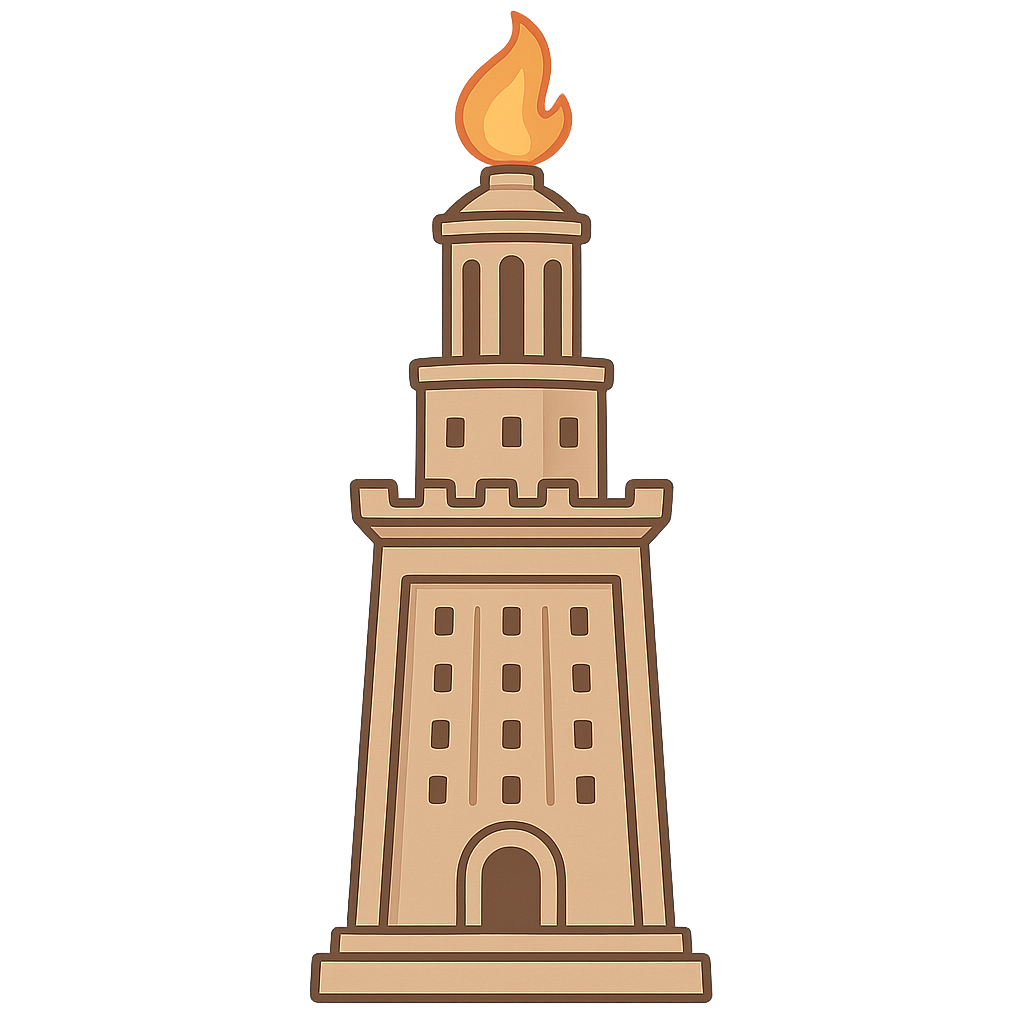
My story began with a king's grand vision. Around the year 280 BCE, a powerful ruler named Ptolemy I Soter decided that his capital city needed something spectacular. He had once been a general for the legendary Alexander the Great, and he dreamed of making Alexandria the center of culture, trade, and knowledge for the entire world. To do that, he needed to ensure that ships from far-off lands could find their way safely into its busy harbor. His solution? A lighthouse unlike any ever seen before. The monumental task of building me began under his rule, but it was his son, Ptolemy II Philadelphus, who saw the project to its completion around 247 BCE. The genius who designed my unique form was an architect named Sostratus of Cnidus. He imagined a structure of breathtaking scale and elegance. For years, workers hauled enormous blocks of light-colored limestone and granite, quarrying them and ferrying them to my island home. They stacked them higher and higher, with incredible precision. I wasn't just a simple, plain tower. I was a masterpiece of engineering, built in three distinct stages. My base was a mighty square, like a fortress against the sea. Above that rose an eight-sided, or octagonal, middle section. And at the very top, a graceful circular tower reached for the clouds, where my most important work would be done.
The Light of Alexandria
Feel the cool spray of the Mediterranean Sea on your face, just as I did for centuries. Hear the sharp cries of the gulls as they wheel and dive in the salty air. From my perch, I watched them all: the grand trading vessels with their sails full of wind, and the small fishing boats bobbing on the waves. I stood on a small island, a rocky outcrop named Pharos, connected by a man-made causeway to one of the most magnificent cities the world has ever known: Alexandria, in Egypt. It was a city of scholars and scrolls, of merchants trading spices and silks, of dreamers from every corner of the known world. Before anyone spoke my name, they understood my purpose. To the sailors navigating the sometimes treacherous waters near the coast, I was a whisper of pale stone and brilliant light, a promise of safe harbor. I was a guide, a silent guardian of the coast. I am the Pharos of Alexandria, and I was a tower of light that touched the sky.
My story began with a king's grand vision. Around the year 280 BCE, a powerful ruler named Ptolemy I Soter decided that his capital city needed something spectacular. He had once been a general for the legendary Alexander the Great, and he dreamed of making Alexandria the center of culture, trade, and knowledge for the entire world. To do that, he needed to ensure that ships from far-off lands could find their way safely into its busy harbor. His solution? A lighthouse unlike any ever seen before. The monumental task of building me began under his rule, but it was his son, Ptolemy II Philadelphus, who saw the project to its completion around 247 BCE. The genius who designed my unique form was an architect named Sostratus of Cnidus. He imagined a structure of breathtaking scale and elegance. For years, workers hauled enormous blocks of light-colored limestone and granite, quarrying them and ferrying them to my island home. They stacked them higher and higher, with incredible precision. I wasn't just a simple, plain tower. I was a masterpiece of engineering, built in three distinct stages. My base was a mighty square, like a fortress against the sea. Above that rose an eight-sided, or octagonal, middle section. And at the very top, a graceful circular tower reached for the clouds, where my most important work would be done.
My true purpose was not just to be tall, but to shine. At my very peak, nestled inside the circular tower, was my heart: a massive, curved mirror forged from polished bronze. It was an incredible piece of technology for its time. During the day, it captured the brilliant Egyptian sun, concentrating its rays into a powerful beam of light that sailors could see from as far as 35 miles away. It was a star on the horizon, guiding them toward land. When darkness fell across the sea, my work became even more vital. A great bonfire was lit at my summit, its flames leaping toward the night sky. The great bronze mirror then gathered this flickering firelight and focused it into a steady, piercing beacon that cut through the blackness. I was more than just a building; I was a marvel of science and optics. For centuries, I stood as a powerful symbol of Alexandria’s wealth, ingenuity, and intellectual might, a proud partner to the city’s other great wonder, the Great Library. I was a constant, welcoming sight for weary travelers, a sign that they had reached the greatest city on Earth.
I had a very long life, standing tall for over 1,500 years. I watched empires rise and crumble, I saw generations of ships come and go, and I witnessed history unfold from my unique vantage point. Travelers from across the globe made pilgrimages just to gaze up at my incredible height. I soon became famous, earning a place on the prestigious list of the Seven Wonders of the Ancient World. Aside from the Great Pyramid of Giza, I was the tallest man-made structure of my era. But even the strongest stone cannot stand forever against the power of the earth. The ground beneath me, which had been my firm foundation for so long, sometimes trembled with great force. On March 22nd, 956 CE, a powerful earthquake shook the Egyptian coast, and I was badly damaged. My top section and the magnificent mirror were weakened. Though repairs were made, I was never quite the same. Centuries later, two more devastating earthquakes, one on August 8th, 1303 CE, and another in 1323 CE, proved to be too much for my ancient stones. I could no longer resist their violent shaking. My beautiful blocks, which had been so carefully placed, tumbled down into the very sea I had watched over for a millennium and a half.
Though my physical form is now gone, scattered on the seabed at the entrance to the harbor I once protected, my spirit shines on. My legacy is woven into the very fabric of language and navigation. The name of my island, Pharos, became so synonymous with my function that it gave birth to the word for lighthouse in many languages. In French, it is 'phare'; in Spanish, 'faro'; in Italian, 'faro'. Every single lighthouse that has been built since, on rocky shores and lonely coastlines all around the world, carries a spark of my original idea. I provided the blueprint, the grand example of how humanity could use its ingenuity to create a beacon of safety and hope. My story is a reminder that even when great wonders fall, the ideas they represent can shine forever. I am more than just a memory of stone and bronze; I am the enduring light of human creativity, a symbol of guidance that continues to inspire people to build, to explore, and to light up the darkness.
Wow facts
About
The Pharos of Alexandria was a magnificent lighthouse, one of the Seven Wonders of the Ancient World, built in the 3rd century BCE to guide ships into the harbor of Alexandria, Egypt.
Take a Quiz
Question 1 of 5
In your own words, retell the main events of the Pharos of Alexandria's life, from its creation to its destruction.
Explore next


Want to do even more?
Go beyond exploring. Unlock tools that turn every story into real learning.

Storypie Plus for families
Full stories, quizzes, and printables. Nights and car rides, sorted.
- Unlimited audio stories
- Create Mode: your child stars in the story
- Offline downloads
- Printable worksheets & coloring pages

Why Storypie for Schools
Students engaged. Prep in seconds. Evenings back to you.
- Worksheets & Quizzes
- Classroom Management
- Formative Assessment
- Custom Curriculum & Lesson Plans
- 27 Languages

Why Storypie for Homeschool
Curriculum done. They'll ask for more. Hours back in your day.
- Worksheet Generator
- First-Person Audio Stories
- Built-in Comprehension Quizzes
- Custom Curriculum & Lesson Plans
- Print & Go Activities