English

Ragtime
Ragtime is a uniquely American musical genre with a syncopated or 'ragged' rhythm…
Reads at Grades 3–5 Listens at Grades 1–5
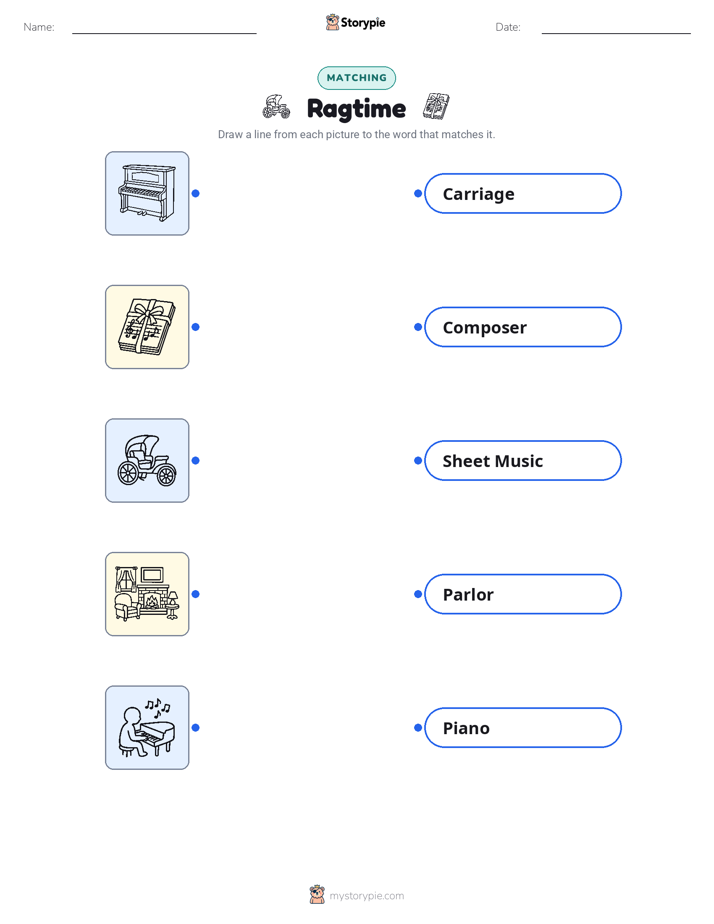
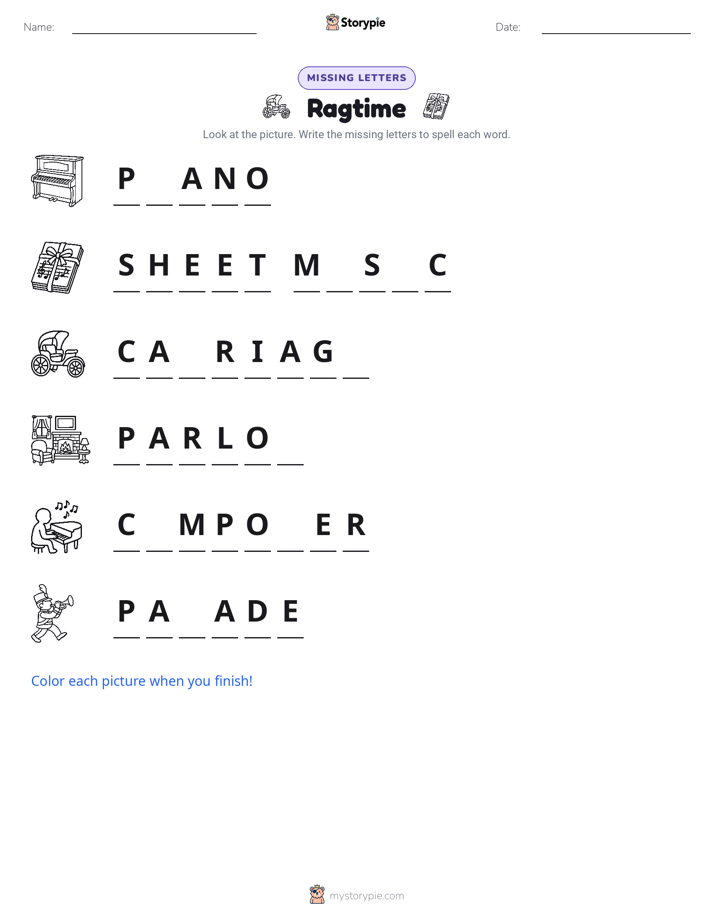
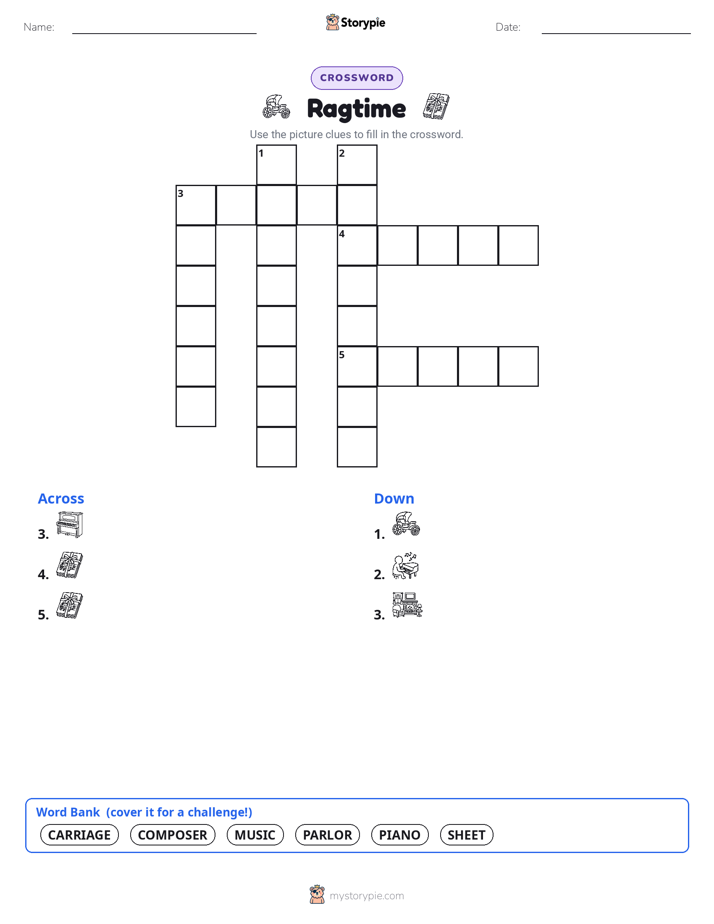
Print & create
Answer keys·No prep·Free with an account
28 worksheets · answer keys · full story · quiz · Ages 8-10 · CEFR B1
Plus adds 244,000+ more stories in 27 languages, audio for every one, and printables for all of them.
Just want Ragtime?
Have you ever heard a sound that makes your feet start tapping all on their own. It’s a bouncy, jumpy, happy sound, full of surprises. It’s not a straight, marching rhythm, but a ragged one, like you’re skipping up a staircase two steps at a time instead of just walking. That’s me. I am the sound of a brand new time, a feeling of excitement and possibility turned into notes. I am Ragtime music. I was born in the late 1800s, coming to life in the busy and vibrant African American communities of American cities like St. Louis, Missouri. My notes first tumbled out of pianos in lively halls where people danced, and in cozy parlors where families gathered. I wasn't like the serious, classical music of Europe or the slow folk songs people knew. I was something different, a joyful noise for a world that was changing fast, and I was ready to make everyone dance.
My sound was so new and full of energy that it could be hard to catch, like trying to grab a firefly. But one man understood my heart better than anyone. His name was Scott Joplin, and people would come to call him the “King of Ragtime”. He was a brilliant African American composer who heard my playful spirit and knew how to write it down on paper so that anyone with a piano could bring me to life. He dreamed of me being heard in grand concert halls, not just dance halls. On September 10th, 1899, he published a song called the “Maple Leaf Rag,” and it became a massive hit. Suddenly, everyone wanted to hear me. My music spread like wildfire thanks to a truly amazing invention: the player piano. Can you imagine a piano playing a complicated song perfectly with no one touching the keys. That was the magic of the player piano. It used a roll of paper with little holes punched in it to tell the keys which notes to play. Soon, my tunes were being played in homes all across America. In 1902, Scott Joplin wrote another one of my famous songs, “The Entertainer,” which would have its own amazing adventure many years in the future.
The Story of Ragtime
Have you ever heard a sound that makes your feet start tapping all on their own. It’s a bouncy, jumpy, happy sound, full of surprises. It’s not a straight, marching rhythm, but a ragged one, like you’re skipping up a staircase two steps at a time instead of just walking. That’s me. I am the sound of a brand new time, a feeling of excitement and possibility turned into notes. I am Ragtime music. I was born in the late 1800s, coming to life in the busy and vibrant African American communities of American cities like St. Louis, Missouri. My notes first tumbled out of pianos in lively halls where people danced, and in cozy parlors where families gathered. I wasn't like the serious, classical music of Europe or the slow folk songs people knew. I was something different, a joyful noise for a world that was changing fast, and I was ready to make everyone dance.
My sound was so new and full of energy that it could be hard to catch, like trying to grab a firefly. But one man understood my heart better than anyone. His name was Scott Joplin, and people would come to call him the “King of Ragtime”. He was a brilliant African American composer who heard my playful spirit and knew how to write it down on paper so that anyone with a piano could bring me to life. He dreamed of me being heard in grand concert halls, not just dance halls. On September 10th, 1899, he published a song called the “Maple Leaf Rag,” and it became a massive hit. Suddenly, everyone wanted to hear me. My music spread like wildfire thanks to a truly amazing invention: the player piano. Can you imagine a piano playing a complicated song perfectly with no one touching the keys. That was the magic of the player piano. It used a roll of paper with little holes punched in it to tell the keys which notes to play. Soon, my tunes were being played in homes all across America. In 1902, Scott Joplin wrote another one of my famous songs, “The Entertainer,” which would have its own amazing adventure many years in the future.
In the first years of the 1900s, I was the most popular sound around. I was the soundtrack for a new century, a time of new inventions like automobiles and moving pictures. Everything felt faster and more exciting, and I was the perfect music for it. Before me, people often danced to slow, formal waltzes where every step was planned. But I was different. My rhythm was syncopated, which is a fancy word for a beat that’s a little off-center and full of surprises. It made people want to move in new ways. I was a joyful celebration of life, a style created and perfected by talented African American musicians who shared their new sound with the world. My cheerful notes floated out of windows in big cities and from pianos in small towns, bringing a new rhythm to America as people gathered to listen, play, and dance to my happy, ragged beat.
Like all popular things, my time at the very top of the charts eventually faded as new styles of music came along. But I didn't disappear. My spirit and my special syncopated rhythm became a secret ingredient in a new kind of music that was just being born: Jazz. The bounce and swing you hear in early jazz music. That’s a piece of me living on. Then, something incredible happened. Decades later, in 1973, a popular movie called “The Sting” used one of my old songs. Do you remember which one. It was “The Entertainer” by Scott Joplin. Suddenly, I was a superstar all over again. A whole new generation of people discovered my joyful sound. My story shows that a great idea never truly goes away. My happy, ragged rhythm is still here today, played on pianos and listened to by people all over the world, reminding everyone that music is full of fun and surprises, and a little bit of syncopation can make the whole world want to tap its feet.
Wow facts
About
Ragtime is a uniquely American musical genre with a syncopated or 'ragged' rhythm, which was highly popular between 1895 and 1919. It originated in African American communities and was primarily written for the piano.
Take a Quiz
Question 1 of 5
In the story, the rhythm is described as 'syncopated.' What does 'syncopated' mean?
Explore next





Want to do even more?
Go beyond exploring. Unlock tools that turn every story into real learning.

Storypie Plus for families
Full stories, quizzes, and printables. Nights and car rides, sorted.
- Unlimited audio stories
- Create Mode: your child stars in the story
- Offline downloads
- Printable worksheets & coloring pages

Why Storypie for Schools
Students engaged. Prep in seconds. Evenings back to you.
- Worksheets & Quizzes
- Classroom Management
- Formative Assessment
- Custom Curriculum & Lesson Plans
- 27 Languages

Why Storypie for Homeschool
Curriculum done. They'll ask for more. Hours back in your day.
- Worksheet Generator
- First-Person Audio Stories
- Built-in Comprehension Quizzes
- Custom Curriculum & Lesson Plans
- Print & Go Activities