English

Ragtime
Ragtime is a uniquely American musical genre with a syncopated or 'ragged' rhythm…
Reads at Grades 6–8 Listens at Grades 4–8
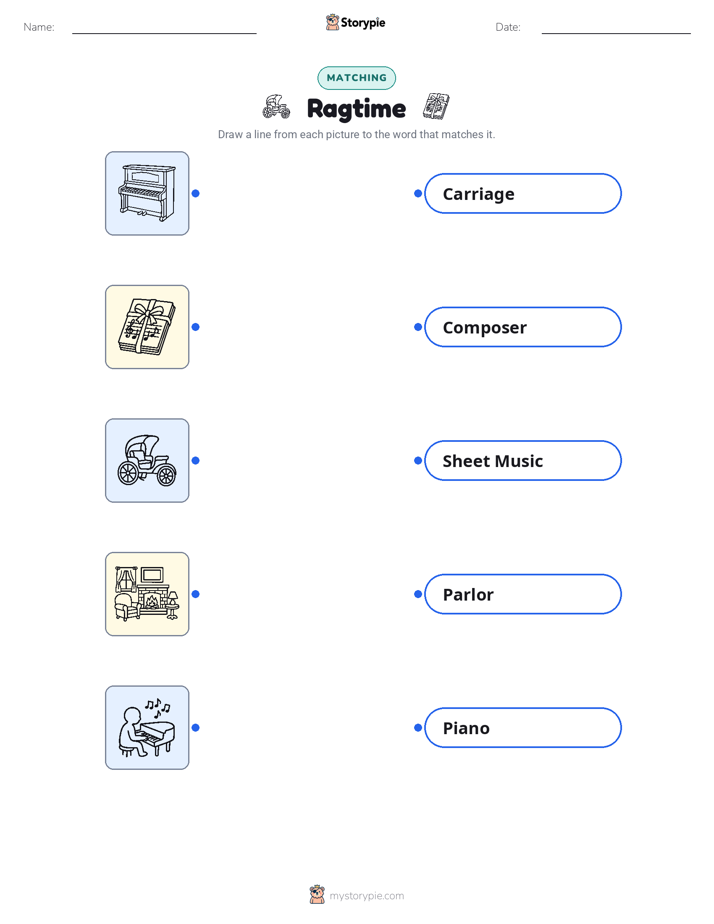
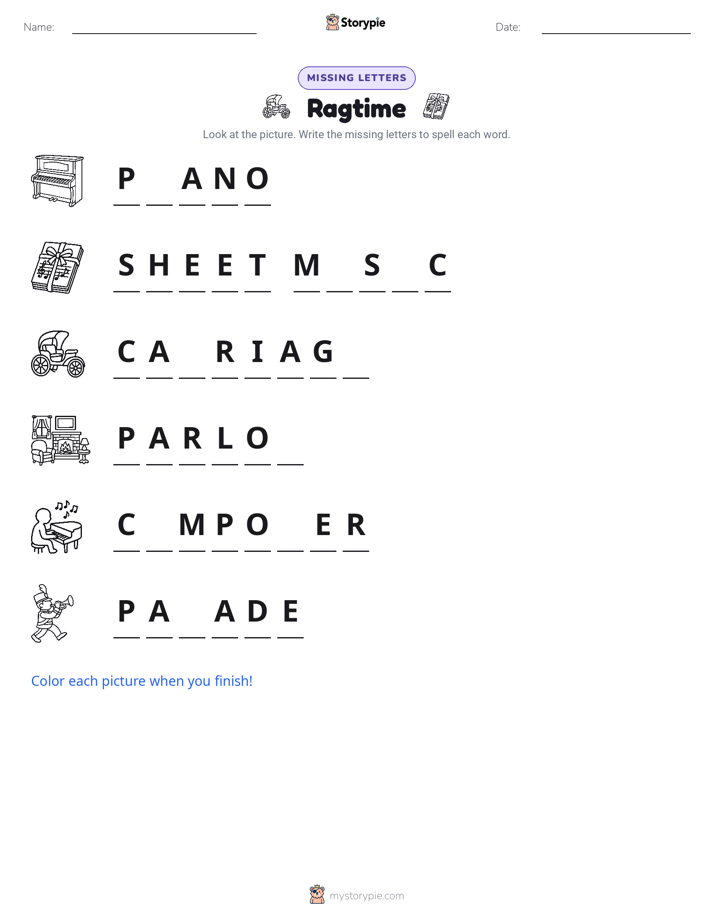
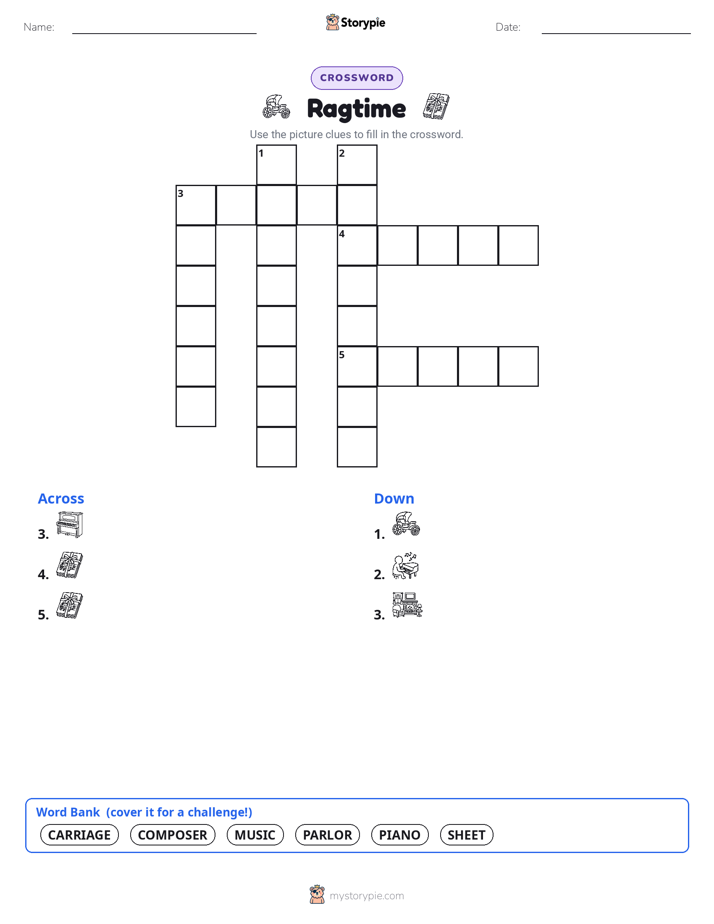
Print & create
Answer keys·No prep·Free with an account
28 worksheets · answer keys · full story · quiz · Ages 10-12 · CEFR B2
Plus adds 244,000+ more stories in 27 languages, audio for every one, and printables for all of them.
Just want Ragtime?
Picture a bustling American city at the turn of the 20th century. The air is filled with the clatter of horse-drawn carriages and the hum of new inventions. But listen closer, through the open window of a parlor or the swinging doors of a music hall. You can hear the sound of a piano playing something brand new. That’s me. My sound might feel familiar at first. If you listen to the pianist’s left hand, you’ll hear a steady, proud march, like soldiers on parade keeping a perfect beat. It’s strong and reliable. But my other half, the melody played by the right hand, is a joyful dancer. It doesn’t stay on the beat. It leaps ahead and skips behind in a way no one had ever heard before. It’s a happy, surprising, and slightly “ragged” sound that makes people want to tap their feet and move their bodies. I am the sound of a new time, a new century, and a new voice for a new generation. I am the rhythm that captured a nation's heart. I am Ragtime.
My musical family is large and diverse, a true American blend. My steady, marching beat is a cousin to the popular patriotic marches of the day, the kind written by composers like John Philip Sousa that made crowds cheer at parades. But my soul, my syncopated, off-the-beat melodies, comes from a much older and deeper place. These complex and beautiful rhythms were carried in the hearts and memories of African people, brought to America over hundreds of years. I was born from the fusion of these worlds in the late 1890s. My first notes were played not in grand concert halls, but in the lively parlors and music halls of African American communities in cities like St. Louis and Sedalia, Missouri. It was there that incredibly talented pianists would sit down and weave these sounds together, experimenting and improvising to create something exciting and completely original. In those days, before phonographs and radios were in every home, you couldn’t just listen to a recording of me. People shared my music by buying sheet music. A song would be printed on paper, and families would gather around their pianos at home to learn my jaunty tunes, spreading my sound from one city to the next.
The Entertainer: My Story
Picture a bustling American city at the turn of the 20th century. The air is filled with the clatter of horse-drawn carriages and the hum of new inventions. But listen closer, through the open window of a parlor or the swinging doors of a music hall. You can hear the sound of a piano playing something brand new. That’s me. My sound might feel familiar at first. If you listen to the pianist’s left hand, you’ll hear a steady, proud march, like soldiers on parade keeping a perfect beat. It’s strong and reliable. But my other half, the melody played by the right hand, is a joyful dancer. It doesn’t stay on the beat. It leaps ahead and skips behind in a way no one had ever heard before. It’s a happy, surprising, and slightly “ragged” sound that makes people want to tap their feet and move their bodies. I am the sound of a new time, a new century, and a new voice for a new generation. I am the rhythm that captured a nation's heart. I am Ragtime.
My musical family is large and diverse, a true American blend. My steady, marching beat is a cousin to the popular patriotic marches of the day, the kind written by composers like John Philip Sousa that made crowds cheer at parades. But my soul, my syncopated, off-the-beat melodies, comes from a much older and deeper place. These complex and beautiful rhythms were carried in the hearts and memories of African people, brought to America over hundreds of years. I was born from the fusion of these worlds in the late 1890s. My first notes were played not in grand concert halls, but in the lively parlors and music halls of African American communities in cities like St. Louis and Sedalia, Missouri. It was there that incredibly talented pianists would sit down and weave these sounds together, experimenting and improvising to create something exciting and completely original. In those days, before phonographs and radios were in every home, you couldn’t just listen to a recording of me. People shared my music by buying sheet music. A song would be printed on paper, and families would gather around their pianos at home to learn my jaunty tunes, spreading my sound from one city to the next.
While many musicians helped shape my voice, one composer became my greatest champion and gave me a chance to be heard by the world. His name was Scott Joplin, a brilliant African American composer who dreamed of creating music that was as respected and admired as any European symphony. People called him the “King of Ragtime,” and for good reason. He understood that I was more than just fun, danceable music; I was a serious and beautiful art form. In the year 1899, he published a piece called “Maple Leaf Rag.” It was a massive success. It didn’t just get played in music halls; its sheet music sold hundreds of thousands of copies, making it one of the most famous instrumental songs of the era. A few years later, in 1902, he wrote another one of my most famous tunes, “The Entertainer.” Scott Joplin’s compositions were masterpieces of rhythm and melody. They proved to everyone that my ragged time was worthy of careful listening and serious study. He gave me a voice that traveled all across America and even sailed across the ocean to Europe, inspiring countless musicians and changing the course of music history forever.
My golden age, the time when I was the most popular sound in America, lasted from about 1895 to 1919. Like all things, times changed, and new sounds began to emerge. But I didn't simply fade away; I grew and transformed. My playful, syncopated rhythms and my spirit of invention became the heart of a new kind of music called Jazz, which would soon take the world by storm. I was the foundation upon which new musical skyscrapers were built. Decades passed, and while I was always remembered by musicians, I wasn't in the spotlight anymore. Then, something amazing happened. In 1973, my old song, “The Entertainer,” was used as the theme for a popular movie called “The Sting.” Suddenly, everyone wanted to hear me again. A whole new generation fell in love with my cheerful, complex sound. Today, my notes continue to be played by pianists all over the world. When you hear my syncopated beat, you are hearing the sound of creativity, resilience, and joy. I am a reminder that from simple sounds on a piano, you can create a voice that dances across time, blending cultures and connecting us all.
Wow facts
About
Ragtime is a uniquely American musical genre with a syncopated or 'ragged' rhythm, which was highly popular between 1895 and 1919. It originated in African American communities and was primarily written for the piano.
Take a Quiz
Question 1 of 5
What is the main theme or lesson of this story about Ragtime music?
Explore next





Want to do even more?
Go beyond exploring. Unlock tools that turn every story into real learning.

Storypie Plus for families
Full stories, quizzes, and printables. Nights and car rides, sorted.
- Unlimited audio stories
- Create Mode: your child stars in the story
- Offline downloads
- Printable worksheets & coloring pages

Why Storypie for Schools
Students engaged. Prep in seconds. Evenings back to you.
- Worksheets & Quizzes
- Classroom Management
- Formative Assessment
- Custom Curriculum & Lesson Plans
- 27 Languages

Why Storypie for Homeschool
Curriculum done. They'll ask for more. Hours back in your day.
- Worksheet Generator
- First-Person Audio Stories
- Built-in Comprehension Quizzes
- Custom Curriculum & Lesson Plans
- Print & Go Activities