English

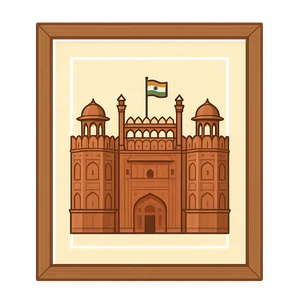
Red Fort
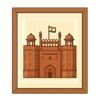
A historic fortress in Delhi, India, built by Mughal Emperor Shah Jahan in the 17th century.
Reads at Grades 6–8 Listens at Grades 4–8
Print & create
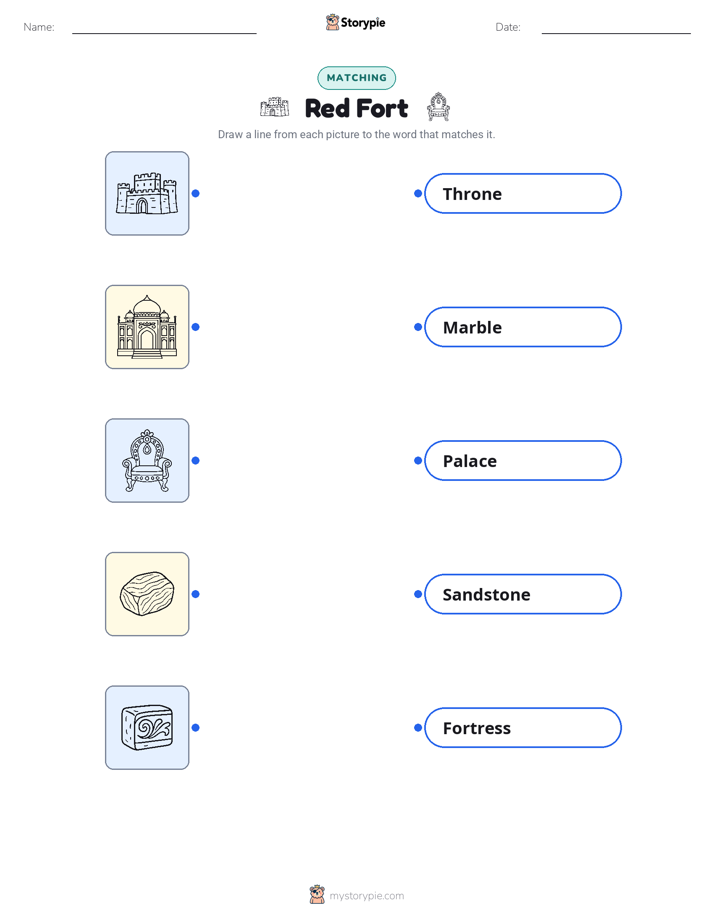
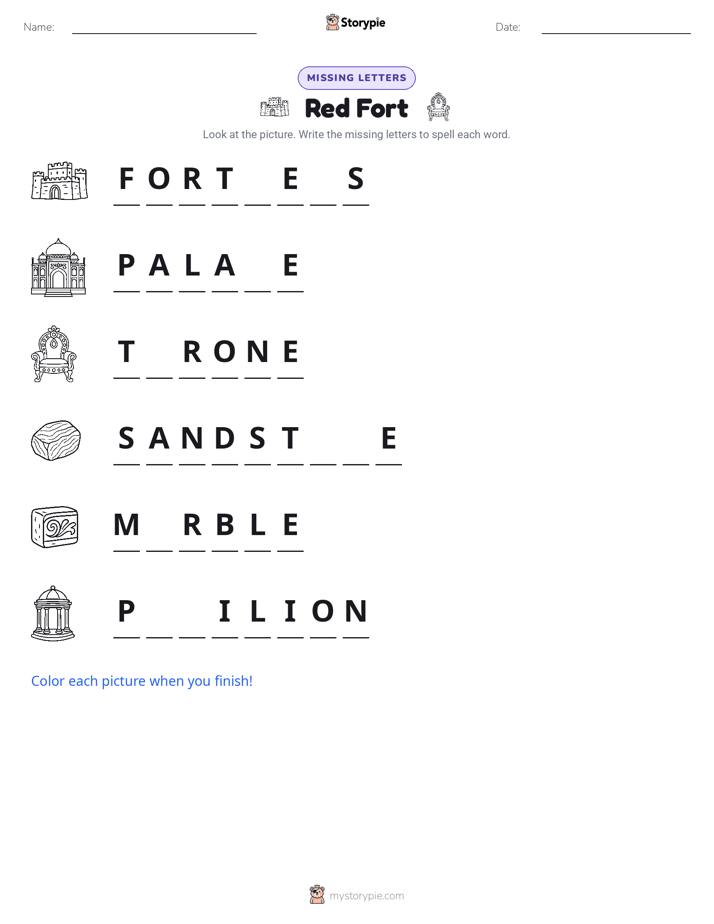
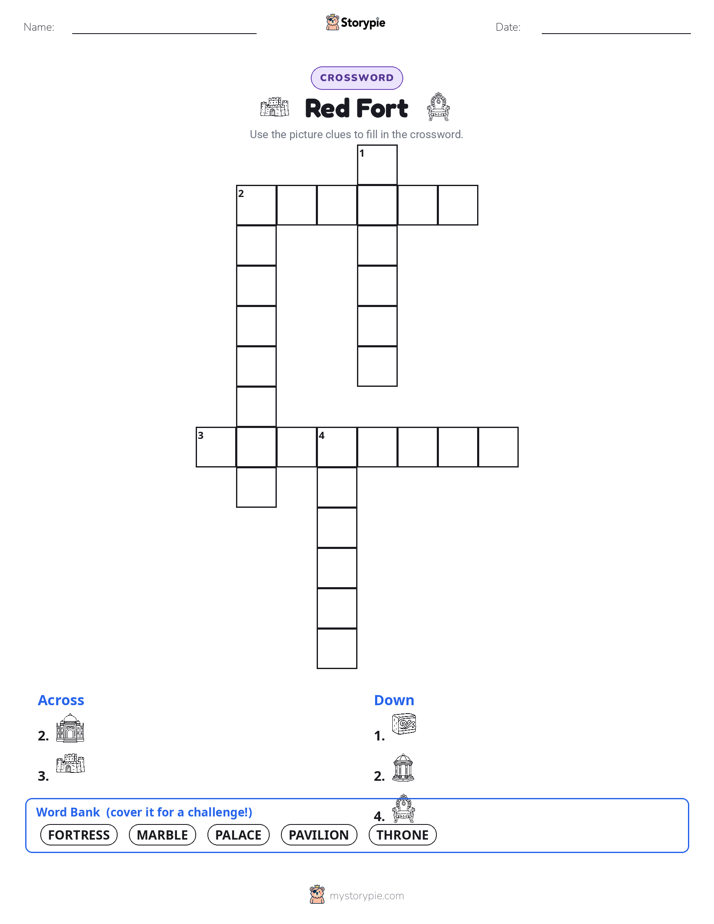
Answer keys·No prep·Free with an account
28 worksheets · answer keys · full story · quiz · Ages 10-12 · CEFR B2
Plus adds 244,000+ more stories in 27 languages, audio for every one, and printables for all of them.
Just want Red Fort?
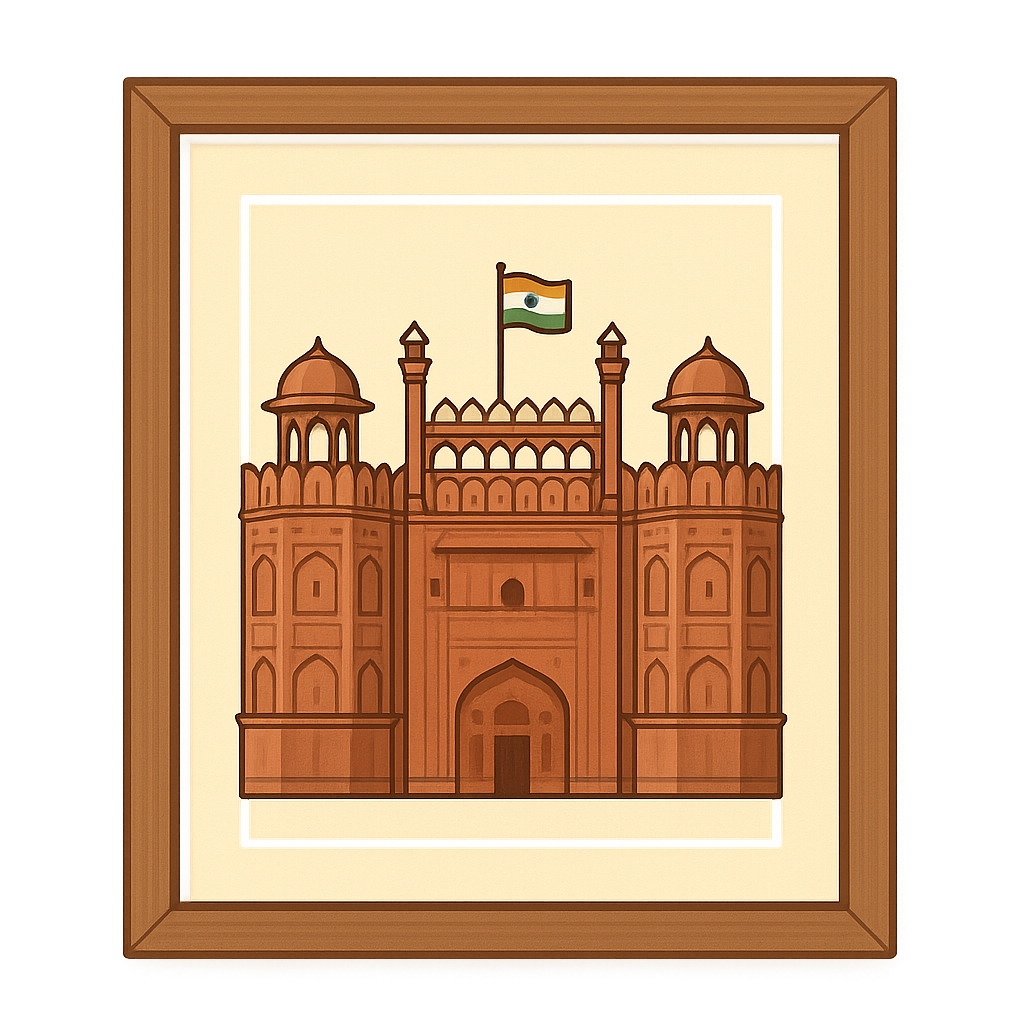
I have stood for centuries, watching the sun rise and set over the Yamuna River in a city now called Delhi. My skin glows with the deep, warm color of red sandstone, a majestic shield stretching for over two kilometers. Within my protective embrace, you will find a world of cool marble palaces, lush green gardens, and courtyards that once echoed with the footsteps of emperors. I am not merely a fortress; I am a city within a city, a treasure chest built to hold the heart of an empire. I am the Red Fort, but in my own land, they have always called me Lal Qila. My story began in the mind of a great Mughal emperor, Shah Jahan. He was the same man who built the beautiful Taj Mahal for his wife, and his vision was always grand. In the year 1638, he decided to move his capital from Agra to a new, magnificent city he would build himself. He called it Shahjahanabad. He dreamed of a palace-fortress at its center that would be so splendid, so powerful, and so beautiful that it would be the envy of the entire world. That dream was me.
The work to bring me to life began on May 12th, 1638. A decade of tireless effort followed, with thousands of the most skilled builders, stone carvers, and artists from across the empire pouring their talents into my creation. My outer walls, made of that famous red sandstone, were built for strength and to project an image of immense power. But inside, my soul was crafted from pure, white marble, polished until it gleamed. My halls were designed to be a paradise on Earth. In the Diwan-i-Aam, the Hall of Public Audience, the emperor sat upon his legendary Peacock Throne, a marvel of gold and precious gems, to listen to the petitions of his subjects. Deeper within my heart lay the Diwan-i-Khas, the Hall of Private Audience. This was a place of breathtaking beauty, where the emperor met with his most trusted nobles and foreign dignitaries. The marble walls were carved with delicate flowers and inlaid with precious stones. It was here that a famous Persian couplet was inscribed, a verse that captured the spirit of my creation: 'If there is a paradise on earth, it is this, it is this, it is this.' When I was finally completed on April 6th, 1648, I wasn't just a building. I was the vibrant, beating heart of the mighty Mughal Empire, a symbol of its wealth, power, and artistic genius.
The Story of the Red Fort
I have stood for centuries, watching the sun rise and set over the Yamuna River in a city now called Delhi. My skin glows with the deep, warm color of red sandstone, a majestic shield stretching for over two kilometers. Within my protective embrace, you will find a world of cool marble palaces, lush green gardens, and courtyards that once echoed with the footsteps of emperors. I am not merely a fortress; I am a city within a city, a treasure chest built to hold the heart of an empire. I am the Red Fort, but in my own land, they have always called me Lal Qila. My story began in the mind of a great Mughal emperor, Shah Jahan. He was the same man who built the beautiful Taj Mahal for his wife, and his vision was always grand. In the year 1638, he decided to move his capital from Agra to a new, magnificent city he would build himself. He called it Shahjahanabad. He dreamed of a palace-fortress at its center that would be so splendid, so powerful, and so beautiful that it would be the envy of the entire world. That dream was me.
The work to bring me to life began on May 12th, 1638. A decade of tireless effort followed, with thousands of the most skilled builders, stone carvers, and artists from across the empire pouring their talents into my creation. My outer walls, made of that famous red sandstone, were built for strength and to project an image of immense power. But inside, my soul was crafted from pure, white marble, polished until it gleamed. My halls were designed to be a paradise on Earth. In the Diwan-i-Aam, the Hall of Public Audience, the emperor sat upon his legendary Peacock Throne, a marvel of gold and precious gems, to listen to the petitions of his subjects. Deeper within my heart lay the Diwan-i-Khas, the Hall of Private Audience. This was a place of breathtaking beauty, where the emperor met with his most trusted nobles and foreign dignitaries. The marble walls were carved with delicate flowers and inlaid with precious stones. It was here that a famous Persian couplet was inscribed, a verse that captured the spirit of my creation: 'If there is a paradise on earth, it is this, it is this, it is this.' When I was finally completed on April 6th, 1648, I wasn't just a building. I was the vibrant, beating heart of the mighty Mughal Empire, a symbol of its wealth, power, and artistic genius.
I have been a silent witness to the endless flow of history. For generations, I watched the pageantry of the Mughal court. I saw powerful emperors celebrate grand festivals, heard music drift through my gardens, and watched poets compose verses in my marble pavilions. But empires, like all things, change over time. I felt a deep stillness settle over me as the power of the Mughals began to fade. Different rulers walked through my gates, each leaving their mark. My greatest transformation came in the middle of the 19th century. After the Indian Rebellion of 1857, the British took control of me and turned my palaces into barracks for their soldiers. I was no longer an emperor's paradise but a military garrison. My spirit felt altered, my purpose redefined. Yet, my story was far from over. A new, powerful chapter began on a day filled with immense hope and emotion. On August 15th, 1947, India finally achieved its independence from British rule. On that historic day, the nation’s first Prime Minister, Jawaharlal Nehru, stood upon my ramparts and raised the new flag of a free India for all the world to see. In that moment, I was reborn. I was no longer a symbol of imperial power, but a proud symbol of a new nation's freedom and sovereignty.
Today, my voice speaks to the world in a new way. The tradition that began on that hopeful day in 1947 continues. Every year on India’s Independence Day, the Prime Minister addresses the nation from my walls, connecting the country's present with its historic struggle for freedom. I am now a UNESCO World Heritage site, a treasure belonging not just to India, but to all of humanity. My grounds are filled with the sounds of life. Schoolchildren run through the same courtyards where emperors once walked, their laughter echoing off my ancient stones. Visitors from every corner of the globe wander through my halls, their eyes wide with wonder as they gaze at the intricate carvings and imagine the centuries of history I have seen. I am more than just a fort. I am a storybook written in sandstone and marble, a living chronicle of empire, change, and freedom. I stand as a proud reminder of the incredible artistic achievements of the past and the enduring promise of the future, a symbol of India’s long, complex, and amazing journey.
Wow facts
About
A historic fortress in Delhi, India, built by Mughal Emperor Shah Jahan in the 17th century. It served as the main residence of the Mughal emperors and is a powerful symbol of India's sovereignty.
Take a Quiz
Question 1 of 5
Based on the story, why did Emperor Shah Jahan build the Red Fort?
Explore next






Want to do even more?
Go beyond exploring. Unlock tools that turn every story into real learning.

Storypie Plus for families
Full stories, quizzes, and printables. Nights and car rides, sorted.
- Unlimited audio stories
- Create Mode: your child stars in the story
- Offline downloads
- Printable worksheets & coloring pages

Why Storypie for Schools
Students engaged. Prep in seconds. Evenings back to you.
- Worksheets & Quizzes
- Classroom Management
- Formative Assessment
- Custom Curriculum & Lesson Plans
- 27 Languages

Why Storypie for Homeschool
Curriculum done. They'll ask for more. Hours back in your day.
- Worksheet Generator
- First-Person Audio Stories
- Built-in Comprehension Quizzes
- Custom Curriculum & Lesson Plans
- Print & Go Activities