English

The Little Mermaid
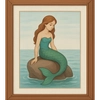
The Little Mermaid is a bronze statue by Edvard Eriksen, depicting a mermaid becoming human.
Reads at Grades 6–8 Listens at Grades 4–8
Print & create
Answer keys·No prep·Free with an account
28 worksheets · answer keys · full story · quiz · Ages 10-12 · CEFR B2
Plus adds 164,000+ more stories in 27 languages, audio for every one, and printables for all of them.
Just want The Little Mermaid?
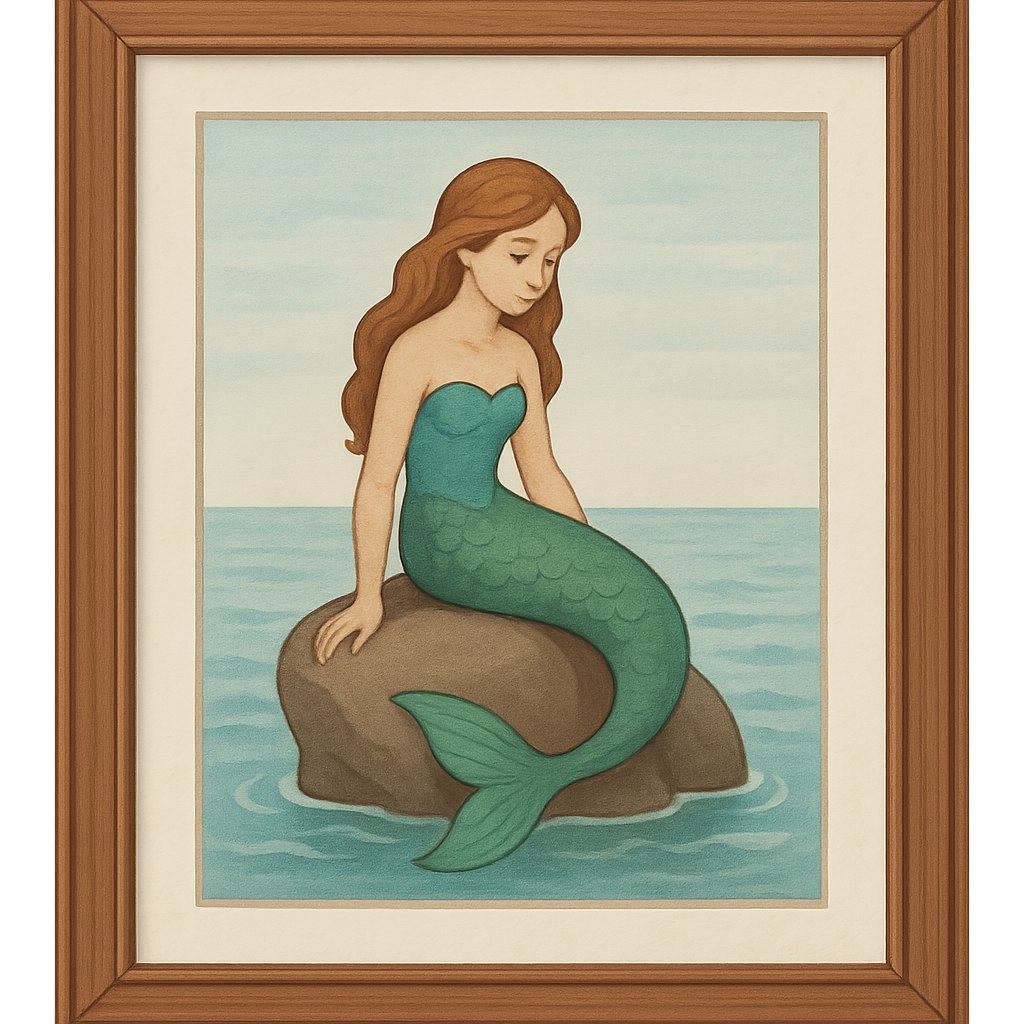
The cool sea spray mists my face, and the sound of waves lapping against granite is the only music I have ever known. From my perch on this rock, I watch the great ships sail in and out of the harbor, their horns calling out across the water. My gaze is forever fixed on the horizon, a constant watch that feels like a mix of peaceful stillness and a deep, unending longing. I am made of cold, hard bronze, but my story is full of warmth, dreams, and the passion of art. To the people of my city, I am a familiar sight, a quiet friend who has been waiting by the water's edge for more than a century. They know my story, and soon you will, too. I am The Little Mermaid.
My story begins not in the sea, but inside a grand theater in the year 1909. A man named Carl Jacobsen, whose family was famous for brewing Carlsberg beer, attended a ballet performance. The ballet was based on a beautiful, sad story written many years before, in 1837, by the wonderful Danish author Hans Christian Andersen. Mr. Jacobsen was so moved by the tale of the mermaid who longed for a human soul that he decided she deserved to be immortalized, cast in bronze for everyone in Copenhagen to see. He hired a talented sculptor named Edvard Eriksen to bring me to life. Edvard knew he had to find the perfect inspiration. The prima ballerina who danced the mermaid role, a woman named Ellen Price, agreed to model for my face. However, she did not wish to pose for the full figure, so for my body, Edvard’s own wife, Eline Eriksen, became the model. I am a blend of a dancer's grace and a sculptor's love for his wife, a secret that makes my story even more human.
The Little Mermaid of Copenhagen
The cool sea spray mists my face, and the sound of waves lapping against granite is the only music I have ever known. From my perch on this rock, I watch the great ships sail in and out of the harbor, their horns calling out across the water. My gaze is forever fixed on the horizon, a constant watch that feels like a mix of peaceful stillness and a deep, unending longing. I am made of cold, hard bronze, but my story is full of warmth, dreams, and the passion of art. To the people of my city, I am a familiar sight, a quiet friend who has been waiting by the water's edge for more than a century. They know my story, and soon you will, too. I am The Little Mermaid.
My story begins not in the sea, but inside a grand theater in the year 1909. A man named Carl Jacobsen, whose family was famous for brewing Carlsberg beer, attended a ballet performance. The ballet was based on a beautiful, sad story written many years before, in 1837, by the wonderful Danish author Hans Christian Andersen. Mr. Jacobsen was so moved by the tale of the mermaid who longed for a human soul that he decided she deserved to be immortalized, cast in bronze for everyone in Copenhagen to see. He hired a talented sculptor named Edvard Eriksen to bring me to life. Edvard knew he had to find the perfect inspiration. The prima ballerina who danced the mermaid role, a woman named Ellen Price, agreed to model for my face. However, she did not wish to pose for the full figure, so for my body, Edvard’s own wife, Eline Eriksen, became the model. I am a blend of a dancer's grace and a sculptor's love for his wife, a secret that makes my story even more human.
Creating me was a long and careful process. First, Edvard shaped me from heavy, wet clay, paying close attention to every detail—the curve of my tail, the hopeful yet sorrowful expression on my face, the way I sit perched on my rock as if I have just emerged from the sea. Once the clay model was perfect, a plaster mold was made from it. Into this mold, glowing, liquid bronze was poured, heated to an incredible temperature. As the metal slowly cooled and hardened, I was born. I became solid and strong, ready to face the salty wind and crashing waves for centuries to come. On August 23rd, 1913, I was finally brought to my permanent home. I was placed on a large granite rock at the Langelinie promenade, right by the water in Copenhagen, Denmark. I was a gift from Carl Jacobsen to his beloved city, and from that day forward, I began my silent watch over the harbor.
For over a hundred years, I have sat here, a silent witness to history. I have seen the city grow and change, watched horse-drawn carriages give way to automobiles, and welcomed millions of visitors from every corner of the world. They come to sit with me, to take photographs, and to whisper their own dreams into the sea breeze. My life has not always been peaceful. On several occasions, people have been unkind and have tried to damage me. But each time, the people of Copenhagen have lovingly repaired me, a testament to how much I mean to them and their city. I have even traveled. In 2010, I was carefully lifted from my rock and journeyed all the way to Shanghai, China. I was the star of the Danish Pavilion at the World Expo, sharing my story with millions of new friends before returning home to my familiar spot by the sea.
Today, I am more than just a bronze sculpture sitting on a rock. I have become a symbol of my home, Copenhagen, and a powerful reminder of the enduring magic of stories. I represent the courage it takes to dream of a different world, and I embody the bittersweet feeling of longing for something that seems just out of reach, a core theme from Hans Christian Andersen’s original tale. When people look at me, they see the heartbroken character from the famous fairy tale, but perhaps they also see a piece of their own story—a dream they are chasing or a love they hold dear. I am here to remind every person who visits that even when you feel small or quiet, your dreams are as vast as the ocean. And stories, like the sea itself, connect us all across time and distance.
Wow facts
About
The Little Mermaid is a bronze statue by Edvard Eriksen, depicting a mermaid becoming human. The sculpture is displayed on a rock by the waterside at the Langelinie promenade in Copenhagen, Denmark.
Take a Quiz
Question 1 of 5
Using details from the story, retell the process of how the Little Mermaid statue was created, from the initial idea to its final placement in the harbor.
Explore next






Want to do even more?
Go beyond exploring. Unlock tools that turn every story into real learning.

Storypie Plus for families
Full stories, quizzes, and printables. Nights and car rides, sorted.
- Unlimited audio stories
- Create Mode: your child stars in the story
- Offline downloads
- Printable worksheets & coloring pages

Why Storypie for Schools
Students engaged. Prep in seconds. Evenings back to you.
- Worksheets & Quizzes
- Classroom Management
- Formative Assessment
- Custom Curriculum & Lesson Plans
- 27 Languages

Why Storypie for Homeschool
Curriculum done. They'll ask for more. Hours back in your day.
- Worksheet Generator
- First-Person Audio Stories
- Built-in Comprehension Quizzes
- Custom Curriculum & Lesson Plans
- Print & Go Activities