English

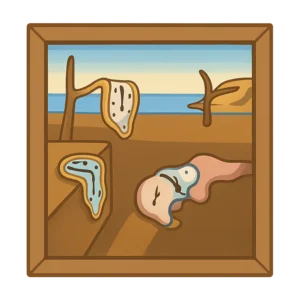
The Persistence of Memory
A 1931 surrealist painting by Salvador Dalí…
Reads at Grades 3–5 Listens at Grades 1–5
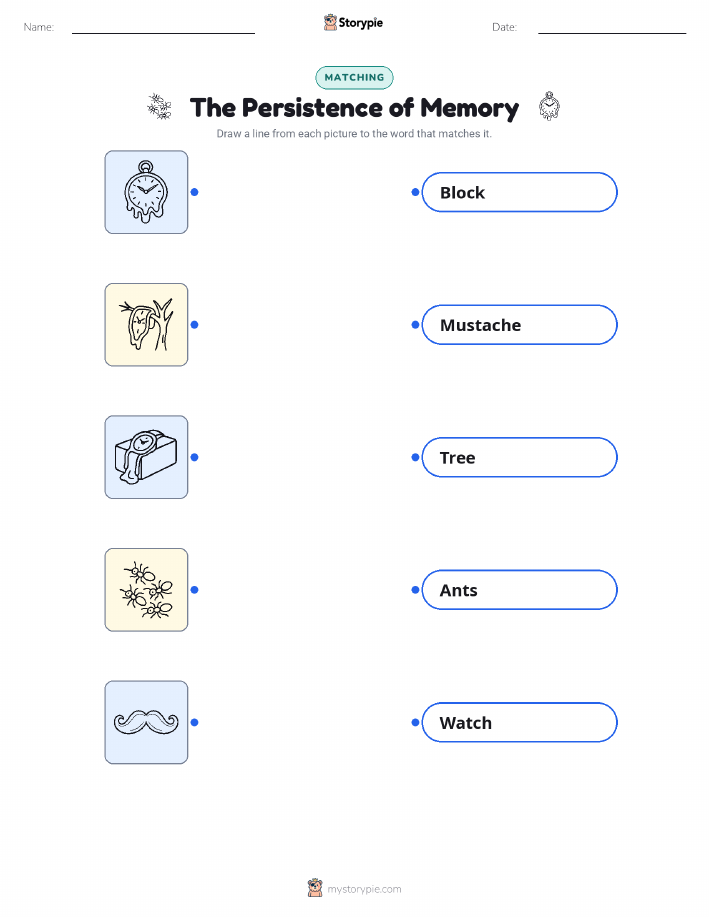
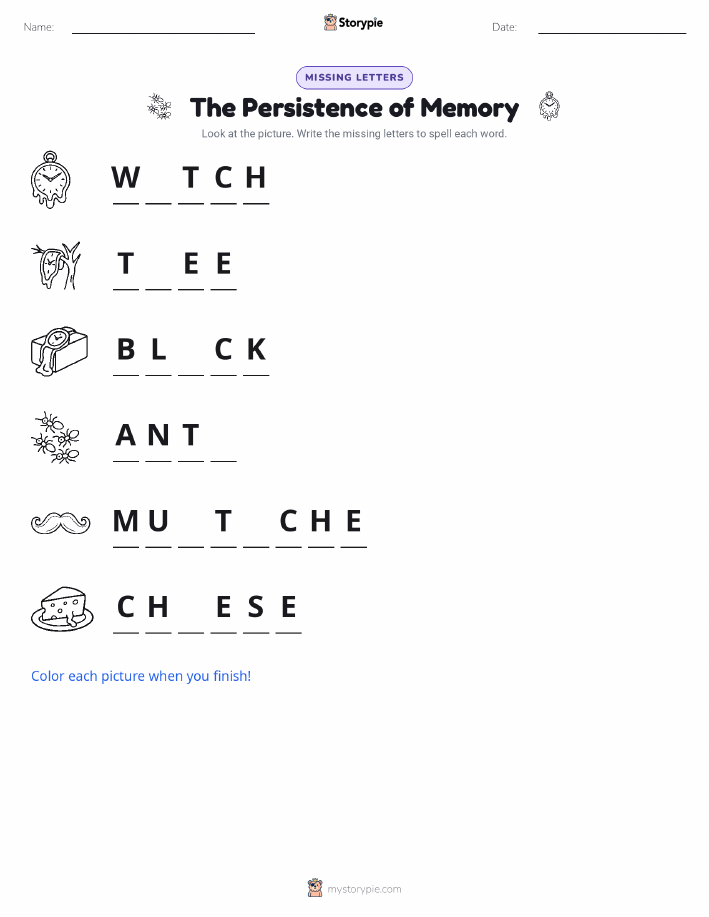
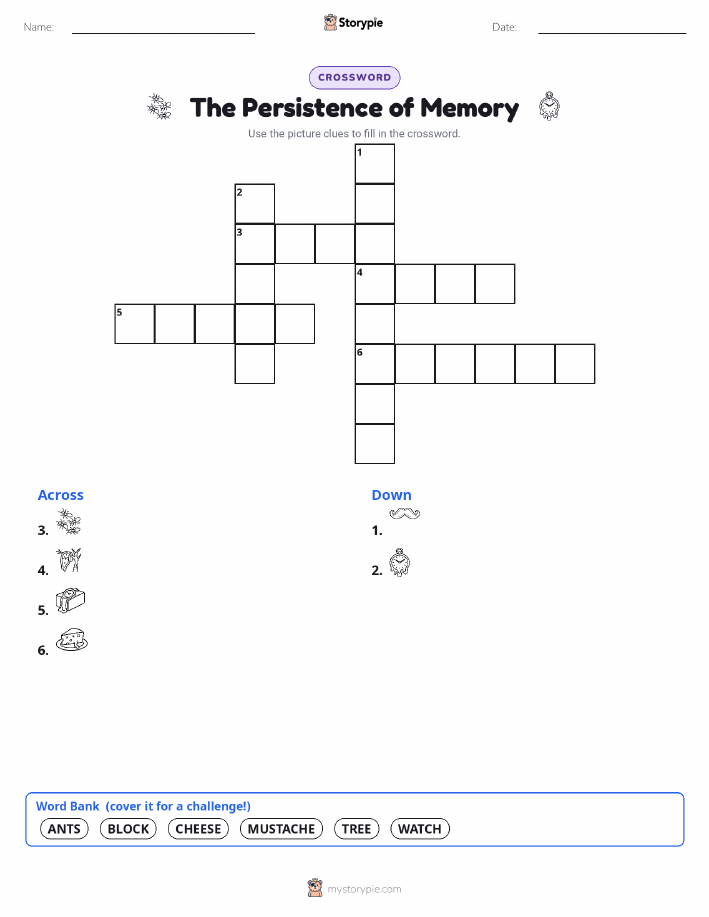
Print & create
Answer keys·No prep·Free with an account
28 worksheets · answer keys · full story · quiz · Ages 8-10 · CEFR B1
Plus adds 280,000+ more stories in 27 languages, audio for every one, and printables for all of them.
Just want The Persistence of Memory?
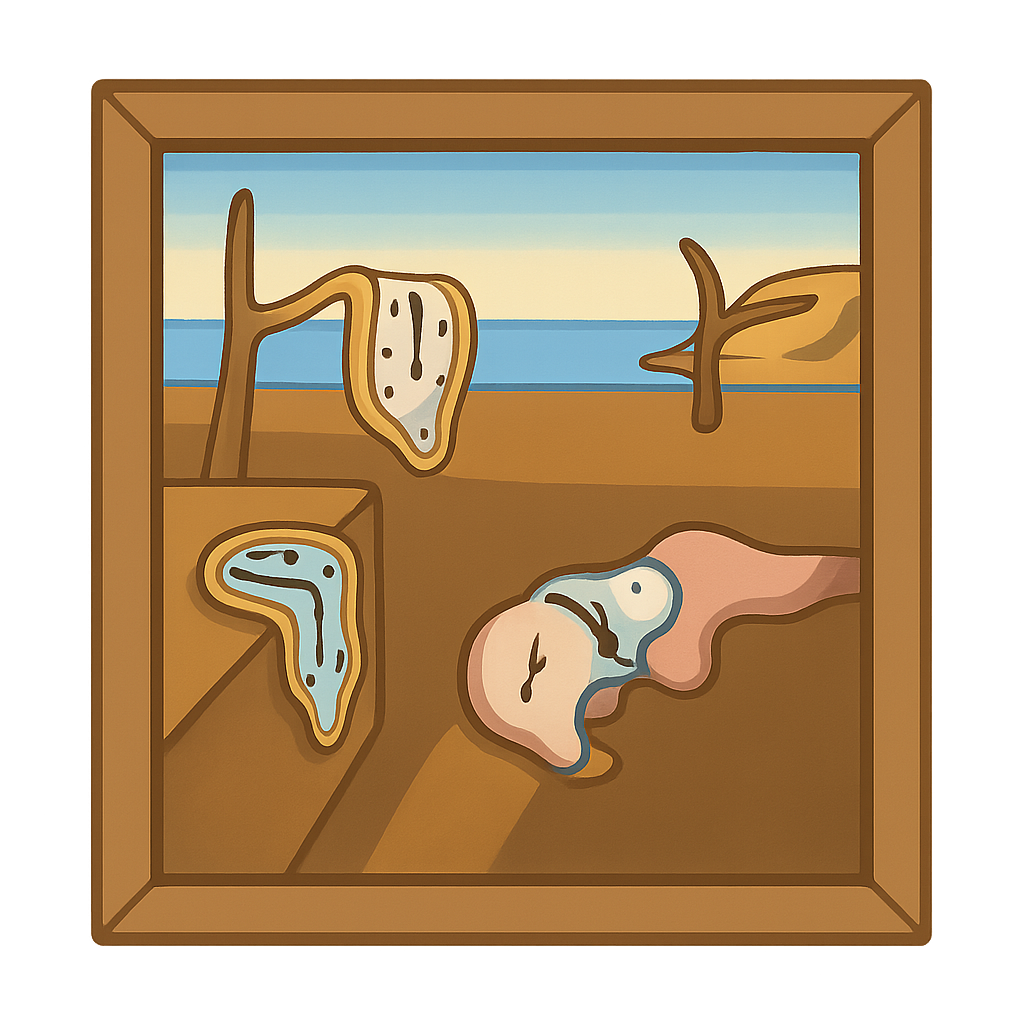
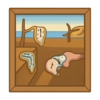
Have you ever been to a place that feels both real and like a dream. I live in one. My world is a quiet, empty beach under a strange, golden sky. There are no people here, only silence and the soft lapping of a distant sea against the cliffs. But the most peculiar things are my clocks. They aren't hard and round like the ones you see on a wall. My clocks are soft, like warm caramel, and they drip and droop over everything. One hangs from the branch of a dead olive tree, another melts over the edge of a block, and a third rests on a strange, sleeping creature on the ground. Some people think that creature, with its long eyelashes, is a picture of my creator sleeping and dreaming me into existence. Not everything is sleepy, though. On one of my clocks, a whole army of ants swarms together, a tiny, busy spot in a very still world. They seem to be eating time itself. For a long time, I was just an idea, a silent landscape waiting to be seen. I am a dream you can visit with your eyes wide open. I am a painting called The Persistence of Memory.
My creator was a man with an imagination as wild and pointy as his famous mustache. His name was Salvador Dalí, and he was a Spanish artist who lived a long time ago. Dalí was a special kind of artist called a Surrealist, which is a fancy word for someone who paints pictures from their subconscious mind—their dreams, their memories, and their deepest thoughts. He believed that the world in our heads was just as real and important as the world outside. One hot summer evening in 1931, Dalí was thinking about the nature of time. After eating dinner, he stared at a wheel of soft, gooey Camembert cheese that was melting in the heat. Suddenly, a brilliant and bizarre idea popped into his head. What if clocks weren't hard and rigid. What if time itself could be soft, bendable, and melty, just like that cheese. That cheesy idea was how I was born. He picked up his paintbrush and began to bring my strange world to life. He painted the cliffs from his home in Catalonia, Spain, in the background, making my dreamscape a place that was very personal to him. With each careful brushstroke, he made my clocks look so real you could almost imagine them slowly dripping onto the sand.
The Persistence of Memory
Have you ever been to a place that feels both real and like a dream. I live in one. My world is a quiet, empty beach under a strange, golden sky. There are no people here, only silence and the soft lapping of a distant sea against the cliffs. But the most peculiar things are my clocks. They aren't hard and round like the ones you see on a wall. My clocks are soft, like warm caramel, and they drip and droop over everything. One hangs from the branch of a dead olive tree, another melts over the edge of a block, and a third rests on a strange, sleeping creature on the ground. Some people think that creature, with its long eyelashes, is a picture of my creator sleeping and dreaming me into existence. Not everything is sleepy, though. On one of my clocks, a whole army of ants swarms together, a tiny, busy spot in a very still world. They seem to be eating time itself. For a long time, I was just an idea, a silent landscape waiting to be seen. I am a dream you can visit with your eyes wide open. I am a painting called The Persistence of Memory.
My creator was a man with an imagination as wild and pointy as his famous mustache. His name was Salvador Dalí, and he was a Spanish artist who lived a long time ago. Dalí was a special kind of artist called a Surrealist, which is a fancy word for someone who paints pictures from their subconscious mind—their dreams, their memories, and their deepest thoughts. He believed that the world in our heads was just as real and important as the world outside. One hot summer evening in 1931, Dalí was thinking about the nature of time. After eating dinner, he stared at a wheel of soft, gooey Camembert cheese that was melting in the heat. Suddenly, a brilliant and bizarre idea popped into his head. What if clocks weren't hard and rigid. What if time itself could be soft, bendable, and melty, just like that cheese. That cheesy idea was how I was born. He picked up his paintbrush and began to bring my strange world to life. He painted the cliffs from his home in Catalonia, Spain, in the background, making my dreamscape a place that was very personal to him. With each careful brushstroke, he made my clocks look so real you could almost imagine them slowly dripping onto the sand.
When I was finished and people first saw me in 1931, they would just stand and stare. They had never seen anything quite like me. Can you imagine seeing a clock that looks like it could puddle on the floor. People were confused, but also fascinated. I made them ask big questions. Is time always ticking forward at the same speed. Or can it stretch out when you're bored and shrink when you're having fun, just like it does in our memories. I became famous very quickly. A few years later, in 1934, I traveled across a huge ocean to a new home in New York City, at the Museum of Modern Art. Here, I have watched generations of visitors gaze into my quiet world. I see children point at my melty clocks and grown-ups whisper about what I mean. I am more than just oil paint on a canvas. I am a reminder that your imagination is a powerful, wonderful place. I show everyone that the strangest ideas can sometimes be the most brilliant, connecting us all through the timeless wonder of a dream.
Wow facts
About
A 1931 surrealist painting by Salvador Dalí, famous for its depiction of melting pocket watches in a dreamlike landscape, exploring the concepts of time, memory, and the subconscious.
Take a Quiz
Question 1 of 5
In the story, the painting says Dalí was a 'Surrealist'. In your own words, what does being a Surrealist mean?
Explore next





Want to do even more?
Go beyond exploring. Unlock tools that turn every story into real learning.

Storypie Plus for families
Full stories, quizzes, and printables. Nights and car rides, sorted.
- Unlimited audio stories
- Create Mode: your child stars in the story
- Offline downloads
- Printable worksheets & coloring pages

Why Storypie for Schools
Students engaged. Prep in seconds. Evenings back to you.
- Worksheets & Quizzes
- Classroom Management
- Formative Assessment
- Custom Curriculum & Lesson Plans
- 27 Languages

Why Storypie for Homeschool
Curriculum done. They'll ask for more. Hours back in your day.
- Worksheet Generator
- First-Person Audio Stories
- Built-in Comprehension Quizzes
- Custom Curriculum & Lesson Plans
- Print & Go Activities