English

Chuseok
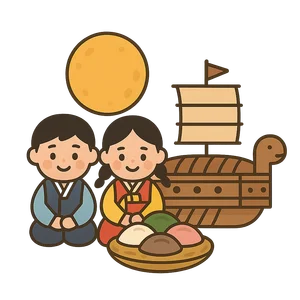
Chuseok is a major Korean harvest festival celebrated on the 15th day of the 8th month of the lunar calendar…
Reads at Grades 3–5 Listens at Grades 1–5
Print & create
Answer keys·No prep·Free with an account
28 worksheets · answer keys · full story · quiz · Ages 8-10 · CEFR B1
Plus adds 116,000+ more stories in 27 languages, audio for every one, and printables for all of them.
Just want Chuseok?
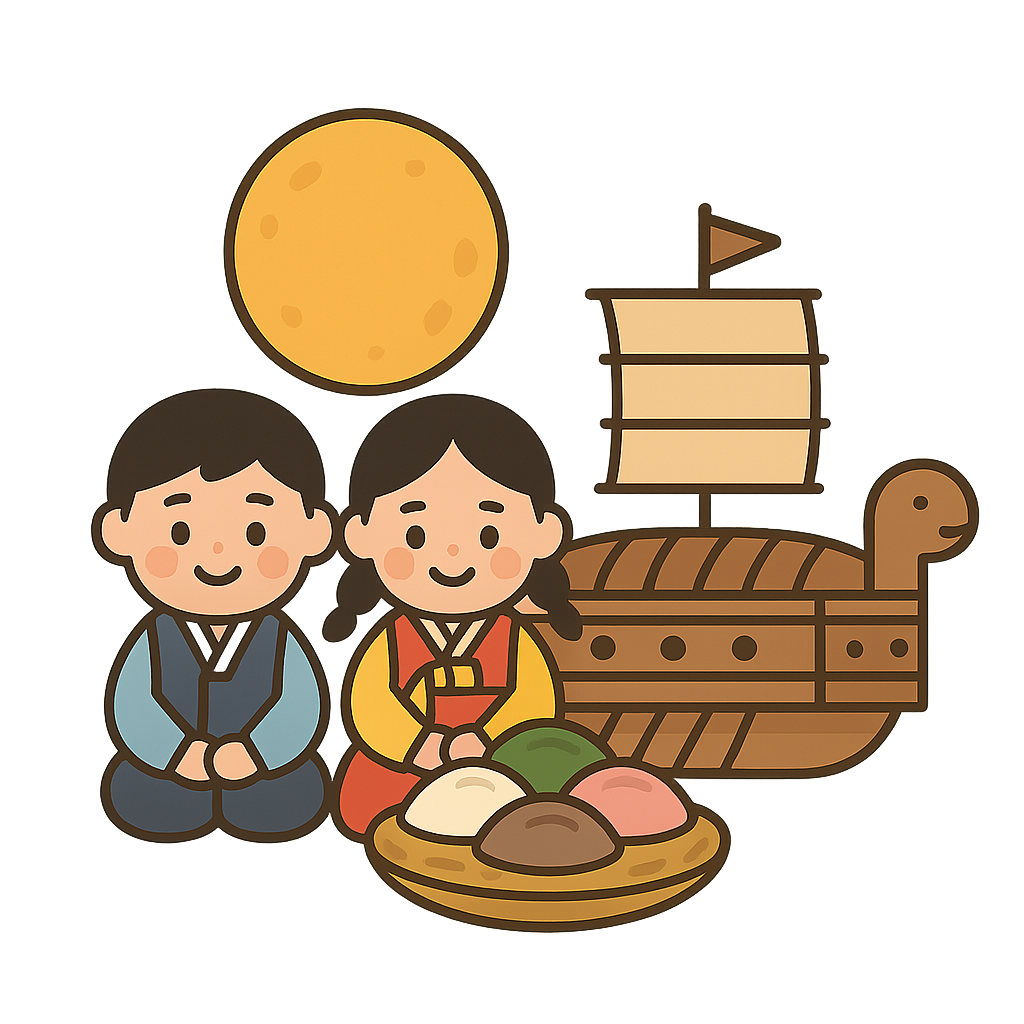
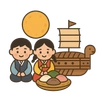
My name is Areum, and I lived long, long ago in the Silla Kingdom, a beautiful land of green mountains and golden fields. As summer faded and the air began to feel crisp and cool, a special kind of excitement filled my village. It was the time of the autumn harvest, when the rice fields shimmered like gold under the sun and the persimmon trees were heavy with bright orange fruit. This was our busiest time, but also our most joyful. This year felt even more special. Our King, a wise and kind ruler, announced a wonderful idea to make the harvest season more festive. He declared a friendly, month-long weaving competition for all the women in the capital. We were divided into two teams, and for a full month, we would weave as much hemp cloth as we could. The competition would end with a grand celebration on the day of the full harvest moon, a day we called Hangawi, meaning 'the great middle of autumn.' My friends and I were thrilled. It was a chance to show our skill, but more importantly, to come together as a community before the cold winter arrived.
Our days became a wonderful rhythm of work and laughter. From sunrise to sunset, the sound of our looms filled the air, a steady 'clack-clack-clack' that sounded like music to my ears. My team worked side-by-side, our fingers flying as we turned the rough fibers into smooth, strong cloth. Even though we were in a competition, there was no anger or jealousy between the teams. We shared stories, sang songs, and encouraged each other. The contest wasn't about beating the other team; it was about creating something beautiful together and celebrating our hard work. Finally, the big day arrived: the 15th day of the 8th month. The moon hung in the sky like a giant, glowing pearl. The judges measured all the cloth we had woven over the past month. My team had worked hard, but the other team had woven just a little bit more. We had lost the competition, but I didn't feel sad at all. As was the tradition set by the King, the losing team had the honor of preparing a great feast for everyone. We gathered the best of the new harvest—fresh rice, shiny chestnuts, and sweet jujubes. The most special food we made was songpyeon, small rice cakes shaped like a half-moon. We filled them with sweet beans and sesame seeds and steamed them over a bed of pine needles, which made them smell like the forest. That night, everyone, both teams together, shared the delicious food under the moonlight. We joined hands and danced in a big circle, singing ancient songs of thanks for the bountiful harvest.
The First Chuseok: A Weaver's Story
My name is Areum, and I lived long, long ago in the Silla Kingdom, a beautiful land of green mountains and golden fields. As summer faded and the air began to feel crisp and cool, a special kind of excitement filled my village. It was the time of the autumn harvest, when the rice fields shimmered like gold under the sun and the persimmon trees were heavy with bright orange fruit. This was our busiest time, but also our most joyful. This year felt even more special. Our King, a wise and kind ruler, announced a wonderful idea to make the harvest season more festive. He declared a friendly, month-long weaving competition for all the women in the capital. We were divided into two teams, and for a full month, we would weave as much hemp cloth as we could. The competition would end with a grand celebration on the day of the full harvest moon, a day we called Hangawi, meaning 'the great middle of autumn.' My friends and I were thrilled. It was a chance to show our skill, but more importantly, to come together as a community before the cold winter arrived.
Our days became a wonderful rhythm of work and laughter. From sunrise to sunset, the sound of our looms filled the air, a steady 'clack-clack-clack' that sounded like music to my ears. My team worked side-by-side, our fingers flying as we turned the rough fibers into smooth, strong cloth. Even though we were in a competition, there was no anger or jealousy between the teams. We shared stories, sang songs, and encouraged each other. The contest wasn't about beating the other team; it was about creating something beautiful together and celebrating our hard work. Finally, the big day arrived: the 15th day of the 8th month. The moon hung in the sky like a giant, glowing pearl. The judges measured all the cloth we had woven over the past month. My team had worked hard, but the other team had woven just a little bit more. We had lost the competition, but I didn't feel sad at all. As was the tradition set by the King, the losing team had the honor of preparing a great feast for everyone. We gathered the best of the new harvest—fresh rice, shiny chestnuts, and sweet jujubes. The most special food we made was songpyeon, small rice cakes shaped like a half-moon. We filled them with sweet beans and sesame seeds and steamed them over a bed of pine needles, which made them smell like the forest. That night, everyone, both teams together, shared the delicious food under the moonlight. We joined hands and danced in a big circle, singing ancient songs of thanks for the bountiful harvest.
As I looked at the smiling faces of my friends and family, all gathered under the bright moon, I understood the true meaning of our celebration. Hangawi wasn't just about weaving or feasts. It was a day to give thanks for the food the earth had given us. It was a time to honor our ancestors, so we set up a special table with the best new foods for them, hoping their spirits would join our celebration. Most of all, it was about cherishing our families and neighbors, and the strong bonds that held our community together. I remember thinking that this feeling of gratitude and togetherness was so precious. I hoped that this tradition of ours, this day of thanks and joy, would last forever, passed down through generations. And it has. The celebration you know today as Chuseok started with us, with our looms and our songs under the harvest moon. Looking back, I see that the most important thing we wove wasn't cloth; it was a tradition of love, gratitude, and family that is still celebrated by people today.
Wow facts
About
Chuseok is a major Korean harvest festival celebrated on the 15th day of the 8th month of the lunar calendar, where families gather to honor ancestors and give thanks for the autumn harvest.
Take a Quiz
Question 1 of 5
What was the name of the weaving competition Areum participated in?
Want to do even more?
Go beyond exploring. Unlock tools that turn every story into real learning.

Storypie Plus for families
Full stories, quizzes, and printables. Nights and car rides, sorted.
- Unlimited audio stories
- Create Mode: your child stars in the story
- Offline downloads
- Printable worksheets & coloring pages

Why Storypie for Schools
Students engaged. Prep in seconds. Evenings back to you.
- Worksheets & Quizzes
- Classroom Management
- Formative Assessment
- Custom Curriculum & Lesson Plans
- 27 Languages

Why Storypie for Homeschool
Curriculum done. They'll ask for more. Hours back in your day.
- Worksheet Generator
- First-Person Audio Stories
- Built-in Comprehension Quizzes
- Custom Curriculum & Lesson Plans
- Print & Go Activities