English

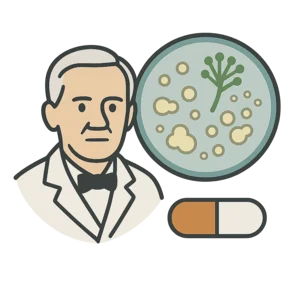
Discovery of Penicillin
The accidental discovery of the first antibiotic, penicillin, by Scottish scientist Alexander Fleming in 1928…
Reads at Grades 6–8 Listens at Grades 4–8
 Screen-free speaker. Built for your kids.
No card, no commitment. One email when there is real news, and one click to stop.
Print & create
Answer keys·No prep·Free with an account
28 worksheets · answer keys · full story · quiz · Ages 10-12 · CEFR B2
Plus adds 102,000+ more stories in 27 languages, audio for every one, and printables for all of them.
Just want Discovery of Penicillin?
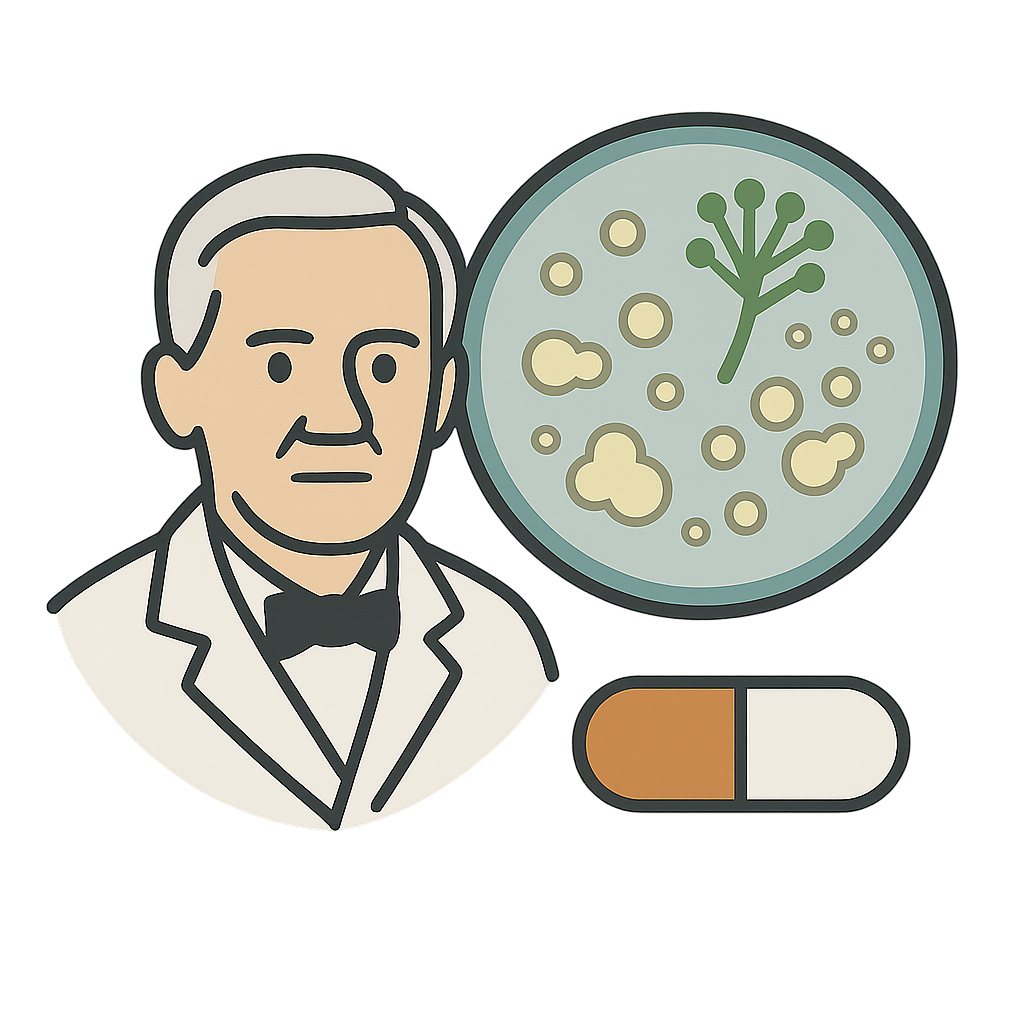
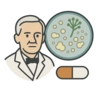
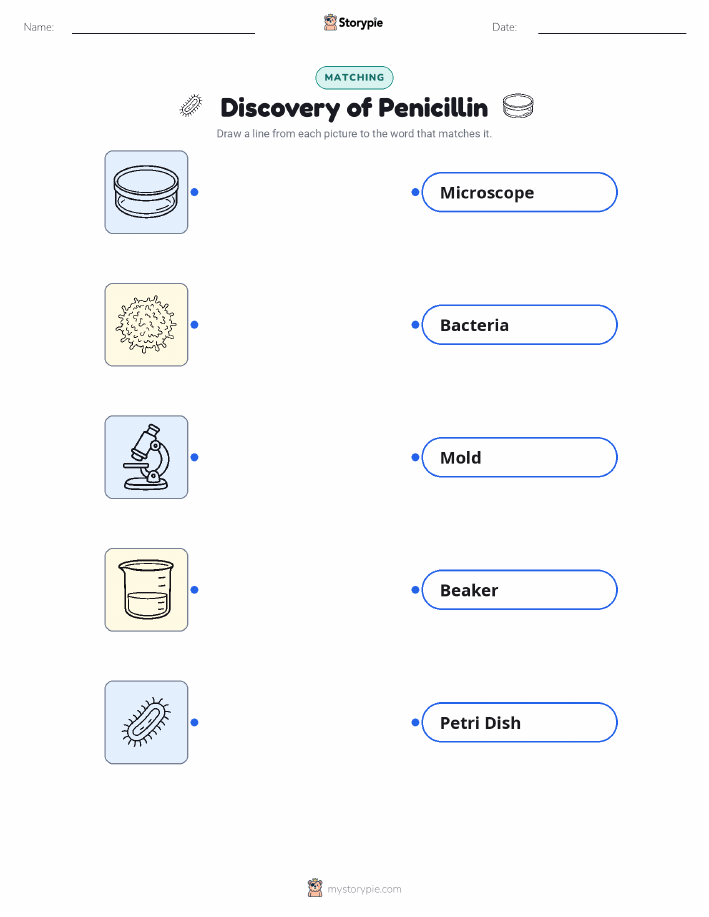
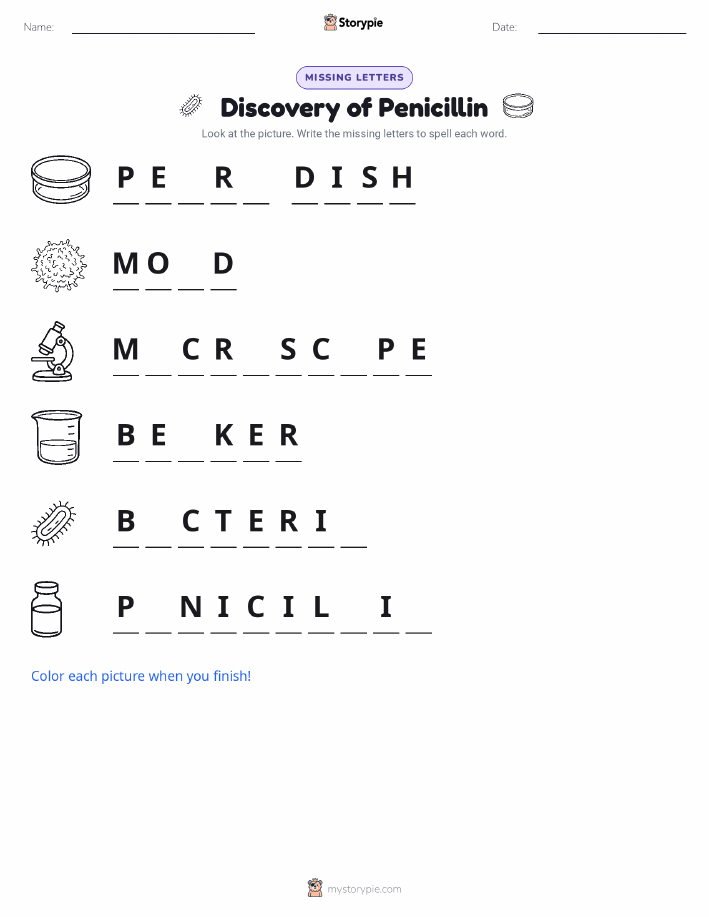
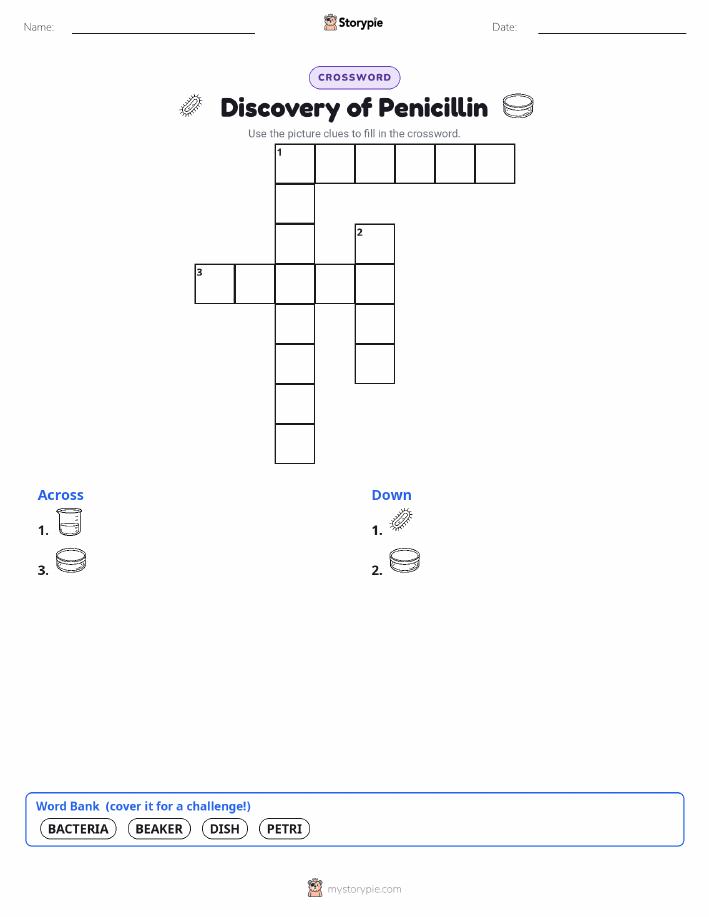
My name is Alexander Fleming, and my world has always been the one you can only see through a microscope. I am a scientist, a bacteriologist to be precise, and back in the 1920s, my greatest foe was a tiny but powerful germ called staphylococcus. These bacteria were responsible for all sorts of nasty infections, and I spent my days at St. Mary's Hospital in London trying to find ways to defeat them. My laboratory, I must admit, was not the tidiest of places. It was a creative chaos of glass bottles, bubbling beakers, and stacks of petri dishes—those little round plates we use to grow bacteria. To me, each dish was a tiny battlefield where I could observe the endless war between germs and potential medicines. In August of 1928, London was sweltering, and I was long overdue for a holiday. I packed my bags, eager for a rest in the countryside with my family. Before I left, I tidied my bench a bit, but I left a stack of about thirty petri dishes I had been working on to one side. They were coated with the staphylococci I was studying. It was a bit of a careless thing to do, as good laboratory practice dictated they should have been cleaned before I departed. But in my haste to escape the city heat, I simply left them there. I had no idea that this small, forgetful act—this fortunate mistake—was about to change the course of medicine forever.
I returned to my lab on a cool morning, September 3, 1928, feeling refreshed from my holiday but dreading the cleanup that awaited me. I began sorting through the stack of old petri dishes, preparing to sterilize them for new experiments. One by one, I dropped them into a tray of disinfectant. As I picked up one dish from near the bottom of the stack, something caught my eye. It was different from the others. A fuzzy, blue-green mold, like the kind you might see on a forgotten piece of bread, was growing on one side of the plate. This wasn't unusual; my lab was old, and spores often drifted in through the open window. I was about to discard it when I looked closer. What was truly astonishing was what surrounded the patch of mold. In a perfect circle around it, the colonies of staphylococci bacteria had vanished. They were completely dissolved, as if a tiny, invisible army had wiped them out. Further away from the mold, the bacteria grew thick and strong, but near it, there was nothing. I remember saying to my assistant, 'That's funny.' But it was more than funny; it was a revelation. Something in that mold was producing a substance that was lethal to the bacteria. I knew instantly that I was on to something monumental. I carefully cultivated the mold, which was later identified as *Penicillium notatum*, and began experimenting with the 'mold juice' it produced. I found that this substance could kill a wide range of harmful bacteria. The challenge, however, was immense. The substance was incredibly difficult to extract in large quantities, and it was unstable, losing its power quickly. I named it 'penicillin,' and though I published my findings in 1929, I simply could not produce enough of it to treat a single patient. For nearly a decade, my discovery remained a fascinating laboratory curiosity, a promise of a cure that I couldn't quite deliver.
Alexander Fleming and the Magic Mold
My name is Alexander Fleming, and my world has always been the one you can only see through a microscope. I am a scientist, a bacteriologist to be precise, and back in the 1920s, my greatest foe was a tiny but powerful germ called staphylococcus. These bacteria were responsible for all sorts of nasty infections, and I spent my days at St. Mary's Hospital in London trying to find ways to defeat them. My laboratory, I must admit, was not the tidiest of places. It was a creative chaos of glass bottles, bubbling beakers, and stacks of petri dishes—those little round plates we use to grow bacteria. To me, each dish was a tiny battlefield where I could observe the endless war between germs and potential medicines. In August of 1928, London was sweltering, and I was long overdue for a holiday. I packed my bags, eager for a rest in the countryside with my family. Before I left, I tidied my bench a bit, but I left a stack of about thirty petri dishes I had been working on to one side. They were coated with the staphylococci I was studying. It was a bit of a careless thing to do, as good laboratory practice dictated they should have been cleaned before I departed. But in my haste to escape the city heat, I simply left them there. I had no idea that this small, forgetful act—this fortunate mistake—was about to change the course of medicine forever.
I returned to my lab on a cool morning, September 3, 1928, feeling refreshed from my holiday but dreading the cleanup that awaited me. I began sorting through the stack of old petri dishes, preparing to sterilize them for new experiments. One by one, I dropped them into a tray of disinfectant. As I picked up one dish from near the bottom of the stack, something caught my eye. It was different from the others. A fuzzy, blue-green mold, like the kind you might see on a forgotten piece of bread, was growing on one side of the plate. This wasn't unusual; my lab was old, and spores often drifted in through the open window. I was about to discard it when I looked closer. What was truly astonishing was what surrounded the patch of mold. In a perfect circle around it, the colonies of staphylococci bacteria had vanished. They were completely dissolved, as if a tiny, invisible army had wiped them out. Further away from the mold, the bacteria grew thick and strong, but near it, there was nothing. I remember saying to my assistant, 'That's funny.' But it was more than funny; it was a revelation. Something in that mold was producing a substance that was lethal to the bacteria. I knew instantly that I was on to something monumental. I carefully cultivated the mold, which was later identified as Penicillium notatum, and began experimenting with the 'mold juice' it produced. I found that this substance could kill a wide range of harmful bacteria. The challenge, however, was immense. The substance was incredibly difficult to extract in large quantities, and it was unstable, losing its power quickly. I named it 'penicillin,' and though I published my findings in 1929, I simply could not produce enough of it to treat a single patient. For nearly a decade, my discovery remained a fascinating laboratory curiosity, a promise of a cure that I couldn't quite deliver.
For ten long years, the potential of penicillin remained locked away in my scientific papers. I knew it could save lives, but I didn't have the resources or the chemical expertise to unlock its power. Then, a team of brilliant scientists at Oxford University, led by Howard Florey and Ernst Boris Chain, took up the challenge. They were determined to turn my 'mold juice' into a true medicine. Working tirelessly, they developed a revolutionary process to purify penicillin and, with the help of American laboratories, figured out how to mass-produce it. Their timing was critical. The world was in the midst of World War II, and soldiers were dying not just from their wounds, but from the terrible infections that followed. Penicillin became the miracle drug of the war, saving countless lives on the battlefield and in hospitals. In 1945, I had the immense honor of sharing the Nobel Prize with Florey and Chain. It was a powerful reminder that science is often a team effort, a relay race where one person's discovery is passed to another to carry it across the finish line. My accidental observation was the start, but their perseverance made it a reality. My story is a lesson I hope you will remember: always stay curious, pay attention to the unexpected, and never underestimate a little bit of mold. Sometimes, a fortunate mistake can change the world.
Wow facts
About
The accidental discovery of the first antibiotic, penicillin, by Scottish scientist Alexander Fleming in 1928, which revolutionized medicine.
Take a Quiz
Question 1 of 5
In your own words, retell the main events that led to the discovery and development of penicillin.
Explore next



Want to do even more?
Go beyond exploring. Unlock tools that turn every story into real learning.

Storypie Plus for families
Full stories, quizzes, and printables. Nights and car rides, sorted.
- Unlimited audio stories
- Create Mode: your child stars in the story
- Offline downloads
- Printable worksheets & coloring pages

Why Storypie for Schools
Students engaged. Prep in seconds. Evenings back to you.
- Worksheets & Quizzes
- Classroom Management
- Formative Assessment
- Custom Curriculum & Lesson Plans
- 27 Languages

Why Storypie for Homeschool
Curriculum done. They'll ask for more. Hours back in your day.
- Worksheet Generator
- First-Person Audio Stories
- Built-in Comprehension Quizzes
- Custom Curriculum & Lesson Plans
- Print & Go Activities