English
 Continue with Google
 Continue with Apple

The Man Who Sent the First Email
My name is Ray Tomlinson, and I want to take you back in time to 1971. The world was very different then. There were no smartphones in every pocket or computers in every home. The computers I worked with were behemoths, giant machines that filled entire rooms, humming with the sound of fans and blinking with rows of lights. To talk to someone who wasn't in the room with you, you’d either pick up a telephone connected to the wall by a curly cord or you’d write a letter, put it in an envelope with a stamp, and wait days for the postman to deliver it. It was a world of big machines and very slow messages. I was a computer engineer at a company called Bolt, Beranek and Newman, or BBN for short. We were working on something incredibly new and exciting called the ARPANET. You can think of it as the great-great-grandfather of the internet you use today. It was a network that connected these giant computers at different universities and research labs across the country. It was revolutionary, but it had a funny little problem. We had a program that let us leave messages for other people, like a digital note on a bulletin board. But it only worked if the other person used the exact same room-sized computer as you. It was like having a mailbox inside your house that only your family could use. If your friend lived right next door, you still couldn't send them a message through the network. It seemed so inefficient that these powerful, connected machines couldn’t pass a simple note to one another. That little problem got me thinking.
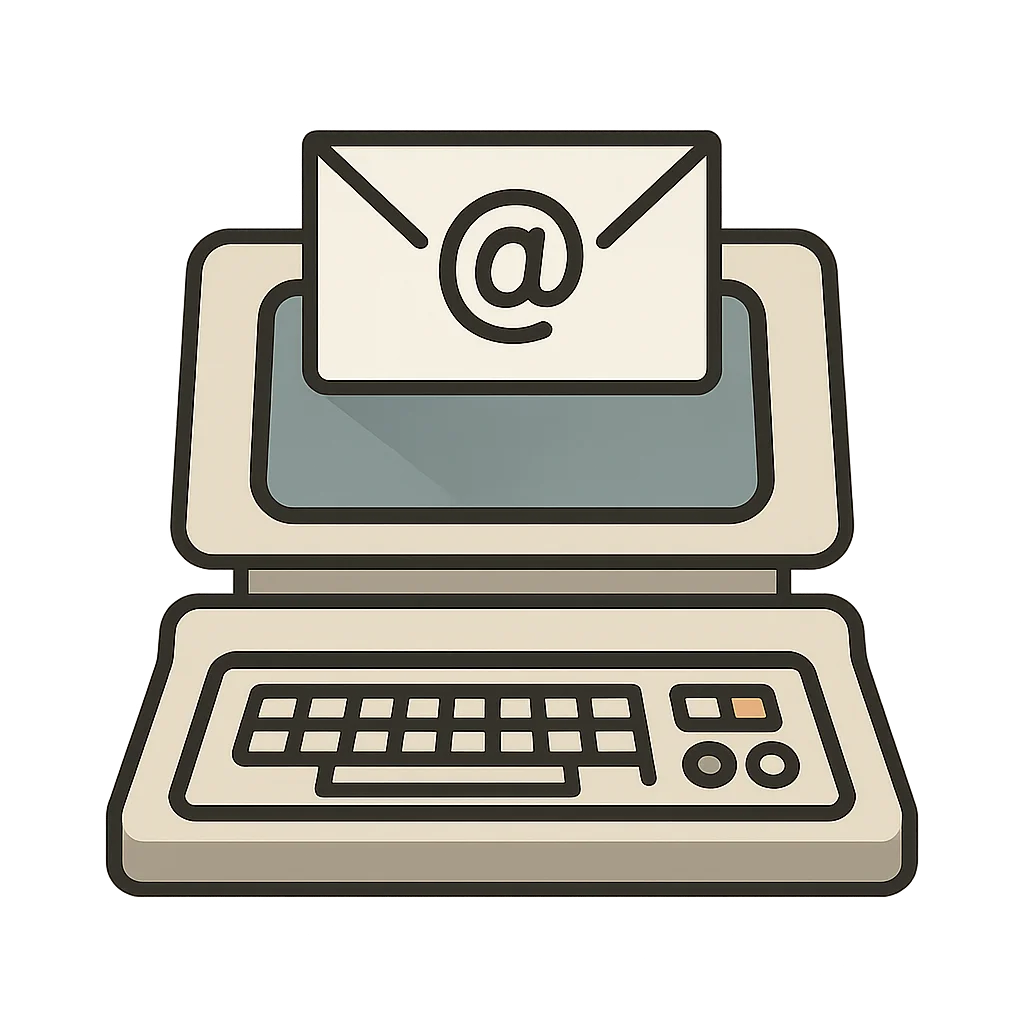
I spent my days tinkering with different programs, trying to see what they could do. At the time, I was working with two specific tools. One was called SNDMSG, which was short for “send message.” It was that program I mentioned, the one that let you leave a note for someone on the same computer. The other was a more powerful program called CPYNET, which stood for “copy net.” CPYNET was designed to send entire files from one computer to another over the ARPANET. They were two separate tools, built for two completely different jobs. Then one afternoon, a thought sparked in my mind. It wasn't a sudden flash of lightning, but more of a quiet, curious idea. What if I could combine them? What if I could use the network power of CPYNET to move the short, simple text of a SNDMSG file? It wasn't my main assignment; no one had asked me to do it. It was just a fascinating puzzle that I wanted to solve for my own satisfaction. The biggest hurdle was figuring out how to tell the network where to send the message. I needed an address, a unique identifier that said, “This message is for this person at that computer.” The address had to have two parts: the user’s name and the computer’s name. How could I connect them in a way a computer could understand, without causing confusion? I looked down at my clunky teletype keyboard. I searched for a symbol, a character that wasn’t already used in people’s names or in the names of the computers. My eyes landed on it: the “@” symbol. It was perfect. In English, it already meant “at.” So, an address like ‘tomlinson@bbn-tenexa’ would simply mean ‘Tomlinson at the BBN-TENEXA computer.’ It was elegant. It was logical. It was the missing piece of the puzzle.
With my new program written and my addressing system figured out, it was time for the test. In my lab, two large teletype machines sat side by side. They were physically only a few feet apart, but I was about to send a message between them through the ARPANET, as if they were in different cities. People always ask what profound, historic words I chose for that very first electronic mail. Was it a line of poetry or a famous quote? The truth is, I don’t remember the exact text. It was probably just a string of letters from the top row of the keyboard, something like ‘QWERTYUIOP.’ I was just a scientist testing my creation, making sure the wiring was all connected, so to speak. I typed the message on one machine, added the new address with the ‘@’ symbol, and hit the send key. I held my breath for a moment, then walked over to the other machine. And there it was. The letters had appeared. My little experiment had worked. I didn't hold a big press conference or announce my invention to the world. It felt like a small, personal victory. I simply told a few of my colleagues about it. I sent them an email explaining how to use my new program. Because it solved a problem they all had, they started using it. Then they told their friends at other labs, and those friends told their friends. The idea spread organically, not because it was launched as a big product, but simply because it was useful. I never imagined that my little side project, born out of curiosity, would one day connect billions of people around the globe. It all started with looking at two different ideas and wondering if they could work together to solve a simple problem. That small spark of curiosity changed the world forever.
Reading Comprehension Questions
Click to see answer