

 English

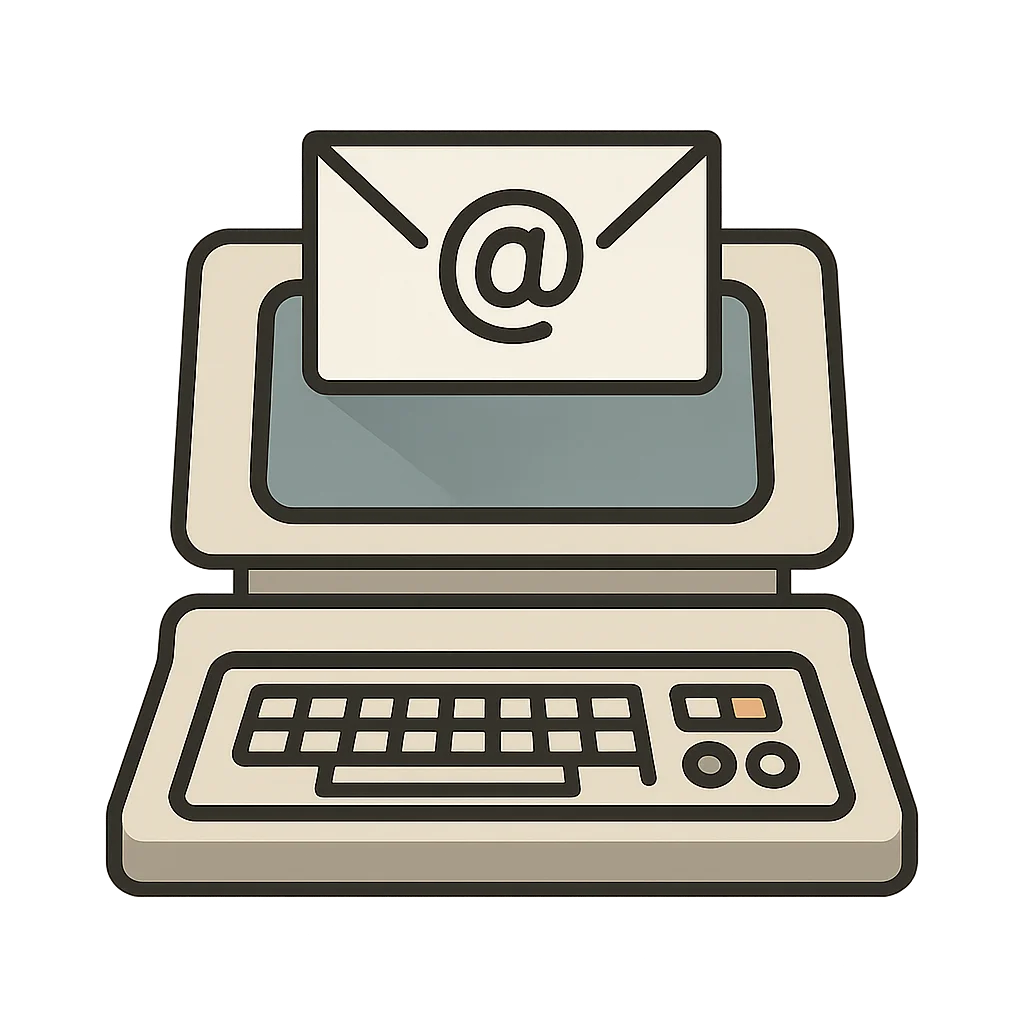
The First Email and Me
Hello there. My name is Ray Tomlinson, and I’m a computer engineer. Back in 1971, the world was a very different place. There were no laptops or smartphones. In fact, computers were gigantic machines that filled entire rooms, with whirring tapes and blinking lights. They were powerful, but they were also a bit lonely. You see, if I wanted to leave a message for my friend Jerry who worked down the hall, I could only do it if we both used the exact same giant computer. I’d type a note and it would sit there, waiting for him to log on to that one machine. If he was using the computer next door, he’d never see it. It was like leaving a note on a kitchen refrigerator, but you could only read it if you were standing in that specific kitchen. Our other choices weren’t much better. We could write a letter on paper, put it in an envelope with a stamp, and wait days for it to travel across the country. Or we could pick up a telephone, but that only worked if the person you were calling was home and free to talk right at that moment. I kept thinking there had to be a better, faster way for people to talk to each other using these amazing new machines.
One afternoon, I was tinkering with two different computer programs in my lab. One program, called SNDMSG, was for leaving those little messages I told you about on a single computer. The other, called CPYNET, was designed to send files from one computer to another over a new network called the ARPANET, which was like a tiny, early version of the internet. Suddenly, a spark of an idea hit me. What if I could combine them. What if I could use the file-sending program to send a message. I got to work, my fingers flying across the keyboard. The biggest puzzle was how to tell the computer who the message was for and where they were. I needed a special symbol, one that wasn't already used in people's names or computer names. I looked down at my keyboard. My eyes scanned the top row of keys, past the numbers and symbols. And there it was. The ‘@’ symbol. It was perfect. It meant ‘at.’ So, a message for ‘jerry’ who was ‘at’ computer ‘bbn-tenexa’ could be written as jerry@bbn-tenexa. It made perfect sense. I set up two big computers right next to each other in my lab. My heart thumped a little with nervous excitement. For my first test message, I didn’t type anything important or profound. I just typed the top row of letters on the keyboard: ‘QWERTYUIOP’. I hit the send key. For a moment, nothing happened. Then, on the screen of the other computer, the letters appeared. QWERTYUIOP. It worked. It felt like a little bit of magic, a jolt of excitement seeing my message jump from one machine to the other. I had just sent the world's very first email.
I was so excited about my little experiment that I immediately went and showed my colleague, Jerry. I expected him to be as thrilled as I was, but he just looked at me and said, 'Don't tell anyone. This wasn't what we were supposed to be working on.'. He was worried we might get in trouble for playing around. But an idea that useful is hard to keep quiet. Soon, other engineers on the ARPANET heard about my invention, and they all wanted to use it. It spread like wildfire because it solved a problem everyone had. It was simple, fast, and it let people communicate on their own time. Looking back now, I see how that one playful afternoon changed everything. That silly message, ‘QWERTYUIOP,’ was the start of a revolution that connected the entire world. Billions of emails are now sent every single day, helping people share ideas, stay in touch with family, and run businesses. It all started because I was curious and asked, ‘what if?’. Always remember that even the smallest idea, the simplest question, can grow into something that changes the world.
Activities
Take a Quiz
Test what you learned with a fun quiz!
Get creative with colors!
Print a coloring book page of this topic.







 Free for Educators