English

Independence of Brazil
The historical process that led to Brazil's separation from the United Kingdom of Portugal…
Reads at Grades 6–8 Listens at Grades 4–8
Print & create
Answer keys·No prep·Free with an account
28 worksheets · answer keys · full story · quiz · Ages 10-12 · CEFR B2
Plus adds 116,000+ more stories in 27 languages, audio for every one, and printables for all of them.
Just want Independence of Brazil?
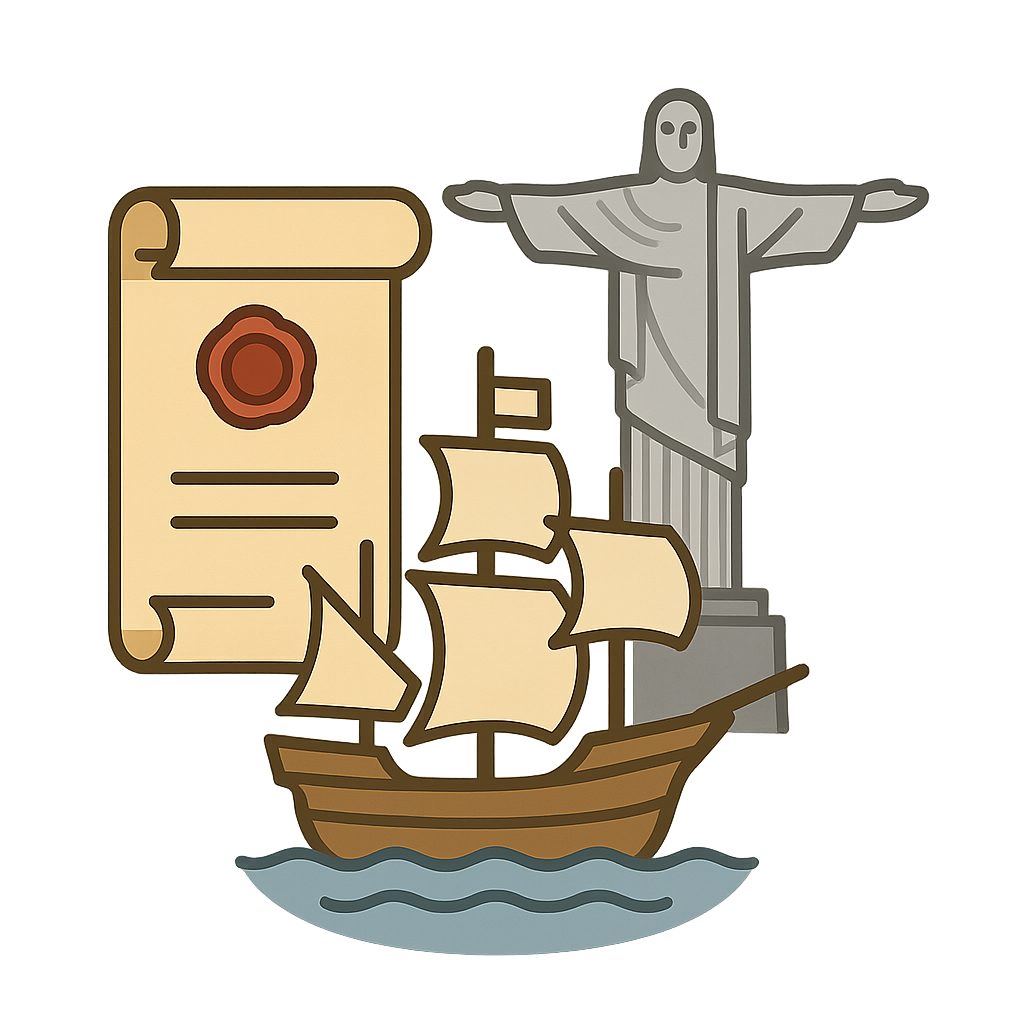
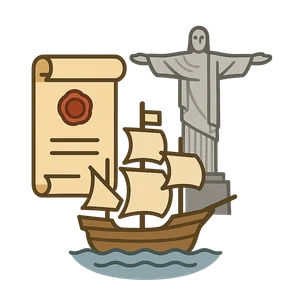
My name is Pedro, and though I was born a prince of Portugal, my heart belongs to Brazil. My story, and the story of Brazil’s birth as a nation, began with a hasty sea voyage. In 1808, when I was just a boy, the powerful French emperor Napoleon Bonaparte invaded my homeland. To escape, my entire family—the royal court of Portugal, led by my father, King João VI—packed onto ships and sailed across the vast Atlantic Ocean. Our destination was our largest colony, the vibrant and sprawling land of Brazil. I grew up not in the stuffy, ancient castles of Europe, but under the warm Brazilian sun. I learned to ride horses across wide-open plains and fell in love with the music, the colors, and the spirit of the people. Portugal was a distant memory, a place I barely knew. Brazil was my home.
Everything changed in 1821. With Napoleon defeated, the politicians in Portugal demanded my father’s return. He went back to rule as king, but he left me behind to govern Brazil as Prince Regent. It was a great responsibility. Almost immediately, tensions began to grow. The Portuguese government, known as the Cortes, grew jealous of Brazil's rising importance. They saw Brazil not as a kingdom equal to Portugal, but as a colony to be controlled. They passed laws to reduce its power and wealth, trying to turn back the clock. I could feel the resentment growing among the Brazilians I had come to love. They looked to me, their prince, to protect their home, and I knew a difficult choice was coming. I was caught between my duty to Portugal and my love for Brazil.
My Cry for Brazil
My name is Pedro, and though I was born a prince of Portugal, my heart belongs to Brazil. My story, and the story of Brazil’s birth as a nation, began with a hasty sea voyage. In 1808, when I was just a boy, the powerful French emperor Napoleon Bonaparte invaded my homeland. To escape, my entire family—the royal court of Portugal, led by my father, King João VI—packed onto ships and sailed across the vast Atlantic Ocean. Our destination was our largest colony, the vibrant and sprawling land of Brazil. I grew up not in the stuffy, ancient castles of Europe, but under the warm Brazilian sun. I learned to ride horses across wide-open plains and fell in love with the music, the colors, and the spirit of the people. Portugal was a distant memory, a place I barely knew. Brazil was my home.
Everything changed in 1821. With Napoleon defeated, the politicians in Portugal demanded my father’s return. He went back to rule as king, but he left me behind to govern Brazil as Prince Regent. It was a great responsibility. Almost immediately, tensions began to grow. The Portuguese government, known as the Cortes, grew jealous of Brazil's rising importance. They saw Brazil not as a kingdom equal to Portugal, but as a colony to be controlled. They passed laws to reduce its power and wealth, trying to turn back the clock. I could feel the resentment growing among the Brazilians I had come to love. They looked to me, their prince, to protect their home, and I knew a difficult choice was coming. I was caught between my duty to Portugal and my love for Brazil.
The pressure from the Portuguese Cortes became unbearable. They sent letters demanding that I give up my power and return to Europe at once. They wanted to strip Brazil of its autonomy and treat it like a simple possession again. But the Brazilian people had other ideas. They surrounded my palace, begging me not to abandon them. On January 9th, 1822, I stepped onto my balcony and made a promise that would change history. Looking out at the hopeful faces, I declared, “If it is for the good of all and the general happiness of the nation, I am ready. Tell the people that I shall stay.” That day became known as the 'Dia do Fico,' or 'I Shall Stay Day,' and it was my first open act of defiance. My decision was supported by two of my closest confidants. My brilliant wife, Maria Leopoldina, was a strong advocate for a free Brazil and urged me to listen to its people. My chief minister, José Bonifácio de Andrada e Silva, was a wise statesman who guided me, arguing that Brazil’s destiny was to be its own master.
Months passed, and the tension grew thicker with each ship that arrived from Portugal carrying new demands. In September of 1822, I was traveling on horseback near the Ipiranga River in São Paulo. A messenger, exhausted from his long ride, caught up with me and delivered a stack of letters. One was from José Bonifácio, another from my wife, Maria Leopoldina. They both warned me that the Cortes had cancelled all of my acts as Prince Regent and were preparing to treat me as a traitor. They had stripped me of all authority. Reading those words, I understood that there was no turning back. All paths to a peaceful compromise had been closed by the politicians an ocean away. I looked at my honor guard, the Dragoons of Independence, who watched me, waiting. In that moment, surrounded by my loyal soldiers on the quiet riverbank, I made my choice. I pulled my sword from its scabbard, raised it high in the air, and shouted the words that had been burning in my heart. “Independência ou Morte.”, Independence or Death.
That cry echoed from the banks of the Ipiranga and across the entire land. My return to Rio de Janeiro was a celebration. The people cheered not for a Portuguese prince, but for the founder of their own country. The path was now clear. On December 1st, 1822, in a grand ceremony, I was crowned Pedro I, the first Emperor of Brazil. Our independence wasn't secured with just a shout, of course. We had to fight a short war to remove the last of the Portuguese troops who refused to accept our freedom, but the spirit of the nation was united and strong. Brazil's journey to nationhood was unlike any other in the Americas. It did not become a republic through a long and bloody revolution but was born as an empire, led by the very prince who was supposed to keep it loyal to Portugal.
Looking back, I see that my life was tied to Brazil's destiny from the moment I first set foot on its shores as a boy. I had to choose between the old world I was born into and the new world that had become my home. By declaring independence, I helped unleash the immense potential of a nation rich in culture, resources, and spirit. My cry by the river was not just my own voice, but the voice of millions of Brazilians who yearned to build their own future. It was a declaration that Brazil was ready to stand on its own, a powerful and independent nation, forever free.
Wow facts
About
The historical process that led to Brazil's separation from the United Kingdom of Portugal, Brazil and the Algarves on September 7th, 1822, when Prince Regent Dom Pedro declared its independence.
Take a Quiz
Question 1 of 5
In your own words, describe the key events that led Dom Pedro to declare Brazil's independence.
Want to do even more?
Go beyond exploring. Unlock tools that turn every story into real learning.

Storypie Plus for families
Full stories, quizzes, and printables. Nights and car rides, sorted.
- Unlimited audio stories
- Create Mode: your child stars in the story
- Offline downloads
- Printable worksheets & coloring pages

Why Storypie for Schools
Students engaged. Prep in seconds. Evenings back to you.
- Worksheets & Quizzes
- Classroom Management
- Formative Assessment
- Custom Curriculum & Lesson Plans
- 27 Languages

Why Storypie for Homeschool
Curriculum done. They'll ask for more. Hours back in your day.
- Worksheet Generator
- First-Person Audio Stories
- Built-in Comprehension Quizzes
- Custom Curriculum & Lesson Plans
- Print & Go Activities