English

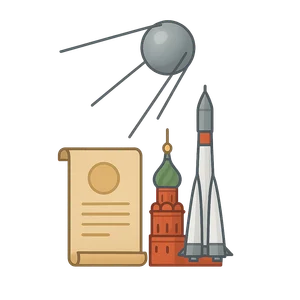
Launch of Sputnik 1 (1957)
The Soviet Union's successful launch of the first artificial satellite, Sputnik 1, on October 4, 1957…
Reads at Grades K-2 Listens at K–3
Print & create
Answer keys·No prep·Free with an account
28 worksheets · answer keys · full story · quiz · Ages 6-8 · CEFR A2
Plus adds 280,000+ more stories in 27 languages, audio for every one, and printables for all of them.
Just want Launch of Sputnik 1 (1957)?
Hello. My name is Sergei Korolev, and when I was a boy, I used to look up at the night sky and dream of flying. I didn't just want to fly in an airplane. I wanted to fly higher than the clouds, all the way up to where the stars sparkle. When I grew up, I became the Chief Designer for my country’s space program. It was a very important job. My country, the Soviet Union, and another country called the United States were in a friendly race. We weren't running or driving cars. It was a race to see who could be the first to send something into space, that big, dark, wonderful place far above our heads. We all wanted to be the first to explore it, and my dream of reaching for the stars was about to come true.
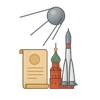
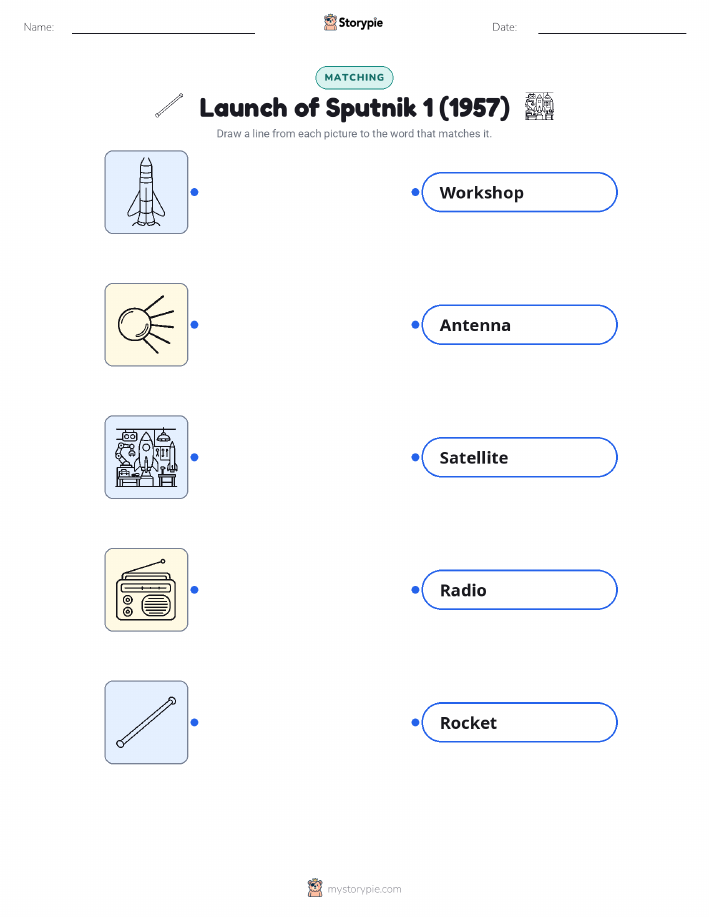
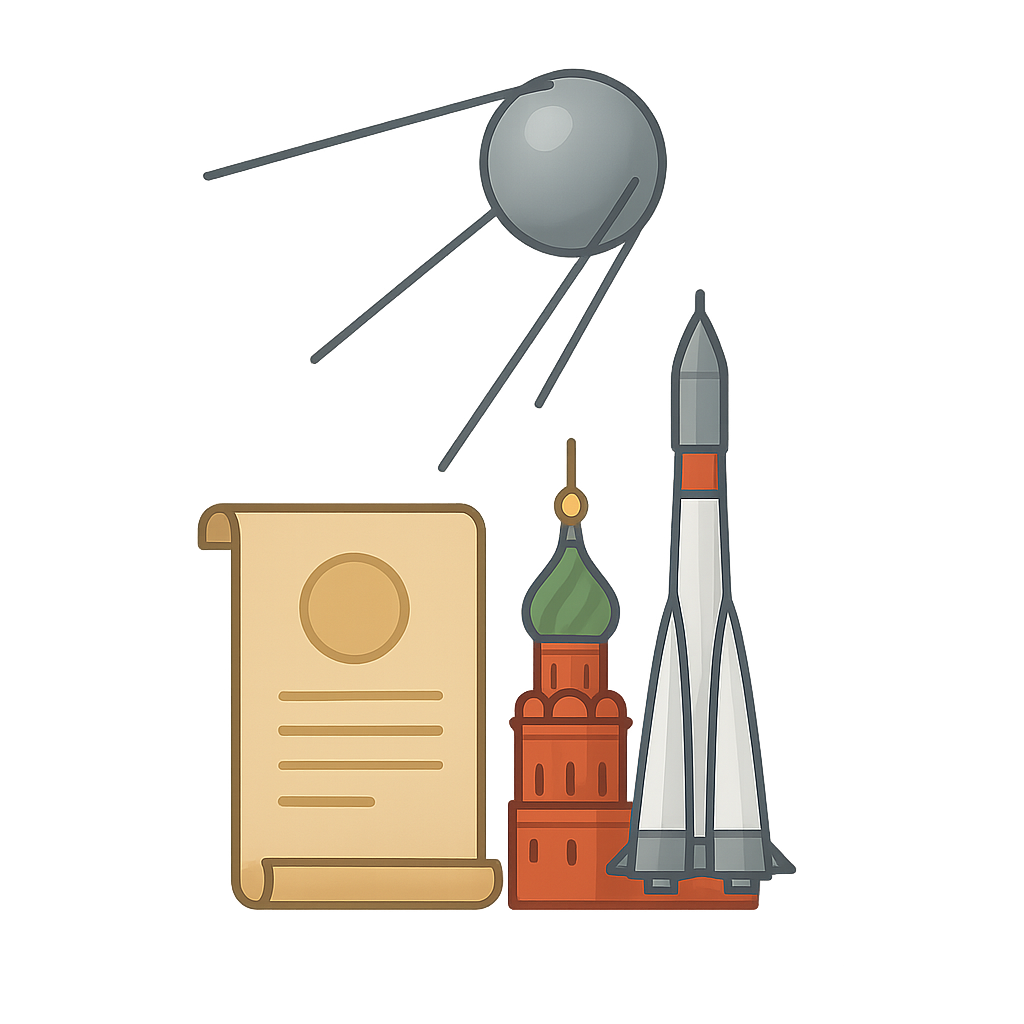
My team and I worked together day and night in a giant workshop. We were building something that had never been built before: the very first satellite. I liked to call it our 'little metal moon.' It was a shiny, silver ball, not much bigger than a beach ball you might play with. It had four long, thin legs sticking out from its sides, which were actually antennas. I thought they looked just like a cat's whiskers. These antennas were so important because they would send signals back down to us on Earth. Finally, the big day arrived on October 4th, 1957. My heart was beating like a drum with excitement and a little bit of worry. We stood a safe distance away and watched our giant R-7 rocket standing on the launch pad, with our little Sputnik tucked safely in its nose. The countdown started, and then, a huge rumbling sound shook the ground. Fire and smoke pushed the rocket up, up, up into the sky. It was amazing. I held my breath as it soared higher, getting smaller and smaller until it looked like a new star in the night.
Sergei Korolev and the First Little Moon
Hello. My name is Sergei Korolev, and when I was a boy, I used to look up at the night sky and dream of flying. I didn't just want to fly in an airplane. I wanted to fly higher than the clouds, all the way up to where the stars sparkle. When I grew up, I became the Chief Designer for my country’s space program. It was a very important job. My country, the Soviet Union, and another country called the United States were in a friendly race. We weren't running or driving cars. It was a race to see who could be the first to send something into space, that big, dark, wonderful place far above our heads. We all wanted to be the first to explore it, and my dream of reaching for the stars was about to come true.
My team and I worked together day and night in a giant workshop. We were building something that had never been built before: the very first satellite. I liked to call it our 'little metal moon.' It was a shiny, silver ball, not much bigger than a beach ball you might play with. It had four long, thin legs sticking out from its sides, which were actually antennas. I thought they looked just like a cat's whiskers. These antennas were so important because they would send signals back down to us on Earth. Finally, the big day arrived on October 4th, 1957. My heart was beating like a drum with excitement and a little bit of worry. We stood a safe distance away and watched our giant R-7 rocket standing on the launch pad, with our little Sputnik tucked safely in its nose. The countdown started, and then, a huge rumbling sound shook the ground. Fire and smoke pushed the rocket up, up, up into the sky. It was amazing. I held my breath as it soared higher, getting smaller and smaller until it looked like a new star in the night.
After the rocket disappeared from sight, we all rushed into a big room filled with radios. Everyone was quiet as we waited and listened. Had our little moon made it all the way? Was it working? Then, through the speakers, we heard a tiny, faint sound. 'Beep… beep… beep…'. It was the most beautiful sound in the world. Our satellite was flying high above the Earth, circling it just like the real moon does. That little beep was a message to everyone on the planet. It said, 'Hello. We are in space.'. That day, our shiny little ball started something amazing called the Space Age. It showed everyone that we could explore the universe beyond our world. My dream of reaching for the stars had come true, and it was just the beginning of a great adventure. It showed that when you dream big and work hard with your team, you can do incredible things.
Wow facts
About
The Soviet Union's successful launch of the first artificial satellite, Sputnik 1, on October 4, 1957, which marked the beginning of the Space Race.
Take a Quiz
Question 1 of 4
Why was Sergei Korolev so happy to hear the 'beep... beep... beep...' sound?
Explore next






Want to do even more?
Go beyond exploring. Unlock tools that turn every story into real learning.

Storypie Plus for families
Full stories, quizzes, and printables. Nights and car rides, sorted.
- Unlimited audio stories
- Create Mode: your child stars in the story
- Offline downloads
- Printable worksheets & coloring pages

Why Storypie for Schools
Students engaged. Prep in seconds. Evenings back to you.
- Worksheets & Quizzes
- Classroom Management
- Formative Assessment
- Custom Curriculum & Lesson Plans
- 27 Languages

Why Storypie for Homeschool
Curriculum done. They'll ask for more. Hours back in your day.
- Worksheet Generator
- First-Person Audio Stories
- Built-in Comprehension Quizzes
- Custom Curriculum & Lesson Plans
- Print & Go Activities