English

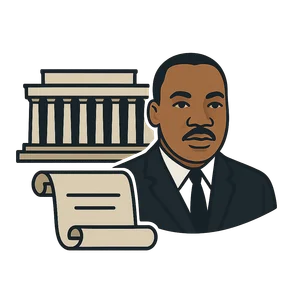
March on Washington for Jobs and Freedom
The March on Washington for Jobs and Freedom was one of the largest political rallies for human rights in…
Reads at Grades 6–8 Listens at Grades 4–8
Print & create
Answer keys·No prep·Free with an account
28 worksheets · answer keys · full story · quiz · Ages 10-12 · CEFR B2
Plus adds 102,000+ more stories in 27 languages, audio for every one, and printables for all of them.
Just want March on Washington for Jobs and Freedom?
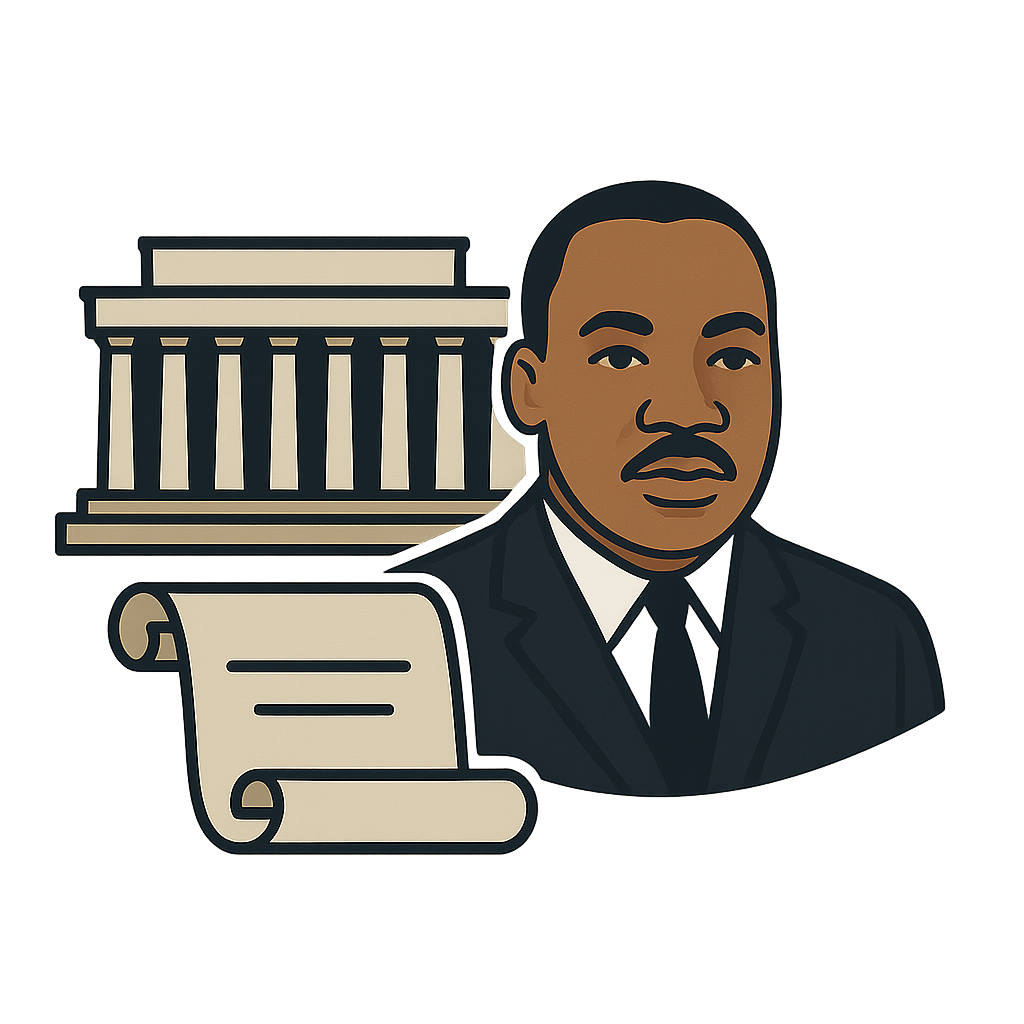
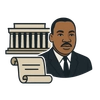
My name is Martin Luther King Jr., and I want to tell you about a time when a dream of freedom echoed across America. The year was 1963, a time of great struggle and great hope. In many parts of our country, laws known as segregation kept people apart based on the color of their skin. Imagine having to use a different water fountain, attend a separate school, or sit in the back of a bus simply because you were Black. This wasn't just unfair; it was a deep wound in the heart of a nation that promised liberty and justice for all. For years, we had been fighting this injustice through nonviolent protests, but we knew we needed to make a statement so powerful, so clear, that the entire nation would have to listen.
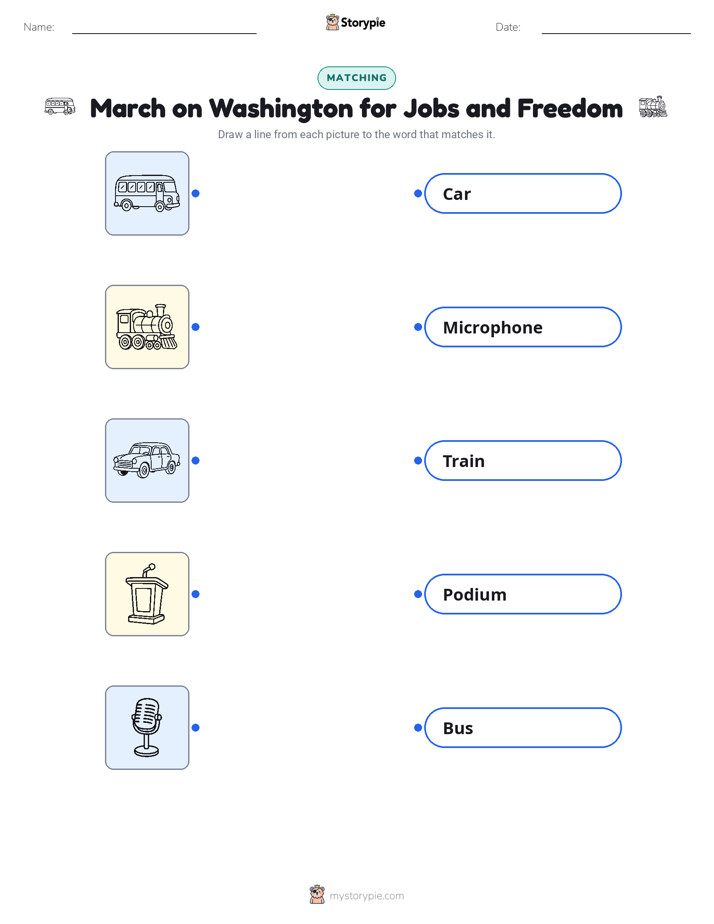
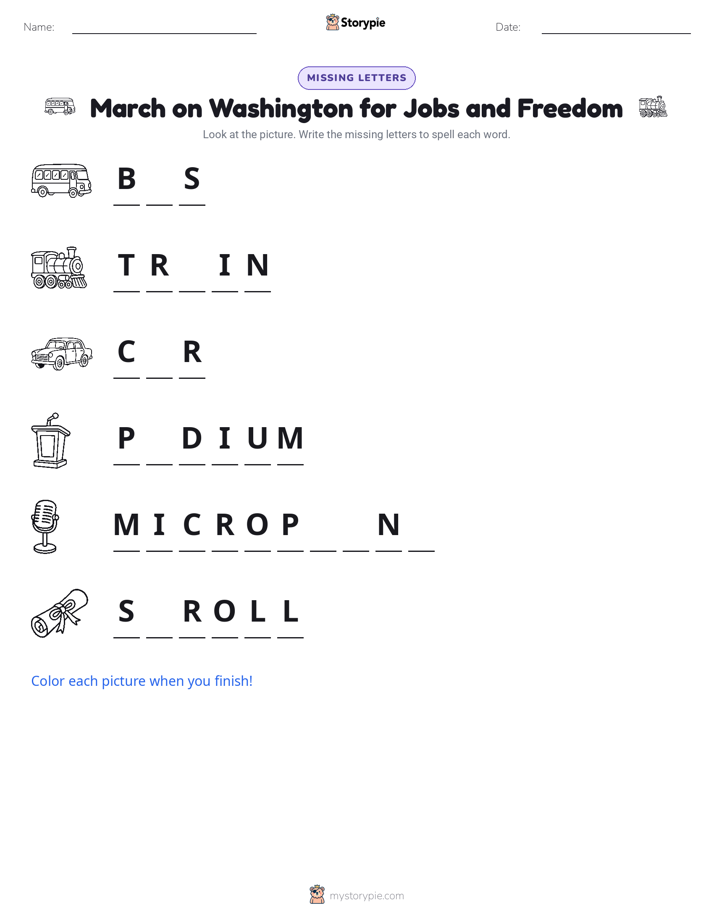
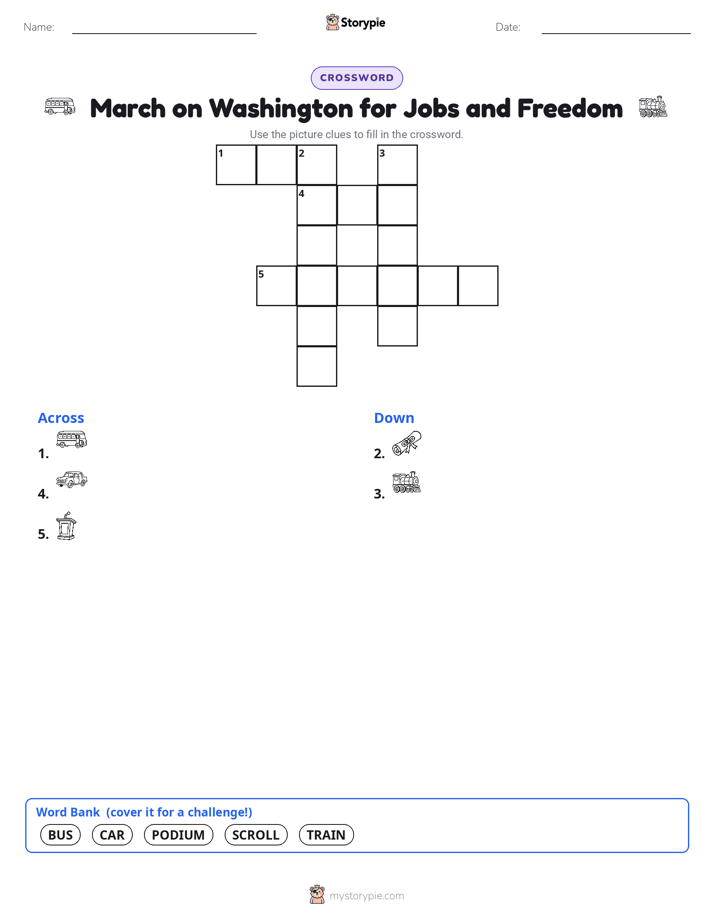
The idea for a massive march on our nation's capital wasn't mine alone. It was a vision held by many, including the wise and respected leader A. Philip Randolph, who had dreamed of such a march for decades. Together with other leaders and the brilliant organizer Bayard Rustin, we began the immense task of planning. We called it the March on Washington for Jobs and Freedom. Our goal was twofold: to demand fair employment opportunities and to urge Congress to pass a meaningful civil rights bill. Every detail was planned with care, from organizing buses and trains to ensuring the event would be peaceful and safe. We felt the weight of history on our shoulders as the day, August 28th, 1963, drew near. We were not just planning a protest; we were planning a pilgrimage for justice.
Martin Luther King Jr. and the March on Washington
My name is Martin Luther King Jr., and I want to tell you about a time when a dream of freedom echoed across America. The year was 1963, a time of great struggle and great hope. In many parts of our country, laws known as segregation kept people apart based on the color of their skin. Imagine having to use a different water fountain, attend a separate school, or sit in the back of a bus simply because you were Black. This wasn't just unfair; it was a deep wound in the heart of a nation that promised liberty and justice for all. For years, we had been fighting this injustice through nonviolent protests, but we knew we needed to make a statement so powerful, so clear, that the entire nation would have to listen.
The idea for a massive march on our nation's capital wasn't mine alone. It was a vision held by many, including the wise and respected leader A. Philip Randolph, who had dreamed of such a march for decades. Together with other leaders and the brilliant organizer Bayard Rustin, we began the immense task of planning. We called it the March on Washington for Jobs and Freedom. Our goal was twofold: to demand fair employment opportunities and to urge Congress to pass a meaningful civil rights bill. Every detail was planned with care, from organizing buses and trains to ensuring the event would be peaceful and safe. We felt the weight of history on our shoulders as the day, August 28th, 1963, drew near. We were not just planning a protest; we were planning a pilgrimage for justice.
On the morning of August 28th, I arrived in Washington, D.C., with a mix of nervousness and profound hope. At first, looking out from the Lincoln Memorial, the crowds seemed smaller than we had prayed for, and a flicker of worry passed through me. But then, they began to arrive. They came from every corner of the nation, by bus, train, and car. They came in waves, a flowing river of humanity filling the space around the Reflecting Pool. It was one of the most incredible sights I have ever witnessed. More than 250,000 people, a quarter of a million souls, stood together. And when I looked out at that vast crowd, I saw not just Black faces, but white faces, too. I saw people of all religions and all backgrounds, united in a single purpose.
The air itself seemed to hum with a powerful energy. It wasn't the sound of anger, but of determination. Thousands of signs bobbed above the crowd, with messages like “We Demand Freedom Now.” and “End Segregated Rules in Public Schools.”. The sound of freedom songs filled the air as people sang together, their voices rising as one. I saw people sharing food and water, smiling at strangers, and shaking hands. For that one day, the divisions that had plagued our country seemed to melt away under the summer sun. Standing there, before the statue of Abraham Lincoln, the great emancipator, we were not separate groups. We were one people, a sea of hope demanding that America finally live up to the true meaning of its founding promises.
When it was my turn to speak, I stepped up to the podium and looked out at that incredible sea of faces. The weight of the moment was immense. I had a speech that my team and I had worked on late into the night, a carefully written text about the unmet promises of our nation. I began by reading from those prepared remarks, speaking of the Emancipation Proclamation and the Declaration of Independence as promissory notes that had come back marked “insufficient funds” for citizens of color. I spoke of the urgency of the moment and the need for immediate action. But as I was speaking, I felt the spirit of the crowd, a powerful current of shared belief and yearning.
Then, from behind me, I heard the voice of my dear friend, the great gospel singer Mahalia Jackson, cry out, “Tell them about the dream, Martin. Tell them about the dream.”. In that instant, I pushed my written speech aside. I decided to speak from my heart, to preach as I had so many times before. I began to talk about a dream I held, a dream deeply rooted in the American dream. I spoke of a future where my four little children would one day live in a nation where they would not be judged by the color of their skin but by the content of their character. I shared my dream that one day, the sons of former slaves and the sons of former slave owners would be able to sit down together at the table of brotherhood. It was a dream that we could transform our nation into a beautiful symphony of unity, and it was a message that flowed not just from me, but through me, from the hearts of everyone gathered there.
The March on Washington did not magically erase injustice overnight. But that powerful, peaceful day changed America forever. It showed the world the moral force of our movement and our unwavering commitment to nonviolence. The images of that diverse, hopeful crowd were broadcast across the globe, and the voices from that day echoed in the halls of power. The march created a new national will for change and placed immense pressure on our government to act. Just one year later, in 1964, the landmark Civil Rights Act was signed into law, officially ending segregation in public places. And in 1965, the Voting Rights Act was passed, which protected the right of every citizen to vote. These laws were giant steps forward, born from the footsteps of all who marched that day. My role was to help give a voice to our shared dream, but the work of making that dream a reality belongs to every generation. It is a legacy of hope, a reminder that even in the face of great challenges, ordinary people standing together can bend the arc of history toward justice.
Wow facts
About
The March on Washington for Jobs and Freedom was one of the largest political rallies for human rights in United States history, where Martin Luther King Jr. delivered his iconic 'I Have a Dream' speech on August 28, 1963.
Take a Quiz
Question 1 of 5
In your own words, summarize the main reason why Dr. King and others organized the March on Washington.
Explore next




Want to do even more?
Go beyond exploring. Unlock tools that turn every story into real learning.

Storypie Plus for families
Full stories, quizzes, and printables. Nights and car rides, sorted.
- Unlimited audio stories
- Create Mode: your child stars in the story
- Offline downloads
- Printable worksheets & coloring pages

Why Storypie for Schools
Students engaged. Prep in seconds. Evenings back to you.
- Worksheets & Quizzes
- Classroom Management
- Formative Assessment
- Custom Curriculum & Lesson Plans
- 27 Languages

Why Storypie for Homeschool
Curriculum done. They'll ask for more. Hours back in your day.
- Worksheet Generator
- First-Person Audio Stories
- Built-in Comprehension Quizzes
- Custom Curriculum & Lesson Plans
- Print & Go Activities