English

Montgomery Bus Boycott
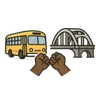
A pivotal civil rights protest from 1955 to 1956 where African Americans in Montgomery, Alabama…
Reads at Grades 6–8 Listens at Grades 4–8
Print & create
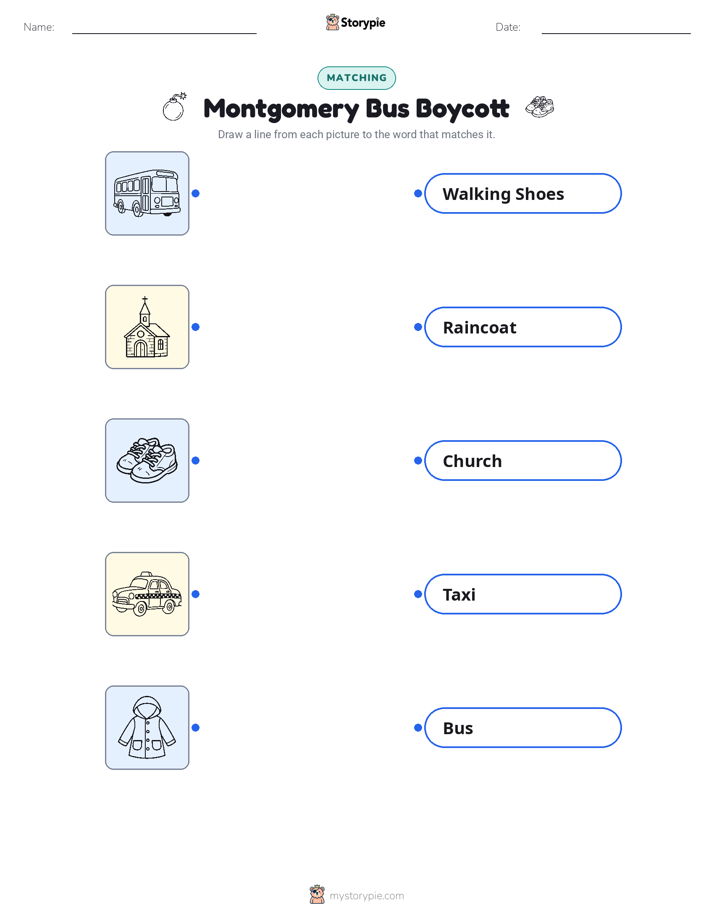
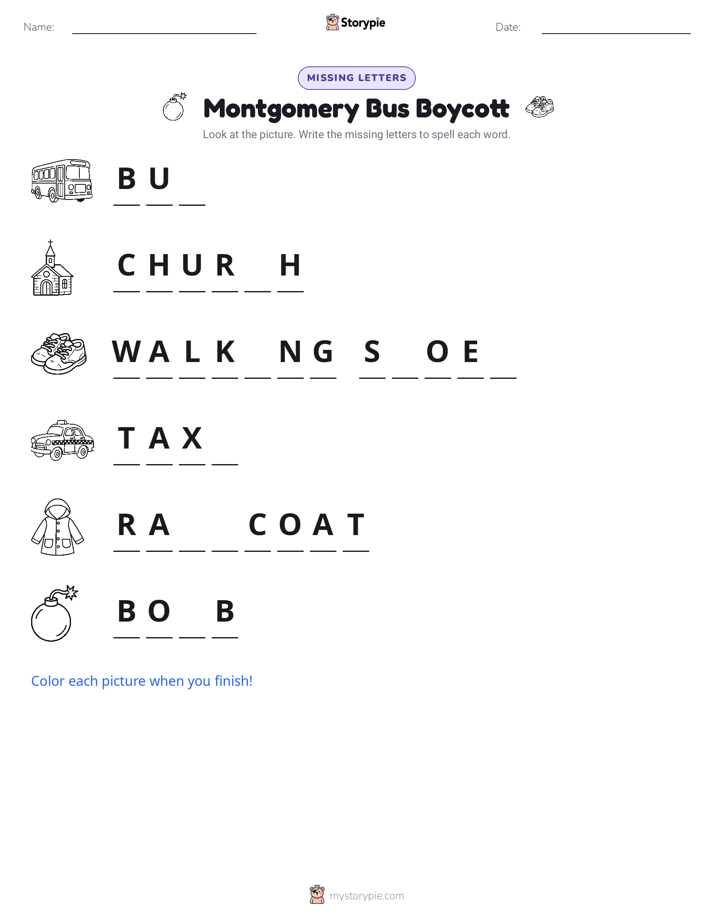
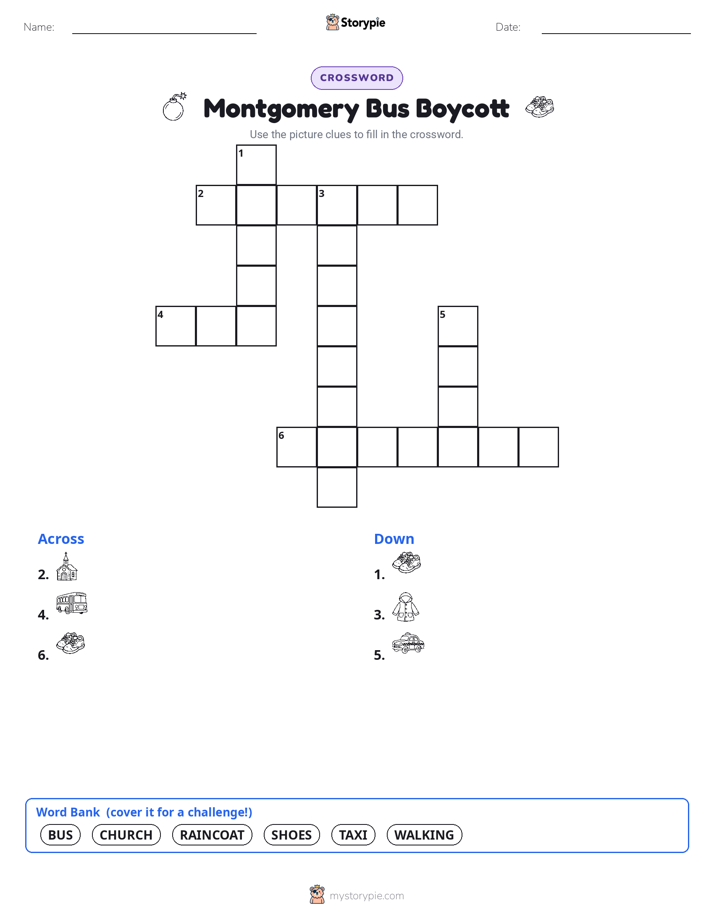
Answer keys·No prep·Free with an account
28 worksheets · answer keys · full story · quiz · Ages 10-12 · CEFR B2
Plus adds 102,000+ more stories in 27 languages, audio for every one, and printables for all of them.
Just want Montgomery Bus Boycott?
My name is Rosa Parks, and I want to tell you about a time when standing up for what is right, or in my case, sitting down, helped change our country. I lived in Montgomery, Alabama, during the 1950s. It was a place of deep inequality, governed by unfair laws called segregation. These laws kept Black people and white people separate in almost every part of life, from water fountains to schools. The city buses were a daily reminder of this injustice. As Black passengers, we had to follow a humiliating routine. We would pay our fare at the front, then we had to get off the bus and walk to the back door to re-enter. The front seats were reserved for white passengers only. If the 'white section' filled up, we were expected to give up our seats in the 'colored section' and stand, or even get off the bus entirely. For many years before my famous arrest, I worked as a secretary for the Montgomery chapter of the National Association for the Advancement of Colored People, or the NAACP. Alongside leaders like E.D. Nixon, I was already deeply involved in the struggle for civil rights. My belief in equality wasn't something that appeared on a single day; it was a fire that had been burning inside me for a very long time.
That fire led to my decision on the evening of December 1st, 1955. It had been a long day of work as a seamstress at the Montgomery Fair department store, and my shoulders ached from leaning over my sewing machine. I boarded the Cleveland Avenue bus to go home, found a seat in the first row of the 'colored section,' and sat down. As the bus continued on its route, more people got on. Soon, the 'white section' was full, and a few white passengers were left standing. The driver, James F. Blake, looked in his mirror, saw the situation, and ordered me and three other Black passengers in my row to get up and move to the back. The other three reluctantly stood up, but I remained seated. He asked me again if I was going to stand, and I looked at him and said, 'No.' People often think I refused to move because I was physically tired from my day, but that wasn't the whole truth. The real reason was that I was tired of giving in to injustice. I felt a calm determination wash over me. I was not afraid. My decision led to my arrest, and as the police officers escorted me off the bus, I felt a quiet dignity. I knew I had done the right thing.
My Stand for Dignity
My name is Rosa Parks, and I want to tell you about a time when standing up for what is right, or in my case, sitting down, helped change our country. I lived in Montgomery, Alabama, during the 1950s. It was a place of deep inequality, governed by unfair laws called segregation. These laws kept Black people and white people separate in almost every part of life, from water fountains to schools. The city buses were a daily reminder of this injustice. As Black passengers, we had to follow a humiliating routine. We would pay our fare at the front, then we had to get off the bus and walk to the back door to re-enter. The front seats were reserved for white passengers only. If the 'white section' filled up, we were expected to give up our seats in the 'colored section' and stand, or even get off the bus entirely. For many years before my famous arrest, I worked as a secretary for the Montgomery chapter of the National Association for the Advancement of Colored People, or the NAACP. Alongside leaders like E.D. Nixon, I was already deeply involved in the struggle for civil rights. My belief in equality wasn't something that appeared on a single day; it was a fire that had been burning inside me for a very long time.
That fire led to my decision on the evening of December 1st, 1955. It had been a long day of work as a seamstress at the Montgomery Fair department store, and my shoulders ached from leaning over my sewing machine. I boarded the Cleveland Avenue bus to go home, found a seat in the first row of the 'colored section,' and sat down. As the bus continued on its route, more people got on. Soon, the 'white section' was full, and a few white passengers were left standing. The driver, James F. Blake, looked in his mirror, saw the situation, and ordered me and three other Black passengers in my row to get up and move to the back. The other three reluctantly stood up, but I remained seated. He asked me again if I was going to stand, and I looked at him and said, 'No.' People often think I refused to move because I was physically tired from my day, but that wasn't the whole truth. The real reason was that I was tired of giving in to injustice. I felt a calm determination wash over me. I was not afraid. My decision led to my arrest, and as the police officers escorted me off the bus, I felt a quiet dignity. I knew I had done the right thing.
My arrest was the spark that ignited a fire in my community. News traveled quickly that night. E.D. Nixon, the president of our local NAACP chapter, bailed me out of jail and immediately began organizing. He knew my case was the perfect opportunity to challenge the segregation laws. At the same time, Jo Ann Robinson, the head of the Women's Political Council, worked through the night with her colleagues to print tens of thousands of flyers. The flyers called for a one-day boycott of all city buses on Monday, December 5th, 1955—the day of my trial. The response was incredible. That Monday, the buses that were usually packed with Black workers were almost empty. That same evening, community leaders formed a new organization to lead the protest, calling it the Montgomery Improvement Association, or MIA. To lead them, they chose a young, eloquent, and inspiring minister who was new to our city. His name was Dr. Martin Luther King Jr. I remember sitting in the Holt Street Baptist Church that night, listening to Dr. King speak. The church was overflowing with people. His words filled us with hope and unity, and when he asked if we should continue the boycott, the crowd rose to its feet with a thunderous 'Yes.'. We were no longer just asking for fairness; we were demanding it together.
What followed was an extraordinary test of our will and spirit that lasted for 381 days. The Montgomery Bus Boycott was a massive, coordinated effort carried out by thousands of ordinary people who became heroes in their own right. The streets of Montgomery looked completely different. Every morning, you would see waves of people walking, sometimes for miles, to get to their jobs as maids, cooks, and laborers. The sense of community was breathtaking. We organized a complex carpool system, with over 200 cars, to help get people where they needed to go. People shared rides, gave strangers a lift, and helped their neighbors. Black taxi drivers lowered their fares to the same price as the bus. It wasn't easy. We faced many hardships. We walked in the pouring rain and the bitter cold. Many people lost their jobs for participating. We received threats, and our leaders, including Dr. King, had their homes bombed. But through it all, we did not give up. The powerful sense of solidarity and the belief that we were on the side of justice kept us going. We were walking for our freedom, and every step was a protest against the injustice we had endured for so long.
Our perseverance finally paid off. While we were walking, our lawyers were fighting in the courts. On November 13th, 1956, we received the news we had been praying for: the United States Supreme Court declared that segregation on public buses was unconstitutional. The feeling of joy and relief that swept through our community was indescribable. After more than a year of sacrifice, we had won. We kept the boycott going for another month until the official court order arrived in Montgomery. Then, on the morning of December 21st, 1956, we rode the buses again. I boarded a bus with Dr. King and other leaders. I sat in a seat right near the front, not in the 'colored section,' but just in a seat. It was a simple act, but it represented a monumental victory. My quiet 'no' on that bus a year earlier, amplified by the footsteps of 40,000 determined people, had sent a message that echoed across the nation. It showed that one person, supported by their community, can stand up to injustice and that peaceful, united protest can create powerful and lasting change. I hope you remember that your own voice, and your own stand for what is right, has the power to change the world.
Wow facts
About
A pivotal civil rights protest from 1955 to 1956 where African Americans in Montgomery, Alabama, refused to ride city buses to protest segregated seating, leading to a landmark Supreme Court ruling that declared such segregation unconstitutional.
Take a Quiz
Question 1 of 5
Which sentence best summarizes the main idea of this story?
Explore next






Want to do even more?
Go beyond exploring. Unlock tools that turn every story into real learning.

Storypie Plus for families
Full stories, quizzes, and printables. Nights and car rides, sorted.
- Unlimited audio stories
- Create Mode: your child stars in the story
- Offline downloads
- Printable worksheets & coloring pages

Why Storypie for Schools
Students engaged. Prep in seconds. Evenings back to you.
- Worksheets & Quizzes
- Classroom Management
- Formative Assessment
- Custom Curriculum & Lesson Plans
- 27 Languages

Why Storypie for Homeschool
Curriculum done. They'll ask for more. Hours back in your day.
- Worksheet Generator
- First-Person Audio Stories
- Built-in Comprehension Quizzes
- Custom Curriculum & Lesson Plans
- Print & Go Activities