

 English

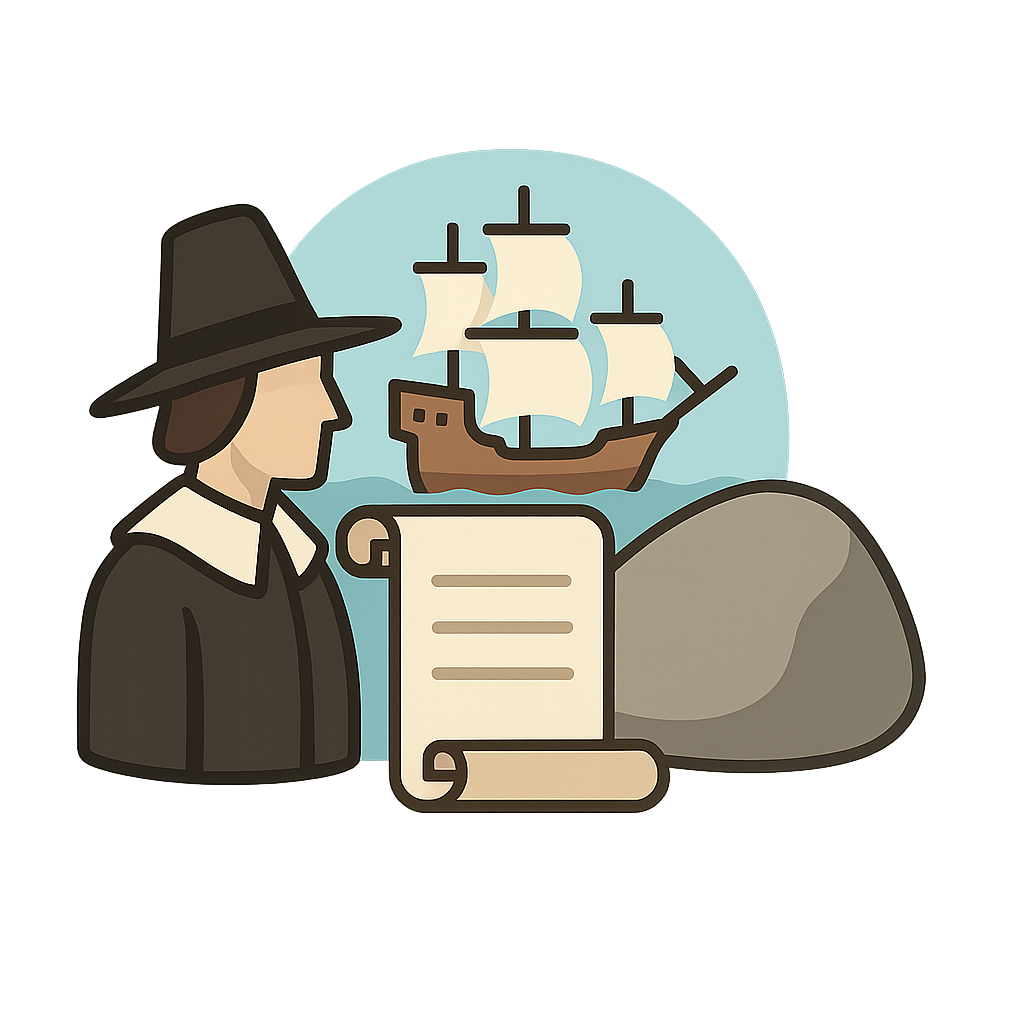
William Bradford and the First Thanksgiving
Hello there. My name is William Bradford, and I want to tell you a story about a great adventure, a difficult challenge, and a new beginning. Many years ago, my friends and I, whom you might know as the Pilgrims, lived in England. We loved our home, but we felt we couldn't worship God in the way our hearts told us to. The rules were very strict, and we longed for the freedom to practice our faith peacefully. First, we moved to a country called Holland, where people were more accepting. It was nice for a while, but we still felt like strangers in a strange land. Our children were growing up speaking a different language and forgetting their English ways. So, we made a brave and difficult decision. We decided to sail across the vast, stormy Atlantic Ocean to a new land, a place where we could build our own community from the ground up and live according to our beliefs. It was a frightening thought, but the hope for a better future gave us the courage we needed to take such a giant leap of faith.
Our journey began on September 6th, 1620, aboard a ship called the Mayflower. It was not a grand vessel, but a sturdy, wooden ship that smelled of tar and damp wood. Over one hundred of us were squeezed into the small spaces below deck, along with all our tools, seeds, and supplies for our new life. The ocean was not always kind. For many weeks, mighty storms crashed against our ship, tossing it back and forth like a toy boat in a bathtub. The wind howled through the rigging, and giant waves washed over the deck. It was cold, damp, and many people became very sick. During those dark days, it was our faith and our fellowship that kept us going. We would gather to sing psalms and pray together, our voices a small comfort against the roaring sea. After more than two long months at sea, a sailor high up on the mast shouted the words we had all been praying to hear: “Land ho.”. On November 9th, 1620, we saw the shores of a new world. The sight of the tree-lined coast filled our hearts with an incredible feeling of relief and overwhelming hope.
Our journey across the water was over, but our greatest challenges were just beginning. Before we even set foot on shore, we knew we needed a plan to live together peacefully and fairly. So, on November 11th, 1620, we gathered in the main cabin of the Mayflower and wrote an agreement. We called it the Mayflower Compact. In it, we all promised to create just and equal laws and to work together for the good of our new colony. It was our promise to be a true community. We found a place to build our settlement and called it Plymouth. But winter arrived with a vengeance. The cold was more bitter than any we had ever known. The wind cut through our thin clothes, and the snow fell deep around the simple shelters we struggled to build. Food was incredibly scarce, and sickness spread quickly through our small group. That first winter was a time of great sadness and hardship, and we lost nearly half of our people. But even in our darkest moments, we did not give up. We held onto our dream and helped one another survive.
When spring finally arrived, it felt like the world was being reborn. The snow melted, the birds returned, and a new feeling of hope warmed our weary spirits. It was then that we met the native people of this land, the Wampanoag. At first, we were cautious of each other, but soon we were visited by a kind and helpful man named Tisquantum, whom you may know as Squanto. He had learned to speak English from earlier explorers and became our teacher and our friend. He showed us how to plant corn by putting a fish in the ground with the seeds to help it grow strong. He taught us which plants were safe to eat and where to catch fish and hunt for deer. Thanks to his guidance and the kindness of the Wampanoag people, our crops grew tall and strong. By the autumn of 1621, we had a bountiful harvest, more than enough food to last us through the next winter. To celebrate and give thanks for our survival, we planned a great feast. We invited our Wampanoag friends to join us, and for three days, we all ate and celebrated together. That joyful meal, which we now call the first Thanksgiving, was a symbol of our gratitude, our friendship, and the new community we had started to build.
Activities
Take a Quiz
Test what you learned with a fun quiz!
Get creative with colors!
Print a coloring book page of this topic.










 Free for Educators