English

Rosetta Mission
The European Space Agency's Rosetta mission was a groundbreaking space exploration endeavor to perform a…
Reads at Grades 3–5 Listens at Grades 1–5
Print & create
Answer keys·No prep·Free with an account
28 worksheets · answer keys · full story · quiz · Ages 8-10 · CEFR B1
Plus adds 244,000+ more stories in 27 languages, audio for every one, and printables for all of them.
Just want Rosetta Mission?
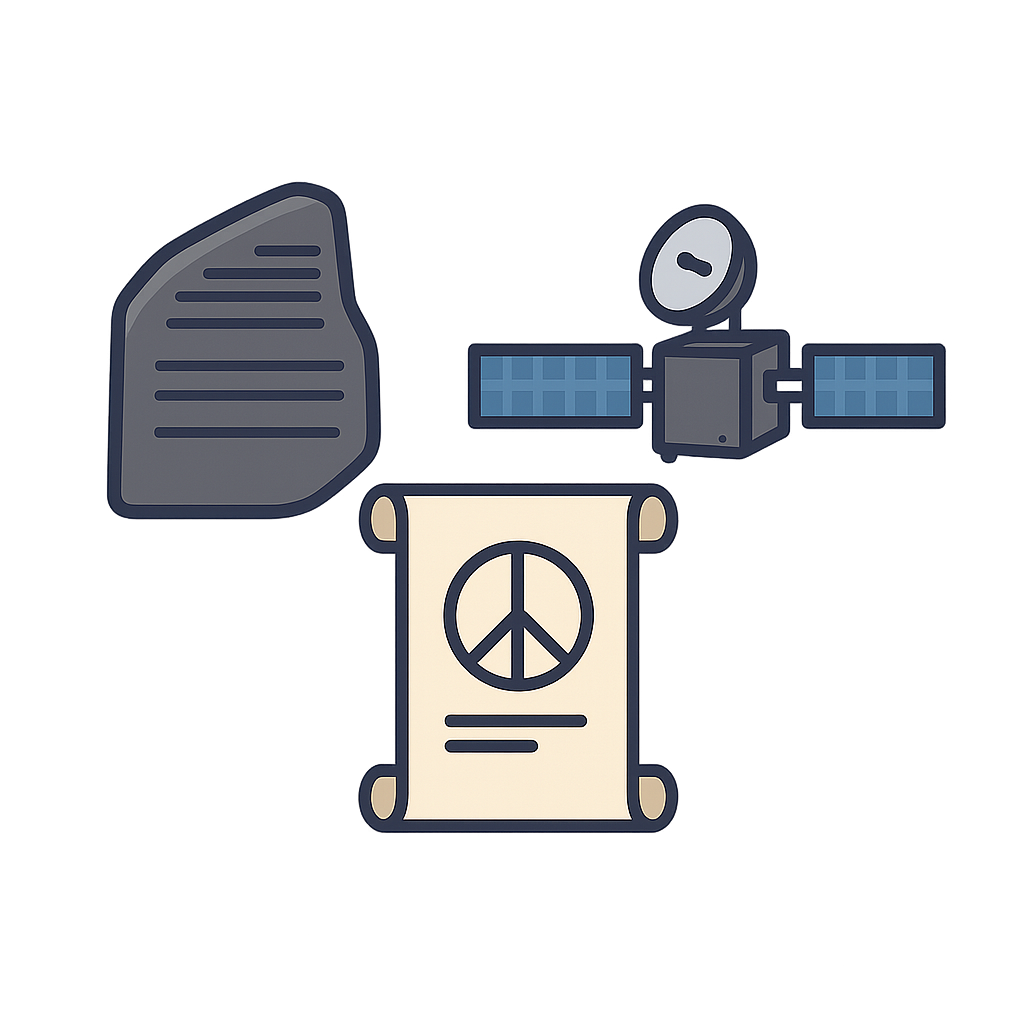
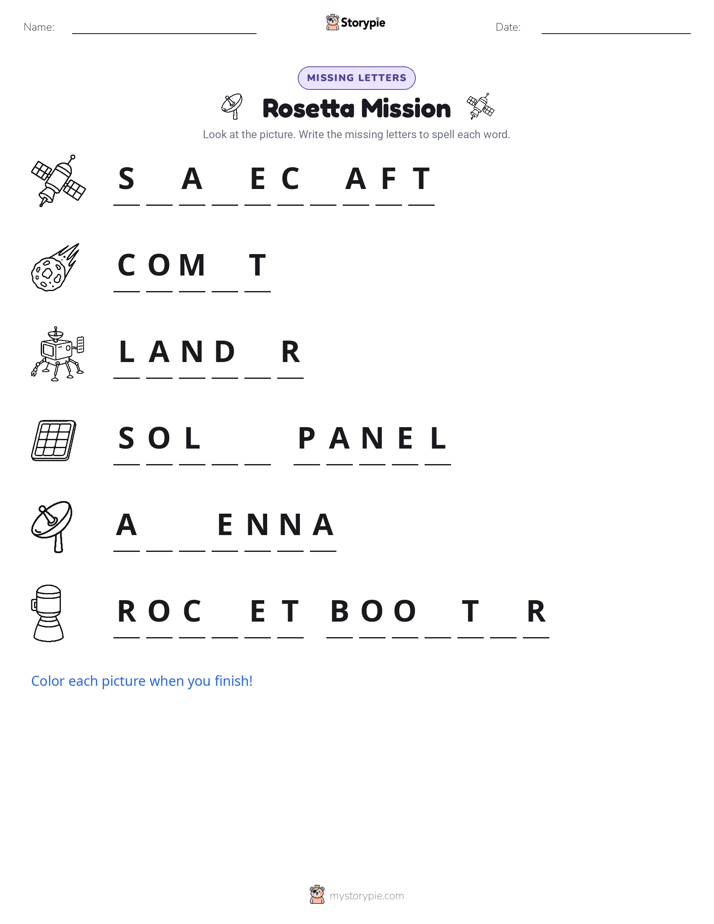
Hello. My name is Dr. Elena Vance, and I am a scientist who studies space. Ever since I was a little girl, I would look up at the night sky and wonder about the shooting stars and distant lights. I was especially fascinated by comets. You can think of a comet as a giant, dusty snowball, or an icy time capsule, zipping through space. They are made of ice, dust, and rock left over from when our solar system was first born, billions of years ago. Because they are so old and frozen, they hold secrets about what our cosmic neighborhood was like a long, long time ago. My team at the European Space Agency and I had a very big dream: we wanted to visit a comet. Not just fly by it, but to orbit it, study it up close, and even land a small probe on its surface. We called our mission Rosetta. After years of planning, our big day finally arrived. On March 2nd, 2004, I stood in our control room, my heart thumping with excitement. We watched as a powerful rocket carried our Rosetta spacecraft into the sky, beginning a journey that would take ten long years to complete. Our little explorer was finally on its way to chase a comet.
The journey was longer than many of you have been alive. For ten years, Rosetta soared through the blackness of space. To save energy for the most important parts of its mission, we had to put Rosetta into a deep sleep, a kind of hibernation, for over two and a half years. Waking it up was one of the most nerve-wracking moments of my career. We sent a signal across millions of miles and then had to wait for hours to see if it would respond. When we finally heard its 'hello' signal, a huge cheer erupted in the control room. Our explorer was awake. On August 6th, 2014, we finally arrived at our destination: a comet named 67P. It didn't look like a ball at all. It looked more like a giant, lumpy rubber duck. For months, Rosetta orbited the comet, taking thousands of pictures to find the perfect landing spot for our little lander, Philae. The landing day was November 12th, 2014. We called it the 'seven hours of terror'. That's because the comet was so far away that it took nearly half an hour for a signal to travel to Earth. We sent the command for Philae to land, and then we had to wait, and wait, and wait. We couldn't do anything but watch our screens. When the signal finally arrived confirming the landing, we jumped for joy. But then we saw something strange in the data. The harpoons that were supposed to anchor Philae to the surface hadn't fired. Philae had hit the ground and then bounced. It bounced twice, flying across the comet for two whole hours before finally settling in the shadow of a cliff.
Rosetta and the Comet Adventure
Hello. My name is Dr. Elena Vance, and I am a scientist who studies space. Ever since I was a little girl, I would look up at the night sky and wonder about the shooting stars and distant lights. I was especially fascinated by comets. You can think of a comet as a giant, dusty snowball, or an icy time capsule, zipping through space. They are made of ice, dust, and rock left over from when our solar system was first born, billions of years ago. Because they are so old and frozen, they hold secrets about what our cosmic neighborhood was like a long, long time ago. My team at the European Space Agency and I had a very big dream: we wanted to visit a comet. Not just fly by it, but to orbit it, study it up close, and even land a small probe on its surface. We called our mission Rosetta. After years of planning, our big day finally arrived. On March 2nd, 2004, I stood in our control room, my heart thumping with excitement. We watched as a powerful rocket carried our Rosetta spacecraft into the sky, beginning a journey that would take ten long years to complete. Our little explorer was finally on its way to chase a comet.
The journey was longer than many of you have been alive. For ten years, Rosetta soared through the blackness of space. To save energy for the most important parts of its mission, we had to put Rosetta into a deep sleep, a kind of hibernation, for over two and a half years. Waking it up was one of the most nerve-wracking moments of my career. We sent a signal across millions of miles and then had to wait for hours to see if it would respond. When we finally heard its 'hello' signal, a huge cheer erupted in the control room. Our explorer was awake. On August 6th, 2014, we finally arrived at our destination: a comet named 67P. It didn't look like a ball at all. It looked more like a giant, lumpy rubber duck. For months, Rosetta orbited the comet, taking thousands of pictures to find the perfect landing spot for our little lander, Philae. The landing day was November 12th, 2014. We called it the 'seven hours of terror'. That's because the comet was so far away that it took nearly half an hour for a signal to travel to Earth. We sent the command for Philae to land, and then we had to wait, and wait, and wait. We couldn't do anything but watch our screens. When the signal finally arrived confirming the landing, we jumped for joy. But then we saw something strange in the data. The harpoons that were supposed to anchor Philae to the surface hadn't fired. Philae had hit the ground and then bounced. It bounced twice, flying across the comet for two whole hours before finally settling in the shadow of a cliff.
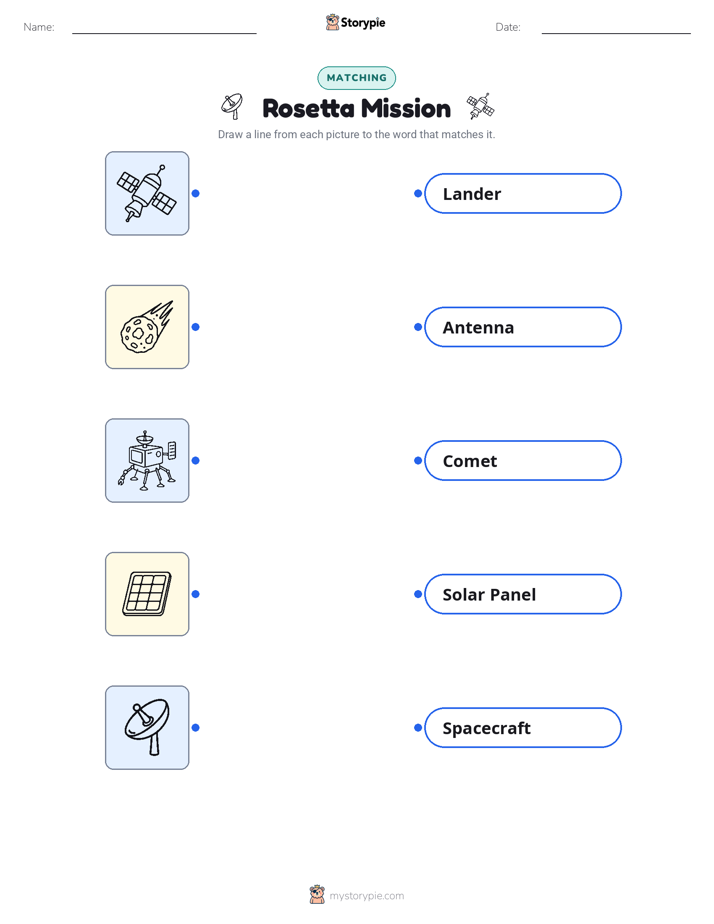
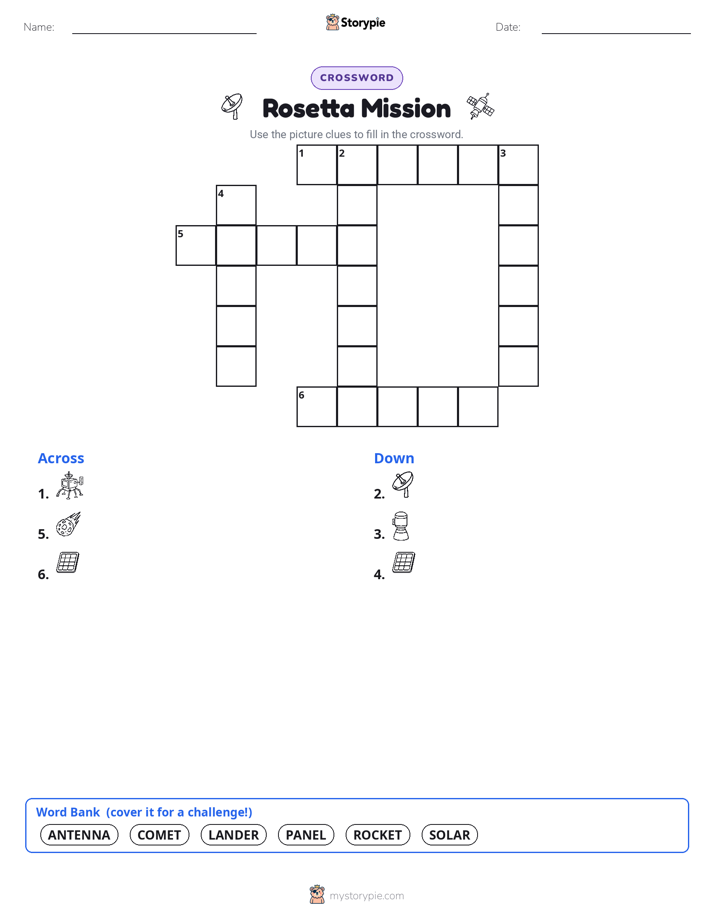
Even though Philae landed in a shady spot where its solar panels couldn't get much sunlight, it was a champion. Before its main battery ran out, it worked for over 60 hours, sending us incredible information from the comet's surface. It sniffed the air, drilled into the ground, and took amazing pictures. It was the very first time humans had ever landed something on a comet. Meanwhile, its mothership, Rosetta, continued its own important work. For two more years, Rosetta flew alongside the comet as it journeyed closer to the Sun and then back out into deep space. It watched as the Sun's heat made ice on the comet turn into jets of gas and dust, giving it a beautiful tail. From Rosetta's data, we discovered some amazing things. We found complex molecules that are the building blocks of life, which suggests that comets might have delivered important ingredients to Earth long ago. After its amazing mission, it was time for Rosetta to say goodbye. On September 30th, 2016, we guided the spacecraft on a slow, final descent to the comet's surface. It took pictures the entire way down, giving us our closest look ever before it finally came to rest, joining Philae forever. Looking back, I am so proud of what our team accomplished. We chased a comet and we caught it. Our curiosity sent us across the solar system, and what we learned taught us not just about comets, but about our own planet and the origins of life.
Wow facts
About
The European Space Agency's Rosetta mission was a groundbreaking space exploration endeavor to perform a detailed study of the comet 67P/Churyumov–Gerasimenko. It was the first mission to orbit a comet and the first to deploy a lander, Philae, to a comet's surface.
Take a Quiz
Question 1 of 5
What problem happened when the Philae lander tried to land on the comet?
Explore next



Want to do even more?
Go beyond exploring. Unlock tools that turn every story into real learning.

Storypie Plus for families
Full stories, quizzes, and printables. Nights and car rides, sorted.
- Unlimited audio stories
- Create Mode: your child stars in the story
- Offline downloads
- Printable worksheets & coloring pages

Why Storypie for Schools
Students engaged. Prep in seconds. Evenings back to you.
- Worksheets & Quizzes
- Classroom Management
- Formative Assessment
- Custom Curriculum & Lesson Plans
- 27 Languages

Why Storypie for Homeschool
Curriculum done. They'll ask for more. Hours back in your day.
- Worksheet Generator
- First-Person Audio Stories
- Built-in Comprehension Quizzes
- Custom Curriculum & Lesson Plans
- Print & Go Activities