English

Siege of Vicksburg
A pivotal 47-day military siege during the American Civil War where the Union Army, led by Ulysses S.
Reads at Grades 3–5 Listens at Grades 1–5
Print & create
Answer keys·No prep·Free with an account
28 worksheets · answer keys · full story · quiz · Ages 8-10 · CEFR B1
Plus adds 102,000+ more stories in 27 languages, audio for every one, and printables for all of them.
Just want Siege of Vicksburg?
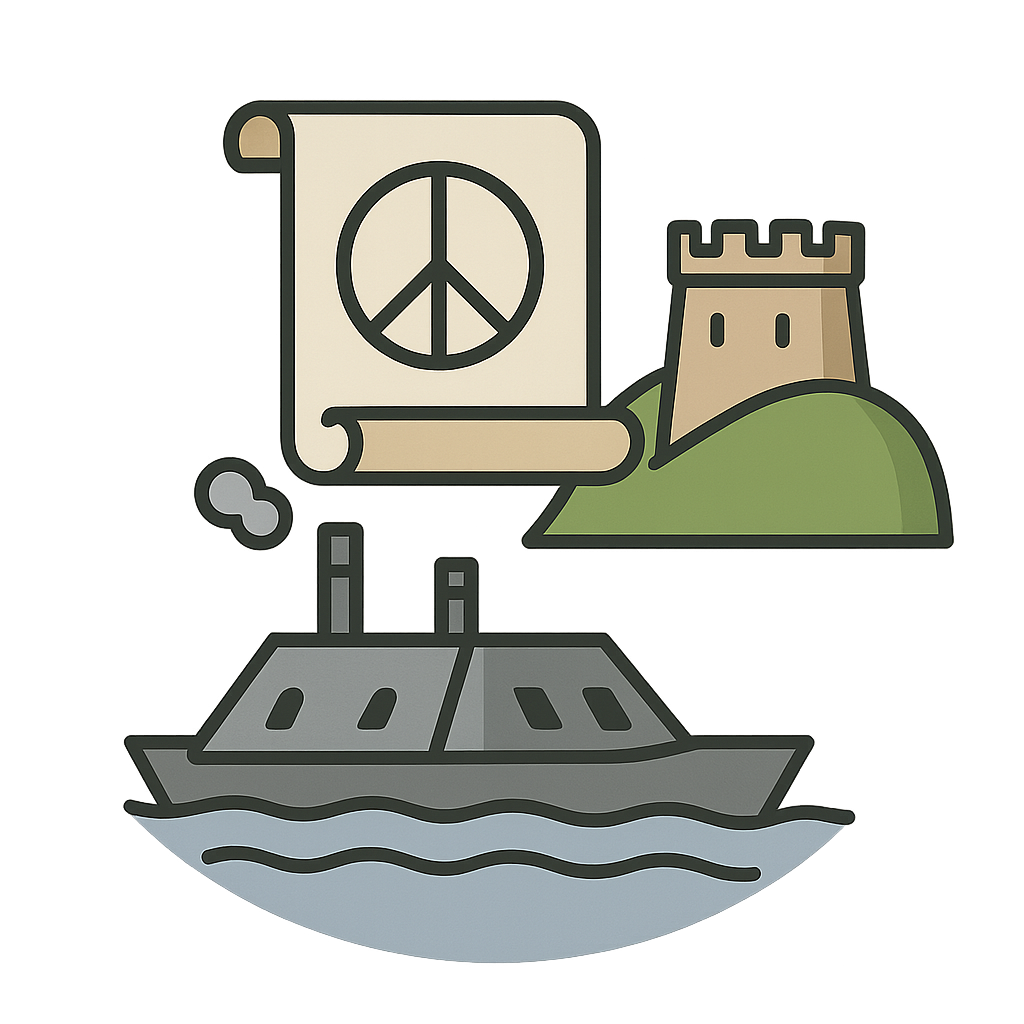
Hello there. My name is Ulysses S. Grant, and I served as a general for the Union Army during a very difficult time in American history. It was the spring of 1863, and our country was torn in two by the Civil War. My soldiers and I were deep in the South, with a very important job to do. Our goal was to capture the city of Vicksburg, Mississippi. Now, Vicksburg wasn't just any city. Imagine a giant castle perched on top of a steep, muddy cliff overlooking a wide, powerful river. That was Vicksburg. Its cannons could stop any ship that tried to pass. Because it was so strong and hard to attack, some called it 'The Gibraltar of the Confederacy.' The Mississippi River was like a great highway, and controlling it was the key to winning the war. If we could capture Vicksburg, we could control the entire river. This would split the Confederacy in two, cutting off their supplies and soldiers from one another. President Abraham Lincoln knew this, and he trusted me to find a way to take the city. It was the most important job I had ever been given, and I knew it wouldn't be easy. The future of our country depended on it.
At first, every plan we made failed. We tried to attack Vicksburg from the north, but the land was a maze of swamps and winding streams that made it impossible to move my army. The Confederate defenses were just too strong. My soldiers grew tired and frustrated, and some people back home thought we should just give up. But I knew we couldn't. I had to think of a new way, something bold and unexpected. So, I came up with a very risky plan. I decided we would march my army down the far side of the Mississippi River, the side opposite Vicksburg. Then, under the cover of darkness, our powerful ironclad navy ships would have to sneak past the city’s giant cannons. It was a dangerous gamble. As our ships chugged past the city, the dark night exploded with cannon fire, but most of our boats made it through. Once my army was south of the city, those ships carried us across the wide river. After landing, we fought and won several battles, pushing the Confederate army back until they were trapped inside Vicksburg’s walls. On May 18th, 1863, we had the city completely surrounded. This is called a 'siege.' A siege is when an army surrounds a city and cuts off all its supplies, like food and ammunition, waiting for the people inside to surrender. We dug long ditches called trenches, getting closer and closer to the city’s defenses. It was a long, patient waiting game under the hot summer sun, but my soldiers were determined to see it through.
The Fortress on the Mississippi
Hello there. My name is Ulysses S. Grant, and I served as a general for the Union Army during a very difficult time in American history. It was the spring of 1863, and our country was torn in two by the Civil War. My soldiers and I were deep in the South, with a very important job to do. Our goal was to capture the city of Vicksburg, Mississippi. Now, Vicksburg wasn't just any city. Imagine a giant castle perched on top of a steep, muddy cliff overlooking a wide, powerful river. That was Vicksburg. Its cannons could stop any ship that tried to pass. Because it was so strong and hard to attack, some called it 'The Gibraltar of the Confederacy.' The Mississippi River was like a great highway, and controlling it was the key to winning the war. If we could capture Vicksburg, we could control the entire river. This would split the Confederacy in two, cutting off their supplies and soldiers from one another. President Abraham Lincoln knew this, and he trusted me to find a way to take the city. It was the most important job I had ever been given, and I knew it wouldn't be easy. The future of our country depended on it.
At first, every plan we made failed. We tried to attack Vicksburg from the north, but the land was a maze of swamps and winding streams that made it impossible to move my army. The Confederate defenses were just too strong. My soldiers grew tired and frustrated, and some people back home thought we should just give up. But I knew we couldn't. I had to think of a new way, something bold and unexpected. So, I came up with a very risky plan. I decided we would march my army down the far side of the Mississippi River, the side opposite Vicksburg. Then, under the cover of darkness, our powerful ironclad navy ships would have to sneak past the city’s giant cannons. It was a dangerous gamble. As our ships chugged past the city, the dark night exploded with cannon fire, but most of our boats made it through. Once my army was south of the city, those ships carried us across the wide river. After landing, we fought and won several battles, pushing the Confederate army back until they were trapped inside Vicksburg’s walls. On May 18th, 1863, we had the city completely surrounded. This is called a 'siege.' A siege is when an army surrounds a city and cuts off all its supplies, like food and ammunition, waiting for the people inside to surrender. We dug long ditches called trenches, getting closer and closer to the city’s defenses. It was a long, patient waiting game under the hot summer sun, but my soldiers were determined to see it through.
For 47 long days, we waited. My soldiers held their positions while the people and soldiers inside Vicksburg grew weaker and weaker. They were running out of food and hope. Finally, on July 3rd, the Confederate general, John C. Pemberton, knew he could not hold out any longer. He sent out a white flag and asked to discuss terms of surrender. We met under a large oak tree between our two armies and made an agreement. The very next day, on July 4th, 1863, General Pemberton officially surrendered the city of Vicksburg. That date was special. The Fourth of July is our nation’s birthday, and winning this great victory on that day felt like a sign of a new beginning for the United States. When President Lincoln heard the news, he was filled with joy. He famously said, 'The Father of Waters again goes unvexed to the sea,' meaning the entire Mississippi River was now under Union control. This victory, coming just one day after another important Union win at the Battle of Gettysburg, was a major turning point in the war. It showed that with perseverance and a bold plan, even the most impossible challenges could be overcome, paving the way to bring our divided nation back together.
Wow facts
About
A pivotal 47-day military siege during the American Civil War where the Union Army, led by Ulysses S. Grant, captured the last major Confederate stronghold on the Mississippi River, marking a major turning point in the war.
Take a Quiz
Question 1 of 5
Why did General Grant call Vicksburg 'The Gibraltar of the Confederacy'?
Explore next




Want to do even more?
Go beyond exploring. Unlock tools that turn every story into real learning.

Storypie Plus for families
Full stories, quizzes, and printables. Nights and car rides, sorted.
- Unlimited audio stories
- Create Mode: your child stars in the story
- Offline downloads
- Printable worksheets & coloring pages

Why Storypie for Schools
Students engaged. Prep in seconds. Evenings back to you.
- Worksheets & Quizzes
- Classroom Management
- Formative Assessment
- Custom Curriculum & Lesson Plans
- 27 Languages

Why Storypie for Homeschool
Curriculum done. They'll ask for more. Hours back in your day.
- Worksheet Generator
- First-Person Audio Stories
- Built-in Comprehension Quizzes
- Custom Curriculum & Lesson Plans
- Print & Go Activities