English

Siege of Vicksburg
A pivotal 47-day military siege during the American Civil War where the Union Army, led by Ulysses S.
Reads at Grades 6–8 Listens at Grades 4–8
Print & create
Answer keys·No prep·Free with an account
28 worksheets · answer keys · full story · quiz · Ages 10-12 · CEFR B2
Plus adds 102,000+ more stories in 27 languages, audio for every one, and printables for all of them.
Just want Siege of Vicksburg?
My name is Ulysses S. Grant, and in the year 1863, I was a general leading the Union Army in a country torn apart by the American Civil War. Our president, Abraham Lincoln, believed that to win the war and reunite our nation, we had to gain full control of the mighty Mississippi River. The river was like the country's backbone, and whoever controlled it could move troops and supplies with great power. But there was one major obstacle standing in our way: a city called Vicksburg, Mississippi. Vicksburg wasn't just any city. It was a fortress perched on high, steep cliffs overlooking a sharp bend in the river. Its cannons could sink any ship that dared to pass. Some called it the 'Gibraltar of the Confederacy,' comparing it to an unconquerable rock fortress in Europe. For months, my army had tried to capture it, but every attempt had failed. The city seemed impossible to take. The frustration was immense, not just for me, but for our entire nation. President Lincoln himself said, 'Vicksburg is the key. The war can never be brought to a close until that key is in our pocket.' I knew he was right, and I became more determined than ever to find a way to turn that key and unlock the path to victory.
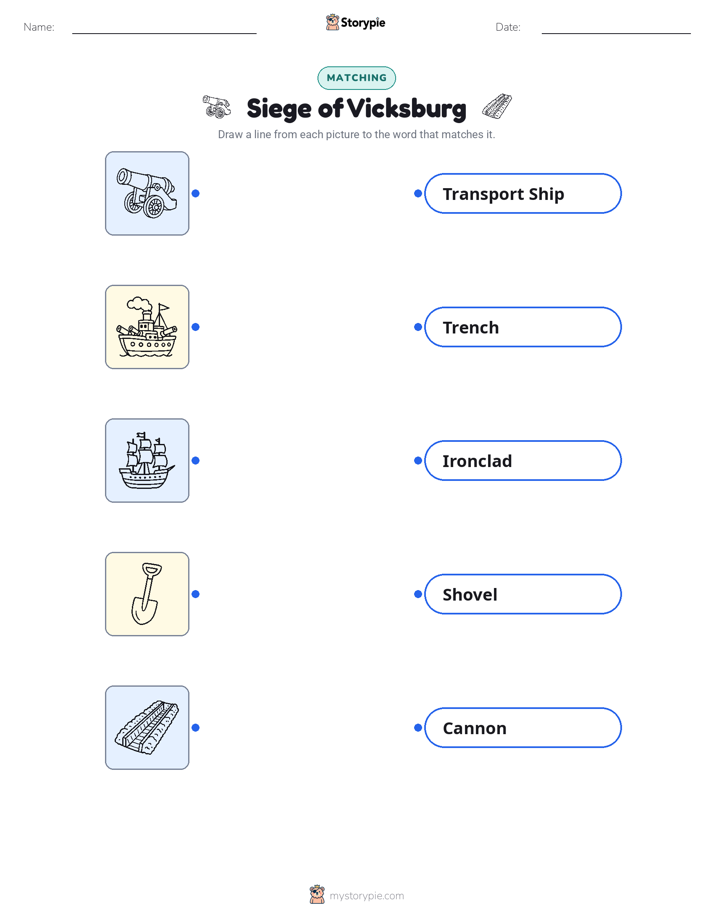
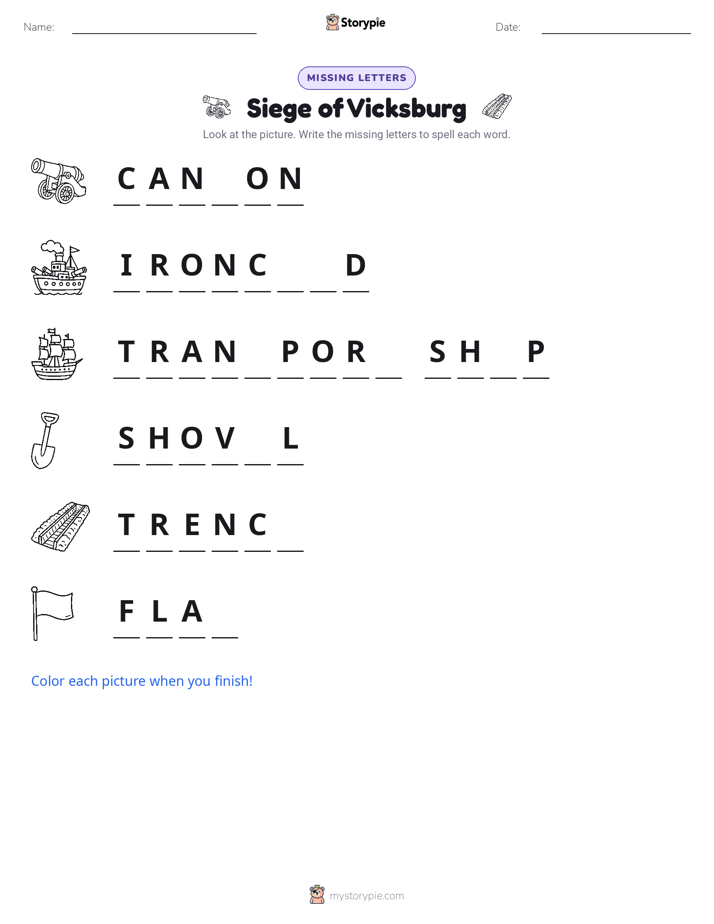
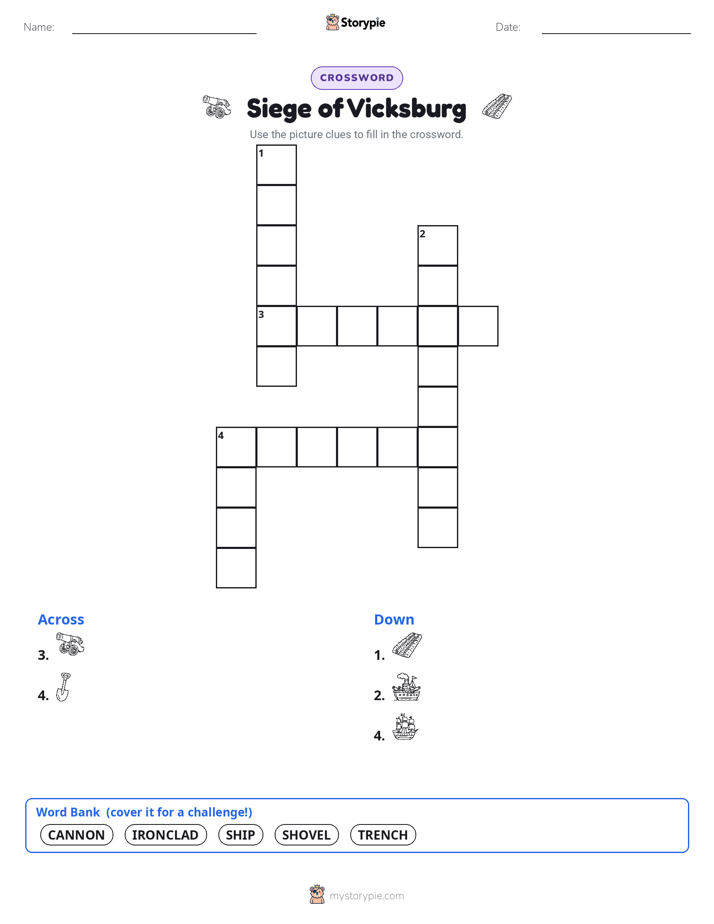
After our earlier failures, I knew a direct attack was not the answer. I needed a new, daring plan, one so risky that the enemy would never see it coming. My idea was to march my entire army of more than forty thousand men down the swampy, difficult land on the west side of the Mississippi River, completely bypassing Vicksburg's defenses. The most dangerous part of this plan was that my army would be on one side of the river, while our navy's transport ships would still be trapped on the other. To get my men across, Admiral David D. Porter had to do something incredibly brave. On the moonless night of April 16th, 1863, he led his fleet of ironclads and transport boats directly past the Vicksburg cannons. I watched from a boat in the middle of the river as the dark sky exploded with fire. The Confederates lit huge bonfires on the shore to see our ships, and their cannonballs rained down upon the fleet. It was a terrifying and spectacular sight, but miraculously, most of our ships made it through. Once we were finally reunited south of the city, we crossed the great river and began a swift campaign. We were now deep in enemy territory, cut off from our supply lines, but we moved fast, fighting and winning a series of five battles in just over two weeks. By May 18th, we had completely surrounded Vicksburg. I believed one more strong push could win the city, so I ordered attacks on May 19th and again on May 22nd. My soldiers fought with incredible courage, but the city's defenses were too strong. We suffered heavy losses, and I realized with a heavy heart that we could not take Vicksburg by force. It was one of the hardest decisions of my career, but I ordered my men to put down their rifles and pick up their shovels. We would lay siege to the city. A siege is a long, patient, and grinding military tactic. You surround a place completely, cutting off all food, supplies, and reinforcements, and simply wait for the enemy to give up. For the next 47 days, under the blistering Mississippi sun, my soldiers dug a complex network of trenches, zig-zagging their way closer and closer to the Confederate lines. The days were filled with the constant boom of cannons and the sharp crack of rifle fire as we slowly tightened our grip around the fortress.
Ulysses S. Grant and the Key to the Union
My name is Ulysses S. Grant, and in the year 1863, I was a general leading the Union Army in a country torn apart by the American Civil War. Our president, Abraham Lincoln, believed that to win the war and reunite our nation, we had to gain full control of the mighty Mississippi River. The river was like the country's backbone, and whoever controlled it could move troops and supplies with great power. But there was one major obstacle standing in our way: a city called Vicksburg, Mississippi. Vicksburg wasn't just any city. It was a fortress perched on high, steep cliffs overlooking a sharp bend in the river. Its cannons could sink any ship that dared to pass. Some called it the 'Gibraltar of the Confederacy,' comparing it to an unconquerable rock fortress in Europe. For months, my army had tried to capture it, but every attempt had failed. The city seemed impossible to take. The frustration was immense, not just for me, but for our entire nation. President Lincoln himself said, 'Vicksburg is the key. The war can never be brought to a close until that key is in our pocket.' I knew he was right, and I became more determined than ever to find a way to turn that key and unlock the path to victory.
After our earlier failures, I knew a direct attack was not the answer. I needed a new, daring plan, one so risky that the enemy would never see it coming. My idea was to march my entire army of more than forty thousand men down the swampy, difficult land on the west side of the Mississippi River, completely bypassing Vicksburg's defenses. The most dangerous part of this plan was that my army would be on one side of the river, while our navy's transport ships would still be trapped on the other. To get my men across, Admiral David D. Porter had to do something incredibly brave. On the moonless night of April 16th, 1863, he led his fleet of ironclads and transport boats directly past the Vicksburg cannons. I watched from a boat in the middle of the river as the dark sky exploded with fire. The Confederates lit huge bonfires on the shore to see our ships, and their cannonballs rained down upon the fleet. It was a terrifying and spectacular sight, but miraculously, most of our ships made it through. Once we were finally reunited south of the city, we crossed the great river and began a swift campaign. We were now deep in enemy territory, cut off from our supply lines, but we moved fast, fighting and winning a series of five battles in just over two weeks. By May 18th, we had completely surrounded Vicksburg. I believed one more strong push could win the city, so I ordered attacks on May 19th and again on May 22nd. My soldiers fought with incredible courage, but the city's defenses were too strong. We suffered heavy losses, and I realized with a heavy heart that we could not take Vicksburg by force. It was one of the hardest decisions of my career, but I ordered my men to put down their rifles and pick up their shovels. We would lay siege to the city. A siege is a long, patient, and grinding military tactic. You surround a place completely, cutting off all food, supplies, and reinforcements, and simply wait for the enemy to give up. For the next 47 days, under the blistering Mississippi sun, my soldiers dug a complex network of trenches, zig-zagging their way closer and closer to the Confederate lines. The days were filled with the constant boom of cannons and the sharp crack of rifle fire as we slowly tightened our grip around the fortress.
As the days turned into weeks, life inside Vicksburg became desperate for the Confederate soldiers and the city's residents. Our blockade was working. They were running out of food, ammunition, and hope. I knew the end was near. On July 3rd, 1863, the Confederate commander, General John C. Pemberton, sent a message asking for terms of surrender. We met under a large oak tree between our two armies to discuss the end of the long struggle. General Pemberton was a proud man, and it was not an easy moment for him, but his men could fight no longer. The official surrender took place the next day, on July 4th, 1863. The date was significant; it was our nation's Independence Day. As the Confederate soldiers laid down their arms, I did not see them as conquered foes. I saw them as fellow Americans who had fought for a cause they believed in. I decided to offer them generous terms. Instead of sending them to prisoner-of-war camps, I allowed them to sign a pledge that they would not fight again and then go home. I hoped this act of mercy would help heal the deep wounds of the war. The capture of Vicksburg was a tremendous victory and a major turning point. With control of the entire Mississippi River, we had cut the Confederacy in two, severely weakening their ability to continue the war. My success here eventually led President Lincoln to give me command of all Union armies. The long, difficult siege taught me that sometimes victory is won not through a single, bold charge, but through careful planning, relentless perseverance, and the courage to wait for the right moment. It was a crucial step on the long road to reuniting our divided country.
Wow facts
About
A pivotal 47-day military siege during the American Civil War where the Union Army, led by Ulysses S. Grant, captured the last major Confederate stronghold on the Mississippi River, marking a major turning point in the war.
Take a Quiz
Question 1 of 5
In your own words, what were the main steps of Ulysses S. Grant's plan to capture Vicksburg?
Explore next



Want to do even more?
Go beyond exploring. Unlock tools that turn every story into real learning.

Storypie Plus for families
Full stories, quizzes, and printables. Nights and car rides, sorted.
- Unlimited audio stories
- Create Mode: your child stars in the story
- Offline downloads
- Printable worksheets & coloring pages

Why Storypie for Schools
Students engaged. Prep in seconds. Evenings back to you.
- Worksheets & Quizzes
- Classroom Management
- Formative Assessment
- Custom Curriculum & Lesson Plans
- 27 Languages

Why Storypie for Homeschool
Curriculum done. They'll ask for more. Hours back in your day.
- Worksheet Generator
- First-Person Audio Stories
- Built-in Comprehension Quizzes
- Custom Curriculum & Lesson Plans
- Print & Go Activities