English

Stone Age
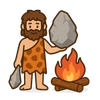
The Stone Age is a vast prehistoric period, lasting approximately 2.6 million years…
Reads at Grades 6–8 Listens at Grades 4–8
Print & create
Answer keys·No prep·Free with an account
28 worksheets · answer keys · full story · quiz · Ages 10-12 · CEFR B2
Plus adds 164,000+ more stories in 27 languages, audio for every one, and printables for all of them.
Just want Stone Age?
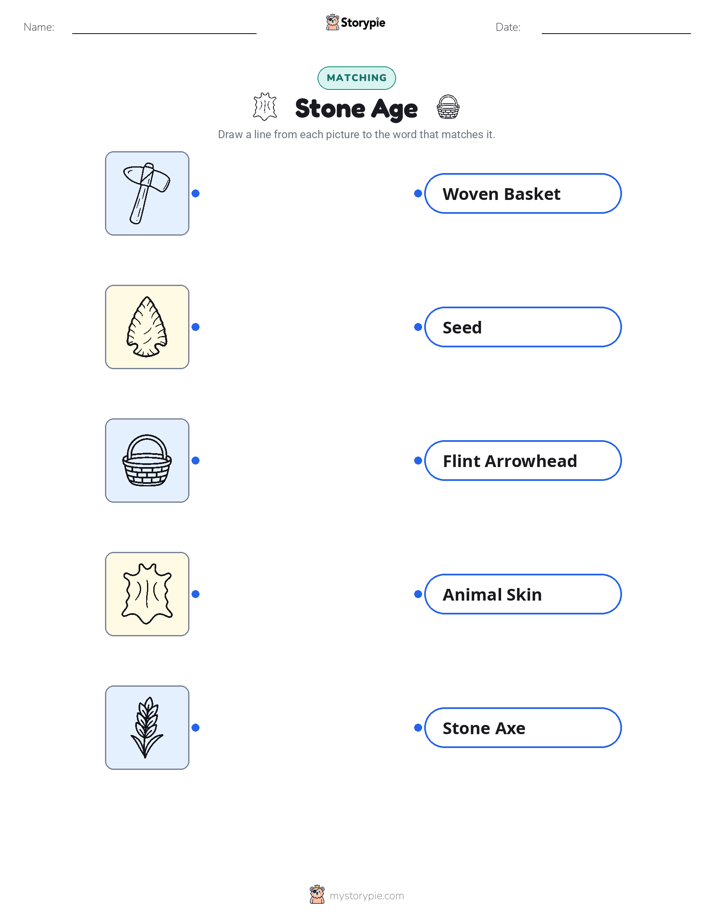
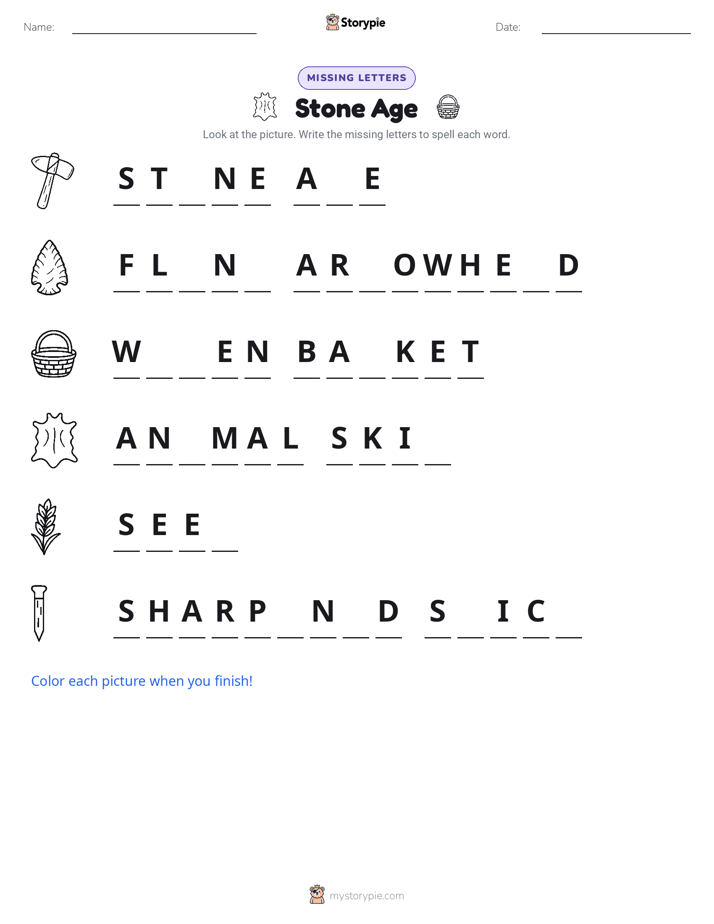
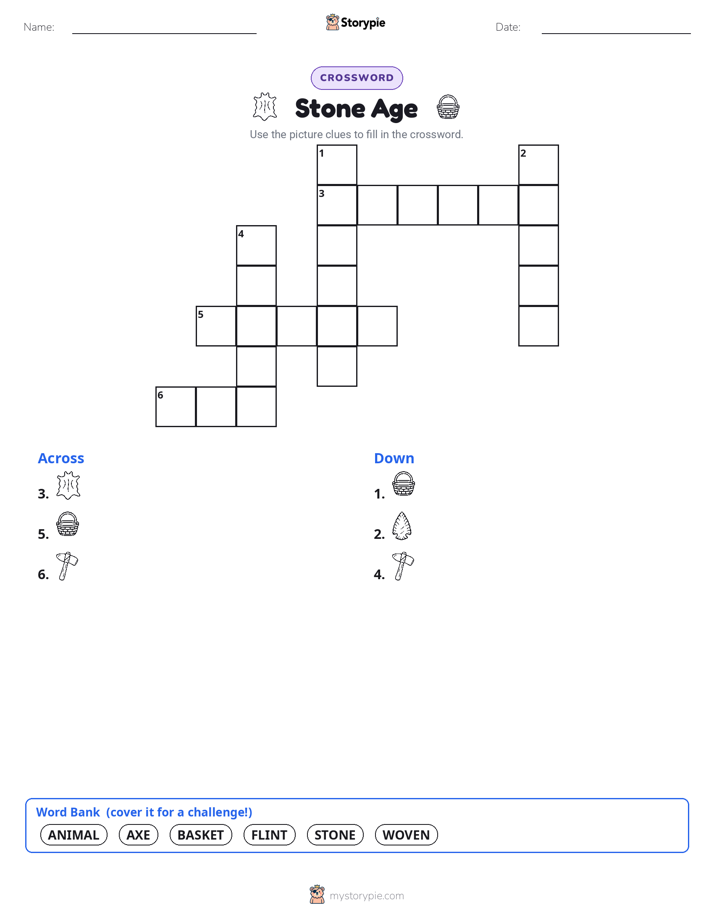
My name is Ana, and my story is not just my own, but the story of my people. You won't find my name written in any of your books, because we had not yet invented writing. I lived a very long time ago, around 9,000 BCE, during the period you call the Neolithic, or the New Stone Age. My world was one of stone, wood, sky, and soil. For as long as anyone could remember, my ancestors had lived as nomads, wandering the land to follow the herds of wild animals and gather the nuts, berries, and roots that grew in the wild. Our clan was our whole world, a small family group that moved together, worked together, and survived together. Every day was about finding enough food to eat. We were always on the move, carrying our few belongings—animal-skin blankets, flint tools, and woven baskets—on our backs.
Life was hard, but we were clever. We were different from our own ancestors of the Old Stone Age. The elders told stories of a time when the tools were rougher, just chipped stones held in the hand. But my people had learned so much. We had polished stone axes that could cut down small trees, and sharp flint arrowheads for our bows that made hunting more successful. We knew the seasons, the paths of the animals, and which plants were safe to eat. We followed the gazelle and the wild goats through the rolling hills of the region you now call the Fertile Crescent. Our homes were temporary shelters made of branches and hides, easily taken down when it was time to move on. We lived by the rhythm of the hunt and the harvest of wild things. But a great change was whispering on the wind, a change that would root us to the earth in a way we had never imagined.
Ana's Story: The First Farmers
My name is Ana, and my story is not just my own, but the story of my people. You won't find my name written in any of your books, because we had not yet invented writing. I lived a very long time ago, around 9,000 BCE, during the period you call the Neolithic, or the New Stone Age. My world was one of stone, wood, sky, and soil. For as long as anyone could remember, my ancestors had lived as nomads, wandering the land to follow the herds of wild animals and gather the nuts, berries, and roots that grew in the wild. Our clan was our whole world, a small family group that moved together, worked together, and survived together. Every day was about finding enough food to eat. We were always on the move, carrying our few belongings—animal-skin blankets, flint tools, and woven baskets—on our backs.
Life was hard, but we were clever. We were different from our own ancestors of the Old Stone Age. The elders told stories of a time when the tools were rougher, just chipped stones held in the hand. But my people had learned so much. We had polished stone axes that could cut down small trees, and sharp flint arrowheads for our bows that made hunting more successful. We knew the seasons, the paths of the animals, and which plants were safe to eat. We followed the gazelle and the wild goats through the rolling hills of the region you now call the Fertile Crescent. Our homes were temporary shelters made of branches and hides, easily taken down when it was time to move on. We lived by the rhythm of the hunt and the harvest of wild things. But a great change was whispering on the wind, a change that would root us to the earth in a way we had never imagined.
It all began with a simple observation. For years, we had gathered wild wheat and barley, grinding the grains between two stones to make a rough flour. Sometimes, grains would spill near our camp. One year, after we returned to a favorite camping spot, we saw something amazing. Where the seeds had fallen the season before, new stalks of wheat were growing tall and strong. It was a moment of wonder. My father and the other elders talked for many nights around the fire. What if we didn't have to search for the grain? What if we could encourage it to grow where we wanted it to? This was the beginning of The Great Change. It didn't happen overnight; it was a slow, difficult process that unfolded over many lifetimes, but it started with that simple idea. We chose a small plot of land near a river, where the soil was dark and rich. It was hard work. Using our polished stone axes, we cleared the land of trees and shrubs. We used sharpened sticks to poke holes in the earth and carefully planted the seeds we had saved. The first year was full of anxiety. We guarded the small field from hungry birds and wild animals. We watched the sky, praying for rain. When the first green shoots pushed through the soil, a great cheer went up from our clan. We had done it. We were helping the earth give us food.
This first small harvest changed everything. It meant we had a reason to stay in one place. We built our first permanent homes, not temporary shelters, but sturdy round houses with walls made of woven branches covered in thick mud, a technique you call wattle and daub. The roofs were thatched with reeds from the riverbank. For the first time, we had a real village. At the same time, we learned another new skill: domesticating animals. We captured young wild goats and sheep, raising them in pens. Instead of just hunting them, we now had a constant supply of milk, wool, and meat right outside our doors. The dogs that had followed our hunting parties for generations became true partners, helping us guard the flocks. With more food came new problems, like how to store it. My mother was one of the first to solve this. She took clay from the riverbank, shaped it into bowls and jars, and let them bake in the hot sun until they were hard. Later, we discovered that baking them in a fire made them waterproof and much stronger. In these new clay pots, we could store our precious grain, keeping it safe from dampness and mice. Life was still hard, but it was becoming more secure, more predictable. We were no longer just wanderers; we were becoming builders and farmers.
Our little settlement grew. What was once a small, wandering clan of about thirty people became a village of over a hundred. We had a home. We knew our neighbors in a way we never had before. This new life allowed us to develop different skills. My father and brothers became full-time farmers, learning the best times to plant and harvest. My mother became a skilled potter, her pots known for their strength. One of my uncles was the best toolmaker, spending his days chipping flint into sharp arrowheads and grinding stone into smooth, effective axe heads. We had builders, weavers, and farmers all working together. We had a community. We even began to trade our surplus grain and pottery with other new villages that were forming in the hills nearby. Sometimes, these traders would bring stories of strange new things. Recently, a trader showed my father a small, shiny bead. He said it came from a special kind of greenish rock that, when put in a very hot fire, would weep a liquid that cooled into a hard, shiny metal. He called it copper. It was just a whisper of the future, a hint that our time of relying only on stone was slowly coming to an end, and a new age of metal was on the horizon. My life was spent at the dawn of this new world. We, the first farmers, made a monumental decision to stop wandering and start planting. By settling down, we built the foundation for every town, city, and civilization that came after us. We learned that by working together and using our ingenuity, we could shape our own future.
Wow facts
About
The Stone Age is a vast prehistoric period, lasting approximately 2.6 million years, during which early humans made and used stone tools. It is divided into the Paleolithic, Mesolithic, and Neolithic periods and marks the foundation of human technology and culture.
Take a Quiz
Question 1 of 5
What is the main theme of Ana's story?
Want to do even more?
Go beyond exploring. Unlock tools that turn every story into real learning.

Storypie Plus for families
Full stories, quizzes, and printables. Nights and car rides, sorted.
- Unlimited audio stories
- Create Mode: your child stars in the story
- Offline downloads
- Printable worksheets & coloring pages

Why Storypie for Schools
Students engaged. Prep in seconds. Evenings back to you.
- Worksheets & Quizzes
- Classroom Management
- Formative Assessment
- Custom Curriculum & Lesson Plans
- 27 Languages

Why Storypie for Homeschool
Curriculum done. They'll ask for more. Hours back in your day.
- Worksheet Generator
- First-Person Audio Stories
- Built-in Comprehension Quizzes
- Custom Curriculum & Lesson Plans
- Print & Go Activities