English

The Holocaust
The Holocaust was the systematic…
Reads at Grades 3–5 Listens at Grades 1–5
Print & create
Answer keys·No prep·Free with an account
28 worksheets · answer keys · full story · quiz · Ages 8-10 · CEFR B1
Plus adds 102,000+ more stories in 27 languages, audio for every one, and printables for all of them.
Just want The Holocaust?
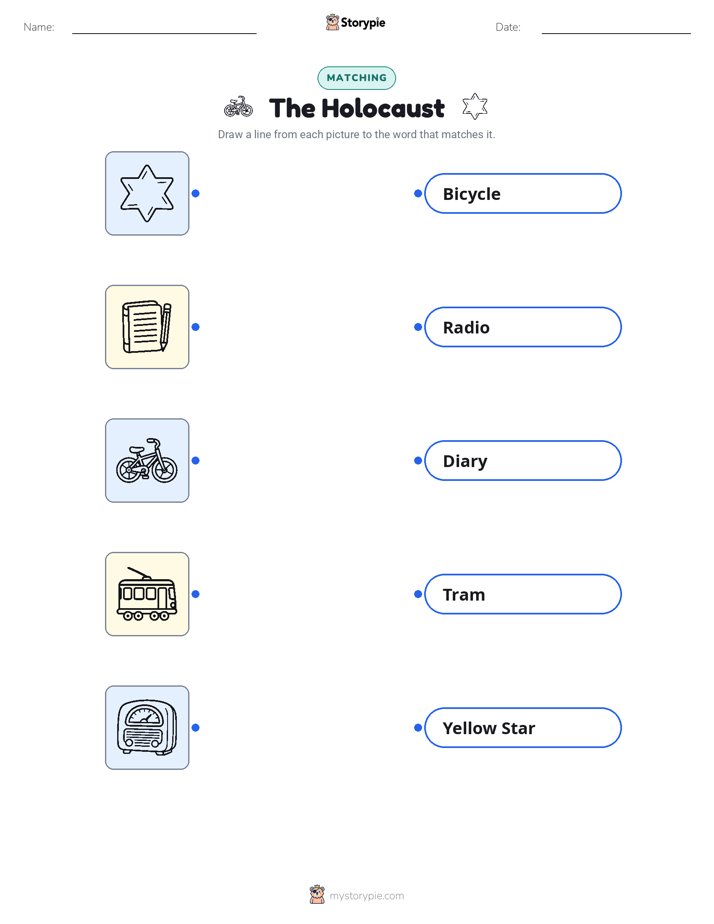
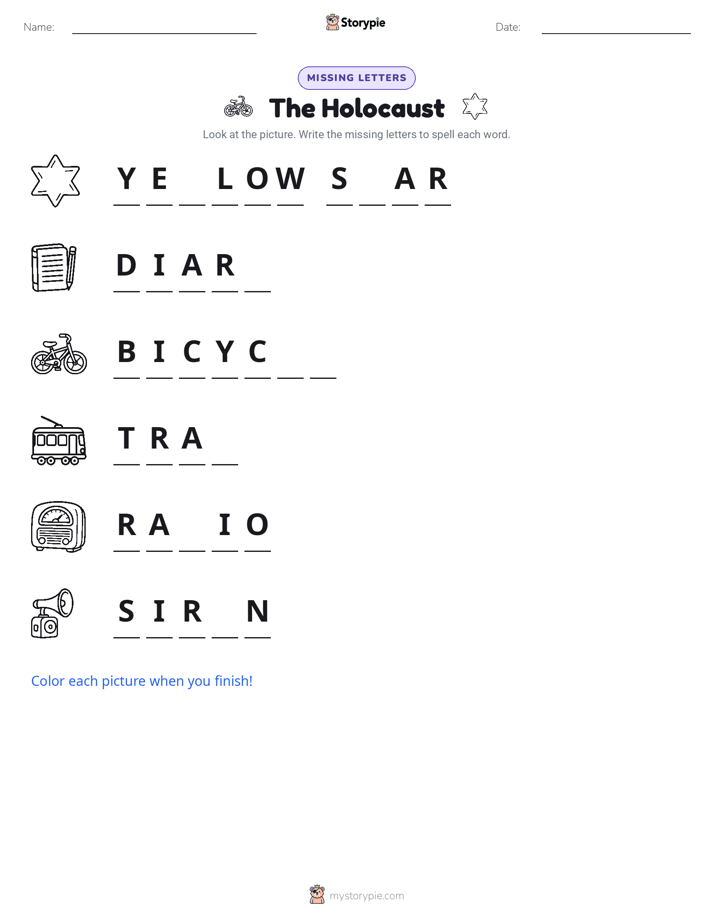
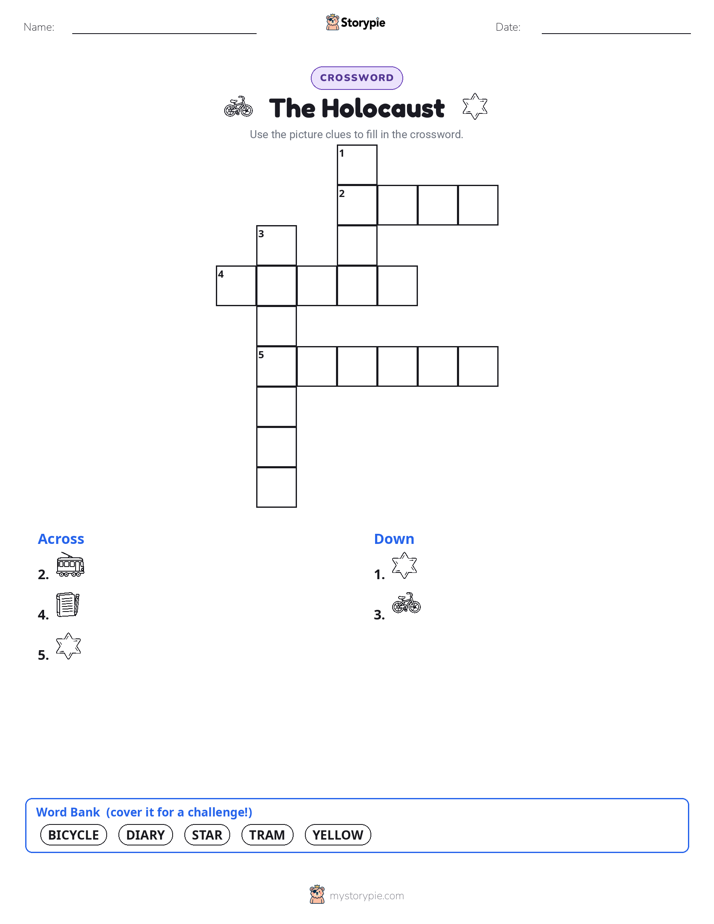
Hello. My name is Miep Gies, and I want to tell you a story about friendship and hope during a very dark time. Before the war, I lived a happy life in Amsterdam, a beautiful city of canals and tall, narrow houses. I worked for a kind man named Otto Frank. He wasn't just my boss; he was my friend. I adored his family, especially his younger daughter, Anne. She was a firecracker, full of laughter, questions, and dreams. She could talk for hours about the movies and film stars she loved. But our happy days began to change. A new government, called the Nazis, came to power, and they brought with them cruel and unfair rules for our Jewish friends, like the Franks. They forced them to wear yellow stars on their clothes so everyone would know they were Jewish. They were no longer allowed to go to parks, ride bicycles, or own businesses. Their world became smaller and scarier every day. One afternoon in 1942, my dear friend Otto came to me with a desperate look in his eyes. He asked me to help him and his family do something very dangerous. He asked if I would help them hide.
Of course, I said yes. I couldn't let my friends be taken away. So, on July 6th, 1942, the Frank family disappeared. But they didn't go far. They moved into a secret space hidden in the very building where I worked. We called it the Secret Annex. To get to it, you had to pull on a swinging bookcase that looked like any other. Behind it was a hidden door and a steep staircase. For over two years, I helped care for the Franks and another family, the van Pels, who hid with them. Life inside was cramped and quiet. During the day, they had to whisper and tiptoe so the workers in the office below wouldn't hear a single sound. Imagine not being able to run, shout, or even flush a toilet for hours. My job was to be their link to the outside world. Every day, I would shop for food, trying to get a little extra here and there without making anyone suspicious. I brought them potatoes, bread, and whatever vegetables I could find. I also brought them books from the library, because I knew how much Anne loved to read and write. Sometimes, I would bring a small treat, like a cake for a birthday, and for a moment, their smiles would light up the small, dim rooms. It was a life of constant fear, for them and for me. But we held onto hope. Then, on a terrible day, August 4th, 1944, our secret was discovered. I was at my desk when the police stormed in. My heart felt like it stopped. There was nothing I could do as I watched my friends, my second family, being led away. The Secret Annex fell silent.
Miep Gies: Keeper of the Diary
Hello. My name is Miep Gies, and I want to tell you a story about friendship and hope during a very dark time. Before the war, I lived a happy life in Amsterdam, a beautiful city of canals and tall, narrow houses. I worked for a kind man named Otto Frank. He wasn't just my boss; he was my friend. I adored his family, especially his younger daughter, Anne. She was a firecracker, full of laughter, questions, and dreams. She could talk for hours about the movies and film stars she loved. But our happy days began to change. A new government, called the Nazis, came to power, and they brought with them cruel and unfair rules for our Jewish friends, like the Franks. They forced them to wear yellow stars on their clothes so everyone would know they were Jewish. They were no longer allowed to go to parks, ride bicycles, or own businesses. Their world became smaller and scarier every day. One afternoon in 1942, my dear friend Otto came to me with a desperate look in his eyes. He asked me to help him and his family do something very dangerous. He asked if I would help them hide.
Of course, I said yes. I couldn't let my friends be taken away. So, on July 6th, 1942, the Frank family disappeared. But they didn't go far. They moved into a secret space hidden in the very building where I worked. We called it the Secret Annex. To get to it, you had to pull on a swinging bookcase that looked like any other. Behind it was a hidden door and a steep staircase. For over two years, I helped care for the Franks and another family, the van Pels, who hid with them. Life inside was cramped and quiet. During the day, they had to whisper and tiptoe so the workers in the office below wouldn't hear a single sound. Imagine not being able to run, shout, or even flush a toilet for hours. My job was to be their link to the outside world. Every day, I would shop for food, trying to get a little extra here and there without making anyone suspicious. I brought them potatoes, bread, and whatever vegetables I could find. I also brought them books from the library, because I knew how much Anne loved to read and write. Sometimes, I would bring a small treat, like a cake for a birthday, and for a moment, their smiles would light up the small, dim rooms. It was a life of constant fear, for them and for me. But we held onto hope. Then, on a terrible day, August 4th, 1944, our secret was discovered. I was at my desk when the police stormed in. My heart felt like it stopped. There was nothing I could do as I watched my friends, my second family, being led away. The Secret Annex fell silent.
After they were gone, my husband and I went up to the empty hiding place. The rooms felt so cold and sad. All their belongings were thrown about. And there, scattered on the floor, were Anne's papers—her diary and her stories. I carefully gathered every single page. I knew how much her writing meant to her. I decided I would keep it safe, tucked away in my desk drawer, until I could give it back to her when she returned. The war finally ended in 1945, and we waited and waited for our friends to come home. But only one person returned: Otto Frank. He had survived, but his wife and his two beautiful daughters, Margot and Anne, had not. My heart ached for him. After he had some time, I opened my desk drawer. I told him, “This is the legacy of your daughter Anne.” I gave him all of her papers. He was hesitant at first, but eventually, he read his daughter's words and decided to share them with the world. Because we saved her diary, Anne's voice was not silenced. Her story, filled with hope and dreams even in the darkest of times, has taught millions of people about the importance of tolerance and understanding. It showed how even in the face of great hate, the courage of ordinary people can make an extraordinary difference.
Wow facts
About
The Holocaust was the systematic, state-sponsored persecution and murder of six million European Jews by the Nazi regime and its collaborators between 1933 and 1945.
Take a Quiz
Question 1 of 5
Why did Miep Gies call helping the Frank family a 'brave and dangerous favor'?
Explore next






Want to do even more?
Go beyond exploring. Unlock tools that turn every story into real learning.

Storypie Plus for families
Full stories, quizzes, and printables. Nights and car rides, sorted.
- Unlimited audio stories
- Create Mode: your child stars in the story
- Offline downloads
- Printable worksheets & coloring pages

Why Storypie for Schools
Students engaged. Prep in seconds. Evenings back to you.
- Worksheets & Quizzes
- Classroom Management
- Formative Assessment
- Custom Curriculum & Lesson Plans
- 27 Languages

Why Storypie for Homeschool
Curriculum done. They'll ask for more. Hours back in your day.
- Worksheet Generator
- First-Person Audio Stories
- Built-in Comprehension Quizzes
- Custom Curriculum & Lesson Plans
- Print & Go Activities