English

Valley Forge
The winter encampment of the Continental Army, led by General George Washington…
Reads at Grades 3–5 Listens at Grades 1–5
Print & create
Answer keys·No prep·Free with an account
28 worksheets · answer keys · full story · quiz · Ages 8-10 · CEFR B1
Plus adds 244,000+ more stories in 27 languages, audio for every one, and printables for all of them.
Just want Valley Forge?

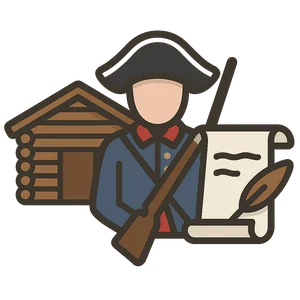
My name is George Washington, and I am the general of the Continental Army. The year was 1777, and the winter was biting at our heels. We had just fought difficult battles near Philadelphia, and though my men were brave, we had not won. We needed a safe place to rest, to gather our strength for the long fight for American independence that still lay ahead. I chose a place called Valley Forge, a wide, open plateau not far from the city. On December 19th, 1777, we trudged into that place, our feet frozen and our stomachs empty. The wind howled through the bare trees, and the ground was hard as iron. There were no warm houses waiting for us, only hills and woods. It looked like a very lonely place to spend a winter. My heart ached for my men, who numbered nearly twelve thousand. They were tired, hungry, and their uniforms were little more than rags. But we had no choice. We had to turn this cold, empty land into a camp, a city of soldiers, and our home for the next six months. Our first task was survival.
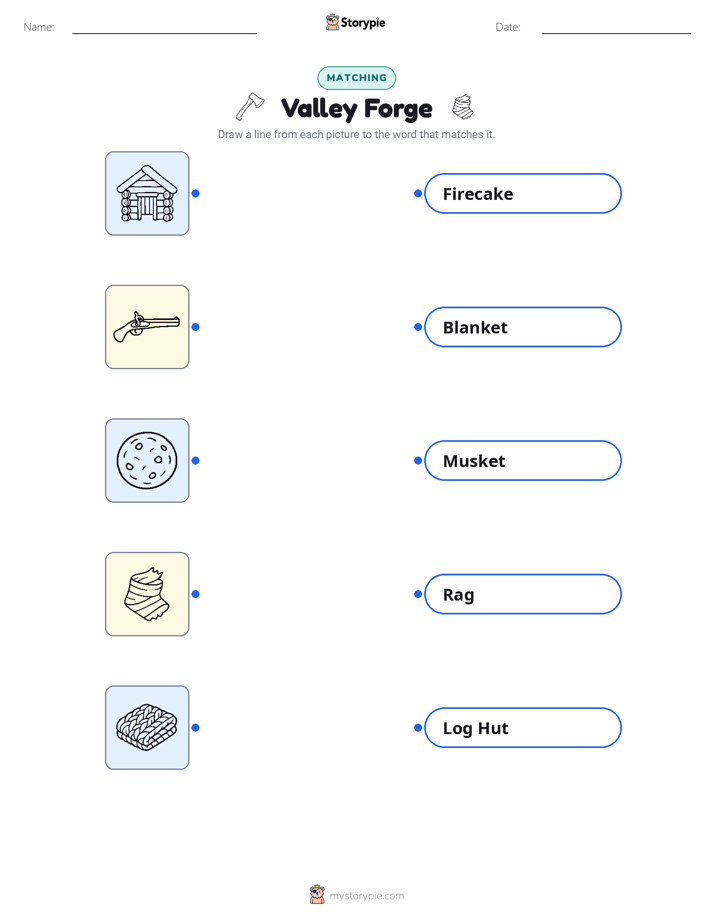
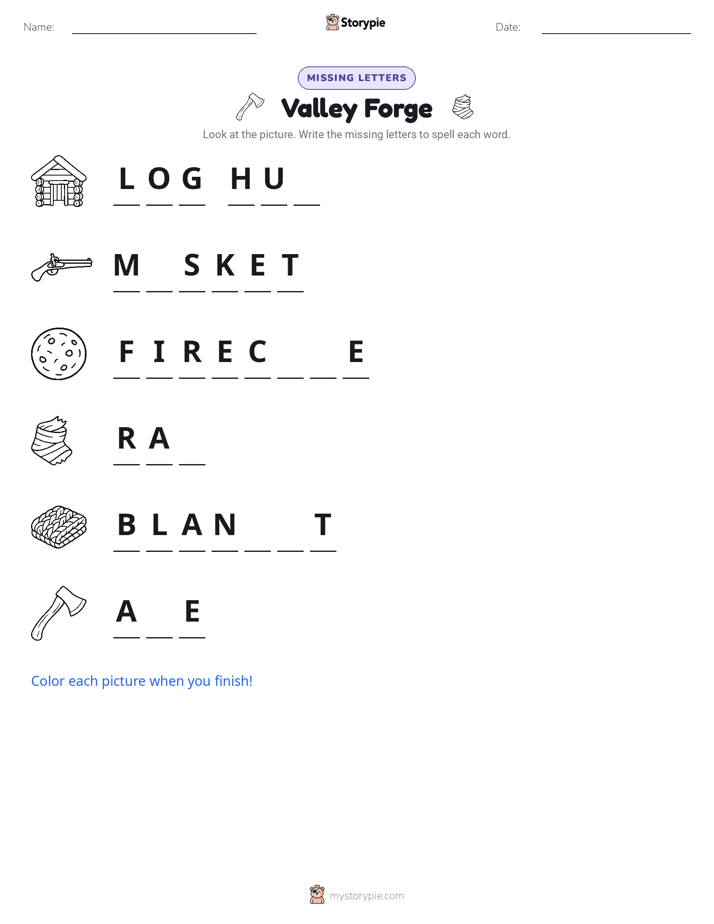
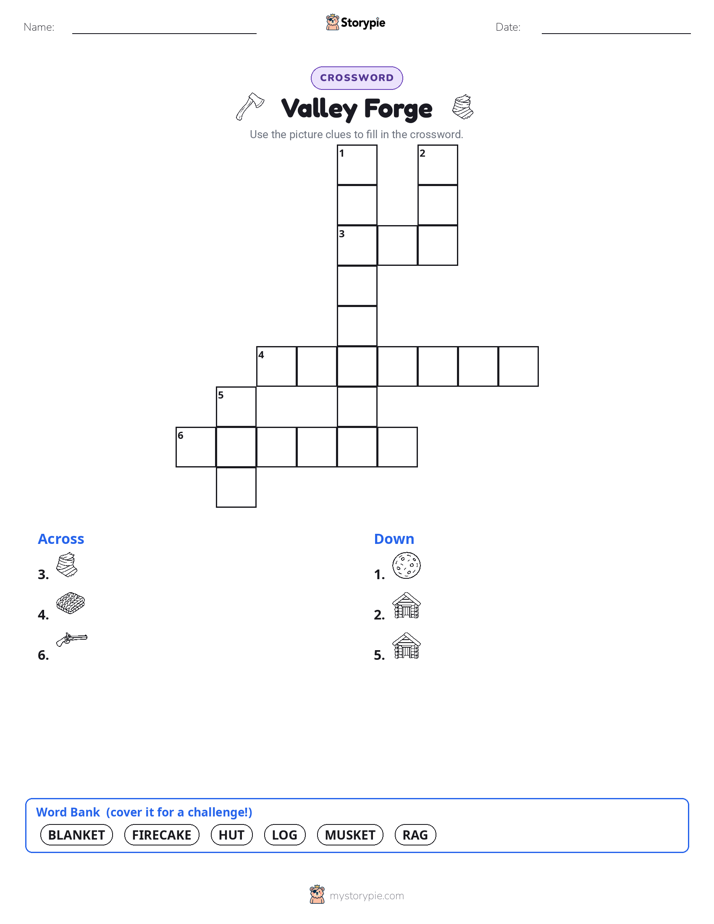
The days that followed were some of the most difficult I have ever known. The cold was relentless, and a blanket of snow soon covered everything. We set to work building log huts, felling trees with aching arms and frozen fingers. It was slow and exhausting work with few tools. Many of my soldiers had no proper shoes, and I still remember the sight of their feet wrapped in rags, leaving bloody footprints in the snow. They shivered in thin coats, huddled around smoky fires trying to stay warm through the long nights. Food was our greatest enemy. There was simply not enough. Our meals often consisted of something we called 'firecake,' which was just a simple paste of flour and water cooked on a hot rock until it was black and hard. It was barely food at all, but it was often all we had. It filled our bellies but gave us little strength. I felt the weight of every hungry soldier, every shivering man. At night, I would walk through the rows of huts, listening to the coughs and groans of the sick. Disease spread quickly in our crowded, cold camp, and we lost far too many good men not to bullets, but to illness. I spent countless hours in my small stone headquarters, writing letter after letter, begging the Continental Congress and the states for food, medicine, and clothing. I wrote, 'Unless some great and capital change suddenly takes place... this Army must inevitably be reduced to one or other of these three things, starve, dissolve, or disperse.' It felt as if our entire fight for freedom might freeze and crumble right there in the snow. Yet, something incredible happened. My men did not quit. They shared what little they had, they helped build huts for their comrades, and they held onto the fragile hope of a free nation. Their spirit was a small, warm flame in the middle of a great and terrible winter.
A Winter of Steel at Valley Forge
My name is George Washington, and I am the general of the Continental Army. The year was 1777, and the winter was biting at our heels. We had just fought difficult battles near Philadelphia, and though my men were brave, we had not won. We needed a safe place to rest, to gather our strength for the long fight for American independence that still lay ahead. I chose a place called Valley Forge, a wide, open plateau not far from the city. On December 19th, 1777, we trudged into that place, our feet frozen and our stomachs empty. The wind howled through the bare trees, and the ground was hard as iron. There were no warm houses waiting for us, only hills and woods. It looked like a very lonely place to spend a winter. My heart ached for my men, who numbered nearly twelve thousand. They were tired, hungry, and their uniforms were little more than rags. But we had no choice. We had to turn this cold, empty land into a camp, a city of soldiers, and our home for the next six months. Our first task was survival.
The days that followed were some of the most difficult I have ever known. The cold was relentless, and a blanket of snow soon covered everything. We set to work building log huts, felling trees with aching arms and frozen fingers. It was slow and exhausting work with few tools. Many of my soldiers had no proper shoes, and I still remember the sight of their feet wrapped in rags, leaving bloody footprints in the snow. They shivered in thin coats, huddled around smoky fires trying to stay warm through the long nights. Food was our greatest enemy. There was simply not enough. Our meals often consisted of something we called 'firecake,' which was just a simple paste of flour and water cooked on a hot rock until it was black and hard. It was barely food at all, but it was often all we had. It filled our bellies but gave us little strength. I felt the weight of every hungry soldier, every shivering man. At night, I would walk through the rows of huts, listening to the coughs and groans of the sick. Disease spread quickly in our crowded, cold camp, and we lost far too many good men not to bullets, but to illness. I spent countless hours in my small stone headquarters, writing letter after letter, begging the Continental Congress and the states for food, medicine, and clothing. I wrote, 'Unless some great and capital change suddenly takes place... this Army must inevitably be reduced to one or other of these three things, starve, dissolve, or disperse.' It felt as if our entire fight for freedom might freeze and crumble right there in the snow. Yet, something incredible happened. My men did not quit. They shared what little they had, they helped build huts for their comrades, and they held onto the fragile hope of a free nation. Their spirit was a small, warm flame in the middle of a great and terrible winter.
Just when our hope was at its lowest, a man arrived who would change everything. In February of 1778, a Prussian officer named Baron Friedrich von Steuben came to our camp. He spoke very little English, often shouting in German and French, which could be quite funny to watch. But he knew how to build an army. He saw our soldiers not as a ragged mob, but as men with the potential for greatness. He believed in them, and he made them believe in themselves. He started with a small group of one hundred men and trained them himself. Day after day, out on the frozen parade ground, he taught them to march in step, to load their muskets quickly, and to use their bayonets not just as tools, but as effective weapons. His commands were sharp, and his methods were strict, but he was fair. He worked alongside the men, showing them exactly what to do. Soon, that small group of trained soldiers began to teach others, and the discipline spread like wildfire through the camp. The men began to stand taller. They moved with purpose. For the first time, we were not just a collection of farmers and shopkeepers with guns; we were becoming a true, professional army. The constant drilling gave the men a new focus, something to do besides worry about the cold and hunger. It was as if the hardship of the winter was a great fire, and Baron von Steuben was the blacksmith, hammering us into something new and strong. We were being forged at Valley Forge.
By the time the snows melted and the first green leaves appeared on the trees, we were a different army. On June 19th, 1778, we marched out of Valley Forge. We were thinner, yes, but we were stronger in spirit and skill than we had ever been. No great battle was fought at Valley Forge. We did not face the enemy with cannons or muskets there. Instead, we fought a different kind of battle—a battle against cold, hunger, and despair. And we won. We had survived the worst, and we had become a unified fighting force. That winter taught us that our greatest strength was not just in our weapons, but in our perseverance and our commitment to one another and to the cause of liberty. We left that place ready to face the British army and win our independence.
Wow facts
About
The winter encampment of the Continental Army, led by General George Washington, from December 1777 to June 1778 during the American Revolutionary War. It was a time of significant hardship, including shortages of provisions, clothing, and shoes, but also of retraining and reorganization that forged a more professional and resilient fighting force.
Take a Quiz
Question 1 of 5
How do you think General Washington felt seeing his soldiers with their feet wrapped in rags, leaving bloody footprints in the snow?
Explore next




Want to do even more?
Go beyond exploring. Unlock tools that turn every story into real learning.

Storypie Plus for families
Full stories, quizzes, and printables. Nights and car rides, sorted.
- Unlimited audio stories
- Create Mode: your child stars in the story
- Offline downloads
- Printable worksheets & coloring pages

Why Storypie for Schools
Students engaged. Prep in seconds. Evenings back to you.
- Worksheets & Quizzes
- Classroom Management
- Formative Assessment
- Custom Curriculum & Lesson Plans
- 27 Languages

Why Storypie for Homeschool
Curriculum done. They'll ask for more. Hours back in your day.
- Worksheet Generator
- First-Person Audio Stories
- Built-in Comprehension Quizzes
- Custom Curriculum & Lesson Plans
- Print & Go Activities