English

War of 1812
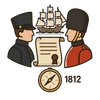
The War of 1812 was a conflict fought between the United States and the United Kingdom…
Reads at Grades 3–5 Listens at Grades 1–5
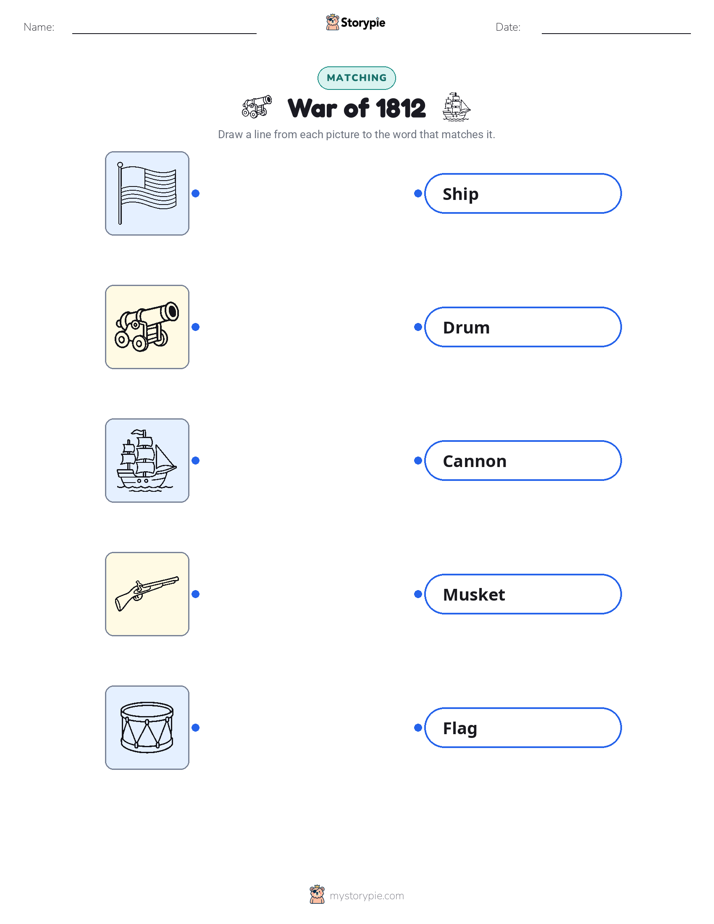
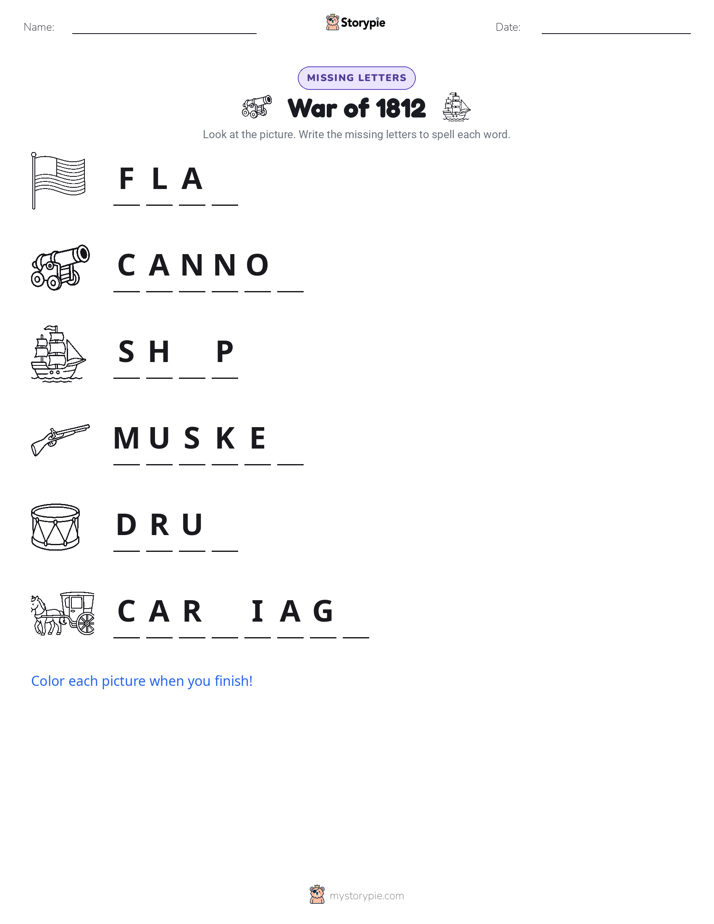
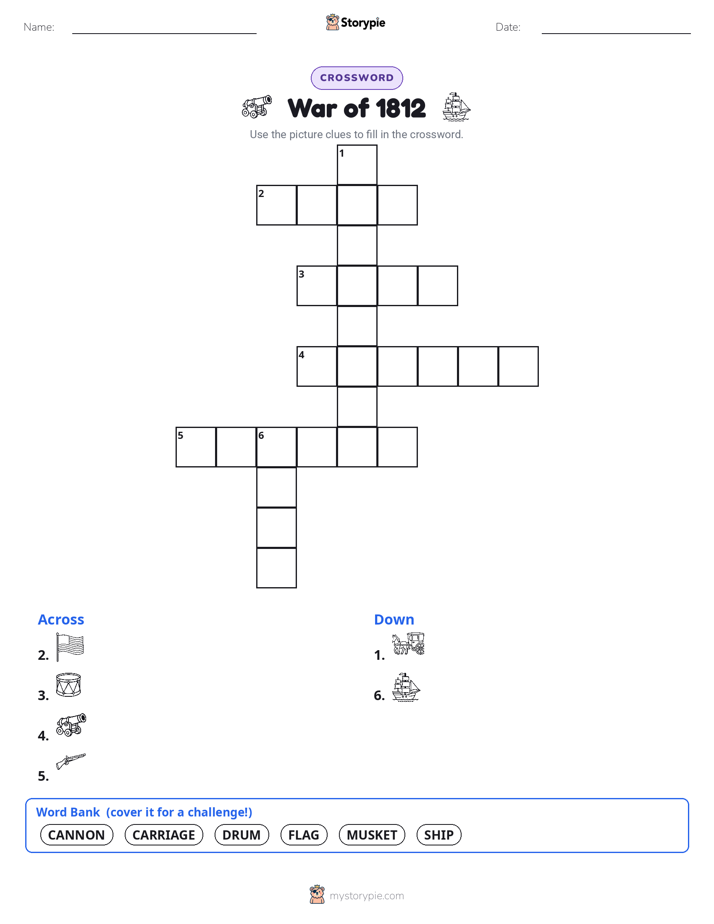
Print & create
Answer keys·No prep·Free with an account
28 worksheets · answer keys · full story · quiz · Ages 8-10 · CEFR B1
Plus adds 102,000+ more stories in 27 languages, audio for every one, and printables for all of them.
Just want War of 1812?
My name is Dolley Madison, and my husband, James Madison, was the fourth president of the United States. We lived in a grand new home called the President’s House in a new city named Washington, D.C. It was an exciting time. Our country was still young, like a child learning to walk on its own. But being a new nation wasn’t always easy. Across the big Atlantic Ocean, Great Britain still acted as if America was its little colony. Their powerful navy would stop our trading ships at sea, which was not fair and hurt our country’s business. They did not seem to respect that we were our own independent nation. My husband and the other leaders tried to solve these problems with words, but it did no good. Finally, on June 18th, 1812, our country declared war on Great Britain. We all hoped it would be a short war, one that would prove once and for all that the United States of America was strong and deserved respect. We had no idea that the war would soon arrive right at our front door.
By August of 1814, the war had been raging for over two years. The fighting had been far away, but now the British soldiers were marching toward our capital city. My husband, James, had gone to be with our soldiers, leaving me at the President’s House. I felt a nervous flutter in my stomach as I listened for the sound of cannons in the distance. On the morning of August 24th, 1814, a messenger arrived, breathless. He told me the British were very close and that I must leave immediately. I looked around the rooms, filled with beautiful furniture and important state documents. What could I save. My mind raced. I quickly packed important government papers into a trunk, but my eyes kept going to one thing: the magnificent, full-length portrait of our first president, George Washington. It was more than just a painting. It was a symbol of our nation’s fight for freedom and the spirit of our country. I could not let the British capture it and make fun of our hero. The painting was huge and screwed to the wall. There was no time to unscrew it. ‘Break the frame.’ I ordered the staff. ‘We must get the canvas out.’ They used an axe to carefully break the heavy golden frame. Just as we rolled up the precious canvas and gave it to two gentlemen for safekeeping, I could hear the sounds of the approaching army. I fled in my carriage, looking back at the home I loved, knowing the enemy was about to arrive.
Saving Mr. Washington
My name is Dolley Madison, and my husband, James Madison, was the fourth president of the United States. We lived in a grand new home called the President’s House in a new city named Washington, D.C. It was an exciting time. Our country was still young, like a child learning to walk on its own. But being a new nation wasn’t always easy. Across the big Atlantic Ocean, Great Britain still acted as if America was its little colony. Their powerful navy would stop our trading ships at sea, which was not fair and hurt our country’s business. They did not seem to respect that we were our own independent nation. My husband and the other leaders tried to solve these problems with words, but it did no good. Finally, on June 18th, 1812, our country declared war on Great Britain. We all hoped it would be a short war, one that would prove once and for all that the United States of America was strong and deserved respect. We had no idea that the war would soon arrive right at our front door.
By August of 1814, the war had been raging for over two years. The fighting had been far away, but now the British soldiers were marching toward our capital city. My husband, James, had gone to be with our soldiers, leaving me at the President’s House. I felt a nervous flutter in my stomach as I listened for the sound of cannons in the distance. On the morning of August 24th, 1814, a messenger arrived, breathless. He told me the British were very close and that I must leave immediately. I looked around the rooms, filled with beautiful furniture and important state documents. What could I save. My mind raced. I quickly packed important government papers into a trunk, but my eyes kept going to one thing: the magnificent, full-length portrait of our first president, George Washington. It was more than just a painting. It was a symbol of our nation’s fight for freedom and the spirit of our country. I could not let the British capture it and make fun of our hero. The painting was huge and screwed to the wall. There was no time to unscrew it. ‘Break the frame.’ I ordered the staff. ‘We must get the canvas out.’ They used an axe to carefully break the heavy golden frame. Just as we rolled up the precious canvas and gave it to two gentlemen for safekeeping, I could hear the sounds of the approaching army. I fled in my carriage, looking back at the home I loved, knowing the enemy was about to arrive.
Later that night, from a safe distance, I watched the sky over Washington glow a terrible orange. The British had set fire to the President’s House, the Capitol, and other government buildings. My heart ached to see our beautiful new city in flames. When we returned a few days later, the city was in ruins. The President’s House was a blackened, empty shell. It was a sad sight, but as I looked around, I did not feel despair. I felt a strong sense of resolve. We would rebuild. We had to. Our nation was more than just buildings. It was an idea, and that idea could not be burned. A few weeks later, the British attacked Baltimore, but our brave soldiers defended Fort McHenry. A lawyer named Francis Scott Key was so inspired watching our flag still waving after the battle that he wrote a poem that became ‘The Star-Spangled Banner.’ That spirit was everywhere. The war officially ended when the Treaty of Ghent was signed on December 24th, 1814. Saving that portrait was my small part, but it taught me that symbols matter. They remind us of who we are and what we stand for. The war was difficult, but in the end, it brought our country closer together and made us stronger than ever.
Wow facts
About
The War of 1812 was a conflict fought between the United States and the United Kingdom, along with their respective allies, from 1812 to 1815. It was caused by British restrictions on U.S. trade and the impressment of American sailors, ultimately resulting in a strengthened sense of American nationalism.
Take a Quiz
Question 1 of 5
Why did Dolley Madison believe it was so important to save the portrait of George Washington?
Explore next



Want to do even more?
Go beyond exploring. Unlock tools that turn every story into real learning.

Storypie Plus for families
Full stories, quizzes, and printables. Nights and car rides, sorted.
- Unlimited audio stories
- Create Mode: your child stars in the story
- Offline downloads
- Printable worksheets & coloring pages

Why Storypie for Schools
Students engaged. Prep in seconds. Evenings back to you.
- Worksheets & Quizzes
- Classroom Management
- Formative Assessment
- Custom Curriculum & Lesson Plans
- 27 Languages

Why Storypie for Homeschool
Curriculum done. They'll ask for more. Hours back in your day.
- Worksheet Generator
- First-Person Audio Stories
- Built-in Comprehension Quizzes
- Custom Curriculum & Lesson Plans
- Print & Go Activities