English

War of 1812
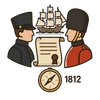
The War of 1812 was a conflict fought between the United States and the United Kingdom…
Reads at Grades 6–8 Listens at Grades 4–8
Print & create
Answer keys·No prep·Free with an account
28 worksheets · answer keys · full story · quiz · Ages 10-12 · CEFR B2
Plus adds 102,000+ more stories in 27 languages, audio for every one, and printables for all of them.
Just want War of 1812?
My name is Dolley Madison, and my husband, James Madison, was the fourth President of the United States. In the early 1800s, we lived in the new capital, which everyone called Washington City. It was an exciting place to be. The city was still being built, with wide, muddy streets and the grand President’s House and Capitol building rising as symbols of our young nation’s dreams. We were a new country, barely thirty years old, and we were so proud of the independence we had fought so hard to win from Great Britain. But that old rivalry had not faded. By 1812, our relationship with the British had grown tense once more. They were at war with France, and they did not respect our right to remain neutral. Their powerful navy would stop our American merchant ships on the high seas, seizing our cargo and, even worse, kidnapping our sailors and forcing them to serve on British warships. This practice was called “impressment,” and it felt like a deep insult to our sovereignty. Furthermore, on the western frontier, the British were supplying weapons to Native American tribes who were resisting the expansion of American settlers. It felt as though they were trying to undermine our nation from all sides. After years of failed diplomacy, my husband and the Congress felt there was no other choice. On June 18th, 1812, the United States declared war on Great Britain for the second time. A feeling of great anxiety settled over our capital, but it was mixed with a determined resolve to prove, once and for all, that we were a truly independent nation.
The President's House in Flames
My name is Dolley Madison, and my husband, James Madison, was the fourth President of the United States. In the early 1800s, we lived in the new capital, which everyone called Washington City. It was an exciting place to be. The city was still being built, with wide, muddy streets and the grand President’s House and Capitol building rising as symbols of our young nation’s dreams. We were a new country, barely thirty years old, and we were so proud of the independence we had fought so hard to win from Great Britain. But that old rivalry had not faded. By 1812, our relationship with the British had grown tense once more. They were at war with France, and they did not respect our right to remain neutral. Their powerful navy would stop our American merchant ships on the high seas, seizing our cargo and, even worse, kidnapping our sailors and forcing them to serve on British warships. This practice was called “impressment,” and it felt like a deep insult to our sovereignty. Furthermore, on the western frontier, the British were supplying weapons to Native American tribes who were resisting the expansion of American settlers. It felt as though they were trying to undermine our nation from all sides. After years of failed diplomacy, my husband and the Congress felt there was no other choice. On June 18th, 1812, the United States declared war on Great Britain for the second time. A feeling of great anxiety settled over our capital, but it was mixed with a determined resolve to prove, once and for all, that we were a truly independent nation.
The war raged on for two long years, mostly along the Canadian border and at sea. But in August of 1814, the conflict arrived directly at our doorstep. A formidable British force had sailed up the Chesapeake Bay and was marching toward Washington. Panic swept through the city as families packed their belongings and fled. My husband, the President, rode out on August 22nd to meet with his generals and observe our troops near Bladensburg, Maryland. Before he left, he urged me to prepare to leave at a moment’s notice, and to be sure to secure the official cabinet papers. I spent the next two days anxiously listening for news, the distant sound of cannons growing louder. On August 24th, a messenger arrived, breathless, confirming our worst fears: our militia had been defeated. The British were advancing on the capital, and they would be here within hours. I directed the staff to pack trunks with as many precious government documents as they could carry. As I hurried through the rooms of the President’s House, my eyes fell upon the magnificent full-length portrait of General George Washington that hung in the state dining room. It was painted by the famed artist Gilbert Stuart, and it was more than just a painting. It was a powerful symbol of the American Revolution, of our first president, and of the very spirit of our republic. I could not bear the thought of it being captured and paraded as a trophy or burned by the enemy. I was determined to save it. But the large painting was screwed securely to the wall. With no time to properly unscrew the frame, I ordered the household staff, including a servant named Paul Jennings and the doorkeeper, to break the frame. They brought axes and shattered the gilded wood, carefully cutting the canvas from its stretcher. Just as they freed it, two gentlemen from New York, Mr. Jacob Barker and Mr. Robert DePeyster, arrived to offer assistance. I entrusted the precious canvas to their care, and they carried it away to safety. Moments later, I was in my carriage, fleeing the city as the first British soldiers marched in. From a distance, I turned to look back. My heart sank as I saw the sky glowing an awful, fiery red. The President's House, the Capitol, and other public buildings were in flames. It was a devastating sight, but in that moment of sorrow, I felt a surge of defiance. They could burn our buildings, but they could not extinguish the spirit of our nation.
The British occupied Washington for only a day, but they left our capital in ruins. The President’s House was a blackened, hollowed-out shell. When we returned, the sight was heartbreaking, and the morale of our country was at a low point. But from those ashes, a new sense of hope soon emerged. A few weeks later, in September 1814, the British fleet turned its attention to the vital port city of Baltimore. For twenty-five straight hours, they bombarded Fort McHenry, which guarded the city’s harbor. A young lawyer named Francis Scott Key was aboard a British ship, where he had gone to negotiate the release of an American prisoner. He was forced to watch the terrifying assault throughout the night, seeing the “bombs bursting in air.” He worried that our flag, and our nation, would not survive the night. But when the sun rose on the morning of September 14th, he saw through the smoke that our enormous American flag was still flying proudly over the fort. He was so overcome with emotion and relief that he began to write a poem on the back of a letter he had in his pocket. That poem, which he titled “The Defence of Fort McHenry,” was later set to music and became our national anthem, “The Star-Spangled Banner.” The successful defense of Baltimore was a major turning point that lifted the nation’s spirits. The war officially concluded when American and British diplomats signed the Treaty of Ghent on December 24th, 1814. Though we did not gain any new territory, the war had a profound impact. We had stood up to the world's greatest military power for a second time and survived. It forged a new American identity, a sense of unity, and a deep national pride. Our capital was rebuilt, and the President's House rose from the ashes to become a symbol of our nation’s resilience. My decision to save Washington's portrait became a small but enduring story of that resilience, a reminder that it is our ideals, not our buildings, that truly define us.
Wow facts
About
The War of 1812 was a conflict fought between the United States and the United Kingdom, along with their respective allies, from 1812 to 1815. It was caused by British restrictions on U.S. trade and the impressment of American sailors, ultimately resulting in a strengthened sense of American nationalism.
Take a Quiz
Question 1 of 5
In your own words, retell the key events of August 24th, 1814, focusing on Dolley Madison's actions.
Explore next






Want to do even more?
Go beyond exploring. Unlock tools that turn every story into real learning.

Storypie Plus for families
Full stories, quizzes, and printables. Nights and car rides, sorted.
- Unlimited audio stories
- Create Mode: your child stars in the story
- Offline downloads
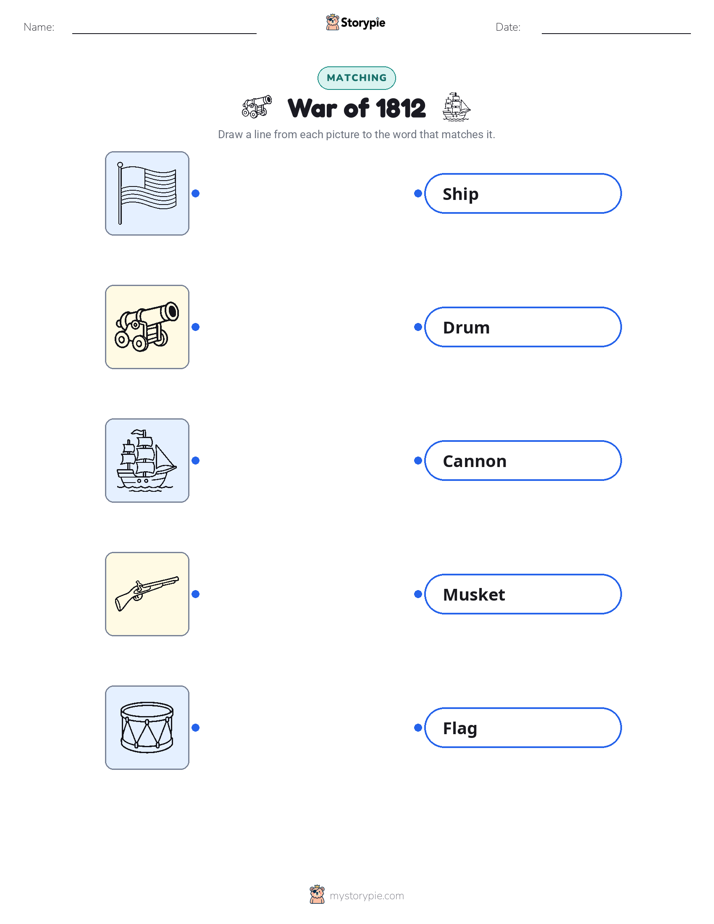
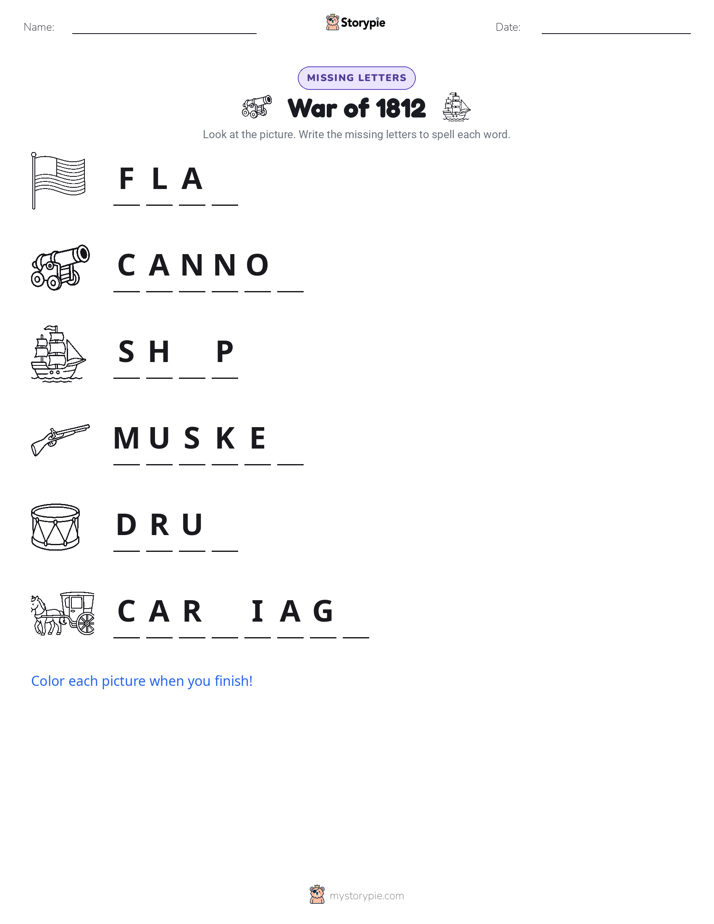
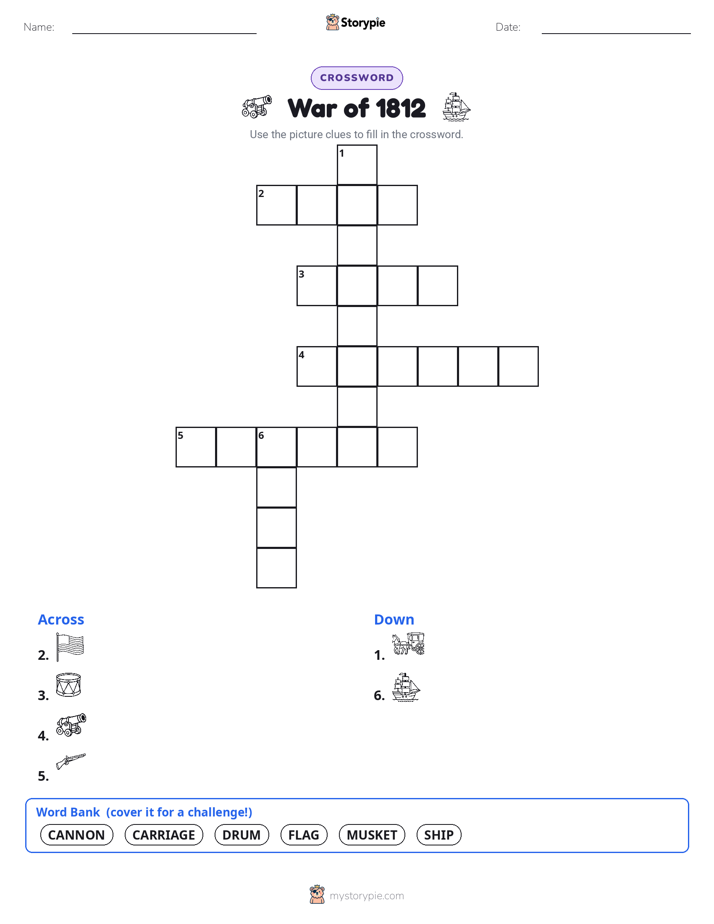
- Printable worksheets & coloring pages

Why Storypie for Schools
Students engaged. Prep in seconds. Evenings back to you.
- Worksheets & Quizzes
- Classroom Management
- Formative Assessment
- Custom Curriculum & Lesson Plans
- 27 Languages

Why Storypie for Homeschool
Curriculum done. They'll ask for more. Hours back in your day.
- Worksheet Generator
- First-Person Audio Stories
- Built-in Comprehension Quizzes
- Custom Curriculum & Lesson Plans
- Print & Go Activities