English

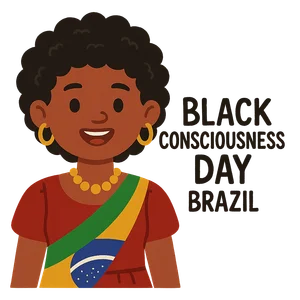
Black Consciousness Day - Brazilian
A Brazilian holiday on November 20th that honors Black culture and commemorates the death of Zumbi dos…
Reads at Grades 6–8 Listens at Grades 4–8
Print & create
Answer keys·No prep·Free with an account
28 worksheets · answer keys · full story · quiz · Ages 10-12 · CEFR B2
Plus adds 279,000+ more stories in 27 languages, audio for every one, and printables for all of them.
Just want Black Consciousness Day - Brazilian?
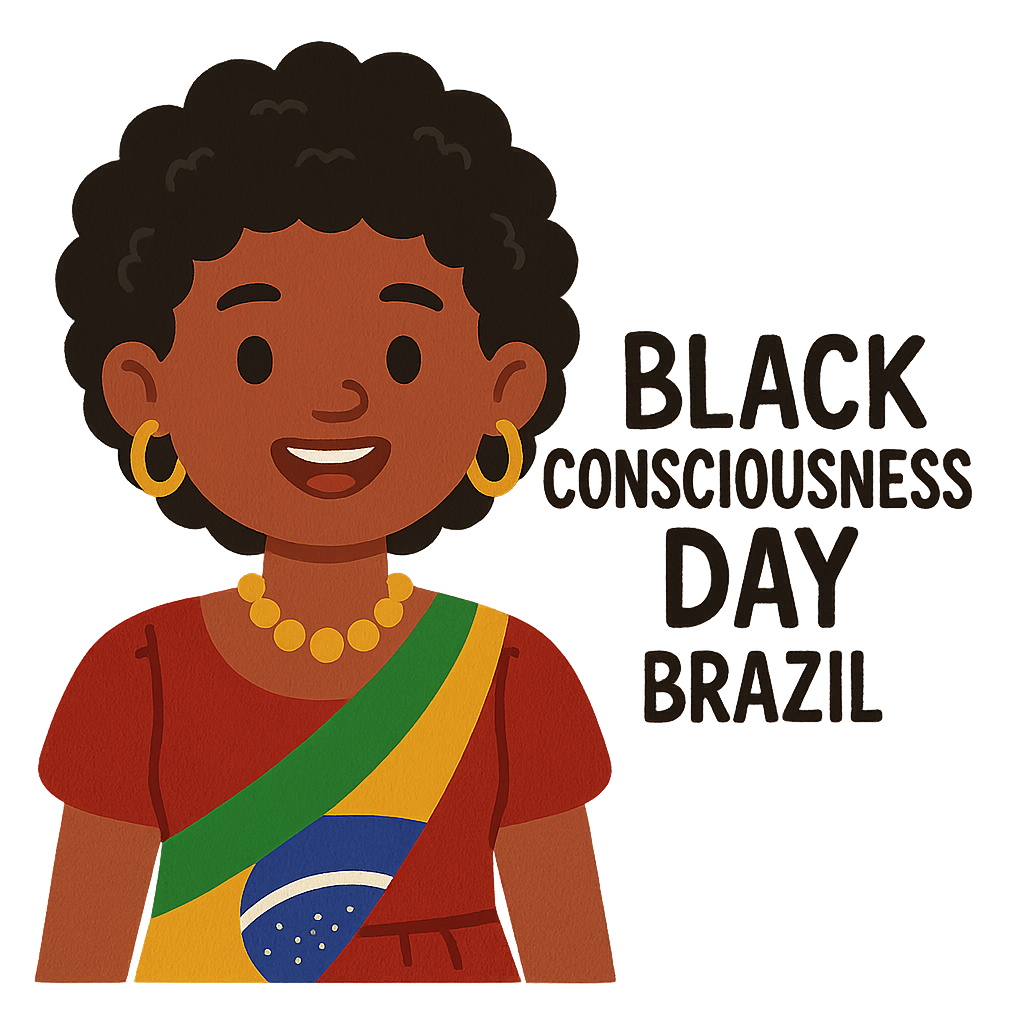
Hello, I am Black Consciousness Day. In Brazil, where people know me as Dia da Consciência Negra, I am observed every year on November 20th. My purpose is to celebrate the rich and resilient culture of Afro-Brazilians and to serve as a day of important reflection. I exist to honor a long history of struggle and achievement while also focusing on the ongoing fight for racial justice. I am a day that looks back at the past to understand the present and to inspire a more equal future for Brazil.
My specific date, November 20th, was chosen to commemorate a significant event in the history of Black resistance in Brazil. It marks the anniversary of the day in 1695 when Zumbi dos Palmares, a leader of immense courage, was killed. Today, Zumbi is remembered and honored as a national hero. He has become a powerful symbol of the fight against the brutal system of slavery that existed in Brazil for centuries. His life represents the unyielding spirit of those who resisted bondage and fought for their own liberation. By marking the day of his death, I call for the remembrance of his legacy and the cause of freedom for which he stood.
Zumbi’s story is deeply connected to the community he led, the Quilombo dos Palmares. A 'quilombo' was a settlement founded by people who had bravely escaped from slavery. These communities were often hidden in the remote Brazilian interior, creating safe havens where formerly enslaved people could live freely and govern themselves. Palmares, located in the present-day state of Alagoas, was the largest, most organized, and longest-lasting of all the quilombos. It was a complex, self-sufficient society that thrived for nearly 100 years. For generations of enslaved people, Palmares was more than just a place; it was a powerful symbol of freedom, a living testament that a society built on liberty and self-determination was possible.
Black Consciousness Day - Brazilian
Hello, I am Black Consciousness Day. In Brazil, where people know me as Dia da Consciência Negra, I am observed every year on November 20th. My purpose is to celebrate the rich and resilient culture of Afro-Brazilians and to serve as a day of important reflection. I exist to honor a long history of struggle and achievement while also focusing on the ongoing fight for racial justice. I am a day that looks back at the past to understand the present and to inspire a more equal future for Brazil.
My specific date, November 20th, was chosen to commemorate a significant event in the history of Black resistance in Brazil. It marks the anniversary of the day in 1695 when Zumbi dos Palmares, a leader of immense courage, was killed. Today, Zumbi is remembered and honored as a national hero. He has become a powerful symbol of the fight against the brutal system of slavery that existed in Brazil for centuries. His life represents the unyielding spirit of those who resisted bondage and fought for their own liberation. By marking the day of his death, I call for the remembrance of his legacy and the cause of freedom for which he stood.
Zumbi’s story is deeply connected to the community he led, the Quilombo dos Palmares. A 'quilombo' was a settlement founded by people who had bravely escaped from slavery. These communities were often hidden in the remote Brazilian interior, creating safe havens where formerly enslaved people could live freely and govern themselves. Palmares, located in the present-day state of Alagoas, was the largest, most organized, and longest-lasting of all the quilombos. It was a complex, self-sufficient society that thrived for nearly 100 years. For generations of enslaved people, Palmares was more than just a place; it was a powerful symbol of freedom, a living testament that a society built on liberty and self-determination was possible.
Although I honor a hero from the 1600s, I am a much more modern observance. My origins date back to 1971, when my creation was first proposed by a collective of Afro-Brazilian activists in southern Brazil known as Grupo Palmares. They saw a need for a new kind of commemoration. At the time, the main date associated with the end of slavery was May 13th, which marks the day in 1888 when the imperial government passed a law abolishing the practice. The activists of Grupo Palmares felt this date focused on the actions of the ruling class and failed to honor the central role that enslaved people themselves played in their own liberation through constant struggle and rebellion. They wanted a day that celebrated Black heroes and Black strength, reframing history to center the agency and resistance of Afro-Brazilians.
My journey to becoming an official holiday was a gradual process that mirrored the growth of the Black consciousness movement across Brazil. A significant step forward came in 2003, with the passage of a federal law that made the teaching of Afro-Brazilian and African history and culture mandatory in Brazilian schools. My date, November 20th, was formally included in the school calendar as part of this educational reform. This ensured that future generations would learn about Zumbi dos Palmares and the history of Black resistance. Then, in 2011, I was officially established as a national holiday by federal law. The law, however, allows each state and city to decide for itself whether to make my day a public holiday, so the observance varies from place to place.
Today, people observe me in many vibrant and meaningful ways that highlight the depth and diversity of Afro-Brazilian culture. In cities and towns across the country, my day is marked by parades, festivals, and cultural events. These celebrations often feature Afro-Brazilian music, such as the powerful rhythms of samba, and demonstrations of capoeira, the unique martial art that blends dance, acrobatics, and music. Capoeira was developed by enslaved Africans as a form of self-defense, making it a particularly fitting tribute. Schools hold special lessons, and communities gather to share traditional foods, connecting with their heritage. I am a day for people to express pride in their identity and to celebrate the countless contributions of Black culture to the fabric of Brazil.
Beyond the celebrations, however, I serve a more solemn and urgent purpose. I am also a day for serious thought, public discussion, and political action. Many Brazilians use my day to organize marches and public forums to address the persistent challenges that Black people in Brazil still face, including systemic racism, economic inequality, and police violence. These events are a platform to discuss the roots of these problems and to work toward tangible solutions. In this way, I connect the historical resistance embodied by Zumbi dos Palmares with the contemporary struggle for civil rights and social justice. I am a reminder that the fight for true freedom and equality is an ongoing effort that requires consciousness, courage, and collective action.
Wow facts
About
A Brazilian holiday on November 20th that honors Black culture and commemorates the death of Zumbi dos Palmares, a leader of a community of escaped slaves. It is a day for reflection on racial inequality and the celebration of Afro-Brazilian heritage.
Take a Quiz
Question 1 of 5
In your own words, summarize why the activist group Grupo Palmares proposed creating Black Consciousness Day.
Want to do even more?
Go beyond exploring. Unlock tools that turn every story into real learning.

Storypie Plus for families
Full stories, quizzes, and printables. Nights and car rides, sorted.
- Unlimited audio stories
- Create Mode: your child stars in the story
- Offline downloads
- Printable worksheets & coloring pages

Why Storypie for Schools
Students engaged. Prep in seconds. Evenings back to you.
- Worksheets & Quizzes
- Classroom Management
- Formative Assessment
- Custom Curriculum & Lesson Plans
- 27 Languages

Why Storypie for Homeschool
Curriculum done. They'll ask for more. Hours back in your day.
- Worksheet Generator
- First-Person Audio Stories
- Built-in Comprehension Quizzes
- Custom Curriculum & Lesson Plans
- Print & Go Activities