English

Halloween - American
An annual American holiday celebrated on October 31st…
Reads at Grades 3–5 Listens at Grades 1–5
Print & create
Answer keys·No prep·Free with an account
28 worksheets · answer keys · full story · quiz · Ages 8-10 · CEFR B1
Plus adds 279,000+ more stories in 27 languages, audio for every one, and printables for all of them.
Just want Halloween - American?
I am Halloween, a holiday you might know for its spooky decorations, fun costumes, and sweet treats. People look forward to my arrival on the 31st of October each year. While my modern celebrations are full of excitement and community fun, my story is very long, stretching back many centuries to ancient lands and old beliefs. My earliest roots can be found in a festival called Samhain, which was celebrated by the Celtic people of ancient Ireland and Scotland. Samhain was a very important time of year because it marked the end of the harvest. The crops were gathered, the days were getting shorter, and winter was approaching. The Celts believed that on the night of Samhain, the border between the world of the living and the world of spirits became thin, allowing ghosts and other supernatural beings to cross over into the human world.
My name, Halloween, sounds a bit mysterious, but its origin is actually connected to a different holiday from the Christian faith. The name is a shortened version of the phrase “All Hallows’ Eve.” This means the evening before All Hallows’ Day, which is another name for All Saints’ Day. All Saints’ Day is observed on November 1st, so All Hallows’ Eve naturally falls on October 31st. As time went on, people began to observe All Hallows' Eve in their own ways. Over many years, some of the ideas and customs from the ancient Celtic festival of Samhain and the Christian observance of All Hallows’ Eve started to blend together. This mixing of traditions is how I began to form into the unique holiday that people recognize today.
I Am Halloween
I am Halloween, a holiday you might know for its spooky decorations, fun costumes, and sweet treats. People look forward to my arrival on the 31st of October each year. While my modern celebrations are full of excitement and community fun, my story is very long, stretching back many centuries to ancient lands and old beliefs. My earliest roots can be found in a festival called Samhain, which was celebrated by the Celtic people of ancient Ireland and Scotland. Samhain was a very important time of year because it marked the end of the harvest. The crops were gathered, the days were getting shorter, and winter was approaching. The Celts believed that on the night of Samhain, the border between the world of the living and the world of spirits became thin, allowing ghosts and other supernatural beings to cross over into the human world.
My name, Halloween, sounds a bit mysterious, but its origin is actually connected to a different holiday from the Christian faith. The name is a shortened version of the phrase “All Hallows’ Eve.” This means the evening before All Hallows’ Day, which is another name for All Saints’ Day. All Saints’ Day is observed on November 1st, so All Hallows’ Eve naturally falls on October 31st. As time went on, people began to observe All Hallows' Eve in their own ways. Over many years, some of the ideas and customs from the ancient Celtic festival of Samhain and the Christian observance of All Hallows’ Eve started to blend together. This mixing of traditions is how I began to form into the unique holiday that people recognize today.
For a long time, my customs were mostly known in Ireland and Scotland. But in the 1800s, my story took a big journey across the Atlantic Ocean. Many immigrants from Ireland and Scotland moved to the United States, and they brought their traditions with them. When they celebrated me in their new country, I started to change and grow. My early American celebrations were often community gatherings. Neighbors would get together to share food from the harvest, tell spooky ghost stories to entertain each other, and sometimes play harmless pranks. These local festivities were an important step in my development. They helped transform me from a folk custom practiced by specific groups of immigrants into a more widespread American holiday that many different communities started to enjoy.
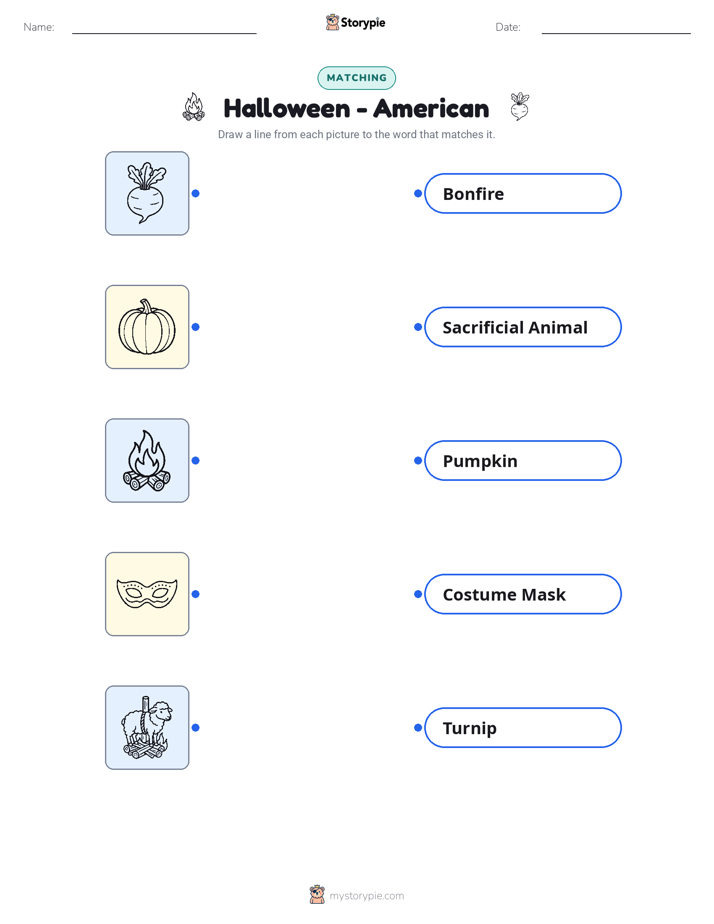
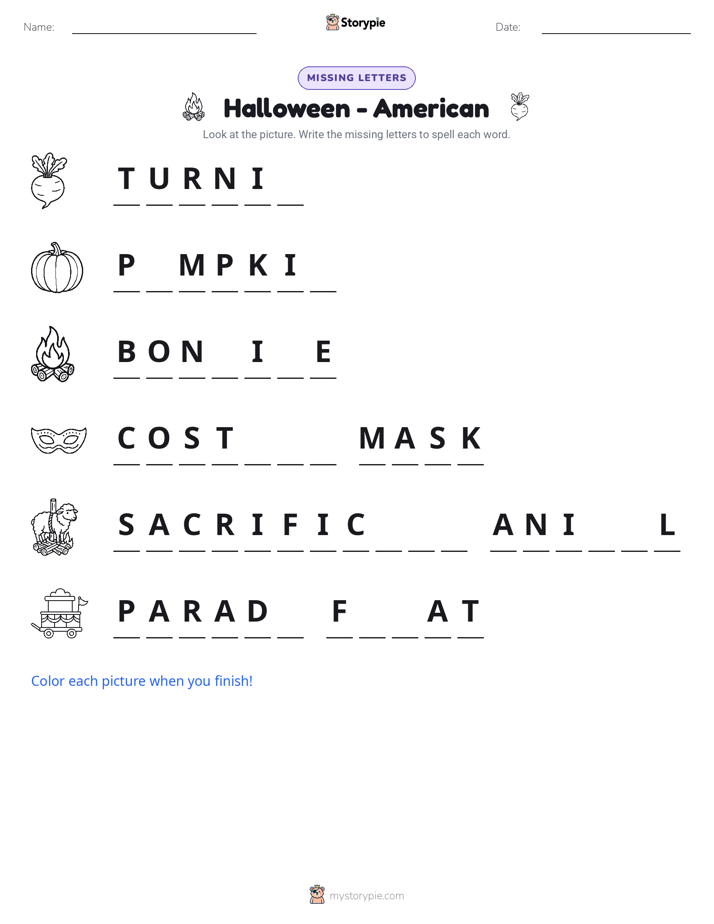
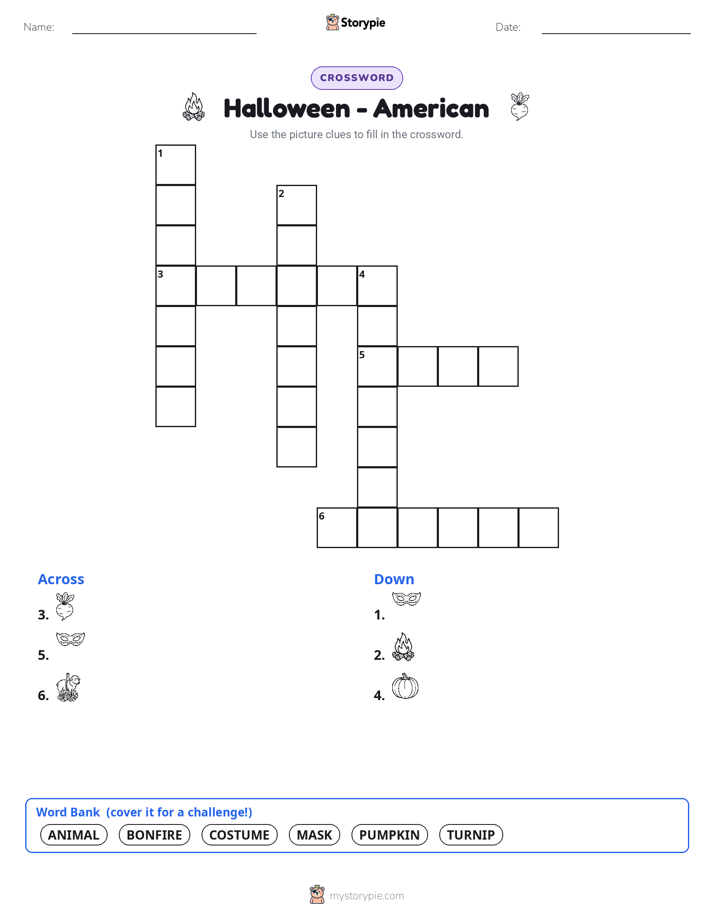
As more people in America began to observe me, some of my most famous traditions started to take shape. One of the most iconic symbols associated with me is the jack-o'-lantern. This tradition came from an Irish custom of carving scary faces into turnips to frighten away wandering spirits. When Irish immigrants arrived in America, they discovered that pumpkins were native to the country and were much more common than turnips. They also found that pumpkins were larger and softer, which made them much easier to carve. So, the tradition adapted, and the glowing, carved pumpkin became a central part of my celebration. Around the same time, the practice of wearing costumes also became more popular. This custom grew out of the ancient belief that spirits roamed the earth on this night. People would wear masks and disguises so that any spirits they encountered would mistake them for fellow ghosts and leave them alone.
The tradition of going door-to-door asking for treats is one of my most beloved activities, and it also has a long history. The American custom of “trick-or-treating” became very popular during the 1930s and 1940s. It was seen as a way for communities to channel the playful energy of the holiday into a safe and organized activity for children. This practice was inspired by older European traditions. In some parts of Britain and Ireland, there was a custom called “guising,” where children would dress in costume and receive gifts. Another similar practice was “souling,” where people would go door-to-door asking for small cakes in exchange for promising to pray for the souls of the household’s deceased relatives. Trick-or-treating combined these ideas into a fun, neighborly event that became a hallmark of my modern identity.
Today, on October 31st, people celebrate me in all sorts of ways that combine my history with modern fun. The traditions of carving pumpkins and children going trick-or-treating in costume are still central to my observance. But people have also added many new activities. Friends and families might host costume parties, visit decorated haunted houses for a thrilling scare, or gather to watch scary movies together. Even though my celebrations have evolved so much over the centuries, they still hold echoes of my ancient past. The focus on ghosts and spirits connects back to the old belief about the thinning veil between worlds. The pumpkins and harvest foods recall my origins as a festival marking the end of the harvest. I continue to be a time for community, imagination, and a little bit of spooky fun that connects the present day to a very distant past.
Wow facts
About
An annual American holiday celebrated on October 31st, originating from the ancient Celtic festival of Samhain and later Christian traditions, known for costumes, trick-or-treating, and pumpkin carving.
Take a Quiz
Question 1 of 5
Why did the tradition of carving jack-o'-lanterns change from using turnips to using pumpkins in America?
Want to do even more?
Go beyond exploring. Unlock tools that turn every story into real learning.

Storypie Plus for families
Full stories, quizzes, and printables. Nights and car rides, sorted.
- Unlimited audio stories
- Create Mode: your child stars in the story
- Offline downloads
- Printable worksheets & coloring pages

Why Storypie for Schools
Students engaged. Prep in seconds. Evenings back to you.
- Worksheets & Quizzes
- Classroom Management
- Formative Assessment
- Custom Curriculum & Lesson Plans
- 27 Languages

Why Storypie for Homeschool
Curriculum done. They'll ask for more. Hours back in your day.
- Worksheet Generator
- First-Person Audio Stories
- Built-in Comprehension Quizzes
- Custom Curriculum & Lesson Plans
- Print & Go Activities