English

Homowo - Ghanaian
Homowo is a harvest festival celebrated by the Ga people of Ghana.
Reads at Grades 6–8 Listens at Grades 4–8
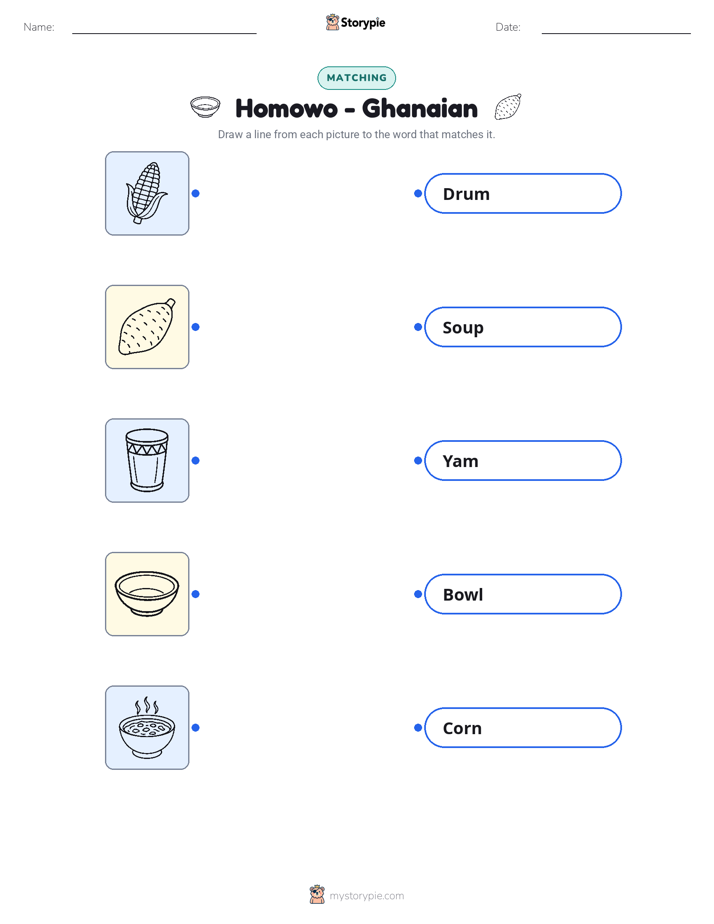
Print & create
Answer keys·No prep·Free with an account
28 worksheets · answer keys · full story · quiz · Ages 10-12 · CEFR B2
Plus adds 279,000+ more stories in 27 languages, audio for every one, and printables for all of them.
Just want Homowo - Ghanaian?
I am the Homowo festival, and my story is one of survival, resilience, and joy. My name is a powerful phrase from the Ga language, spoken by the people who created me. Homowo means “hooting at hunger.” It is a name that sounds like a shout of defiance and a laugh of relief, and that is exactly its spirit. The Ga people of the Greater Accra Region in Ghana observe me each year as a harvest celebration. They created me to ensure that no one would ever forget the terrible famine their ancestors endured and, more importantly, how they overcame it. I am a time for giving thanks for the bounty of the earth, but also for remembering the strength and determination it took for a community to survive against all odds. My traditions are rooted in this history, turning a memory of hardship into an annual celebration of life and abundance.
My origins trace back to a difficult period in the 16th century. The Ga people had journeyed and settled in the coastal plains of what is now Ghana. After their migration, they faced an unexpected and devastating challenge. The rains, which were essential for their crops, failed to arrive for a long time. This prolonged drought led to a severe famine across the land. The crops withered, food became scarce, and the people experienced great suffering and loss. It was a dark and trying time in their history. However, through perseverance and hard work, they eventually learned to farm the land successfully. The rains returned, the harvest was plentiful, and hunger was finally defeated. I was born from this incredible victory. The elders and community leaders decided to create a special festival that would forever commemorate their triumph over starvation. I became a living tradition, a promise to future generations that they would always remember where they came from and the resilience that is part of their heritage.
Homowo: Hooting at Hunger
I am the Homowo festival, and my story is one of survival, resilience, and joy. My name is a powerful phrase from the Ga language, spoken by the people who created me. Homowo means “hooting at hunger.” It is a name that sounds like a shout of defiance and a laugh of relief, and that is exactly its spirit. The Ga people of the Greater Accra Region in Ghana observe me each year as a harvest celebration. They created me to ensure that no one would ever forget the terrible famine their ancestors endured and, more importantly, how they overcame it. I am a time for giving thanks for the bounty of the earth, but also for remembering the strength and determination it took for a community to survive against all odds. My traditions are rooted in this history, turning a memory of hardship into an annual celebration of life and abundance.
My origins trace back to a difficult period in the 16th century. The Ga people had journeyed and settled in the coastal plains of what is now Ghana. After their migration, they faced an unexpected and devastating challenge. The rains, which were essential for their crops, failed to arrive for a long time. This prolonged drought led to a severe famine across the land. The crops withered, food became scarce, and the people experienced great suffering and loss. It was a dark and trying time in their history. However, through perseverance and hard work, they eventually learned to farm the land successfully. The rains returned, the harvest was plentiful, and hunger was finally defeated. I was born from this incredible victory. The elders and community leaders decided to create a special festival that would forever commemorate their triumph over starvation. I became a living tradition, a promise to future generations that they would always remember where they came from and the resilience that is part of their heritage.
My season begins long before the main celebrations fill the streets with noise and color. It starts quietly in May, which is the traditional time for planting essential crops like maize and yams. This planting marks the beginning of a period of anticipation and preparation. For one full month before my main festivities in August, a ban on drumming, loud music, and any form of joyous noise-making is put into effect throughout the Ga lands. This time is not one of sadness, but of deep respect and solemn reflection. It is a period dedicated to honoring the earth, the gods, and the ancestors. The quiet allows for prayers and hopes for a successful harvest to be offered without distraction. This stillness creates a powerful contrast to the joyful explosion of sound that will later mark my arrival, making the eventual celebration even more meaningful. It is a reminder that bounty comes from hard work, patience, and a connection to the spiritual world.
At the very heart of my observance is a special food called kpokpoi. This dish is not just a meal; it is a symbol of the harvest and the history I represent. Kpokpoi is made from cornmeal, the very crop that signifies the end of the famine. The corn is first fermented and then steamed, resulting in a unique, unleavened food. It is traditionally eaten with a rich and flavorful palm nut soup, which adds color and substance to the meal. The preparation of kpokpoi is a significant event in itself. It is a communal activity that brings entire families and neighborhoods together. People gather to grind the corn, tend to the steamers, and prepare the soup, sharing stories and strengthening community bonds. This act of cooking and sharing together is a direct reflection of the unity that was necessary for the Ga people to survive the famine. It reinforces the idea that the harvest is a blessing to be shared by all.
One of my most significant and solemn traditions is the ritual of sprinkling kpokpoi. On the main day of the festival, a sense of reverence fills the air. Traditional chiefs, dressed in their ceremonial attire, and the heads of families lead processions through the streets of their towns and villages. They carry bowls filled with the specially prepared kpokpoi. As they walk, they dip their hands into the bowls and sprinkle the food onto the ground. This act is a sacred offering. It is a gesture of gratitude directed toward the gods and the spirits of the ancestors. By returning a portion of the harvest to the earth, the people are thanking these spiritual forces for their protection and for providing the bountiful crops. It is also a prayer, asking for their continued blessings, peace, and prosperity for the community in the year to come. This quiet, respectful ritual connects the living generation to their ancestors and the spiritual world.
Immediately after the solemn ritual of sprinkling kpokpoi is complete, the entire atmosphere transforms. The month-long ban on noise-making is officially lifted, and this is the moment when the “hooting at hunger” truly begins. The quiet reverence gives way to an outpouring of pure joy and celebration. The streets, which were silent just moments before, erupt with the powerful rhythms of drums. People begin to sing traditional songs, their voices rising together in celebration. Dancing breaks out spontaneously as processions move through the communities. This exuberant noise is not just for entertainment; it is a deliberate and meaningful act. The Ga people are joyfully mocking and driving away the memory of hunger. The sounds of celebration are a powerful declaration that they are a people of abundance, that famine has been defeated, and that they will forever celebrate their victory over that ancient hardship.
In modern times, I remain a vital and cherished festival for Ga people, not only in the Greater Accra Region of Ghana but also for those who live in other parts of the world. I have become a powerful symbol of cultural identity and heritage. My observance is a period of homecoming, a time when many people travel from cities and foreign countries back to their ancestral towns and villages. They come to reconnect with their roots, reunite with family members, and participate in the traditions that have been passed down for centuries. While some aspects may have evolved over time, the core traditions—the quiet ban, the preparation of kpokpoi, the sprinkling ritual, and the joyful hooting at hunger—continue with great pride. I serve as an annual reminder for all Ga people of their shared history, their incredible resilience in the face of adversity, and the enduring strength of their community.
Wow facts
About
Homowo is a harvest festival celebrated by the Ga people of Ghana. Its name means 'hooting at hunger' and it commemorates the Ga people's survival of a severe famine during their migration to present-day Accra.
Take a Quiz
Question 1 of 5
What is the meaning of the festival's name, 'Homowo,' and how does it relate to the final celebration?
Want to do even more?
Go beyond exploring. Unlock tools that turn every story into real learning.

Storypie Plus for families
Full stories, quizzes, and printables. Nights and car rides, sorted.
- Unlimited audio stories
- Create Mode: your child stars in the story
- Offline downloads
- Printable worksheets & coloring pages

Why Storypie for Schools
Students engaged. Prep in seconds. Evenings back to you.
- Worksheets & Quizzes
- Classroom Management
- Formative Assessment
- Custom Curriculum & Lesson Plans
- 27 Languages

Why Storypie for Homeschool
Curriculum done. They'll ask for more. Hours back in your day.
- Worksheet Generator
- First-Person Audio Stories
- Built-in Comprehension Quizzes
- Custom Curriculum & Lesson Plans
- Print & Go Activities