English

Independence Day - Mexican
Mexican Independence Day is a national holiday in Mexico that commemorates the 'Grito de Dolores…
Reads at Grades 6–8 Listens at Grades 4–8
Print & create
Answer keys·No prep·Free with an account
28 worksheets · answer keys · full story · quiz · Ages 10-12 · CEFR B2
Plus adds 279,000+ more stories in 27 languages, audio for every one, and printables for all of them.
Just want Independence Day - Mexican?
I am Mexican Independence Day, and people in Mexico celebrate me every year on September 16th. For many, I am the most important national holiday of the entire year. My purpose is to commemorate a pivotal moment in history: the day in 1810 when the people of Mexico embarked on their long and arduous journey to gain freedom from Spanish colonial rule. My observance is a time filled with immense national pride, a moment for everyone to remember and honor the heroes who dedicated their lives to securing the country's liberty and sovereignty.
My own story begins in the predawn hours of September 16th, 1810. The setting was the small town of Dolores, located in the state of Guanajuato. There, a Roman Catholic priest named Miguel Hidalgo y Costilla performed an act that would change the course of history. He walked to his church and began to ring its bell, calling the townspeople to gather. Once they had assembled, he delivered a fiery and passionate speech, urging them to rise up against the injustices of the Spanish government. This historic call to action became famously known as the "Grito de Dolores," which translates to the "Cry of Dolores." That powerful cry was the spark that ignited the Mexican War of Independence, inspiring thousands of ordinary citizens, farmers, and laborers to join the rebellion and fight for a new future.
The war that was ignited on my first day was far from a swift victory. The path to freedom was a challenging one, filled with conflict and sacrifice. It would take eleven long years of continuous struggle before Mexico could finally declare itself an independent nation in the year 1821. Although the war officially concluded on a different date, the people of Mexico chose to establish me, September 16th, as the day of celebration. This decision was made to specifically honor the courage, determination, and revolutionary spirit of that very first cry for freedom in Dolores. It marks the beginning of the journey, not just its end.
Mexican Independence Day
I am Mexican Independence Day, and people in Mexico celebrate me every year on September 16th. For many, I am the most important national holiday of the entire year. My purpose is to commemorate a pivotal moment in history: the day in 1810 when the people of Mexico embarked on their long and arduous journey to gain freedom from Spanish colonial rule. My observance is a time filled with immense national pride, a moment for everyone to remember and honor the heroes who dedicated their lives to securing the country's liberty and sovereignty.
My own story begins in the predawn hours of September 16th, 1810. The setting was the small town of Dolores, located in the state of Guanajuato. There, a Roman Catholic priest named Miguel Hidalgo y Costilla performed an act that would change the course of history. He walked to his church and began to ring its bell, calling the townspeople to gather. Once they had assembled, he delivered a fiery and passionate speech, urging them to rise up against the injustices of the Spanish government. This historic call to action became famously known as the "Grito de Dolores," which translates to the "Cry of Dolores." That powerful cry was the spark that ignited the Mexican War of Independence, inspiring thousands of ordinary citizens, farmers, and laborers to join the rebellion and fight for a new future.
The war that was ignited on my first day was far from a swift victory. The path to freedom was a challenging one, filled with conflict and sacrifice. It would take eleven long years of continuous struggle before Mexico could finally declare itself an independent nation in the year 1821. Although the war officially concluded on a different date, the people of Mexico chose to establish me, September 16th, as the day of celebration. This decision was made to specifically honor the courage, determination, and revolutionary spirit of that very first cry for freedom in Dolores. It marks the beginning of the journey, not just its end.
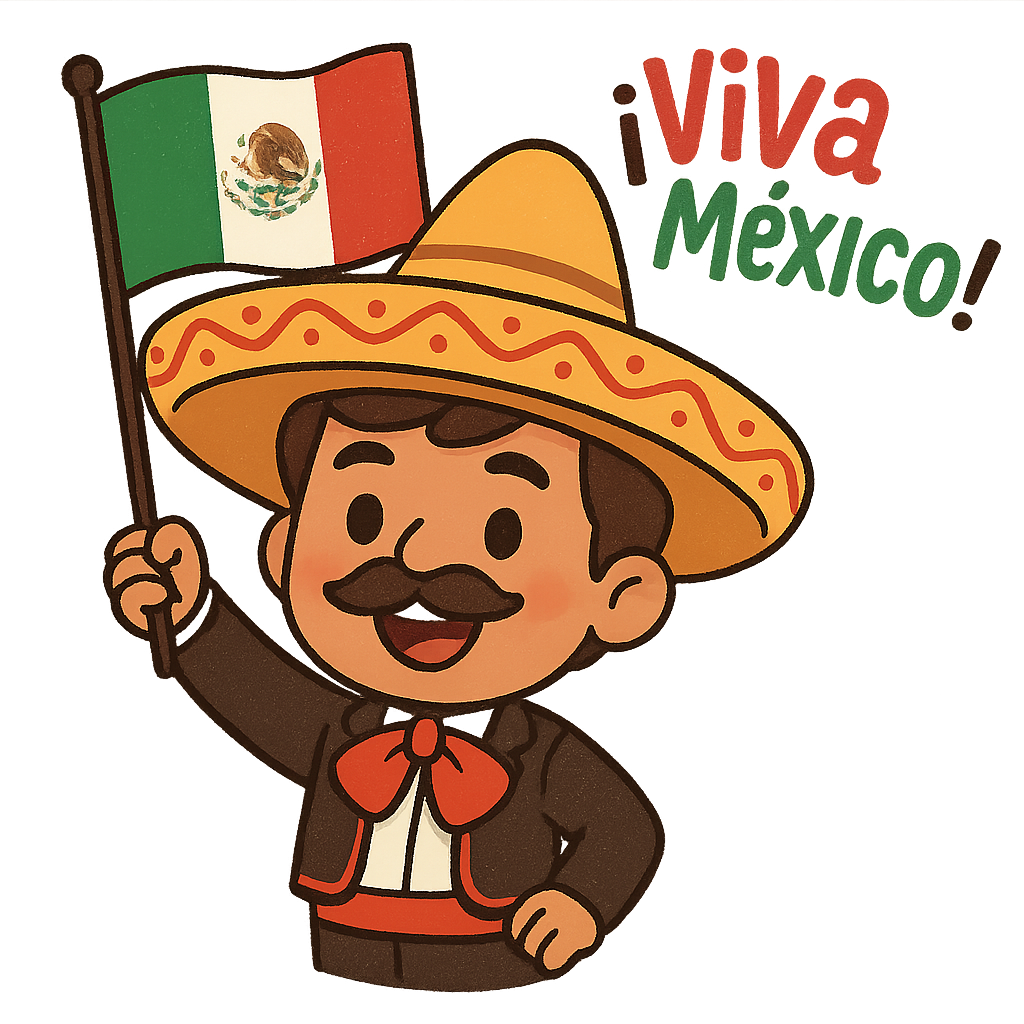
One of the most powerful and central traditions of my celebration is the annual re-enactment of the "Grito de Dolores." This ceremony takes place on the night of September 15th, just before my official day begins. In Mexico City, the nation’s capital, the President of Mexico steps out onto the main balcony of the National Palace, which overlooks a vast public square called the Zócalo. In a deeply symbolic act, the president rings the very same bell that Father Hidalgo used more than two hundred years ago. Following the ringing of the bell, the president recites a patriotic shout, honoring the heroes of the independence movement and ending with three powerful words: "¡Viva México!"—which means "Long live Mexico!" Hundreds of thousands of people who have gathered in the square below, along with millions more watching on television from their homes, roar the phrase back in a unified chorus. This moving ceremony is not limited to the capital; it is repeated by governors and mayors in town squares and city halls all across the country, uniting the nation in a shared moment of remembrance and patriotism.
When the sun rises on September 16th, my celebrations continue with great energy and spectacle. In major cities, especially Mexico City, grand military parades are held. Members of the army, navy, and air force march in impressive formations, showcasing their commitment and service to the country. It is a display of national strength and unity. Beyond the official military events, schools, local governments, and various community groups also organize their own parades, filling the streets with music, colorful floats, and enthusiastic participants. Throughout the day, my observance is marked by joyful gatherings. Families and friends come together for lively "fiestas," or parties. These celebrations are a time to share delicious food, listen and dance to traditional music, and light up the night sky with brilliant fireworks, making the day a true festival of national identity.
During the days leading up to and including my observance, the entire country is draped in the colors of the Mexican flag. Green, white, and red are seen everywhere, decorating streets, homes, cars, and public buildings, creating a vibrant and patriotic atmosphere. My celebration also has its own special flavors. People prepare and enjoy traditional dishes that are deeply connected to Mexican history and culture. One popular food is pozole, a rich and hearty stew made with hominy and meat. Another significant dish is chiles en nogada, which consists of poblano peppers stuffed with a mix of meat and fruit, covered in a creamy walnut sauce, and sprinkled with pomegranate seeds. The green of the pepper, the white of the sauce, and the red of the seeds represent the colors of the flag. The air is also filled with my characteristic sounds, most notably the music of mariachi bands. Their guitars, violins, and trumpets play beloved songs that tell stories of Mexican history, love, and pride, forming the perfect soundtrack for the nation's most important holiday.
As my story is shared around the world, I am sometimes confused with another important Mexican holiday, Cinco de Mayo. People living outside of Mexico, in particular, occasionally mistake the two. While Cinco de Mayo, which occurs on May 5th, is a significant day that is celebrated with pride, it commemorates a very different historical event. That holiday marks the Mexican army's unexpected victory over the French forces in a single conflict, the Battle of Puebla, which took place in 1862. I, on the other hand, represent something much broader and more fundamental to the nation's identity. My date, September 16th, celebrates the very beginning of the country's decade-long struggle for independence from Spanish colonial rule. I am the commemoration of the birth of the independence movement itself.
Wow facts
About
Mexican Independence Day is a national holiday in Mexico that commemorates the 'Grito de Dolores,' the call to arms on September 16, 1810, that triggered the Mexican War of Independence from Spain.
Take a Quiz
Question 1 of 5
In your own words, retell the events of the "Grito de Dolores" and explain why it is so important to Mexican Independence Day.
Want to do even more?
Go beyond exploring. Unlock tools that turn every story into real learning.

Storypie Plus for families
Full stories, quizzes, and printables. Nights and car rides, sorted.
- Unlimited audio stories
- Create Mode: your child stars in the story
- Offline downloads
- Printable worksheets & coloring pages

Why Storypie for Schools
Students engaged. Prep in seconds. Evenings back to you.
- Worksheets & Quizzes
- Classroom Management
- Formative Assessment
- Custom Curriculum & Lesson Plans
- 27 Languages

Why Storypie for Homeschool
Curriculum done. They'll ask for more. Hours back in your day.
- Worksheet Generator
- First-Person Audio Stories
- Built-in Comprehension Quizzes
- Custom Curriculum & Lesson Plans
- Print & Go Activities