English

Juneteenth - American
Juneteenth is a federal holiday in the United States commemorating the emancipation of enslaved African…
Reads at Grades 3–5 Listens at Grades 1–5
Print & create
Answer keys·No prep·Free with an account
28 worksheets · answer keys · full story · quiz · Ages 8-10 · CEFR B1
Plus adds 273,000+ more stories in 27 languages, audio for every one, and printables for all of them.
Just want Juneteenth - American?
I am the holiday called Juneteenth, and people observe me on the 19th of June. My story is one of freedom, and it begins on a summer day in Galveston, Texas. The year was 1865, and the American Civil War had recently ended. On June 19th, a Union Army officer, General Gordon Granger, arrived in the city with his soldiers. He stood before the people of Galveston and read from a military order. This order, known as General Order No. 3, announced that all enslaved African Americans in Texas were, by law, finally free. This was a moment of profound change and the reason for my existence. However, this news was very late. The freedom announced that day should have been granted more than two years earlier.
To understand why the news took so long to arrive, you have to look back to the middle of the Civil War. In 1863, President Abraham Lincoln issued the Emancipation Proclamation. This historic document declared that all enslaved people in the Confederate states—the states that had left the Union—were to be freed. But a proclamation is just words on paper unless there are people to enforce it. The Civil War was still raging, and Texas was a Confederate state far from the main areas of the fighting and the reach of the Union Army. The law could not be upheld there. It wasn't until Union soldiers were able to march into Texas after the war's end in 1865 that the promise of the Emancipation Proclamation could finally become a reality for the last group of enslaved people in the nation.
My first observances began almost immediately. The very next year, in 1866, newly freed African Americans in Texas and surrounding states gathered to mark the anniversary of their liberation. They wanted to remember the day that freedom finally came to them. These early celebrations were deeply meaningful community events. Families and neighbors would come together for prayer services to give thanks. They shared large meals, a tradition that continues today, and enjoyed music and games. It was also a time for learning and reflection, and people would gather to listen to speakers who shared stories and reminded everyone of the importance of the day.
I Am Juneteenth
I am the holiday called Juneteenth, and people observe me on the 19th of June. My story is one of freedom, and it begins on a summer day in Galveston, Texas. The year was 1865, and the American Civil War had recently ended. On June 19th, a Union Army officer, General Gordon Granger, arrived in the city with his soldiers. He stood before the people of Galveston and read from a military order. This order, known as General Order No. 3, announced that all enslaved African Americans in Texas were, by law, finally free. This was a moment of profound change and the reason for my existence. However, this news was very late. The freedom announced that day should have been granted more than two years earlier.
To understand why the news took so long to arrive, you have to look back to the middle of the Civil War. In 1863, President Abraham Lincoln issued the Emancipation Proclamation. This historic document declared that all enslaved people in the Confederate states—the states that had left the Union—were to be freed. But a proclamation is just words on paper unless there are people to enforce it. The Civil War was still raging, and Texas was a Confederate state far from the main areas of the fighting and the reach of the Union Army. The law could not be upheld there. It wasn't until Union soldiers were able to march into Texas after the war's end in 1865 that the promise of the Emancipation Proclamation could finally become a reality for the last group of enslaved people in the nation.
My first observances began almost immediately. The very next year, in 1866, newly freed African Americans in Texas and surrounding states gathered to mark the anniversary of their liberation. They wanted to remember the day that freedom finally came to them. These early celebrations were deeply meaningful community events. Families and neighbors would come together for prayer services to give thanks. They shared large meals, a tradition that continues today, and enjoyed music and games. It was also a time for learning and reflection, and people would gather to listen to speakers who shared stories and reminded everyone of the importance of the day.
These gatherings were so important that communities made sure they would always have a place to happen. In many places, groups of formerly enslaved people and their descendants pooled their money, bit by bit, to buy land. They wanted to own a piece of property where they could gather freely and safely to hold their annual celebrations. These spaces were often called “emancipation grounds.” One of the most famous examples is Emancipation Park in Houston, Texas, which was purchased by a group of Black community leaders in 1872. This park still exists today as a powerful reminder of that commitment to remembering freedom.
As years passed, my traditions traveled far beyond Texas. During a period known as the Great Migration, many African American families moved from the southern states to other parts of the country in search of better opportunities. As they settled in new cities and towns in the North, Midwest, and West, they brought me with them. They continued to honor June 19th, teaching the story to their children and sharing the customs with their new communities. This is how I grew from a local Texas observance into a day recognized across the nation.
Today, people observe me in many different ways. Some cities host large parades with floats and marching bands, while others hold music festivals and community fairs. Families gather for backyard barbecues and picnics, sharing food and spending time together. It is also a day for education, with museums and community centers hosting events that teach about African American history and the long struggle for civil rights. One special tradition you might see is the serving of red-colored foods and drinks, like strawberry soda, watermelon, or red velvet cake. The color red holds a deep meaning. For many, it is a symbol that acknowledges the bloodshed and suffering of enslaved people, while also representing the strength and resilience of the African American spirit.
For more than 150 years, I was celebrated primarily within African American communities, a cherished tradition passed down through generations. But my significance was eventually recognized by the entire country. On June 17th, 2021, I was officially named a federal holiday, Juneteenth National Independence Day. This act meant that my story became part of the larger American story. Now, I am a day for all Americans to learn about the complex history of the end of slavery, to reflect on the meaning of freedom, and to celebrate the richness of African American history and culture.
Wow facts
About
Juneteenth is a federal holiday in the United States commemorating the emancipation of enslaved African Americans. It marks the anniversary of the announcement of General Order No. 3 by Union Army general Gordon Granger on June 19, 1865, proclaiming freedom for enslaved people in Texas.
Take a Quiz
Question 1 of 5
Why did the news of freedom from the Emancipation Proclamation take more than two years to reach enslaved people in Texas?
Want to do even more?
Go beyond exploring. Unlock tools that turn every story into real learning.

Storypie Plus for families
Full stories, quizzes, and printables. Nights and car rides, sorted.
- Unlimited audio stories
- Create Mode: your child stars in the story
- Offline downloads
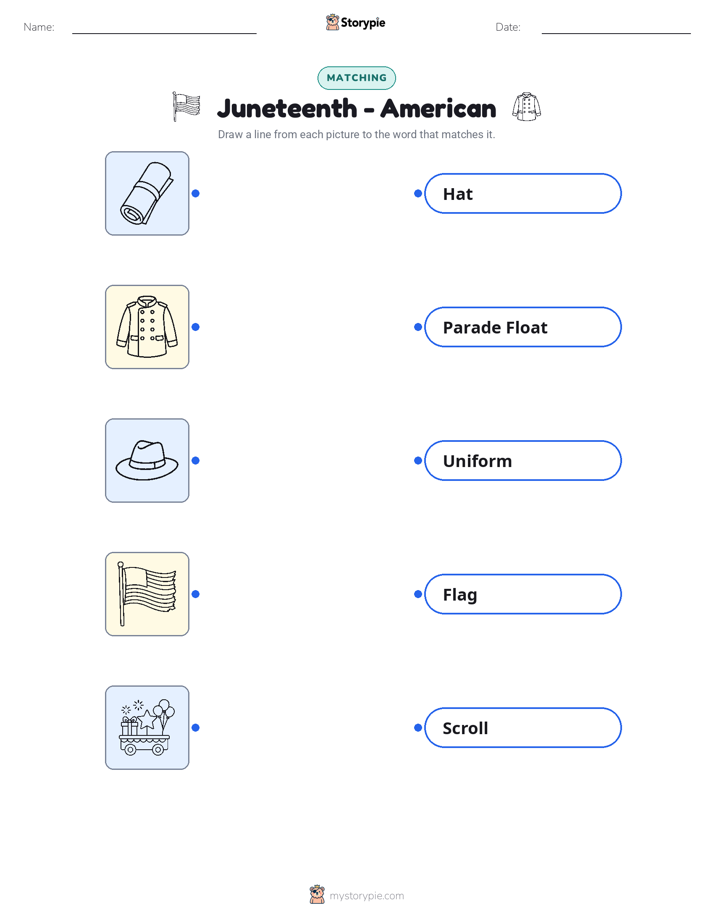
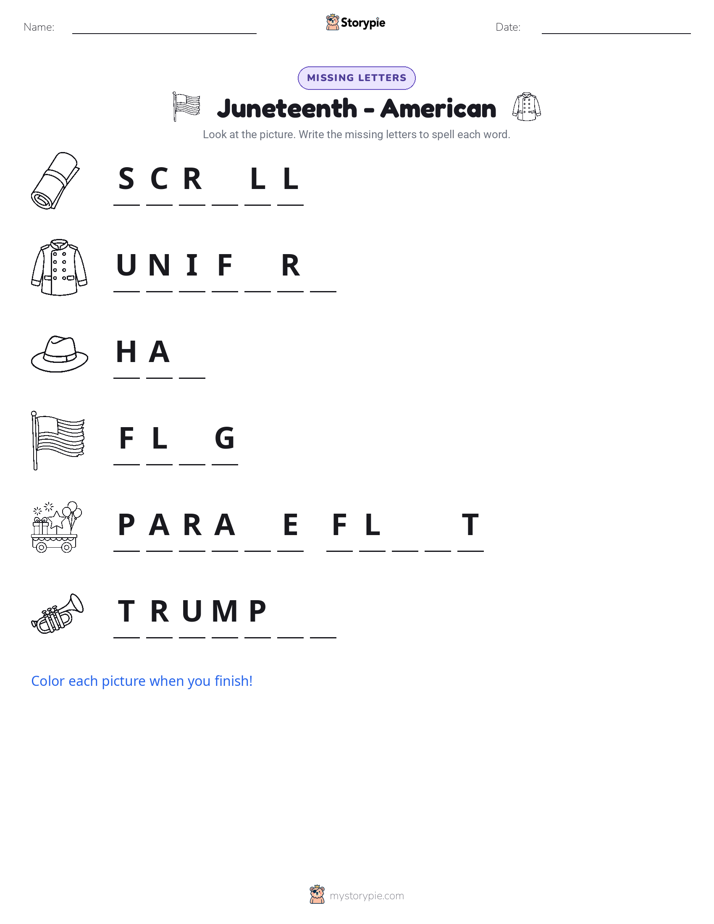
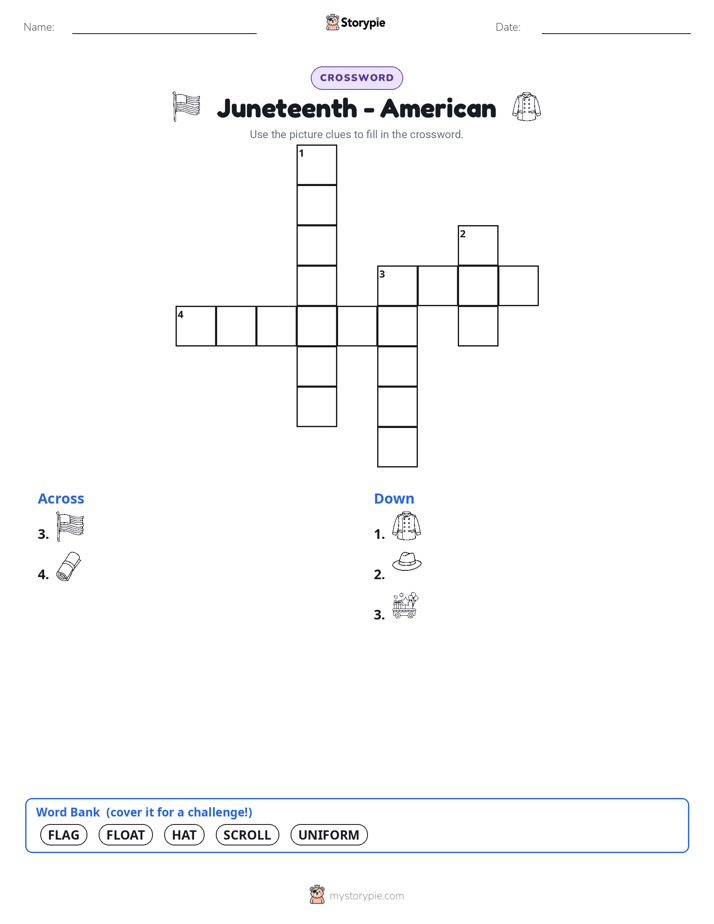
- Printable worksheets & coloring pages

Why Storypie for Schools
Students engaged. Prep in seconds. Evenings back to you.
- Worksheets & Quizzes
- Classroom Management
- Formative Assessment
- Custom Curriculum & Lesson Plans
- 27 Languages

Why Storypie for Homeschool
Curriculum done. They'll ask for more. Hours back in your day.
- Worksheet Generator
- First-Person Audio Stories
- Built-in Comprehension Quizzes
- Custom Curriculum & Lesson Plans
- Print & Go Activities