English

Lantern Festival - Chinese
The Chinese Lantern Festival is a traditional festival celebrated on the 15th day of the first lunar month…
Reads at Grades 6–8 Listens at Grades 4–8
Print & create
Answer keys·No prep·Free with an account
28 worksheets · answer keys · full story · quiz · Ages 10-12 · CEFR B2
Plus adds 279,000+ more stories in 27 languages, audio for every one, and printables for all of them.
Just want Lantern Festival - Chinese?
I am the Chinese Lantern Festival, a celebration of light, togetherness, and the arrival of the first full moon of the new year. In Chinese, my name is Yuan Xiao Jie. My observance takes place on a very specific day: the 15th day of the first month of the lunisolar calendar. This calendar, which follows the cycles of both the moon and the sun, means my date on the more common Gregorian calendar changes each year. My arrival holds special significance, as I mark the grand finale of the Chinese New Year celebration period. For two weeks, families have welcomed the new year with various customs, and my appearance signals the official, joyful conclusion to these festivities, ushering in the year under the bright light of a full moon.
My history is a long one, with roots that reach back more than 2,000 years into China's past, to the time of the Han Dynasty. While historians debate my exact origins, one popular story offers a fascinating explanation for my beginnings. This story connects me to an emperor of the Han Dynasty named Ming. It is said that Emperor Ming was a devout follower of Buddhism. To show his respect and honor for the Buddha, he commanded that on the 15th day of the first lunar month, lanterns should be lit throughout his imperial palace. According to this tradition, the beautiful practice caught the imagination of the public. Over time, what started as a reverent act within palace walls is said to have spread among the common people, gradually evolving into the large, community-wide festival that I am known as today.
The Story of the Lantern Festival
I am the Chinese Lantern Festival, a celebration of light, togetherness, and the arrival of the first full moon of the new year. In Chinese, my name is Yuan Xiao Jie. My observance takes place on a very specific day: the 15th day of the first month of the lunisolar calendar. This calendar, which follows the cycles of both the moon and the sun, means my date on the more common Gregorian calendar changes each year. My arrival holds special significance, as I mark the grand finale of the Chinese New Year celebration period. For two weeks, families have welcomed the new year with various customs, and my appearance signals the official, joyful conclusion to these festivities, ushering in the year under the bright light of a full moon.
My history is a long one, with roots that reach back more than 2,000 years into China's past, to the time of the Han Dynasty. While historians debate my exact origins, one popular story offers a fascinating explanation for my beginnings. This story connects me to an emperor of the Han Dynasty named Ming. It is said that Emperor Ming was a devout follower of Buddhism. To show his respect and honor for the Buddha, he commanded that on the 15th day of the first lunar month, lanterns should be lit throughout his imperial palace. According to this tradition, the beautiful practice caught the imagination of the public. Over time, what started as a reverent act within palace walls is said to have spread among the common people, gradually evolving into the large, community-wide festival that I am known as today.
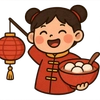
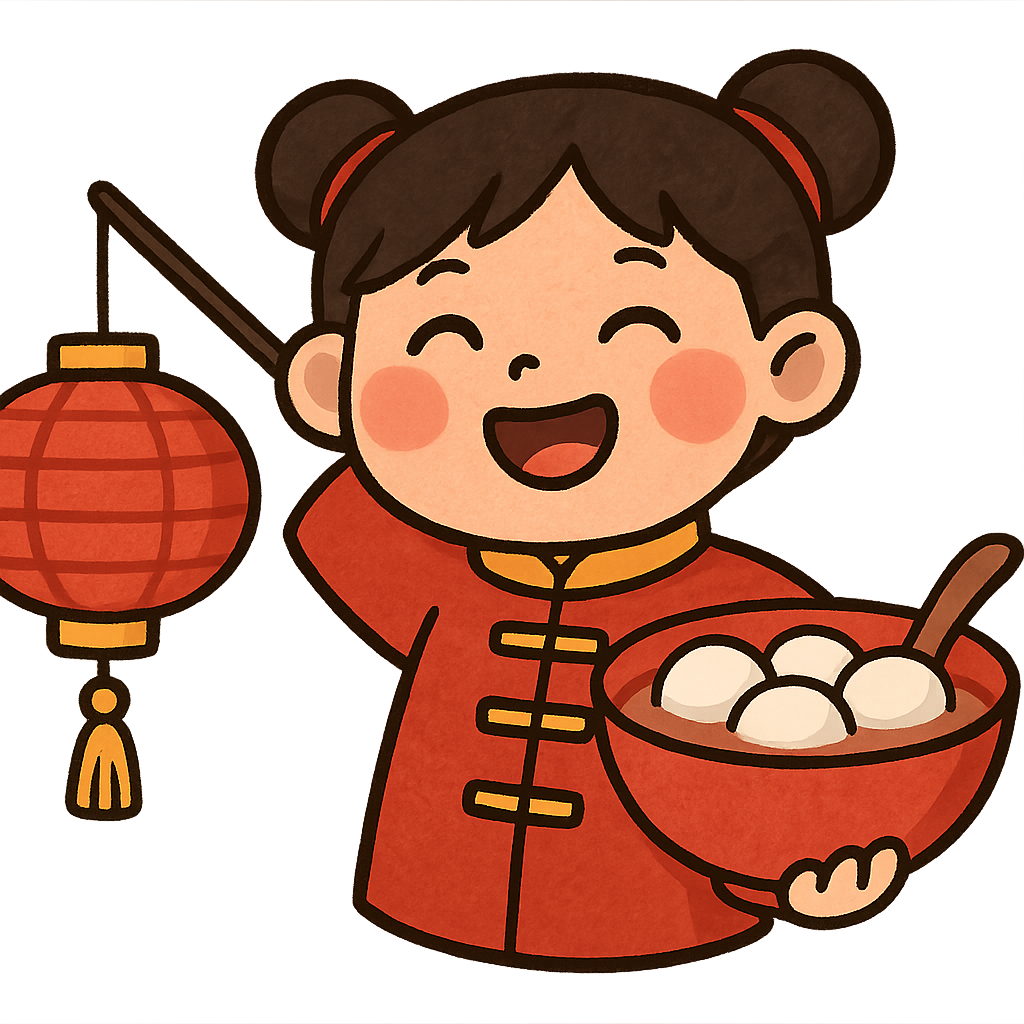
As my name suggests, the most central and beloved of my traditions involves the display of beautiful, glowing lanterns. This practice has transformed remarkably over the centuries. In ancient times, the lanterns people used were often quite simple in their design and construction, perhaps made of paper or silk stretched over a bamboo frame with a candle inside. However, as dynasties passed and artistic techniques advanced, my lanterns evolved into stunning and intricate works of art. Today, when people celebrate me, the night is filled with lanterns of every imaginable shape, size, and color. You can see traditional red globes, which cast a warm and festive glow, hanging alongside incredibly complex designs. These might take the form of majestic dragons, graceful fish that seem to swim through the air, or the twelve animals of the Chinese zodiac, all brought to life with light.
Adding to the festive atmosphere is a clever and engaging activity: guessing lantern riddles. This tradition became a widespread and popular part of my observance during the Song Dynasty, which ruled from 960 to 1279. The game is a delightful challenge for the mind. People write riddles, which can be about characters, objects, or ideas, onto small slips of paper. These are then attached to the lanterns for everyone to see. As families and friends stroll through the lantern displays, they stop to ponder the puzzles. Anyone who thinks they have the correct answer can approach the lantern's owner to see if they are right. This tradition adds a wonderful layer of interactive fun and intellectual challenge to the night's events, making my celebration enjoyable for both children and adults.
Food is also an essential part of my observance, and one dish in particular is eaten to mark the occasion. This special food is called tangyuan. Tangyuan are soft, chewy balls made from glutinous rice flour. They are often filled with sweet pastes, such as rich black sesame, sweet red bean, or peanut paste. These delightful dumplings are typically served warm in a simple, often sweet, broth. The food itself is delicious, but its significance goes much deeper. The round shape of the tangyuan is highly symbolic. It represents the full moon shining on the night of my celebration, but more importantly, it symbolizes family togetherness, harmony, and the joy of a happy reunion. Eating tangyuan with loved ones is a way of expressing hope for a full and complete year ahead.
Today, I am celebrated with joy and enthusiasm by Chinese communities all across the globe. My ancient traditions remain at the heart of the festivities. Families still gather to share bowls of tangyuan, and people of all ages continue to delight in the challenge of solving riddles hanging from lanterns. Alongside these timeless customs, many celebrations now feature modern touches that bring my spirit of light into the 21st century. It is common for large public parks to host massive lantern displays, where enormous, complex structures are illuminated with vibrant electric lights and sometimes even feature moving parts. These spectacular displays are often accompanied by traditional performances, such as the energetic and colorful lion and dragon dances, which are believed to bring good luck. Through this blend of old and new, my core spirit of community, light, and togetherness continues to shine brightly in the modern era.
Wow facts
About
The Chinese Lantern Festival is a traditional festival celebrated on the 15th day of the first lunar month, marking the end of the Chinese New Year festivities with lantern displays, riddles, and special foods.
Take a Quiz
Question 1 of 5
The story mentions that the tradition of guessing lantern riddles became popular during which Chinese dynasty?
Want to do even more?
Go beyond exploring. Unlock tools that turn every story into real learning.

Storypie Plus for families
Full stories, quizzes, and printables. Nights and car rides, sorted.
- Unlimited audio stories
- Create Mode: your child stars in the story
- Offline downloads
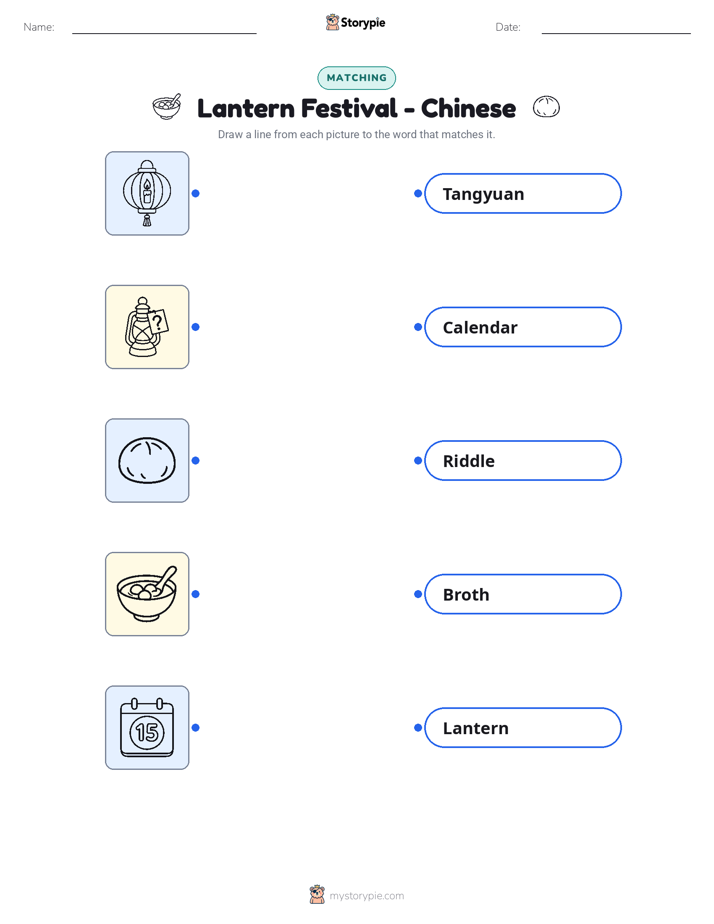
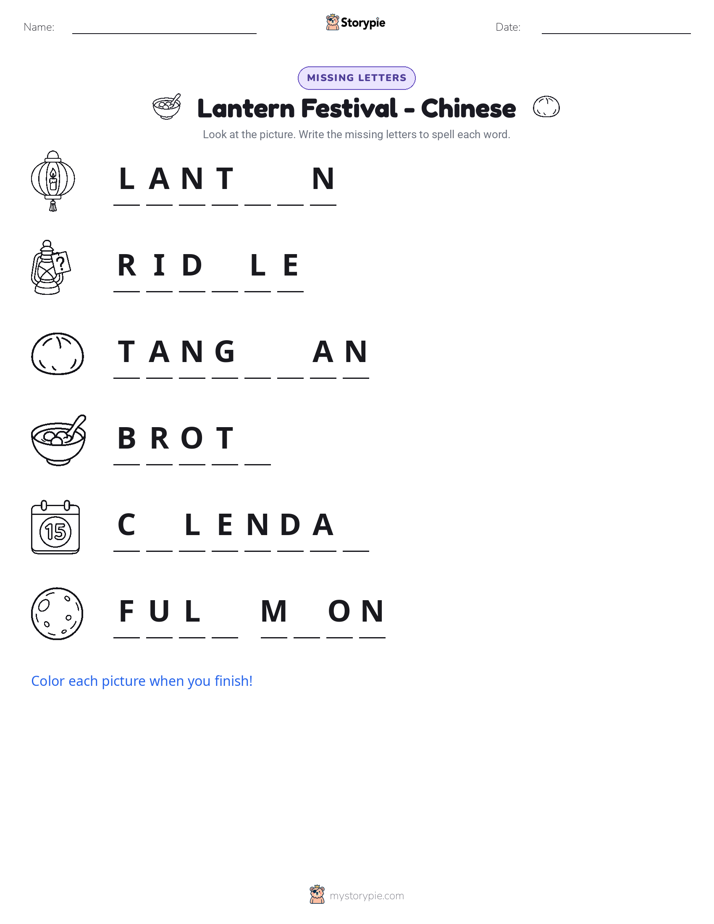
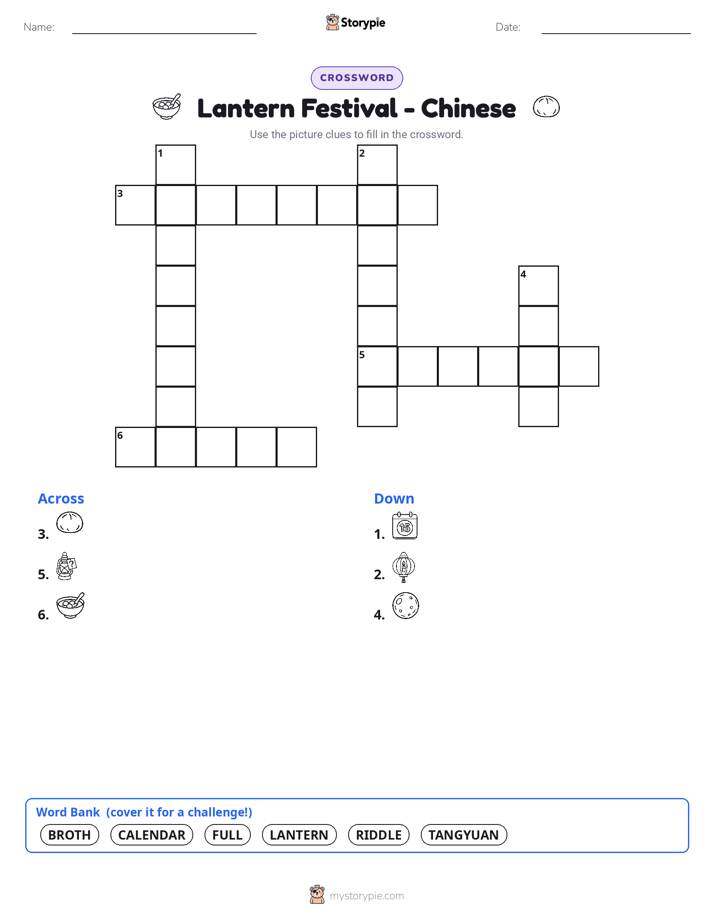
- Printable worksheets & coloring pages

Why Storypie for Schools
Students engaged. Prep in seconds. Evenings back to you.
- Worksheets & Quizzes
- Classroom Management
- Formative Assessment
- Custom Curriculum & Lesson Plans
- 27 Languages

Why Storypie for Homeschool
Curriculum done. They'll ask for more. Hours back in your day.
- Worksheet Generator
- First-Person Audio Stories
- Built-in Comprehension Quizzes
- Custom Curriculum & Lesson Plans
- Print & Go Activities