English

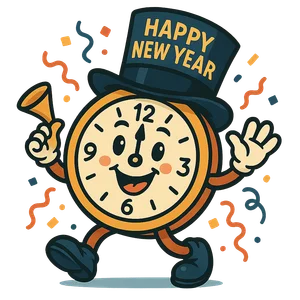
New Year's Day
New Year's Day marks the beginning of the new year in the Gregorian calendar on January 1st.
Reads at Grades 6–8 Listens at Grades 4–8
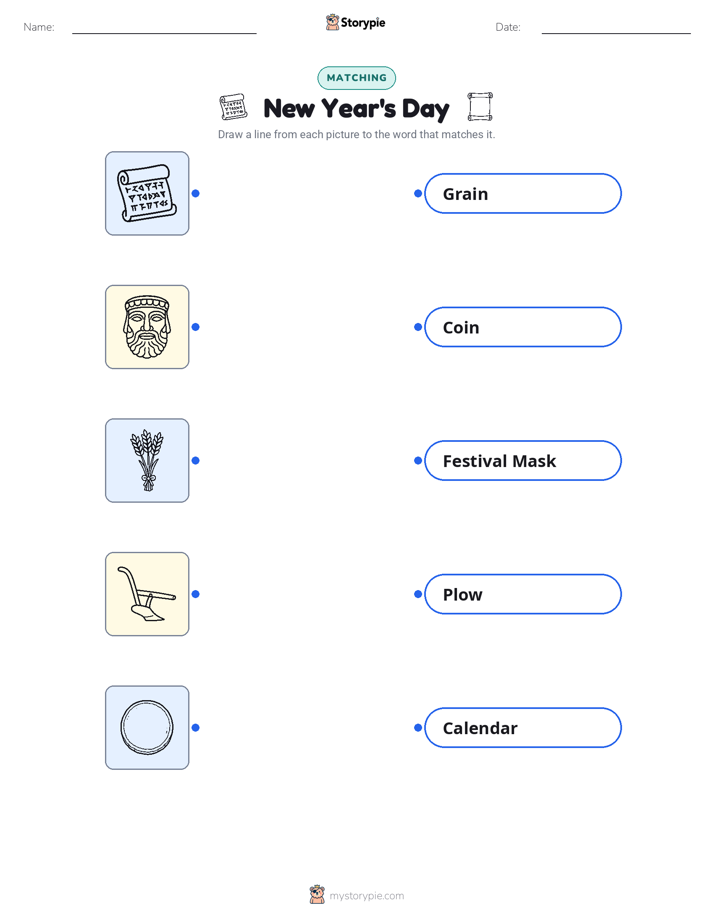
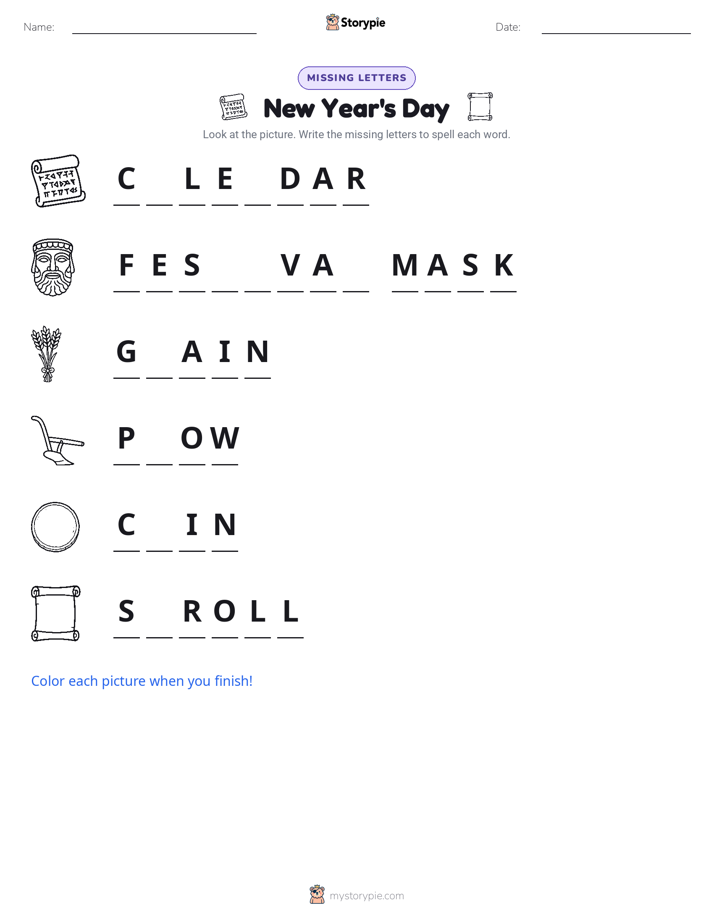
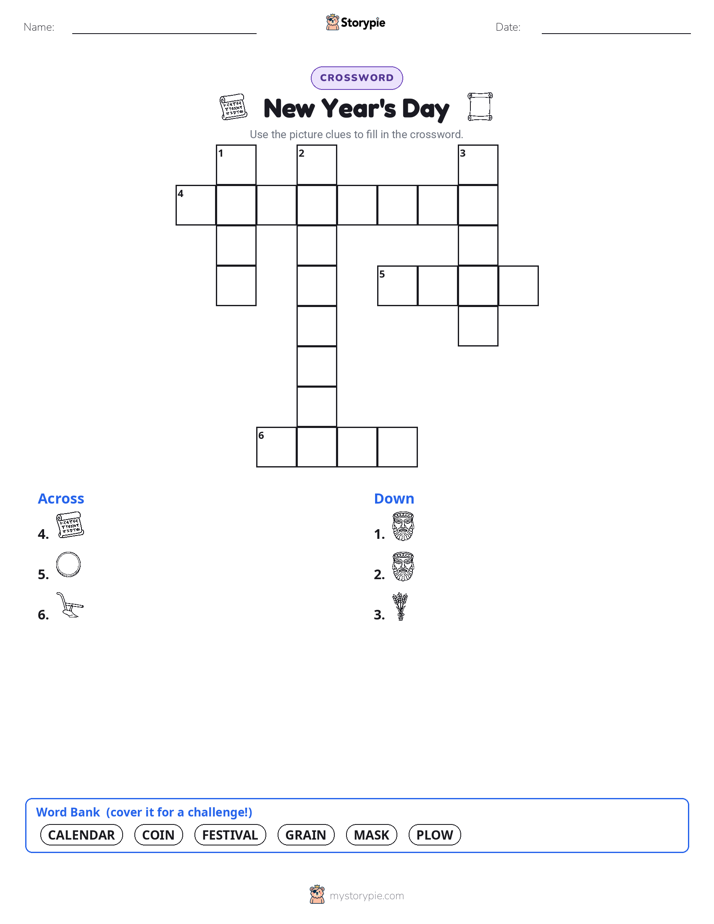
Print & create
Answer keys·No prep·Free with an account
28 worksheets · answer keys · full story · quiz · Ages 10-12 · CEFR B2
Plus adds 279,000+ more stories in 27 languages, audio for every one, and printables for all of them.
Just want New Year's Day?
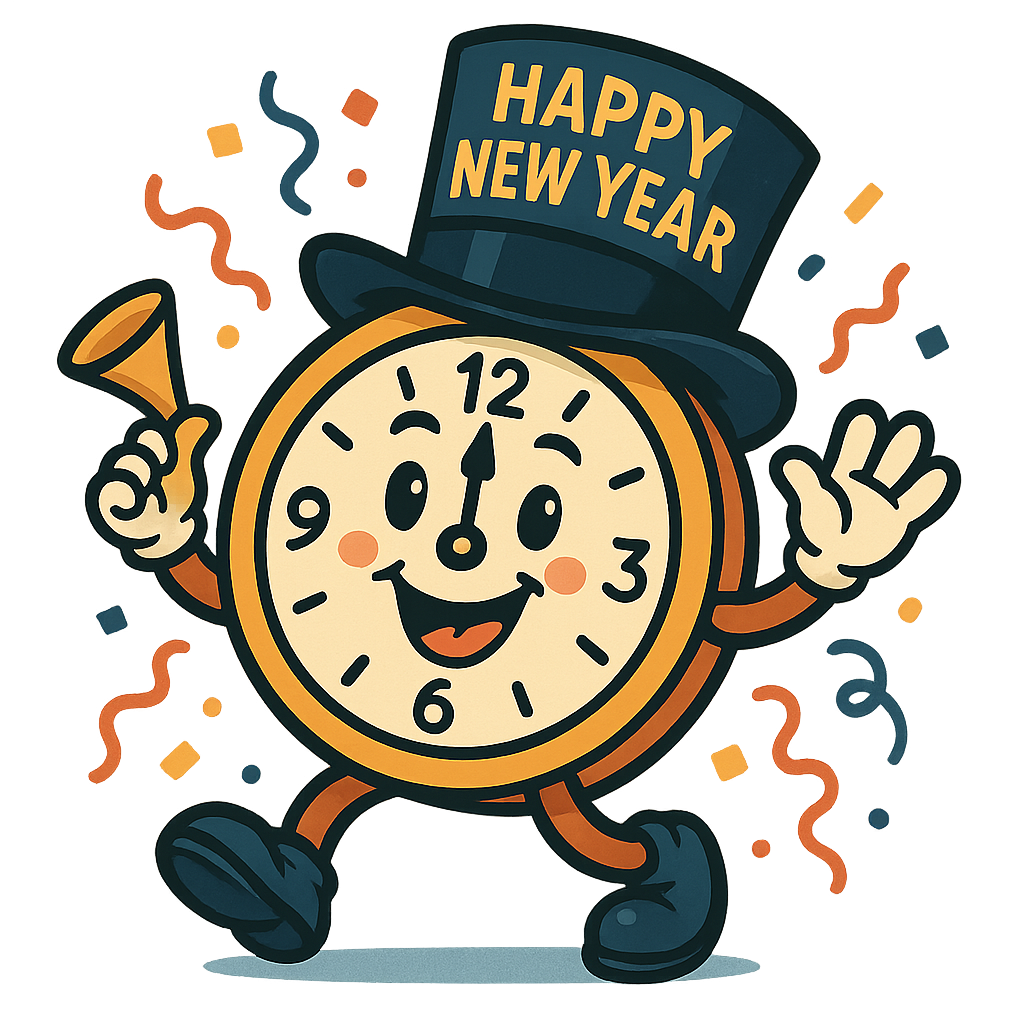
I am New Year's Day, the holiday that marks the beginning of a brand new year. For many people in the modern world, my arrival is tied to a specific date on the calendar: January 1st. However, the idea I represent—a fresh start, a moment to look forward with hope—is much older than any single calendar. For thousands of years, cultures all across the globe have found their own special times to welcome a new cycle. These celebrations were often deeply connected to the rhythms of the natural world, such as the planting of crops in the spring or the harvest in the fall, marking time by the turning of the seasons long before my date was fixed.
My earliest known observances took place more than 4,000 years ago in the ancient Mesopotamian city of Babylon. The Babylonian people celebrated a grand and important religious festival they called Akitu. This was not a one-day event; it was a massive, multi-day celebration that occurred around the time of the vernal equinox in late March. This timing was no accident. The vernal equinox is the point in spring when day and night are of nearly equal length, signaling the end of winter and the start of a new growing season. For the Babylonians, Akitu was a powerful moment. It was a celebration of the rebirth of the natural world, a time when the darkness of winter gave way to the life-giving light of spring, and farmers could once again plant their crops, ensuring food for the year ahead.
For many centuries, my arrival was linked to the spring. Even the ancient Romans, whose influence would eventually set my date in winter, originally celebrated the start of their year in March. This changed because of one of history's most famous leaders, Julius Caesar. In 46 BCE, he decided that the Roman calendar was in need of a major reform. With the help of the best astronomers and mathematicians of his time, he introduced a new calendar system known as the Julian calendar. As part of this sweeping change, he officially set my date as January 1st. This choice was symbolic. He selected this day to honor Janus, the Roman god of beginnings, transitions, and doorways. Janus was a fitting patron for a new year; he was depicted with two faces, one looking back at the past and the other looking forward into the future. By starting the year in his honor, the Romans were creating a powerful symbol of reflection and anticipation.
The Story of New Year's Day
I am New Year's Day, the holiday that marks the beginning of a brand new year. For many people in the modern world, my arrival is tied to a specific date on the calendar: January 1st. However, the idea I represent—a fresh start, a moment to look forward with hope—is much older than any single calendar. For thousands of years, cultures all across the globe have found their own special times to welcome a new cycle. These celebrations were often deeply connected to the rhythms of the natural world, such as the planting of crops in the spring or the harvest in the fall, marking time by the turning of the seasons long before my date was fixed.
My earliest known observances took place more than 4,000 years ago in the ancient Mesopotamian city of Babylon. The Babylonian people celebrated a grand and important religious festival they called Akitu. This was not a one-day event; it was a massive, multi-day celebration that occurred around the time of the vernal equinox in late March. This timing was no accident. The vernal equinox is the point in spring when day and night are of nearly equal length, signaling the end of winter and the start of a new growing season. For the Babylonians, Akitu was a powerful moment. It was a celebration of the rebirth of the natural world, a time when the darkness of winter gave way to the life-giving light of spring, and farmers could once again plant their crops, ensuring food for the year ahead.
For many centuries, my arrival was linked to the spring. Even the ancient Romans, whose influence would eventually set my date in winter, originally celebrated the start of their year in March. This changed because of one of history's most famous leaders, Julius Caesar. In 46 BCE, he decided that the Roman calendar was in need of a major reform. With the help of the best astronomers and mathematicians of his time, he introduced a new calendar system known as the Julian calendar. As part of this sweeping change, he officially set my date as January 1st. This choice was symbolic. He selected this day to honor Janus, the Roman god of beginnings, transitions, and doorways. Janus was a fitting patron for a new year; he was depicted with two faces, one looking back at the past and the other looking forward into the future. By starting the year in his honor, the Romans were creating a powerful symbol of reflection and anticipation.
However, the establishment of the Julian calendar did not mean that my January 1st date was immediately and permanently accepted everywhere. After the Roman Empire fell, its influence faded, and Europe entered the era known as the Middle Ages. During this long period, many Christian leaders felt that January 1st was a date tied to pagan Roman traditions. They preferred to mark the new year on days that held greater significance for their faith. As a result, the start of the year became inconsistent across the continent. In some places, the new year began on December 25th, celebrating the birth of Jesus. In others, it was marked on March 25th, the Feast of the Annunciation. For centuries, there was no single, unified New Year's Day, and a person could travel from one region to another and find the year changing on a completely different day.
This confusion lasted for hundreds of years until another major calendar reform took place. By the 1500s, it had become clear that the Julian calendar, while an improvement, had a small but significant flaw in its calculations that caused it to drift out of sync with the solar year. In 1582, Pope Gregory XIII decided to fix this problem once and for all. He introduced a revised and more accurate system, which became known as the Gregorian calendar. This is the calendar that most of the world uses today. Pope Gregory's reform re-established January 1st as the official and authoritative start of the new year. The adoption of this new calendar was not instant. It happened gradually, with different countries making the switch over the course of many decades and even centuries. But eventually, the Gregorian calendar became the international standard, and with it, my date of January 1st was solidified across the globe.
Today, people observe my arrival with a wonderful variety of traditions, each reflecting a unique culture. In the United States, one of the most famous celebrations takes place in New York City's Times Square. Huge crowds gather to watch a giant, glittering ball slowly descend as they count down the final seconds of the old year. In Spain and many other Spanish-speaking countries, a popular tradition involves eating exactly 12 grapes at the stroke of midnight, one for each month, to bring good luck and prosperity in the year ahead. In cities all over the world, from Sydney to London to Rio de Janeiro, the night sky is illuminated with spectacular fireworks displays. These dazzling shows of light and sound create a shared moment of wonder and excitement, a vibrant and explosive welcome to the new beginning I represent.
Beneath all the fireworks, parties, and special foods lies my central and most enduring meaning: the chance for a fresh start. This powerful idea is the foundation for one of my most personal traditions—the making of New Year's resolutions. This is a time when people reflect on their past actions and make promises to themselves to learn, grow, and improve in the coming year. Whether it's a pledge to be kinder, work harder, or learn a new skill, a resolution is a personal commitment to a better future. This custom is not a modern invention; it has surprisingly ancient roots. The Babylonians, during their Akitu festival thousands of years ago, would make promises to their gods to pay off their debts and return any borrowed farm equipment. From ancient promises to gods to modern promises to oneself, I continue to be a time of reflection, renewal, and hope for what is to come.
Wow facts
About
New Year's Day marks the beginning of the new year in the Gregorian calendar on January 1st. It is widely observed on January 1st in countries using the Gregorian calendar, but not universally. People celebrate with various customs including fireworks, parties, and making resolutions for the coming year.
Take a Quiz
Question 1 of 5
What is the central theme of this story about New Year's Day?
Want to do even more?
Go beyond exploring. Unlock tools that turn every story into real learning.

Storypie Plus for families
Full stories, quizzes, and printables. Nights and car rides, sorted.
- Unlimited audio stories
- Create Mode: your child stars in the story
- Offline downloads
- Printable worksheets & coloring pages

Why Storypie for Schools
Students engaged. Prep in seconds. Evenings back to you.
- Worksheets & Quizzes
- Classroom Management
- Formative Assessment
- Custom Curriculum & Lesson Plans
- 27 Languages

Why Storypie for Homeschool
Curriculum done. They'll ask for more. Hours back in your day.
- Worksheet Generator
- First-Person Audio Stories
- Built-in Comprehension Quizzes
- Custom Curriculum & Lesson Plans
- Print & Go Activities