English

Qixi Festival - Chinese
The Qixi Festival is a traditional Chinese holiday celebrated on the seventh day of the seventh month of the…
Reads at Grades 3–5 Listens at Grades 1–5
Print & create
Answer keys·No prep·Free with an account
28 worksheets · answer keys · full story · quiz · Ages 8-10 · CEFR B1
Plus adds 273,000+ more stories in 27 languages, audio for every one, and printables for all of them.
Just want Qixi Festival - Chinese?
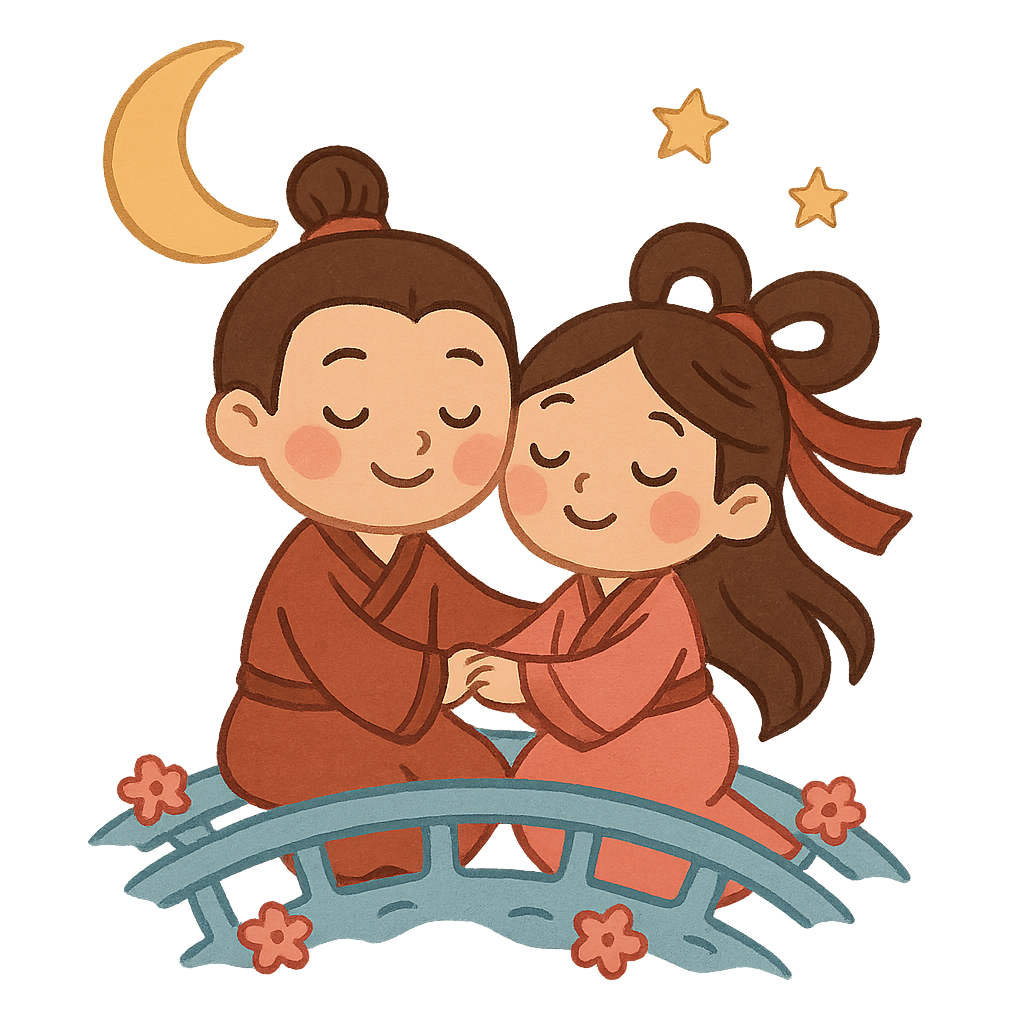
Hello, I am the Qixi Festival. People in China and other parts of Asia observe me each year, but my date changes. That’s because my timing is based on the Chinese lunisolar calendar, which follows the cycles of both the moon and the sun. You can always find me on the seventh day of the seventh month of that calendar. My story is tied to a beautiful and romantic legend that has been told for many, many centuries. It is the story of two sweethearts who live among the stars: a talented Weaver Girl named Zhinü and a kind Cowherd named Niulang.
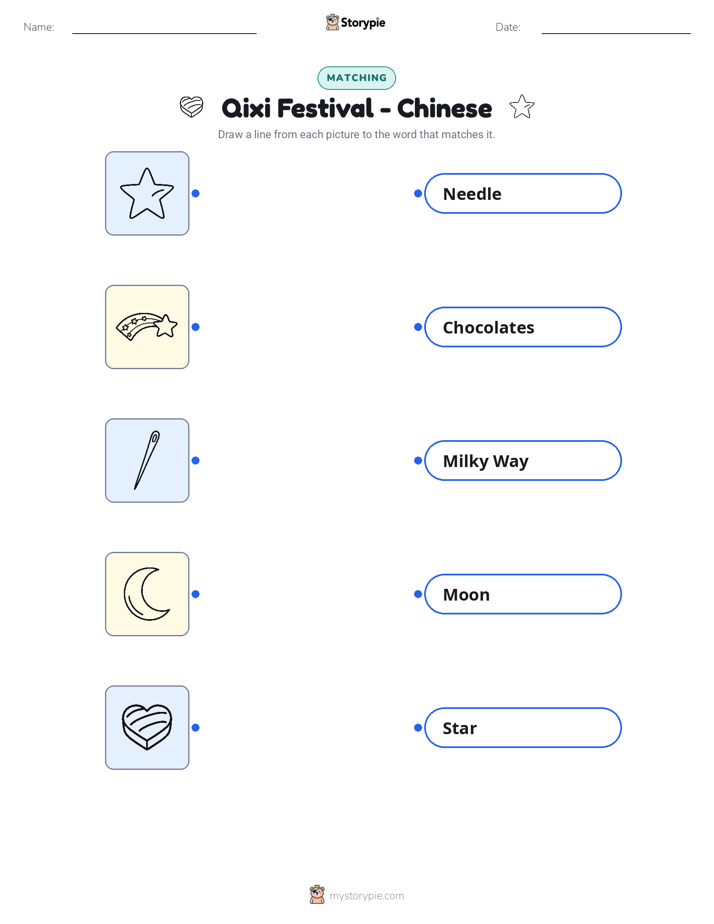
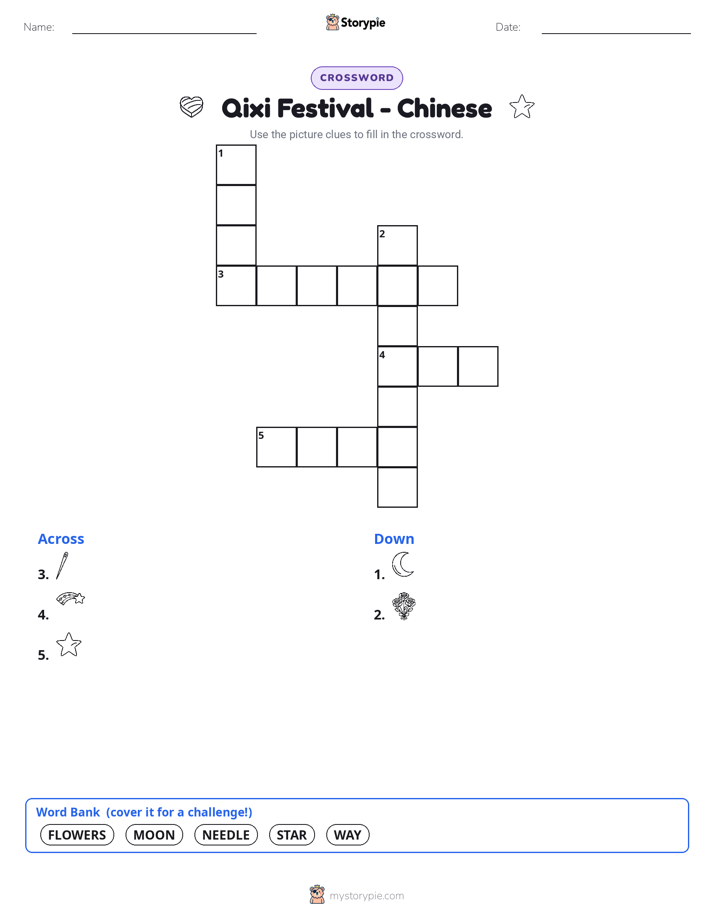
This traditional story explains that Zhinü and Niulang fell deeply in love and wanted to spend their lives together. However, powerful forces in the heavens disapproved of their relationship and decided to separate them. They were forced to live on opposite sides of a vast, shimmering river in the night sky. The river that keeps them apart is the one you can see from Earth, known as the Milky Way. This separation meant they could no longer be together, creating a sad and lonely existence for them both.
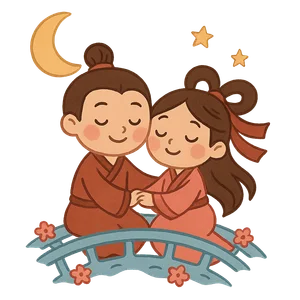
Even though they were kept apart, the legend says that their love was so strong that they were granted one chance each year to see each other. This special meeting is only allowed to happen on my day, the seventh day of the seventh month. To make this reunion possible, it is said that every single magpie in the world takes flight, soaring up into the heavens. There, high above the world, they join together wing to wing, forming a long, sturdy bridge across the wide expanse of the Milky Way.
The Story of the Qixi Festival
Hello, I am the Qixi Festival. People in China and other parts of Asia observe me each year, but my date changes. That’s because my timing is based on the Chinese lunisolar calendar, which follows the cycles of both the moon and the sun. You can always find me on the seventh day of the seventh month of that calendar. My story is tied to a beautiful and romantic legend that has been told for many, many centuries. It is the story of two sweethearts who live among the stars: a talented Weaver Girl named Zhinü and a kind Cowherd named Niulang.
This traditional story explains that Zhinü and Niulang fell deeply in love and wanted to spend their lives together. However, powerful forces in the heavens disapproved of their relationship and decided to separate them. They were forced to live on opposite sides of a vast, shimmering river in the night sky. The river that keeps them apart is the one you can see from Earth, known as the Milky Way. This separation meant they could no longer be together, creating a sad and lonely existence for them both.
Even though they were kept apart, the legend says that their love was so strong that they were granted one chance each year to see each other. This special meeting is only allowed to happen on my day, the seventh day of the seventh month. To make this reunion possible, it is said that every single magpie in the world takes flight, soaring up into the heavens. There, high above the world, they join together wing to wing, forming a long, sturdy bridge across the wide expanse of the Milky Way.
It is on this incredible living bridge that Zhinü and Niulang can finally cross the celestial river and be in each other’s arms for a single night. This touching part of the story is why I have more than one name. Because of the helpful birds, many people also call me the Magpie Festival. The image of the magpie bridge has become a powerful symbol of love overcoming great obstacles, even if just for a short time.
My history goes back a very long way. The earliest written records of my observance come from the Han Dynasty in China, which was more than 2,000 years ago. In those ancient times, I was celebrated a bit differently and was known by another name: the Qiqiao Festival. This name translates to the “Begging for Skills Festival.” My focus wasn't just on romance back then; it was also a very important time for young women to wish for talent, wisdom, and dexterity in their work.
During these early observances, young women would gather to take part in special customs. Under the soft light of the moon, they would set up tables with offerings of fresh fruit for Zhinü. Since Zhinü was the Weaver Girl and known in the stories as a masterful weaver, they saw her as a source of inspiration. The women would practice their own skills, especially needlework, hoping to prove their diligence. Some would also carve melons into detailed and intricate shapes, showing off their steady hands and creative minds.
These traditions were deeply meaningful. By making offerings and displaying their abilities, the young women hoped that Zhinü would see their efforts and grant them her blessings. They wished for “clever hands,” which meant having great skill in domestic arts like weaving, embroidery, and other household crafts. These skills were highly valued. They also prayed for a good husband and a happy life, believing that Zhinü, as a figure of love and devotion, could help guide them toward a joyful future.
Over the centuries, my traditions have evolved. While some people still practice the older customs, my meaning has shifted. Today, I am widely known as a day for romance, and many celebrate me in a way that is very similar to how Valentine's Day is celebrated in other parts of the world. It has become a modern occasion for couples to express their love for one another. Instead of focusing on domestic skills, the emphasis is now on partnership and affection.
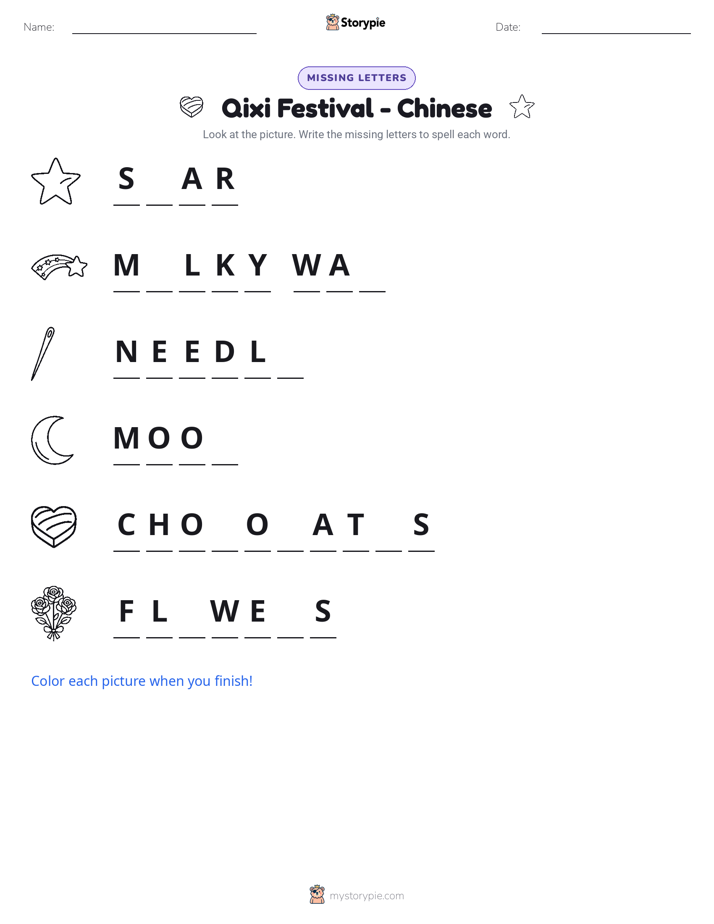
On my day now, couples often go on special dates or enjoy a nice evening together. It is common for them to exchange gifts to show their feelings. Popular presents include beautiful bouquets of flowers, boxes of chocolates, and other thoughtful tokens of love. Although many of my old traditions have changed, one special activity connects the past to the present: looking up at the night sky. Many people still go outside to search for two particular bright stars, Vega and Altair. In the sky, these stars represent the separated lovers, Zhinü and Niulang, forever waiting to be reunited on my special night.
Wow facts
About
The Qixi Festival is a traditional Chinese holiday celebrated on the seventh day of the seventh month of the Chinese lunisolar calendar, commemorating the annual meeting of the mythological figures, the weaver girl and the cowherd.
Take a Quiz
Question 1 of 5
According to the story, what amazing thing do the magpies do on the night of the festival?
Want to do even more?
Go beyond exploring. Unlock tools that turn every story into real learning.

Storypie Plus for families
Full stories, quizzes, and printables. Nights and car rides, sorted.
- Unlimited audio stories
- Create Mode: your child stars in the story
- Offline downloads
- Printable worksheets & coloring pages

Why Storypie for Schools
Students engaged. Prep in seconds. Evenings back to you.
- Worksheets & Quizzes
- Classroom Management
- Formative Assessment
- Custom Curriculum & Lesson Plans
- 27 Languages

Why Storypie for Homeschool
Curriculum done. They'll ask for more. Hours back in your day.
- Worksheet Generator
- First-Person Audio Stories
- Built-in Comprehension Quizzes
- Custom Curriculum & Lesson Plans
- Print & Go Activities