English

Qixi Festival - Chinese
The Qixi Festival is a traditional Chinese holiday celebrated on the seventh day of the seventh month of the…
Reads at Grades 6–8 Listens at Grades 4–8
Print & create
Answer keys·No prep·Free with an account
28 worksheets · answer keys · full story · quiz · Ages 10-12 · CEFR B2
Plus adds 279,000+ more stories in 27 languages, audio for every one, and printables for all of them.
Just want Qixi Festival - Chinese?
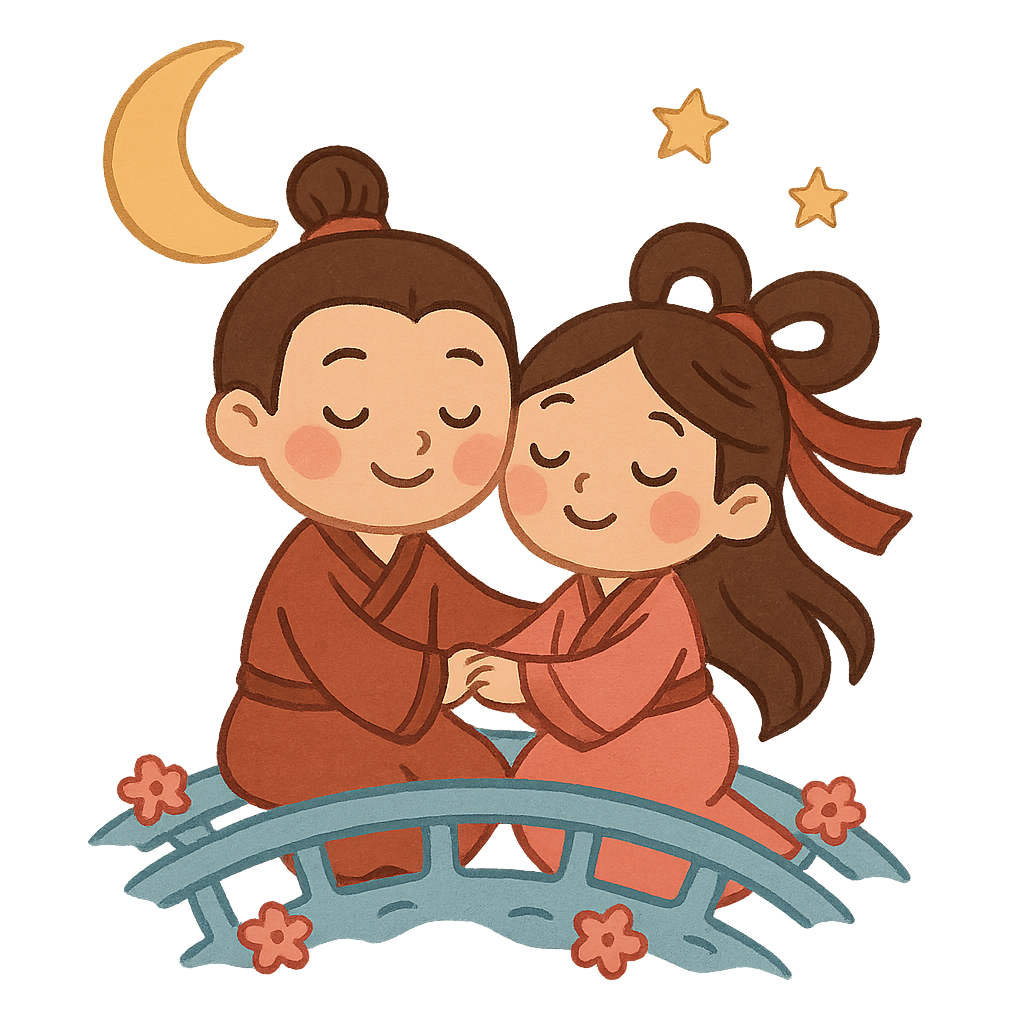
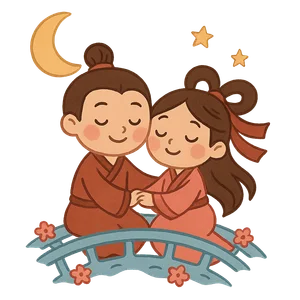
I am the Qixi Festival, and people in China know me as a day that commemorates one of the country's most famous romantic legends. My name, Qixi, translates to 'The Night of Sevens' because my observance takes place on the 7th day of the 7th month of the Chinese lunisolar calendar. The traditional story that defines me is about two lovers who were separated from each other. One was a celestial being, the Weaver Girl named Zhinü, and the other was a mortal, the Cowherd named Niulang. According to the legend, they were cast apart by a great celestial river, and I mark the one special night each year when they are permitted to cross the divide and be reunited.
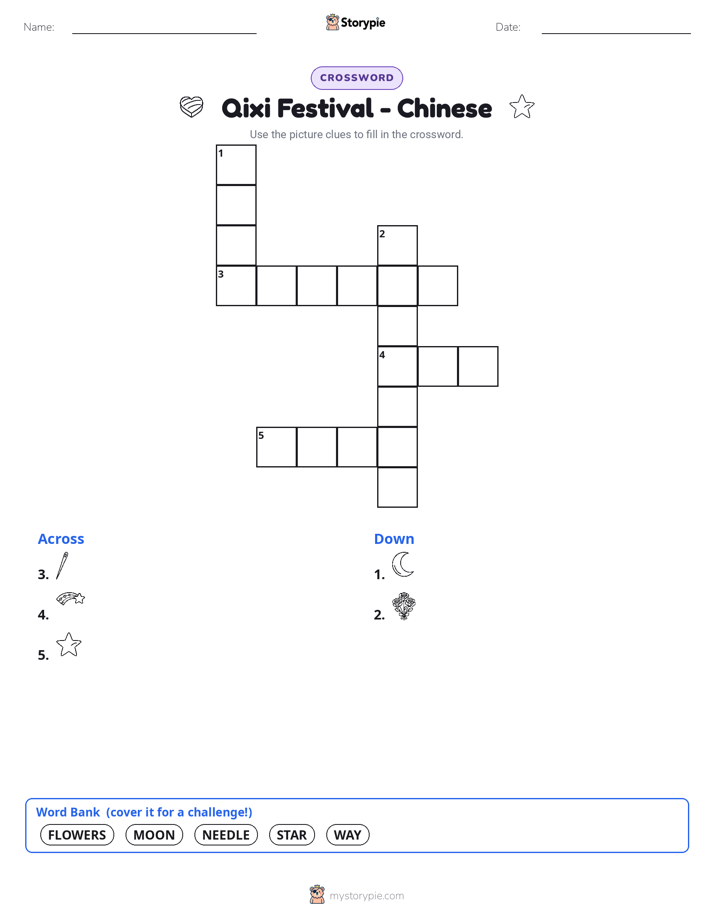
My story is not just a tale told on Earth; it is written in the vast expanse of the summer night sky. The legend's characters have astronomical counterparts that people can see. Zhinü is represented by the brilliant star Vega, while Niulang is embodied by the star Altair. The celestial river that keeps them apart in the story is the Milky Way, the luminous band of stars that stretches across the heavens. On clear summer nights, these two bright stars can be seen shining on opposite sides of the Milky Way. It was this celestial arrangement that inspired the ancient tale of their long separation and their brief, yearly reunion, connecting my observance directly to the stars above.
My history is a long one, reaching back more than 2,000 years to the time of the Han Dynasty in China. The first known written records of the story of the Cowherd and the Weaver Girl date back to this period. In those early days, my observances were closely linked to the practice of worshipping the stars. People would look to the night sky with reverence and wonder. Over the course of many centuries, however, the focus of my traditions began to shift. The formal worship of stars gradually gave way to a deeper focus on the romantic and poignant story of Zhinü and Niulang. Their legend became the central theme, shaping my meaning and the ways people marked my arrival each year.
Qixi Festival
I am the Qixi Festival, and people in China know me as a day that commemorates one of the country's most famous romantic legends. My name, Qixi, translates to 'The Night of Sevens' because my observance takes place on the 7th day of the 7th month of the Chinese lunisolar calendar. The traditional story that defines me is about two lovers who were separated from each other. One was a celestial being, the Weaver Girl named Zhinü, and the other was a mortal, the Cowherd named Niulang. According to the legend, they were cast apart by a great celestial river, and I mark the one special night each year when they are permitted to cross the divide and be reunited.
My story is not just a tale told on Earth; it is written in the vast expanse of the summer night sky. The legend's characters have astronomical counterparts that people can see. Zhinü is represented by the brilliant star Vega, while Niulang is embodied by the star Altair. The celestial river that keeps them apart in the story is the Milky Way, the luminous band of stars that stretches across the heavens. On clear summer nights, these two bright stars can be seen shining on opposite sides of the Milky Way. It was this celestial arrangement that inspired the ancient tale of their long separation and their brief, yearly reunion, connecting my observance directly to the stars above.
My history is a long one, reaching back more than 2,000 years to the time of the Han Dynasty in China. The first known written records of the story of the Cowherd and the Weaver Girl date back to this period. In those early days, my observances were closely linked to the practice of worshipping the stars. People would look to the night sky with reverence and wonder. Over the course of many centuries, however, the focus of my traditions began to shift. The formal worship of stars gradually gave way to a deeper focus on the romantic and poignant story of Zhinü and Niulang. Their legend became the central theme, shaping my meaning and the ways people marked my arrival each year.
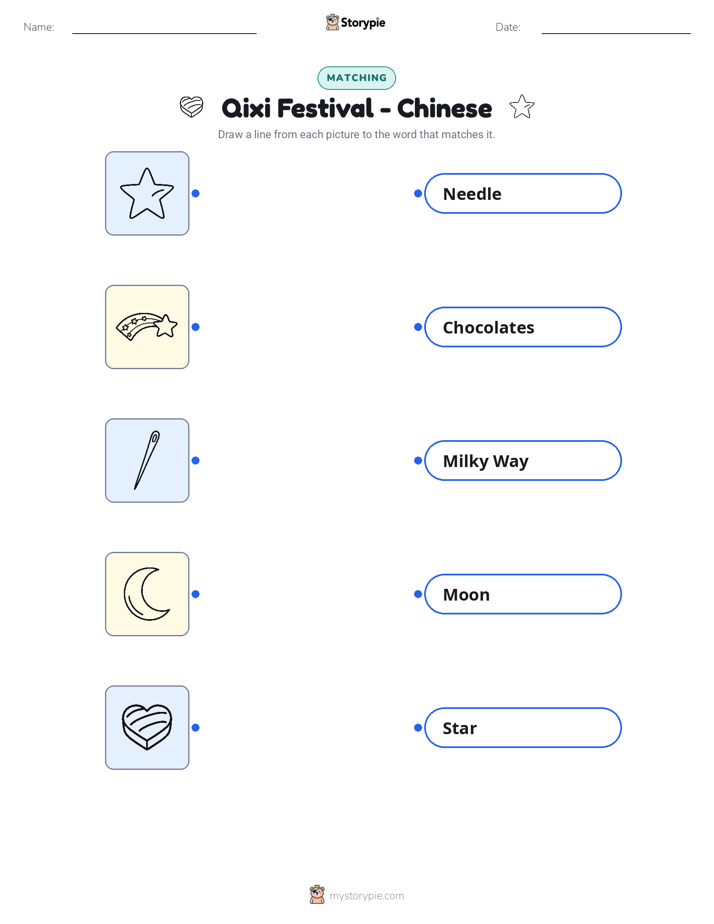
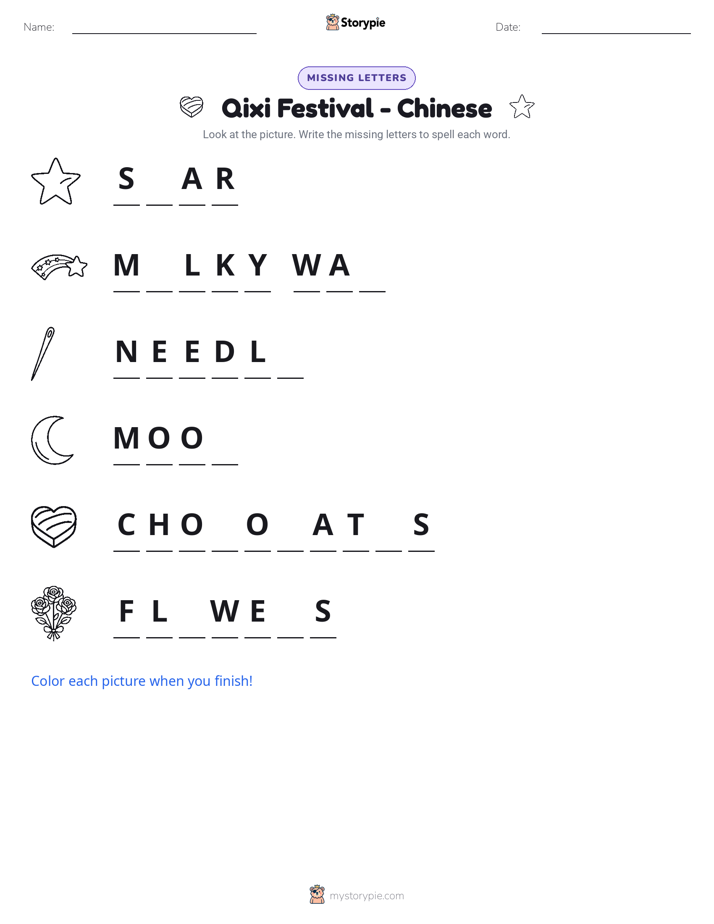
For many hundreds of years, I was a particularly significant day for girls and young women. They would take part in customs known as qi qiao, a phrase that means 'praying for skills.' In these traditions, girls looked to the celestial Weaver Girl, Zhinü, as a role model because of her legendary skill and diligence. To honor her, young women would demonstrate their own domestic abilities, especially their talent for needlework. A common practice involved trying to thread a needle under the faint light of the moon. As they performed these tasks, they would also offer prayers to Zhinü, asking for wisdom, skill, and the blessing of a good marriage.
As time has passed, my identity has continued to transform. While some people still honor my older customs, my meaning has evolved considerably in the modern era. Today, I am widely known and celebrated as the 'Chinese Valentine's Day.' For many, especially younger generations, the emphasis has moved away from the celebration of women's domestic skills and toward the celebration of romantic love between couples. This modern interpretation has become very popular, turning me into a day for expressing affection and celebrating relationships. It shows how a festival can adapt its meaning to reflect changes in culture and society.
Today, people observe me in ways that blend ancient sentiment with modern life. Couples often celebrate by going out for special dinners, watching movies, or exchanging gifts such as flowers and chocolates. But my story's influence has also traveled beyond China's borders. In Japan, a similar festival inspired by my legend is called Tanabata, or the 'Star Festival.' During Tanabata, people write their wishes on colorful strips of paper and hang them on bamboo branches. In Korea, the festival is known as Chilseok. These related celebrations in different parts of East Asia demonstrate how my ancient story of love and longing continues to be shared, cherished, and adapted by new generations across different cultures.
Wow facts
About
The Qixi Festival is a traditional Chinese holiday celebrated on the seventh day of the seventh month of the Chinese lunisolar calendar, commemorating the annual meeting of the mythological figures, the weaver girl and the cowherd.
Take a Quiz
Question 1 of 5
Which statement best summarizes the main idea of the story about the Qixi Festival?
Want to do even more?
Go beyond exploring. Unlock tools that turn every story into real learning.

Storypie Plus for families
Full stories, quizzes, and printables. Nights and car rides, sorted.
- Unlimited audio stories
- Create Mode: your child stars in the story
- Offline downloads
- Printable worksheets & coloring pages

Why Storypie for Schools
Students engaged. Prep in seconds. Evenings back to you.
- Worksheets & Quizzes
- Classroom Management
- Formative Assessment
- Custom Curriculum & Lesson Plans
- 27 Languages

Why Storypie for Homeschool
Curriculum done. They'll ask for more. Hours back in your day.
- Worksheet Generator
- First-Person Audio Stories
- Built-in Comprehension Quizzes
- Custom Curriculum & Lesson Plans
- Print & Go Activities