English

Ramadan
Ramadan is the ninth month of the Islamic lunar calendar, observed by Muslims worldwide as a month of fasting…
Reads at Grades K-2 Listens at K–3
Print & create
Answer keys·No prep·Free with an account
28 worksheets · answer keys · full story · quiz · Ages 6-8 · CEFR A2
Plus adds 273,000+ more stories in 27 languages, audio for every one, and printables for all of them.
Just want Ramadan?
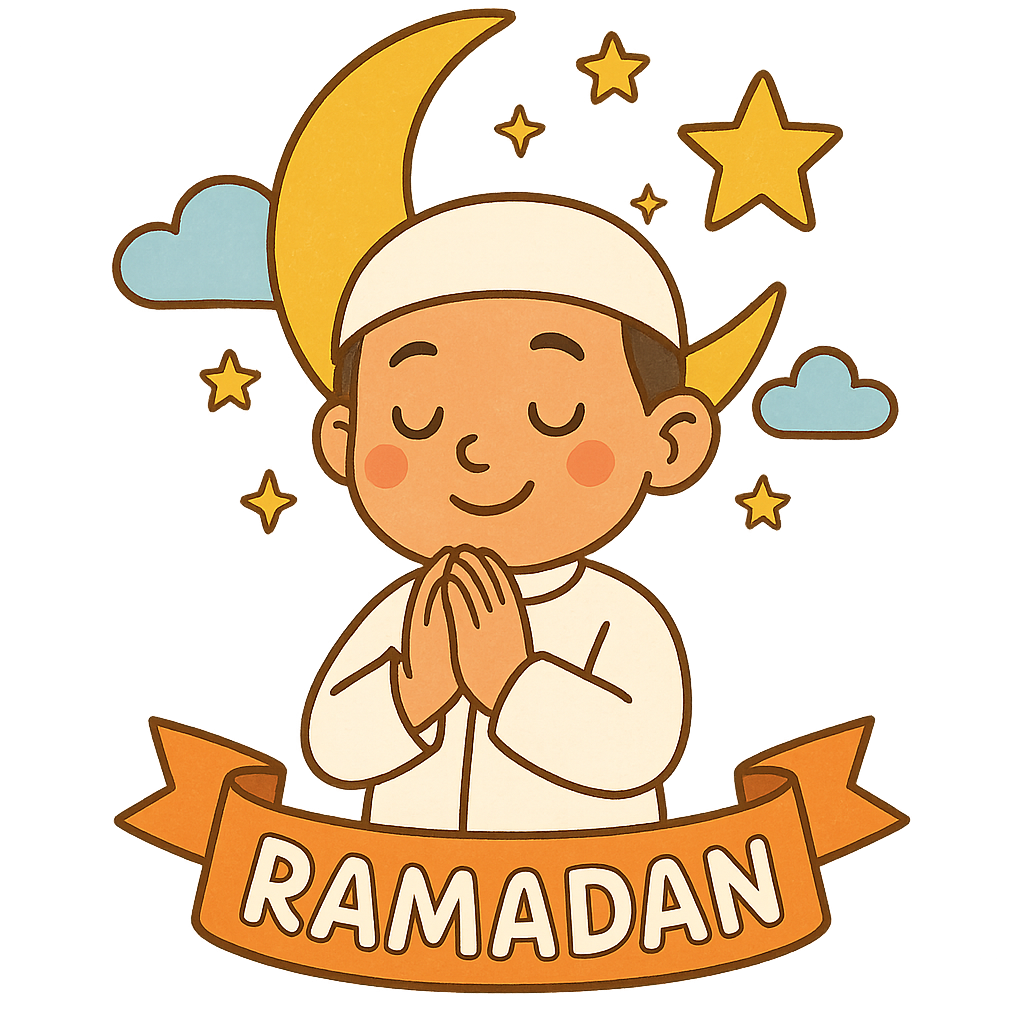
Hello! I am Ramadan. I am the ninth month of the Islamic calendar, and for Muslims all over the world, I am the most sacred time of the year. My importance comes from the belief that many centuries ago, around the year 610 CE, the first parts of the holy book called the Quran were revealed to the Prophet Muhammad during my days.
You might notice that people observe me at different times of the year. That's because my dates follow the phases of the Moon. The Islamic calendar is a lunar calendar. It is about 11 days shorter than the 365-day solar calendar that many people use. This difference means I start a little earlier each year. Over time, I get to visit every season—sometimes I arrive in the warm summer, and other times I come during the cool winter or pleasant days of spring and fall.
One of the most important traditions during my 29 or 30 days is fasting. Many grown-up Muslims practice this, which is called 'sawm.' From the time the sun rises until it sets, they do not eat or drink anything at all. For them, it is a time to feel closer to God, to practice self-control, and to think about people in the world who may not have enough food. To help them with the fast, they eat a meal called 'suhoor' before the sun comes up. When the sun goes down, they break their fast with a meal called 'iftar,' often starting with sweet dates and water.
My time is about more than just fasting. I am also a month for extra prayer, being generous, and spending quality time with family and friends. People try to be especially kind to one another. Many give to charity to help others, a practice known as 'zakat.' In the evenings, after a long day, it is common for communities to gather together. They might share the iftar meal at home or at a mosque. Many people also visit the mosque for special evening prayers.
I Am Ramadan
Hello! I am Ramadan. I am the ninth month of the Islamic calendar, and for Muslims all over the world, I am the most sacred time of the year. My importance comes from the belief that many centuries ago, around the year 610 CE, the first parts of the holy book called the Quran were revealed to the Prophet Muhammad during my days.
You might notice that people observe me at different times of the year. That's because my dates follow the phases of the Moon. The Islamic calendar is a lunar calendar. It is about 11 days shorter than the 365-day solar calendar that many people use. This difference means I start a little earlier each year. Over time, I get to visit every season—sometimes I arrive in the warm summer, and other times I come during the cool winter or pleasant days of spring and fall.
One of the most important traditions during my 29 or 30 days is fasting. Many grown-up Muslims practice this, which is called 'sawm.' From the time the sun rises until it sets, they do not eat or drink anything at all. For them, it is a time to feel closer to God, to practice self-control, and to think about people in the world who may not have enough food. To help them with the fast, they eat a meal called 'suhoor' before the sun comes up. When the sun goes down, they break their fast with a meal called 'iftar,' often starting with sweet dates and water.
My time is about more than just fasting. I am also a month for extra prayer, being generous, and spending quality time with family and friends. People try to be especially kind to one another. Many give to charity to help others, a practice known as 'zakat.' In the evenings, after a long day, it is common for communities to gather together. They might share the iftar meal at home or at a mosque. Many people also visit the mosque for special evening prayers.
After my last day, my month of reflection and fasting ends with a wonderful celebration. This festival is called Eid al-Fitr, which means the 'Festival of Breaking the Fast.' It is a very happy holiday that can last for several days. To celebrate, people often wear nice clothes, say special prayers in the morning, and visit with their families and friends. They share delicious festive meals, and children sometimes receive gifts. It is a joyful way to mark the end of my special month.
Wow facts
About
Ramadan is the ninth month of the Islamic lunar calendar, observed by Muslims worldwide as a month of fasting, prayer, reflection, and community to commemorate the first revelation of the Quran.
Take a Quiz
Question 1 of 4
Why does Ramadan happen during different seasons each year?
Want to do even more?
Go beyond exploring. Unlock tools that turn every story into real learning.

Storypie Plus for families
Full stories, quizzes, and printables. Nights and car rides, sorted.
- Unlimited audio stories
- Create Mode: your child stars in the story
- Offline downloads
- Printable worksheets & coloring pages

Why Storypie for Schools
Students engaged. Prep in seconds. Evenings back to you.
- Worksheets & Quizzes
- Classroom Management
- Formative Assessment
- Custom Curriculum & Lesson Plans
- 27 Languages

Why Storypie for Homeschool
Curriculum done. They'll ask for more. Hours back in your day.
- Worksheet Generator
- First-Person Audio Stories
- Built-in Comprehension Quizzes
- Custom Curriculum & Lesson Plans
- Print & Go Activities