English

Tết - Vietnamese
Tết, short for Tết Nguyên Đán, is the Vietnamese New Year celebration…
Reads at Grades 6–8 Listens at Grades 4–8
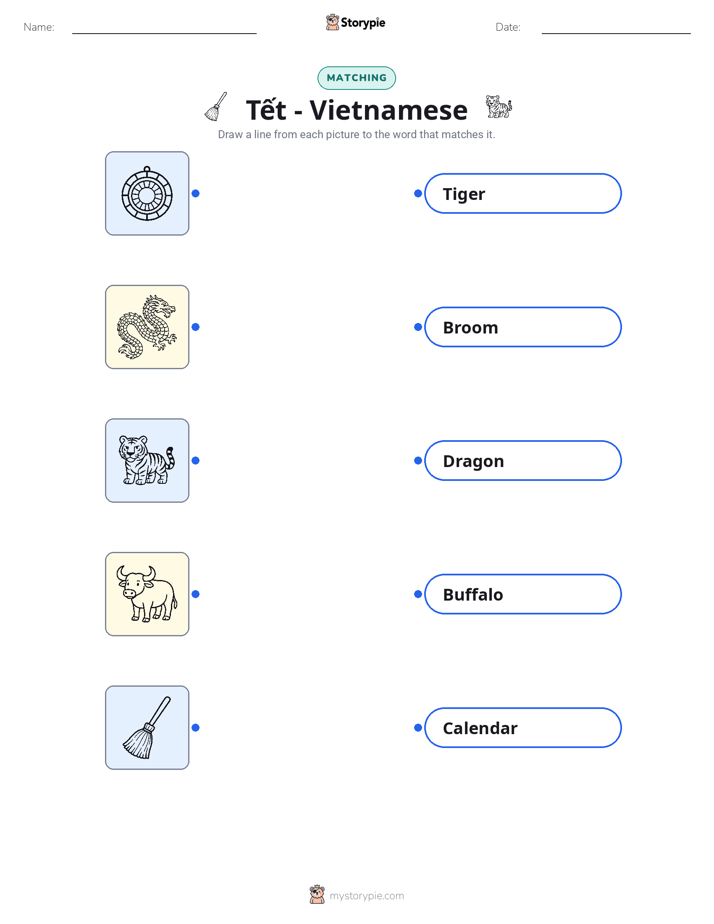
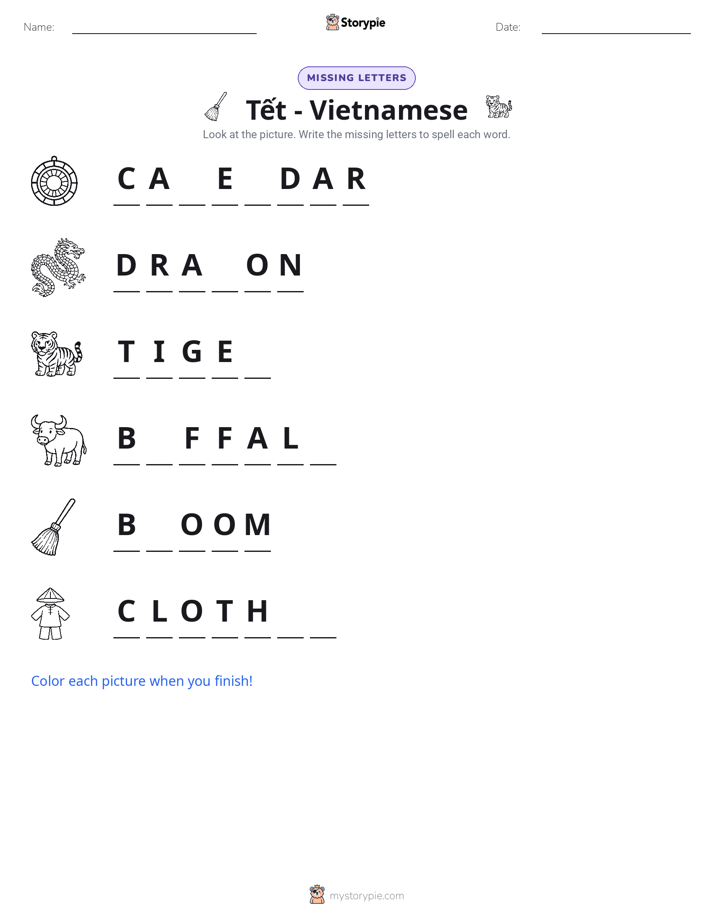
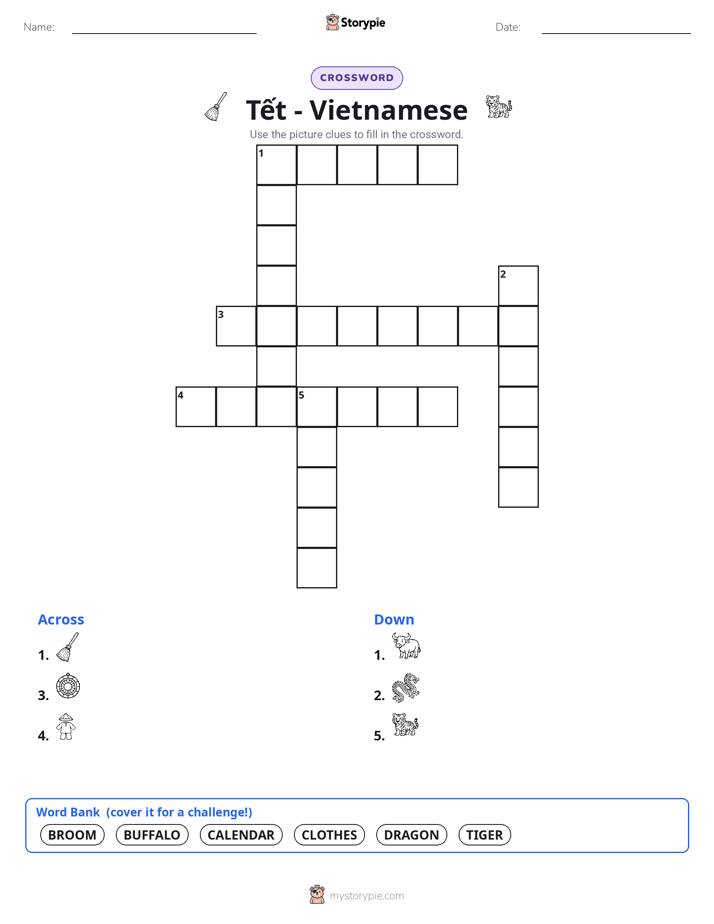
Print & create
Answer keys·No prep·Free with an account
28 worksheets · answer keys · full story · quiz · Ages 10-12 · CEFR B2
Plus adds 279,000+ more stories in 27 languages, audio for every one, and printables for all of them.
Just want Tết - Vietnamese?
I am Tết Nguyên Đán, but many people know me by my shorter name, Tết. In Vietnamese culture, I am considered the most important festival of the year. My full name translates to the “Feast of the First Morning of the First Day,” which points to my purpose: I mark the beginning of a new year and the arrival of spring. My observance follows the lunisolar calendar, a timekeeping system based on the cycles of both the moon and the sun. For the Vietnamese people who observe me, I represent a wonderful chance for a fresh start. It is a time for families to come together, no matter how far apart they live, and a solemn moment to pay respect to their ancestors.
My origins trace back thousands of years, deeply connected to the agricultural rhythms of ancient Vietnam. I began as a practical and spiritual observance for farmers. After a long season of work culminating in the winter harvest, they needed a period of rest and renewal. My earliest form was a celebration of this rest and an expression of hope for the coming planting season. During this time, farmers would show their gratitude to the gods of the land and sky, making offerings in the hope of securing a prosperous and bountiful year ahead. Over many centuries, these foundational celebrations of nature and community evolved, slowly gathering the rich layers of cultural traditions that people associate with me today.
People sometimes wonder why my date changes each year on the Gregorian calendar, which is used in many parts of the world. The reason lies in the lunisolar calendar that guides my timing. This calendar is precisely calculated based on the phases of the moon as well as the Earth’s orbit around the sun. My first day is always the first day of the first month of this traditional calendar. This usually places my arrival sometime in late January or early February. Another fascinating part of my timing is that each new year I introduce is named for one of the twelve animals of the zodiac, such as the Dragon, the Tiger, or the Buffalo, each believed to bring its own character to the year ahead.
Tết: The Vietnamese New Year
I am Tết Nguyên Đán, but many people know me by my shorter name, Tết. In Vietnamese culture, I am considered the most important festival of the year. My full name translates to the “Feast of the First Morning of the First Day,” which points to my purpose: I mark the beginning of a new year and the arrival of spring. My observance follows the lunisolar calendar, a timekeeping system based on the cycles of both the moon and the sun. For the Vietnamese people who observe me, I represent a wonderful chance for a fresh start. It is a time for families to come together, no matter how far apart they live, and a solemn moment to pay respect to their ancestors.
My origins trace back thousands of years, deeply connected to the agricultural rhythms of ancient Vietnam. I began as a practical and spiritual observance for farmers. After a long season of work culminating in the winter harvest, they needed a period of rest and renewal. My earliest form was a celebration of this rest and an expression of hope for the coming planting season. During this time, farmers would show their gratitude to the gods of the land and sky, making offerings in the hope of securing a prosperous and bountiful year ahead. Over many centuries, these foundational celebrations of nature and community evolved, slowly gathering the rich layers of cultural traditions that people associate with me today.
People sometimes wonder why my date changes each year on the Gregorian calendar, which is used in many parts of the world. The reason lies in the lunisolar calendar that guides my timing. This calendar is precisely calculated based on the phases of the moon as well as the Earth’s orbit around the sun. My first day is always the first day of the first month of this traditional calendar. This usually places my arrival sometime in late January or early February. Another fascinating part of my timing is that each new year I introduce is named for one of the twelve animals of the zodiac, such as the Dragon, the Tiger, or the Buffalo, each believed to bring its own character to the year ahead.
Preparations for my arrival begin weeks in advance, filling households with a sense of purpose and anticipation. A very important tradition is a thorough house cleaning. Families work together to scrub, dust, and organize their homes, a symbolic act meant to sweep away any bad luck or misfortunes from the old year and make space for good fortune to enter. Following this spirit of renewal, people often buy new clothes to wear during my celebration, signifying a fresh and positive start. The act of preparing for me is as much about cleaning a physical space as it is about clearing the way for a happy and prosperous new year.
Once the homes are clean, they are decorated with vibrant colors and meaningful symbols. Red and yellow are especially popular, as they are seen as colors of luck and wealth. Flowers play a major role in these decorations, with different preferences in different parts of Vietnam. In the northern regions, families often display branches of pink peach blossoms, which are believed to ward off evil and bring good luck. In the warmer south, brilliant yellow apricot blossoms are the flower of choice, their color symbolizing wealth and nobility. Many families also purchase a kumquat tree to display in their living room. With its lush green leaves and bright orange fruits, the tree is a beautiful symbol of fertility and prosperity for the coming year.
Food is at the very center of my celebration, with many special dishes prepared exclusively for this time. The most essential of these are traditional sticky rice cakes. In northern Vietnam, people make bánh chưng, which are square-shaped cakes wrapped in leaves. In the south, the preference is for bánh tét, which are similar but shaped into a cylinder. An old legend tells that these shapes were created to represent the Earth (the square bánh chưng) and the sky (the cylindrical bánh tét). Preparing these cakes is often a family affair that takes many hours, strengthening bonds as everyone works together. Alongside these cakes, families prepare trays of colorful candied fruits called mứt and jars of pickled onions, ready to share with the many guests who will visit their homes.
At my very heart, I am a celebration of family. The days of my observance are a time when the importance of kinship and togetherness is felt most strongly. Many people who have moved away for work or study undertake long journeys to return to their hometowns, ensuring they can be with their parents and relatives to welcome the new year. The first few days of my arrival are dedicated to visiting family and friends, sharing good food, and exchanging wishes for the year ahead. This is also a crucial time to honor ancestors. In most homes, an altar is set up with offerings of food, fresh fruit, and burning incense. This is a way for families to show their deep respect and to symbolically invite the spirits of their ancestors to join them in the celebration, reinforcing the connection between past and present generations.
My observance is filled with many joyful customs meant to bring happiness and good luck. One of the most beloved traditions involves children, who receive lucky money from their elders. This money is placed inside special red envelopes called lì xì, and it comes with wishes for a good year of health, study, and growth. Another significant custom is called xông đất. This tradition holds that the very first person to enter a house on the first day of the new year will influence the family’s fortune for the entire year. Therefore, families are careful to invite someone they consider kind, successful, and virtuous to be their first guest. The festive spirit also spills out into the public squares, where communities gather to watch exciting lion and dragon dances, whose energetic movements are believed to bring good fortune. In the past, the loud sound of firecrackers would have filled the air, a practice meant to scare away any lingering evil spirits and joyfully announce the arrival of a new beginning.
Wow facts
About
Tết, short for Tết Nguyên Đán, is the Vietnamese New Year celebration, marking the arrival of spring based on the lunisolar calendar. It is the most important and widely celebrated public holiday in Vietnam.
Take a Quiz
Question 1 of 5
What is the central theme at the heart of the Tết celebration, according to the story?
Want to do even more?
Go beyond exploring. Unlock tools that turn every story into real learning.

Storypie Plus for families
Full stories, quizzes, and printables. Nights and car rides, sorted.
- Unlimited audio stories
- Create Mode: your child stars in the story
- Offline downloads
- Printable worksheets & coloring pages

Why Storypie for Schools
Students engaged. Prep in seconds. Evenings back to you.
- Worksheets & Quizzes
- Classroom Management
- Formative Assessment
- Custom Curriculum & Lesson Plans
- 27 Languages

Why Storypie for Homeschool
Curriculum done. They'll ask for more. Hours back in your day.
- Worksheet Generator
- First-Person Audio Stories
- Built-in Comprehension Quizzes
- Custom Curriculum & Lesson Plans
- Print & Go Activities