English

Timkat - Ethiopian
Timkat is the Ethiopian Orthodox Tewahedo Church's celebration of Epiphany…
Reads at Grades 6–8 Listens at Grades 4–8
Print & create
Answer keys·No prep·Free with an account
28 worksheets · answer keys · full story · quiz · Ages 10-12 · CEFR B2
Plus adds 279,000+ more stories in 27 languages, audio for every one, and printables for all of them.
Just want Timkat - Ethiopian?
I am Timkat, the Ethiopian Orthodox celebration of Epiphany. My name comes from the ancient Ge'ez language and it means 'baptism.' This meaning is at the very core of my identity, because for followers of the Ethiopian Orthodox Tewahedo Church, I am a sacred time to remember and honor a significant event described in Christian scripture: the baptism of Jesus Christ. This event, in which John the Baptist baptized Jesus in the Jordan River, is a cornerstone of the faith. My observance is a profound expression of this belief, marked by ancient rituals that have been preserved for centuries, processions filled with vibrant colors, and the sound of joyful, sacred music that fills the air.
People in Ethiopia observe me according to the Ethiopian calendar, which is different from the Gregorian calendar used in many other parts of the world. My main day falls each year on the 10th day of the month of Terr. On the Gregorian calendar, this date usually corresponds to January 19th. However, during a leap year, it shifts by one day to January 20th. While the central commemoration happens on this day, my full observance is not just a single day's event. My festivities are a journey that unfolds over the course of three days, each with its own unique and important ceremonies that build upon one another, creating a powerful spiritual experience for participants.
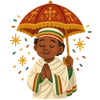
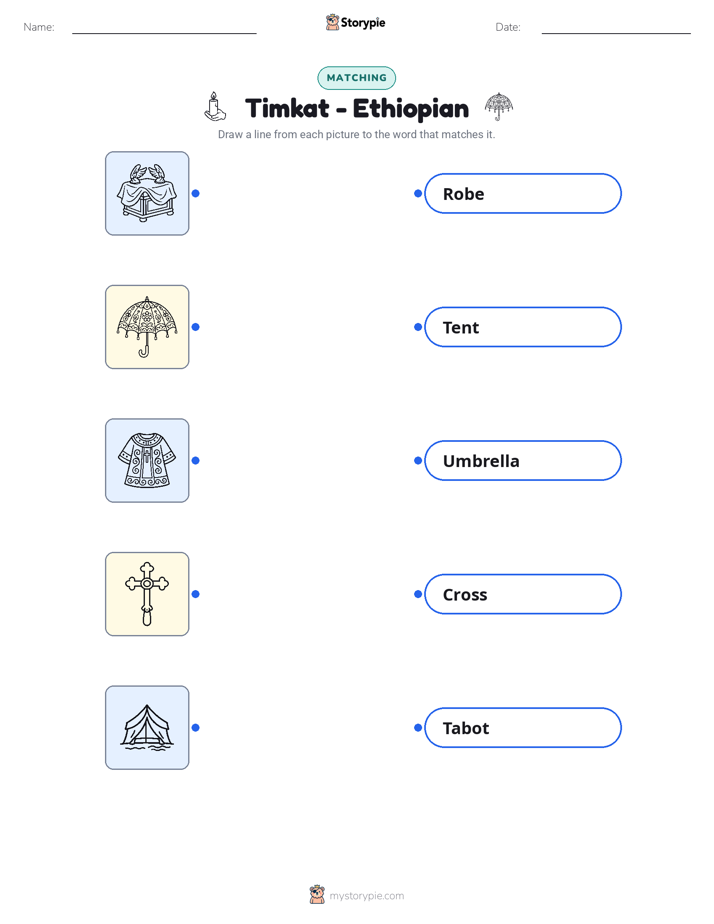
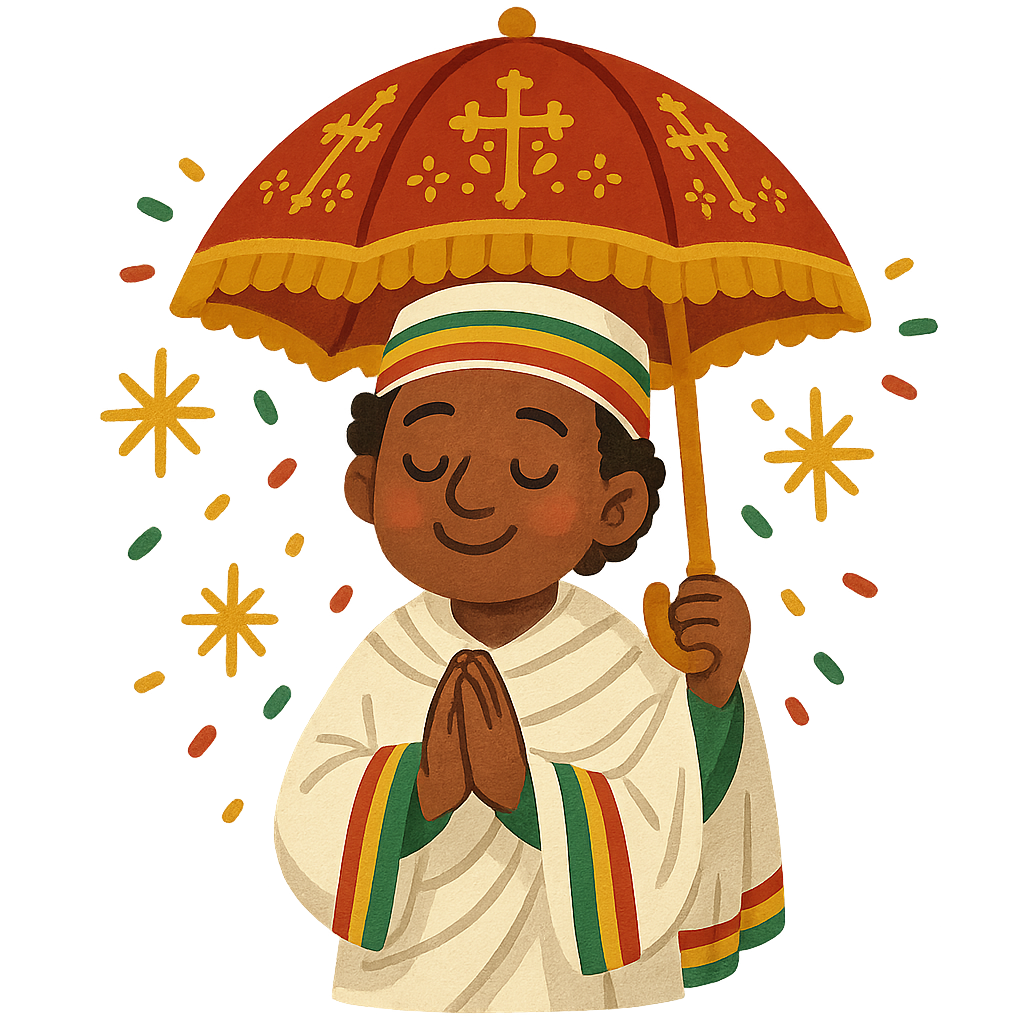
My celebrations begin on the eve of my main day, a period known as Ketera. This is when one of my most visually stunning and meaningful traditions takes place. From churches all across the country, priests emerge, dressed in beautifully ornate and colorful robes that signify the holiness of the occasion. In a solemn and reverent procession, they carry sacred replicas of the Ark of the Covenant. These replicas are called Tabots, and they are considered so sacred that they are carefully wrapped in rich, luxurious cloth, shielding them from direct view. As the priests carry the Tabots, they are shaded by large, ornate umbrellas that are covered in intricate embroidery. The air is filled with the sound of choirs singing hymns that have been sung for generations, and they are followed by large crowds of people, all participating in this sacred journey.
Timkat: The Celebration of Epiphany in Ethiopia
I am Timkat, the Ethiopian Orthodox celebration of Epiphany. My name comes from the ancient Ge'ez language and it means 'baptism.' This meaning is at the very core of my identity, because for followers of the Ethiopian Orthodox Tewahedo Church, I am a sacred time to remember and honor a significant event described in Christian scripture: the baptism of Jesus Christ. This event, in which John the Baptist baptized Jesus in the Jordan River, is a cornerstone of the faith. My observance is a profound expression of this belief, marked by ancient rituals that have been preserved for centuries, processions filled with vibrant colors, and the sound of joyful, sacred music that fills the air.
People in Ethiopia observe me according to the Ethiopian calendar, which is different from the Gregorian calendar used in many other parts of the world. My main day falls each year on the 10th day of the month of Terr. On the Gregorian calendar, this date usually corresponds to January 19th. However, during a leap year, it shifts by one day to January 20th. While the central commemoration happens on this day, my full observance is not just a single day's event. My festivities are a journey that unfolds over the course of three days, each with its own unique and important ceremonies that build upon one another, creating a powerful spiritual experience for participants.
My celebrations begin on the eve of my main day, a period known as Ketera. This is when one of my most visually stunning and meaningful traditions takes place. From churches all across the country, priests emerge, dressed in beautifully ornate and colorful robes that signify the holiness of the occasion. In a solemn and reverent procession, they carry sacred replicas of the Ark of the Covenant. These replicas are called Tabots, and they are considered so sacred that they are carefully wrapped in rich, luxurious cloth, shielding them from direct view. As the priests carry the Tabots, they are shaded by large, ornate umbrellas that are covered in intricate embroidery. The air is filled with the sound of choirs singing hymns that have been sung for generations, and they are followed by large crowds of people, all participating in this sacred journey.
This procession leads the Tabots from their home churches to a special location, typically near a river or a pool of water. There, a tent has been set up to serve as a temporary holy place where the Tabots will rest overnight. This begins the sacred vigil. As darkness falls, the atmosphere becomes one of deep prayer and reflection. Throughout the entire night, priests chant prayers and sing hymns from the sacred liturgy. They are not alone in their devotion. Many faithful followers choose to stay awake with them, holding a candlelight vigil that illuminates the night. This period of waiting and praying is a quiet, contemplative time of preparation for the main ceremonies that will begin with the sunrise.
As morning light breaks on the main day of my observance, the most significant ritual takes place. The body of water near the tent is blessed by a high-ranking cleric, transforming it into a symbolic representation of the Jordan River. This act of blessing is central to my meaning. After the prayers, the cleric takes a ceremonial cross, dips it into the newly blessed water, and begins to sprinkle it over the attendees who have gathered. This act is a powerful symbol of renewal and purification. For many participants, this is not enough; they choose to fully immerse themselves in the water. For them, this is a moment to renew their own baptismal vows, a personal and communal act that symbolizes a spiritual cleansing and a recommitment to their faith.
Following the morning rituals at the water, my celebration moves into its joyful conclusion. The Tabots are prepared for their journey back to their respective churches. This second procession is even more vibrant and celebratory than the first. The solemnity of the vigil gives way to an outpouring of joy, with much more music, singing, and traditional dancing. It is a spectacle of faith and community happiness. This combination of solemn ritual and joyful celebration makes me one of the most important religious and cultural events in Ethiopia. My traditions are not limited to one country; they are also celebrated by Ethiopian communities around the world who carry these ancient practices with them. In recognition of my unique cultural and historical importance, my celebration was added to UNESCO's list of the world's intangible cultural heritage in 2019, ensuring my story and traditions are preserved for all of humanity.
Wow facts
About
Timkat is the Ethiopian Orthodox Tewahedo Church's celebration of Epiphany, commemorating the baptism of Jesus Christ in the Jordan River. Timkat is celebrated on January 19 (or 20 in leap years), with festivities beginning on the eve, known as Ketera, and continuing into the following day. It is known for its vibrant processions of Tabotat (replicas of the Ark of the Covenant) and the ritual blessing of water.
Take a Quiz
Question 1 of 5
Describe the journey of the Tabots during Timkat, from when they leave the church to when they return.
Want to do even more?
Go beyond exploring. Unlock tools that turn every story into real learning.

Storypie Plus for families
Full stories, quizzes, and printables. Nights and car rides, sorted.
- Unlimited audio stories
- Create Mode: your child stars in the story
- Offline downloads
- Printable worksheets & coloring pages

Why Storypie for Schools
Students engaged. Prep in seconds. Evenings back to you.
- Worksheets & Quizzes
- Classroom Management
- Formative Assessment
- Custom Curriculum & Lesson Plans
- 27 Languages

Why Storypie for Homeschool
Curriculum done. They'll ask for more. Hours back in your day.
- Worksheet Generator
- First-Person Audio Stories
- Built-in Comprehension Quizzes
- Custom Curriculum & Lesson Plans
- Print & Go Activities