English

Vaisakhi
Vaisakhi is a spring harvest festival celebrated in the Punjab region and by Sikhs worldwide.
Reads at Grades 6–8 Listens at Grades 4–8
Print & create
Answer keys·No prep·Free with an account
28 worksheets · answer keys · full story · quiz · Ages 10-12 · CEFR B2
Plus adds 279,000+ more stories in 27 languages, audio for every one, and printables for all of them.
Just want Vaisakhi?
I am Vaisakhi, a festival that arrives each spring, usually on the 13th or 14th of April. My identity is woven from two important beginnings, one tied to the earth and the other to a pivotal moment in history. For centuries, people in the Punjab region of South Asia have known me as a harvest festival. My arrival signals a time of great joy and relief, as farmers and communities celebrate the successful gathering of the winter crops, like wheat. It is a time for music, dancing, and giving thanks for nature’s provision after a season of hard work. At the same time, for millions of Sikhs around the world, I mark one of the most significant events in the history of their faith. My observance for them is a deeply spiritual occasion, celebrating a legacy of commitment, courage, and community. This makes me a festival of both earthly abundance and profound faith.
My most defining moment for the Sikh faith occurred in the year 1699, in the city of Anandpur Sahib in Punjab. On my day that year, the tenth Sikh Guru, a visionary leader named Guru Gobind Singh, called for a large assembly of his followers to gather. Thousands of people traveled to hear him speak, uncertain of what he was going to announce. It was during this historic gathering that Guru Gobind Singh established the Khalsa. The Khalsa is the collective body of initiated Sikhs, men and women who formally commit to a life guided by high spiritual and moral principles. To become part of the Khalsa is to pledge to uphold justice, to defend the innocent against oppression, and to dedicate oneself to the service of all humanity, regardless of a person’s background. This act transformed the Sikh community, giving it a clear and unified identity built on discipline and devotion.
The Story of Vaisakhi
I am Vaisakhi, a festival that arrives each spring, usually on the 13th or 14th of April. My identity is woven from two important beginnings, one tied to the earth and the other to a pivotal moment in history. For centuries, people in the Punjab region of South Asia have known me as a harvest festival. My arrival signals a time of great joy and relief, as farmers and communities celebrate the successful gathering of the winter crops, like wheat. It is a time for music, dancing, and giving thanks for nature’s provision after a season of hard work. At the same time, for millions of Sikhs around the world, I mark one of the most significant events in the history of their faith. My observance for them is a deeply spiritual occasion, celebrating a legacy of commitment, courage, and community. This makes me a festival of both earthly abundance and profound faith.
My most defining moment for the Sikh faith occurred in the year 1699, in the city of Anandpur Sahib in Punjab. On my day that year, the tenth Sikh Guru, a visionary leader named Guru Gobind Singh, called for a large assembly of his followers to gather. Thousands of people traveled to hear him speak, uncertain of what he was going to announce. It was during this historic gathering that Guru Gobind Singh established the Khalsa. The Khalsa is the collective body of initiated Sikhs, men and women who formally commit to a life guided by high spiritual and moral principles. To become part of the Khalsa is to pledge to uphold justice, to defend the innocent against oppression, and to dedicate oneself to the service of all humanity, regardless of a person’s background. This act transformed the Sikh community, giving it a clear and unified identity built on discipline and devotion.
At that momentous assembly in 1699, Guru Gobind Singh conducted a dramatic test of courage to identify those with the strongest faith. According to Sikh tradition, he stood before the crowd with his sword drawn and asked for a volunteer willing to sacrifice their life for their Guru and their beliefs. A hush fell over the crowd until one man, Daya Ram, stepped forward. The Guru led him into a tent, and soon returned to the crowd alone, his sword stained. He asked for another volunteer, and then another. Four more times he made the request, and four more men bravely offered their lives. These five individuals, who showed ultimate devotion, became known as the Panj Pyare, which means the 'Five Beloved Ones.' They were the very first people to be initiated into the Khalsa through a special ceremony. In this ceremony, Guru Gobind Singh prepared sweetened water, called Amrit, by stirring it with a double-edged sword while reciting prayers. This ceremony symbolized a spiritual rebirth into a new, dedicated family.
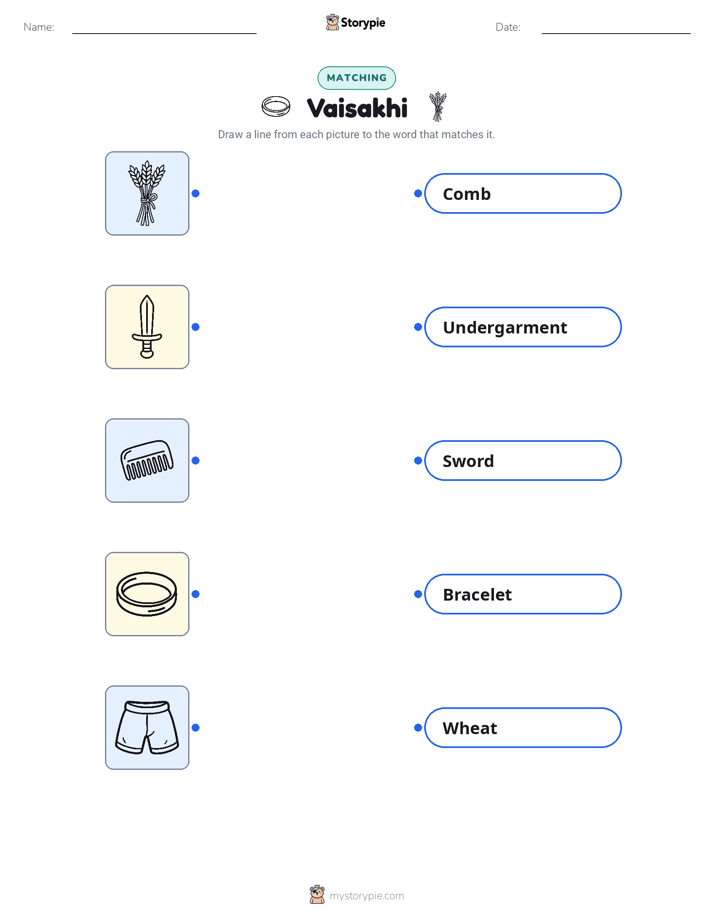
Those who are initiated into the Khalsa commit to wearing five articles of faith at all times. These are known as the Panj Kakkar, or the Five Ks, because their names in the Punjabi language all begin with the letter 'K.' Each item is a physical and constant reminder of the wearer's spiritual commitments and their connection to the Sikh community and its history. The first is Kesh, which is the practice of keeping hair uncut, symbolizing a person’s acceptance of God’s will. The second is the Kangha, a small wooden comb used to keep the hair clean and tidy, representing self-discipline. The third is the Kara, a steel bracelet worn on the wrist, which serves as a reminder of one's duty to do good deeds and to remember the divine in all actions. The fourth is the Kachera, a specific type of cotton undergarment that signifies self-control and modesty. Finally, there is the Kirpan, a ceremonial sword. It represents the duty of a Sikh to stand up for justice and protect the weak and oppressed. Together, these five articles form a unique identity for members of the Khalsa.
Today, Sikhs around the world observe me with great reverence and joy. The center of the celebration is the Gurdwara, the Sikh place of worship. On my day, Gurdwaras are often beautifully decorated and filled with families and individuals who come to pray and reflect. They participate in special services where they listen to the singing of sacred hymns, known as kirtan, from their holy scripture, the Guru Granth Sahib. The wisdom and music from the scripture guide the community in prayer and celebration. A particularly important ceremony that often takes place during my observance is the raising of a new Nishan Sahib. This is the distinctive triangular orange or blue flag that flies on a tall flagpole outside every Gurdwara. The raising of a fresh flag each year is a powerful symbol of renewal and the enduring presence of the Sikh faith in the community.
A vibrant and visible part of my modern celebration is the Nagar Kirtan. The name means 'town hymn singing,' and it is a colorful religious procession that winds through the streets of towns and cities. These processions are often led by the Panj Pyare, dressed in traditional robes, who carry swords and the Sikh flag. They are followed by a large float carrying the Guru Granth Sahib, the holy scripture, which is treated with the utmost respect. Community members walk behind, singing hymns together as they travel the parade route. The Nagar Kirtan is a joyful public event, often featuring floats depicting scenes from Sikh history, musicians playing traditional instruments, and energetic demonstrations of Gatka. Gatka is the traditional Sikh martial art, and performers show their skill with swords and staves in thrilling displays. Through the Nagar Kirtan, the community shares its heritage and the festive spirit with everyone.
Central to my observance, and to Sikhism itself, is the tradition of Langar. Langar is a free community meal that is prepared and served by volunteers at the Gurdwara. The food is always vegetarian so that people from all dietary backgrounds can eat together. During my celebration, special and extensive Langars are organized, feeding thousands of people. This practice is a beautiful demonstration of core Sikh principles. It embodies the idea of selfless service, known as seva. It also represents the deep commitment to equality, as everyone—regardless of their religion, wealth, gender, or social status—is invited to sit together on the floor and share the same meal. Langar expresses the importance of community and hospitality, ensuring that no one who comes to the Gurdwara leaves hungry.
While I hold a place of profound importance for the Sikh faith, my identity as a harvest festival and New Year celebration continues to be shared by other communities across South Asia. My roots in the agricultural cycles of the land are ancient, and this aspect of me is celebrated by many people, including Hindus and others in the Punjab region and beyond. For some Hindus, my day is an auspicious time to mark the new year. A common tradition is for people to make a pilgrimage to bathe in sacred rivers, such as the Ganges, believing the act cleanses them of past sins and brings blessings for the year ahead. These varied observances show my deep and diverse connections to the region’s long history and rich cultures, making me a festival that brings people together for many different reasons—from the spiritual to the seasonal.
Wow facts
About
Vaisakhi is a spring harvest festival celebrated in the Punjab region and by Sikhs worldwide. For Sikhs, it also commemorates the 1699 establishment of the Khalsa Panth by Guru Gobind Singh.
Take a Quiz
Question 1 of 5
Summarize the two main reasons Vaisakhi is celebrated, as described in the story.
Want to do even more?
Go beyond exploring. Unlock tools that turn every story into real learning.

Storypie Plus for families
Full stories, quizzes, and printables. Nights and car rides, sorted.
- Unlimited audio stories
- Create Mode: your child stars in the story
- Offline downloads
- Printable worksheets & coloring pages

Why Storypie for Schools
Students engaged. Prep in seconds. Evenings back to you.
- Worksheets & Quizzes
- Classroom Management
- Formative Assessment
- Custom Curriculum & Lesson Plans
- 27 Languages

Why Storypie for Homeschool
Curriculum done. They'll ask for more. Hours back in your day.
- Worksheet Generator
- First-Person Audio Stories
- Built-in Comprehension Quizzes
- Custom Curriculum & Lesson Plans
- Print & Go Activities