

 English

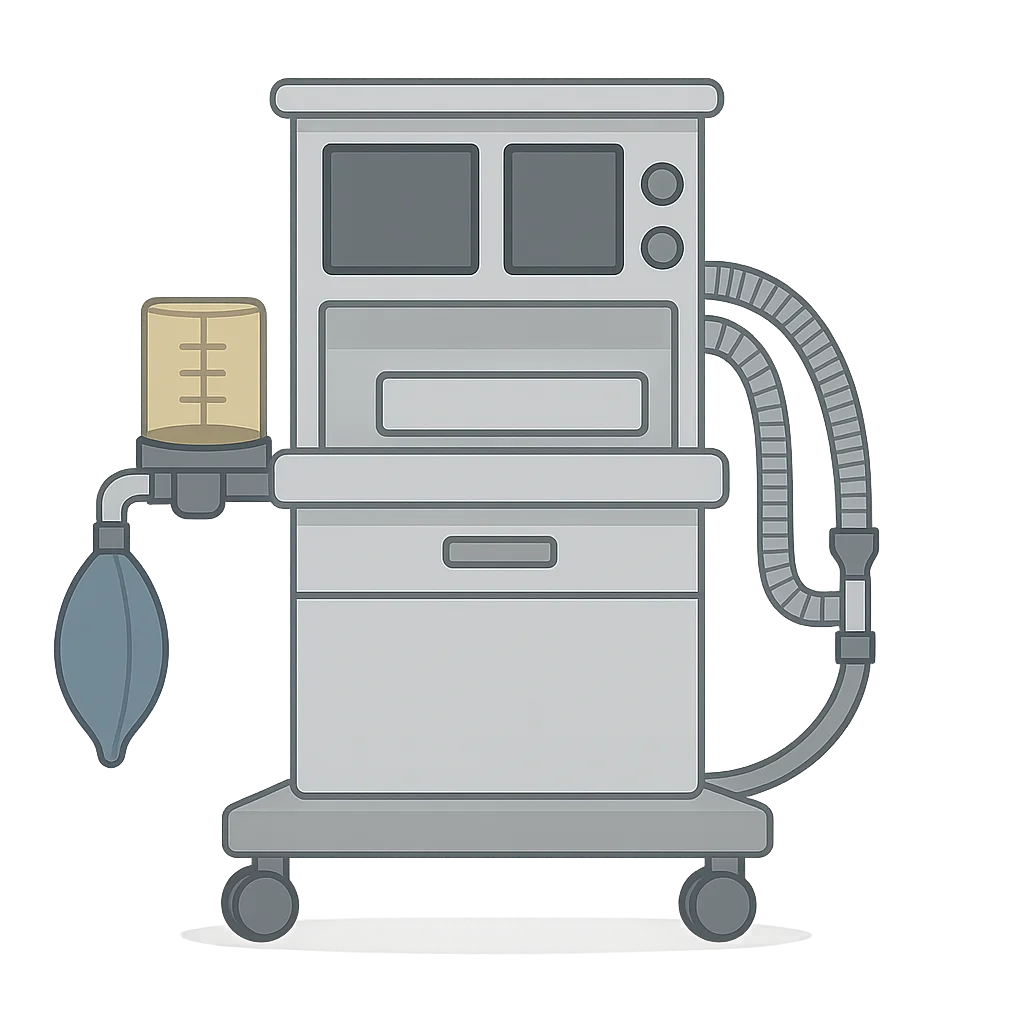
The Gentle, Sleepy Whisper of Anesthesia
Before I had a name, I was just a possibility, a gentle, sleepy whisper waiting to be heard in a world filled with shouts of pain. You can call me Anesthesia. My story begins in the early 1800s, a time of brilliant minds and steady hands, but also a time of unimaginable fear. Imagine a room, not clean and quiet like today's hospitals, but a theater filled with anxious students watching a surgeon at work. The tools were sharp, the doctors were skilled, but they were missing one crucial thing: me. They could set a broken bone or remove a diseased appendix, but they could not stop the searing pain that came with every cut. People with illnesses that are easily fixed today would often choose to suffer rather than face the surgeon’s knife. The bravest patients would bite down on a leather strap, their knuckles white as they gripped the sides of the operating table. It was a world where healing hurt terribly, and the place meant to offer hope was often the most dreaded place on Earth. I knew I was needed, but my voice was too quiet, and no one yet knew how to listen for me.
My first hints appeared in the most unlikely of places: at parties. In the 1840s, people discovered a curious gas called nitrous oxide. They called it 'laughing gas' because inhaling it made them feel giddy and silly. At social gatherings, they would breathe it in for amusement, stumbling around and laughing without a care. I was there, in that gas, a quiet promise of peace. A compassionate dentist named Horace Wells was at one of these parties on December 10th, 1844, when he saw something extraordinary. A man who had inhaled the gas stumbled and badly gashed his leg, but he didn't even flinch. He just kept laughing. A spark of an idea lit up in Dr. Wells's mind: if this gas could block the pain of a deep cut, could it block the pain of pulling a tooth? The very next day, he had a fellow dentist pull one of his own teeth while he breathed in the gas. He felt nothing. Convinced he had found the answer, he arranged a public demonstration in Boston in 1845 to show the world. But in his haste, he didn't administer enough of the gas. The patient cried out in pain, and the audience of doctors and students jeered, calling Wells a failure. He was heartbroken, and my first chance to help the world seemed to vanish in a cloud of doubt. Even earlier, in 1842, a quiet doctor in Georgia named Crawford Long had used another substance, ether, to painlessly remove a tumor from a patient’s neck, but he was so careful and methodical that he didn’t tell the world about his discovery for several years. My secret remained just out of reach.
Watching from the audience during Horace Wells’s failed demonstration was another dentist, William T. G. Morton. He saw the flicker of potential in Wells's idea but believed a more reliable substance was needed. He began to experiment with ether, a liquid that produced a much deeper, more stable sleep. He tested it carefully on animals, and then on himself, before he was certain he understood my power. He arranged for his own public demonstration at Massachusetts General Hospital on October 16th, 1846. The room, which would later be called the Ether Dome, was filled with the most respected surgeons in the country. They were skeptical; they had been fooled before. The patient, a young man named Gilbert Abbott, had a tumor on his jaw that needed to be removed. He looked terrified. Dr. Morton held a glass globe to Mr. Abbott’s mouth, a sponge soaked in ether inside. I flowed out as a vapor, a gentle whisper entering his lungs. Mr. Abbott’s eyes grew heavy, and soon he was completely still, lost in a deep, painless sleep. The lead surgeon, the great Dr. John Collins Warren, leaned in. 'Your patient is ready, Doctor,' Morton said with a confidence he didn't fully feel. Dr. Warren made the first cut. The crowd held its breath, expecting a scream. But there was only silence. The tumor was removed, and still, Mr. Abbott slept peacefully. When he finally awoke, Dr. Warren asked him if he had felt any pain. Mr. Abbott shook his head and said he had only felt a faint scratching sensation. A wave of astonishment swept through the room. Dr. Warren turned to his stunned colleagues and declared, 'Gentlemen, this is no humbug.' In that moment, the world of medicine changed forever.
That one successful demonstration was the moment my whisper became a clear, confident voice that echoed around the globe. The news spread like wildfire, and soon, surgeons everywhere were using me to bring comfort to their patients. I was not perfect at first. Ether was flammable and had unpleasant side effects. But that day in the Ether Dome opened a door that could never be closed. Scientists and doctors began to study me, to understand how I worked, and to create safer and more effective versions of me. Over the next century, I evolved from a simple liquid on a sponge into a complex and precise science called anesthesiology. Today, there are specialist doctors, anesthesiologists, who dedicate their entire careers to mastering my use. They can put a patient into a deep sleep for a heart transplant, numb a single part of the body for a minor procedure, or ease the pain of childbirth. My existence means that surgeons can take their time, performing intricate and life-saving miracles that were once the stuff of dreams. My journey began with a failed attempt and a brave second chance, and it continues every single day in operating rooms around the world, proving that great progress often comes from perseverance and the simple desire to make healing a gentle, hopeful process, not a frightening one.
Activities
Take a Quiz
Test what you learned with a fun quiz!
Get creative with colors!
Print a coloring book page of this topic.














 Free for Educators